

How to Get Rid of Lumps After Filler: Safe Next Steps Now
A few days after filler, you catch your reflection and notice a firm bump that wasn’t there before. It’s understandable to wonder how to get rid of lumps after filler, but pressing or massaging the area may not be the right first step. A bump can have several causes, and the safest response depends on what’s behind it.
A clinician will consider when the lump appeared, where it is, what symptoms you have, and which filler was used. This article explains what may be happening, what to avoid at home, and when to contact a qualified clinician. Severe or increasing pain, unusual skin color changes, or vision symptoms call for immediate medical attention.
Key Takeaways
- A bump alone can’t reveal whether the cause is swelling, bruising, filler placement, or a delayed reaction.
- How to get rid of lumps after filler depends on identifying the likely cause before considering a correction.
- Record when the lump appeared, where it is, and whether symptoms are changing before you contact a clinician.
- Filler type matters: hyaluronidase can break down some hyaluronic acid fillers, but it isn’t suitable for every filler.
- A clinician may ask about your treatment and examine the area before discussing next steps, including an in-person evaluation in Beverly Hills.
How to Get Rid of Lumps After Filler: What Might Be Happening?
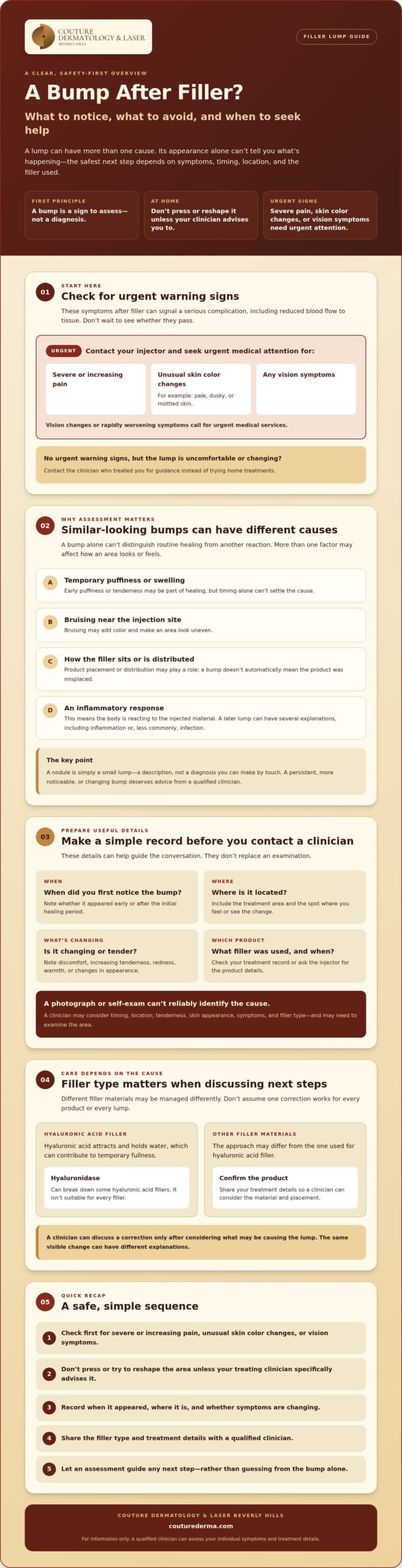
A few days after filler, one spot may feel firmer or look more raised than the surrounding area. A bump by itself can’t show what caused it or which response is appropriate. First, note when you noticed it, whether it is changing, and whether you have other symptoms.
A filler lump is a small raised or firm area you can see or feel after an injection. It might reflect temporary puffiness, bruising, the way filler is sitting in the tissue, or an inflammatory response, meaning the body is reacting to the injected material. These possibilities can look similar, so an examination may be needed to tell them apart. The broad overview of injectable filler also describes possible side effects, including reactions that can lead to lumps or scarring.
For a clinician’s overview of delayed nodules, you can watch this educational discussion. It isn’t a substitute for an individual assessment.
Could this be swelling, bruising, or a filler nodule?
A nodule simply means a small lump. It’s a descriptive term, not a diagnosis you can make by touch. Early puffiness or tenderness may be part of healing, while a distinct bump that persists, becomes more noticeable, or changes deserves advice from the clinician who treated you. There isn’t one timeline that settles the question for everyone.
When assessing a lump, a clinician may consider when it appeared, where it sits, whether it’s tender, and how the skin looks. Bruising may add color, while swelling can make an area feel uneven. A defined lump may have another cause. Because normal healing and a complication can look similar, avoid pressing or trying to reshape the area unless your treating clinician has specifically advised you to.
Which symptoms should prompt urgent medical attention?
Severe or increasing pain, unusual skin color changes such as pale, dusky, or mottled skin, and any vision symptoms after filler need urgent medical attention. These can signal a serious complication, including reduced blood flow to tissue. Don’t wait to see whether they pass. Contact your injector immediately and seek urgent medical services, especially for vision changes or rapidly worsening symptoms.
If the lump is uncomfortable or changing but you don’t have urgent warning signs, contact the treating clinician for guidance rather than trying home treatments. The right next step depends on the timing, location, symptoms, and filler involved.
Why Do Lumps Form After Dermal Filler?
A bump after filler doesn’t automatically mean the product was misplaced. Possible explanations include ordinary swelling, bruising around the injection site, how the product settled in the tissue, and a delayed reaction. These can overlap in appearance, so the bump alone can’t tell you what’s happening.
Some fillers contain hyaluronic acid, a substance that attracts and holds water. This can contribute to temporary fullness, while bruising can make an area look uneven. In other cases, product placement or distribution may play a role. The FDA’s dermal filler risks guidance also describes raised bumps, including nodules and granulomas, an inflammatory type of lump, as possible risks.
Before recommending care, a clinician considers when the bump appeared, what symptoms accompany it, where it is, and which product was used. That assessment matters because the same visible change can have different explanations.
How do filler type and injection area affect assessment?
Knowing the filler type can help guide the discussion. Hyaluronic acid fillers may be managed differently from fillers made with other materials, so don’t assume every product can be addressed in the same way. Look for your treatment record or ask the injector which product was used and when it was placed.
The location matters, too. In delicate or thin-skinned areas, a small change in contour may be easier to see or feel, though this varies from person to person. A clinician can examine the area and consider the product and placement rather than relying on appearance alone.
Can a lump appear after the initial healing period?
Yes, a bump can become noticeable after the early healing period. A later lump may have several explanations, including inflammation, meaning the body’s response to a substance, or, less commonly, infection. Timing alone doesn’t establish the cause, and a photograph or self-exam can’t reliably distinguish these possibilities.
If a lump appears later, is changing, or comes with increasing tenderness, redness, or warmth, contact a qualified clinician for an individual assessment. Bring your treatment details if you have them. That information can help guide a careful discussion about next steps without assuming the filler needs to be adjusted.
What Are the Treatment Options for a Filler Lump?
There isn’t one correction that suits every bump. A clinician will consider what may be causing it, which filler was used, and whether you have other symptoms. Depending on that assessment, the next step may be clinician-guided observation, further evaluation, or a treatment chosen for the specific finding.
Observation doesn’t mean ignoring the area. If symptoms are mild and an examination supports monitoring, your clinician may recommend watching for changes and arranging follow-up. Ask which changes should prompt you to get back in touch and when they want to hear from you. If the cause isn’t clear, an examination or, when appropriate, ultrasound imaging, which uses sound waves to create pictures of structures beneath the skin, may help assess the area before treatment is considered.
Can hyaluronidase dissolve every filler lump?
Hyaluronidase is an enzyme, a substance that helps break down certain hyaluronic acid fillers. A trained clinician may consider it when the product and clinical picture make it appropriate. It isn’t a universal solution: it doesn’t break down every filler material, and not every lump is caused by filler that should be dissolved.
The FDA guidance on dermal fillers describes raised bumps as a possible side effect that may need treatment. That doesn’t mean dissolving is automatically the right choice. Don’t try to obtain or use hyaluronidase yourself; a qualified clinician needs to decide whether it fits your case.
| Option | When a clinician may consider it | Key limitation |
|---|---|---|
| Observation with follow-up | When symptoms are mild and monitoring seems appropriate after assessment. | Requires clear guidance on what to watch for and when to reconnect. |
| Further assessment | When the cause is uncertain or the lump changes; examination and sometimes imaging may help. | A photo or description alone may not clarify what is happening. |
| Hyaluronidase | When a clinician finds that a particular hyaluronic acid filler may be suitable for breakdown. | It doesn’t dissolve all filler types or address every cause of a lump. |
To make the discussion more useful, bring the treatment date and product name if you have them, and ask what signs should change the plan. If you’re unsure how to get rid of lumps after filler, a clinician-led assessment can help clarify which options are relevant without committing you to a particular treatment.
What Can You Safely Do Before a Clinician Evaluates the Lump?
It’s tempting to press a bump to see whether it moves or smooths out. But home care can’t identify or safely correct every filler lump. Until you’ve spoken with the clinician who treated you, focus on recording what you notice and getting advice rather than trying to change the area yourself.
Use this simple plan to prepare for that conversation:
- Pause manipulation. Don’t squeeze, puncture, or massage the area unless your treating clinician specifically tells you to. Massage advice depends on the suspected cause, filler, and treatment plan.
- Write down the details. Note the treatment date, area treated, filler name if known, when the bump appeared, and whether it’s changing. Include pain, color changes, warmth, swelling, or other symptoms.
- Contact your treating clinician. Share what you’ve observed and ask what to do next. Don’t apply unapproved products or try to dissolve or otherwise treat the filler yourself.
Should you massage or press the area?
Not without guidance. The right advice can vary with the cause and product, and pressure isn’t a reliable way to move filler into place. Avoid repeatedly checking the bump by pressing it. If your clinician recommends massage after reviewing your situation, ask them to explain exactly what they want you to do.
What information should you share when you call?
Be specific about when the lump began and whether it’s getting larger, more tender, or warmer. Mention any skin color changes, swelling, or other symptoms, along with the filler name, treatment date, and previous reactions if you know them. A clear photo can help show how the area looks; take it in consistent lighting and from a similar angle if you’re documenting changes.
Photos shouldn’t delay care if you have severe or increasing pain, unusual skin color changes, or vision symptoms. Contact your injector immediately and seek urgent medical services for concerning symptoms. If you need an in-person assessment in Beverly Hills, you can request an appointment with our clinic. This is a way to arrange an evaluation, not a promise of a particular correction or treatment.
How Can a Beverly Hills Dermatologist Help With Filler Lumps?
A lump can be difficult to interpret on your own, especially if you’re unsure which filler was used or why the area has changed. A message or photograph alone can’t confirm the cause. An in-person assessment gives a clinician a chance to review your history and examine the area before discussing what, if anything, should happen next.
What should you expect during an assessment?
A clinician may ask when you had filler, which area was treated, what product was used if you know, and when the lump or other symptoms began. They may also ask whether it has changed, whether it’s painful or warm, and whether you’ve had a similar reaction before. Your concerns and goals are useful context, too.
The examination may include looking at and gently assessing the area while considering the treatment details you can provide. If the finding remains unclear, further evaluation or referral may be appropriate. The options depend on what the assessment suggests; an appointment doesn’t mean that a specific correction is needed or suitable.
Couture Dermatology & Laser Beverly Hills is a cosmetic and medical dermatology practice in Beverly Hills, serving patients in Los Angeles. Led by Harvard-trained dermatologist Dr. Chinonso Kagha Abisogun, the practice offers aesthetic injectables, including dermal and lip fillers, as well as laser and medical dermatology services. You can discuss your concern with the clinic, but an appointment can’t promise a particular diagnosis or result.
When does a consultation make sense?
Consider contacting a qualified clinician if a lump persists, changes, worries you, or remains unexplained. Bring any treatment records you have, and note when symptoms started. That context can help guide an individualized conversation about whether observation, further assessment, or another next step may fit your situation.
If you have severe or increasing pain, unusual skin color changes, or vision symptoms, seek immediate medical care rather than waiting for a routine appointment. For a non-urgent concern, you’re welcome to book an appointment with our Beverly Hills practice to discuss your situation and receive individualized guidance.
Choose a Safe, Individualized Next Step
A filler bump can have several causes, and its appearance alone doesn’t tell you which response is right. The safest approach to how to get rid of lumps after filler is to avoid pressing or treating the area yourself, note any changes, and have a qualified clinician consider the product, timing, location, and symptoms.
If the lump persists, changes, or remains worrying, an individualized assessment can help clarify what to consider next. Couture Dermatology is a Beverly Hills cosmetic and medical dermatology practice led by Harvard-trained dermatologist Dr. Chinonso Kagha Abisogun. An evaluation can inform a careful discussion without assuming a particular treatment is needed or suitable.
If you have severe or increasing pain, unusual skin color changes, or vision symptoms, seek immediate medical care rather than waiting for a routine appointment. For a non-urgent concern, you can book an appointment for individualized guidance. Take the next step with calm, informed care.
Frequently Asked Questions
Can filler lumps go away on their own?
Some early bumps may be swelling and can settle as your body heals, but a persistent or changing lump needs clinical assessment. Timing varies with the filler, treatment area, and your healing response. Contact the clinician who treated you rather than guessing at the cause. Severe or increasing pain, unusual skin color changes, or vision symptoms need immediate medical attention.
Should I massage a lump after filler?
Not unless your treating clinician advises you to. Massage isn’t suitable for every cause or filler, and pressure may be unhelpful when the reason for the lump is unknown. Contact your injector for guidance before pressing, rubbing, or otherwise manipulating the area. If you have severe pain, unusual skin color changes, or vision symptoms, seek urgent medical care instead of waiting for routine advice.
Can hyaluronidase dissolve any type of filler?
No. Hyaluronidase is an enzyme that can break down certain hyaluronic acid fillers, but it doesn’t work on every filler material or address every kind of lump. A qualified clinician needs to consider the product and your symptoms before deciding whether it’s appropriate. Don’t inject it yourself or seek treatment from an unqualified provider. Ask your injector what filler was used if you’re unsure.
How long do lumps after filler usually last?
There isn’t one timeframe that applies to every filler lump. Early swelling may behave differently from a persistent or later-appearing bump, and the product, area treated, and your symptoms all matter. Contact your treating clinician if the lump isn’t improving, changes, or concerns you. Severe or increasing pain, unusual skin color changes, or vision symptoms need prompt medical attention, not watchful waiting.
Is a hard lump after filler an emergency?
Firmness alone can’t tell you whether a lump is an emergency. Contact a clinician for assessment, especially if the bump is changing or causing concern. Severe or increasing pain, unusual skin color changes, or vision symptoms require immediate medical attention. A description or photo can’t reliably rule out a serious problem. Don’t try to press, break up, or reshape the lump yourself.
What should I do if a filler lump appears weeks later?
A lump that appears weeks later can have several possible causes, and timing alone can’t identify which one applies. Contact your injector or another qualified clinician and share the treatment date, product name if known, and any changes or accompanying symptoms. Avoid massage or other treatments unless a clinician advises you. Seek immediate medical attention for severe pain, unusual skin color changes, or vision symptoms.
Can I book a dermatologist for a filler lump in Beverly Hills?
Yes, a dermatologist can review your treatment history, examine the area, and discuss next steps based on the findings. Couture Dermatology is a Beverly Hills practice serving Los Angeles and offering aesthetic injectables, including dermal and lip fillers. For individualized guidance, you can book an appointment. Seek immediate care for urgent symptoms.