

You’ve tried a treatment for dark marks, but they’re still visible, and you’re unsure what to try next. Maybe the advice you received didn’t account for how your skin reacted, or you left an appointment feeling that your concern had been reduced to your Filipino heritage. It’s understandable to want care that takes your experience and questions seriously. The best dermatologist for filipino skin concerns will listen to what you’ve noticed and make recommendations based on your needs, not assumptions.
I’m Dr. Chinonso Abisogun, a Harvard-trained, board-certified dermatologist with 15 years of experience. At Couture Dermatology & Laser Beverly Hills, I care for patients from across Los Angeles. A useful consultation gives you room to explain what’s bothering you, what you’ve already tried, and what you hope to understand or change. I’ll share how to recognize an individualized approach, what to ask about pigmentation and acne marks, and how to prepare for a conversation about next steps.
Key Takeaways
- The best dermatologist for filipino skin concerns will assess your personal skin history rather than assume your needs based on heritage.
- Look for board certification, experience with concerns like pigmentation or acne marks, and a communication style that makes room for your questions.
- Before considering a procedure, discuss the diagnosis, suitable options, possible risks, and how follow-up will guide care.
- A thoughtful consultation connects what you’re noticing now with past treatments, triggers, complexion, and your goals.
- Learn what to expect from a Beverly Hills consultation with Dr. Chinonso Kagha Abisogun, a Harvard-trained, board-certified dermatologist with 15 years of experience.
What Filipino Skin Concerns Should a Los Angeles Dermatologist Understand?
You’ve treated a breakout, but the dark mark it left behind is still visible. Now you’re wondering whether another product might irritate your skin. The best dermatologist for filipino skin concerns will take that worry seriously and assess you as an individual, rather than treating Filipino heritage as a diagnosis.
Here’s a useful distinction: skin tone describes the visible color of your skin; a skin concern is what you notice or want help with; a medical diagnosis is a clinician’s assessment of what’s causing it. Heritage alone can’t determine your skin type, history, or treatment needs. In my practice, I look at the skin symptom and the story behind it.
Which concerns might bring Filipino patients to a dermatologist?
Patients may seek care for melasma, acne, dark marks, or scars, but these aren’t universal experiences. Post-inflammatory hyperpigmentation means dark marks that can remain after skin inflammation, such as a pimple or irritation. Melasma is a pattern of brown or gray-brown patches that needs assessment; appearance alone doesn’t confirm the diagnosis.
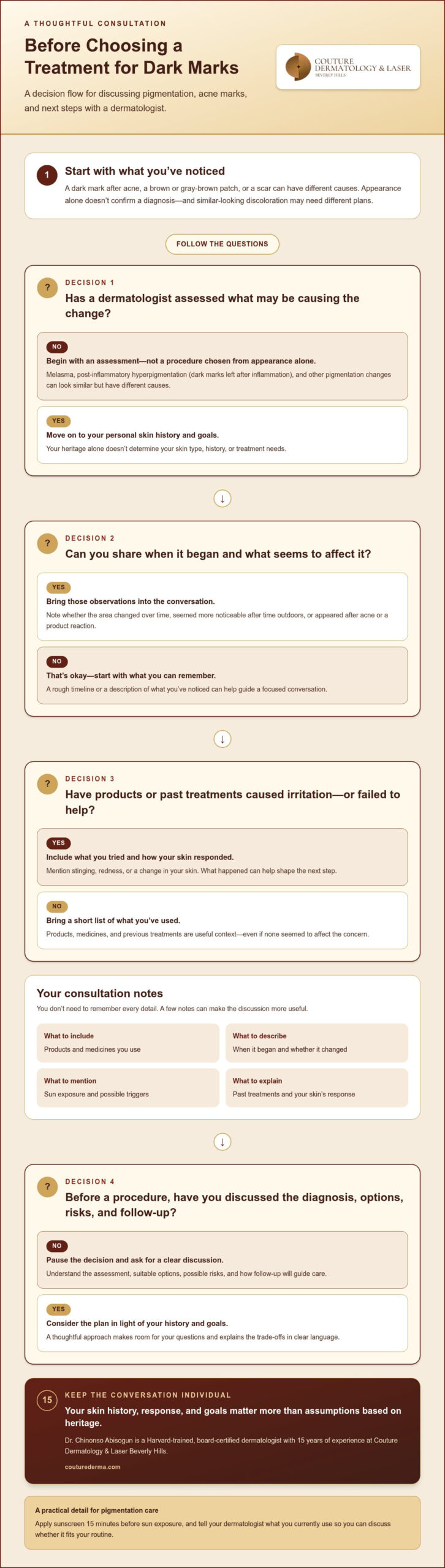
Before your visit, note when the concern began and what seems to affect it. Does a patch look more noticeable after time outdoors? Did a mark appear after acne or a product reaction? These observations can help guide a focused conversation at your Los Angeles dermatology appointment.
Why should care begin with your individual skin history?
Prior irritation, medications, sun exposure, and treatments you’ve already tried can all help me understand what may be happening and what to consider next. Melanin, the pigment that gives skin its color, is one part of the clinical picture. It doesn’t tell me exactly how your individual skin will respond. The goal is to assess your concern, not make assumptions from ethnicity.
A practical step: bring a short list of products, medicines, and previous treatments, including anything that caused stinging, redness, or a change in your skin. You don’t need to remember every detail. Notes about what you used, when you used it, and how your skin responded can make the consultation more useful.
How Can a Dermatologist Tailor Care for Filipino Skin Concerns?
You may arrive with a clear concern, such as a brown patch or acne marks, but choosing an approach takes more than looking at color. I connect what I see with when it appeared, what was happening at the time, what you’ve tried, and how your skin responded. Melanin, the pigment that gives skin its color, is one part of that assessment, not a prediction of how your skin will react.
Diagnosis should come before a cosmetic procedure. Similar-looking discoloration can have different causes, and the next step depends on the cause, your skin history, and your past response to care. Melasma, post-inflammatory hyperpigmentation (dark marks left after inflammation), and other changes in pigmentation may call for different plans. I assess the concern before discussing medical treatment, a procedure, or another approach.
How are melasma and dark marks assessed?
I may ask when the patches or marks began, whether they’ve changed, what products or treatments you’ve used, and whether anything seemed to make them worse. I’ll also ask about medications and sun exposure to understand the visible pattern in context. A patch that looks like melasma to you may have another cause, so avoid diagnosing it yourself or starting a procedure based on appearance alone.
If acne is part of the picture, tell me about both the breakouts and the marks they leave, along with any treatments that caused irritation or didn’t help. That history can shape the next step. You can read more about acne scar refinement if lingering scars are one of your concerns.
What does culturally aware, individualized care look like?
It means I listen to what you want to change and what you’re concerned a treatment might do, including visible irritation or darker marks. I explain reasonable options and trade-offs in clear language, then make room for your questions. The best dermatologist for filipino skin concerns should discuss your own skin response and goals, not assume them from your background.
Sun protection can also be part of a pigmentation plan. Apply sunscreen 15 minutes before sun exposure, and tell me what you currently use so we can discuss whether it fits your routine. If you’d like to talk through your symptoms and history with me, you can book a dermatology consultation.
Choosing a Dermatologist for Filipino Skin in LA
You shouldn’t have to choose between medical expertise and feeling heard. As you compare dermatologists in Los Angeles, look for a board-certified clinician whose experience fits the concern you want assessed and who can explain how your history and skin response shape the plan. The best dermatologist for filipino skin concerns won’t treat heritage as a diagnosis or promise a particular result.
Board certification means a dermatologist has completed specialty training and earned certification in the field. Relevant clinical experience matters too: a clinician who regularly assesses pigmentation, acne, or scarring can discuss those concerns with informed care. At Couture Dermatology in Beverly Hills, I bring 15 years of experience as a Harvard-trained, board-certified dermatologist to consultations with patients across Los Angeles.
| What to compare | What to look for |
|---|---|
| Credentials | Board certification in dermatology and relevant clinical experience. |
| Relevant concern | Experience assessing the issue you want to discuss, such as melasma, acne, or dark marks. |
| Communication | Clear explanations, careful listening, and room for your questions. |
| Individualized planning | A plan that considers your history, goals, and past skin response, rather than relying on assumptions. |
What should you look for in a dermatologist’s credentials and approach?
Look for a clinician who treats the concern you want assessed, then pay attention to how they explain their thinking. A thoughtful plan connects the visible symptom with your goals and relevant history. If you’re considering a cosmetic procedure, ask about possible benefits and limitations, as well as other approaches that may suit your situation.
How can you assess whether the consultation feels right?
It’s reasonable to ask directly: “How will my history and the way my skin has responded to past treatments affect your recommendations?” A clear answer should address your specific concern, not rely on broad statements about Filipino skin. The clinician should discuss possible risks without promising uniform results.
Bring a few photographs if they show how the concern has changed over time, especially if it looks different from day to day. A consultation is a two-way conversation, not a commitment to a procedure. You should leave understanding the reasoning behind the next step, with space to consider your options.
Which Treatment Questions Matter for Pigmentation and Acne Marks?
You may be ready to act on a dark mark, but a good plan starts with understanding what it is and what may be driving it. In my practice, I first confirm the diagnosis, then discuss suitable options, review possible risks and aftercare, and agree on how we’ll assess progress. That order matters because a treatment that helps one concern may not be right for another.
Could a laser be appropriate for melasma or dark marks?
Possibly, but a laser isn’t the default choice for every patch of discoloration or every Filipino patient. Before recommending a procedure, I consider the diagnosis, your skin and treatment history, your goals, and the possibility of irritation or changes in pigmentation. The same treatment may not suit everyone, and I won’t promise uniform results.
For melasma, a laser treatment may be one option we discuss when it’s clinically appropriate. Whether it belongs in your plan depends on the assessment, not on your heritage alone. Ask what concern a proposed procedure is meant to address and why it may fit your situation. Couture Dermatology offers laser and light treatments, including skin resurfacing. If your concern is a lasting acne scar rather than a flat dark mark, learn more about acne scar refinement.
What should you ask before starting a treatment plan?
Try asking: “What are we treating, what kind of response is realistic for me, and what should I watch for afterward?” You can also ask what aftercare involves, what irritation might look or feel like, and when we’ll review how your skin is responding. Clear answers help you make an informed choice without pressure.
If tretinoin, a prescription skin treatment, is part of your plan, wait 20 minutes after cleansing before applying it. Follow the directions I provide for your specific treatment, and let me know if you notice persistent discomfort or a change that concerns you. A follow-up gives us a chance to review your response and adjust the approach if needed.
The best dermatologist for filipino skin concerns should explain the reasoning behind a recommendation in terms of your diagnosis and history. If you’re ready to discuss pigmentation or acne marks with me, book a dermatology consultation.
What Can You Expect From a Beverly Hills Dermatology Consultation?
You may come in with a specific goal, like understanding a stubborn dark mark, or with a general feeling that your skin has changed. In my consultation, I start by listening to what you’ve noticed, when it began, and what you hope will be different. Then I connect those details with your skin history and examine the concern before discussing possible next steps.
I’m Dr. Chinonso Kagha Abisogun, a Harvard-trained, board-certified dermatologist with 15 years of experience. At Couture Dermatology in Beverly Hills, I care for patients from across Los Angeles. My role is to help you understand the concern and consider a plan that fits your medical needs and personal goals, not to rush you toward a procedure.
How does a personalized consultation support the next step?
We’ll talk about what you’re experiencing, what you’ve already tried, and how your skin responded. Depending on your concern, I may discuss medical dermatology care, aesthetic options, or why another step could make more sense first. I’ll explain the reasoning in clear language, including relevant benefits and limitations, so you can take part in deciding what feels right.
A consultation is a conversation, not a commitment to treatment. If you’re looking for the best dermatologist for filipino skin concerns, notice whether the clinician makes room for your questions and considers your individual history rather than making assumptions about your heritage.
How can you prepare for your dermatology appointment?
A little preparation can make it easier to give a clear picture of what’s been happening. Before your visit, jot down when the skin symptom began, any changes or patterns you’ve noticed, and what you’ve already tried. Bring a list of products, medications, and previous treatments, along with the questions you most want answered.
- Note whether the concern has changed over time or seems linked to a particular trigger.
- Include products or treatments that caused irritation or didn’t meet your expectations.
- Write down your main goal, such as understanding the cause or discussing possible options.
We’ll begin by understanding your concern, then shape the discussion around what matters to you. If you’re ready to talk through your skin history and goals, book a dermatology consultation.
Take the Next Step Toward Thoughtful Skin Care
Choosing the best dermatologist for filipino skin concerns means finding a clinician who listens to your experience, assesses the concern itself, and explains why an option may suit your goals. Your heritage can inform the conversation, but it doesn’t replace your personal skin history or determine your diagnosis.
I’m Dr. Chinonso Kagha Abisogun, a Harvard-trained, board-certified dermatologist with 15 years of experience. At our Beverly Hills clinic, serving Los Angeles, I work with you to connect your symptoms, past treatments, and priorities before shaping a considered plan. That may involve medical dermatology care or, when appropriate, discussing an aesthetic treatment. The aim is for you to understand the reasoning, possible trade-offs, and next steps without feeling rushed into a procedure.
If you’re ready to talk about what you’ve noticed and what you hope to change, book a personalized dermatology consultation. A clearer understanding of your skin can be a reassuring place to begin.
Frequently Asked Questions
Is there a dermatologist in Los Angeles who treats Filipino skin concerns?
Yes. Couture Dermatology in Beverly Hills serves patients across Los Angeles with medical and cosmetic dermatology care. Dr. Chinonso Kagha Abisogun is Harvard-trained and board-certified, with 15 years of experience. If you’re looking for the best dermatologist for filipino skin concerns, a consultation should focus on your particular concern, skin history, past responses, and goals. Filipino heritage alone doesn’t determine your skin type or which treatment may suit you.
What skin concerns should I discuss with a dermatologist?
Bring up any skin changes that concern you, including acne, melasma, dark marks, irritation, or scarring. Melasma is a pattern of brown or gray-brown patches, while dark marks may have other causes, so appearance alone may not tell the whole story. Note when the concern began, what seems to affect it, and which products or treatments you’ve tried. Those details can help guide the assessment.
Can a laser treat melasma on Filipino skin?
A laser may be considered for some people with melasma, but it isn’t automatically right for every patient or every pigmentation concern. I first assess what may be causing the discoloration, review your skin and treatment history, and discuss potential benefits and risks. At Couture Dermatology, laser treatment may be discussed as an option for melasma when clinically appropriate. The recommendation depends on your individual assessment, not your heritage alone.
How do I choose a dermatologist for hyperpigmentation in Los Angeles?
Look for a board-certified dermatologist who evaluates the cause of your pigmentation, listens to your goals, and explains treatment options and limits clearly. During a consultation, you should understand why an approach is being considered and how your response will be reviewed. Relevant clinical experience and individualized planning matter. Be cautious of promises of a particular result; a thoughtful plan accounts for your own history and skin response.
Is post-inflammatory hyperpigmentation permanent?
Post-inflammatory hyperpigmentation is a dark mark that can remain after skin inflammation, such as acne or irritation. How it looks and how long it lasts can vary, and the original cause matters. I can assess the mark and discuss suitable care based on your skin and history. Avoid starting several strong products at once, since irritation may add another factor and make it harder to tell what’s helping.
What should I bring to my first dermatology appointment?
Bring a list of your current products and medications, details of previous treatments, and questions about your main concern. Note when the symptoms began and any changes or patterns you’ve observed. If the appearance has shifted over time, dated photographs may help show that history. You don’t need a perfect record; even brief notes can give your dermatologist useful context for a focused discussion.