
A keloid is raised scar tissue that grows beyond the original injury, sometimes after acne, a piercing, surgery, or even a minor cut. On darker skin, it may also become brown, dark brown, or purplish as it develops. When looking for a keloid scar specialist for African American skin in California, seek a dermatologist who understands both keloid growth and pigment changes that can follow inflammation.
If a scar is growing, itching, tender, or affecting how you feel about your skin, it’s reasonable to want clear answers and a thoughtful plan. Injections may help soften or shrink a keloid, while surgery may be considered for some scars. Because keloids can return, treatment often involves more than one approach. This article explains why keloids form, how injections and surgery fit into care, and why experience treating Black skin can inform decisions. It also explains why the plan should reflect the scar’s location, symptoms, and history, not appearance alone.
Key Takeaways
- Notice whether a raised scar grows beyond the original injury; that pattern can help distinguish a keloid from other thick scars.
- When considering treatment, account for both scar growth and the possibility of pigment changes in darker skin.
- Injections may help reduce a keloid, but treatment often takes multiple visits and the scar can return.
- Surgery needs a recurrence-prevention plan, since removing a keloid alone may not prevent it from growing back.
- Look for a dermatologist who can explain how skin tone, scar location, symptoms, and treatment history shape the approach.
Best Keloid Removal Advice for African American Skin?
Keloid care in Los Angeles and Santa Monica should account for scar growth, symptoms, and pigment changes. The treatment plan may combine approaches rather than rely on removal alone.
Treatment costs in California depend on scar size, location, and whether care involves injections, lasers, surgery, or a combination. Insurance coverage varies by plan and treatment, so review your benefits and any authorization requirements before proceeding.
Laser and Microneedling Options
Laser and microneedling are sometimes used alongside other care to address scar redness, texture, or pigmentation. A pulsed dye laser targets blood vessels in red, inflamed scars, while fractional CO2 laser treatment can resurface and flatten scar tissue.
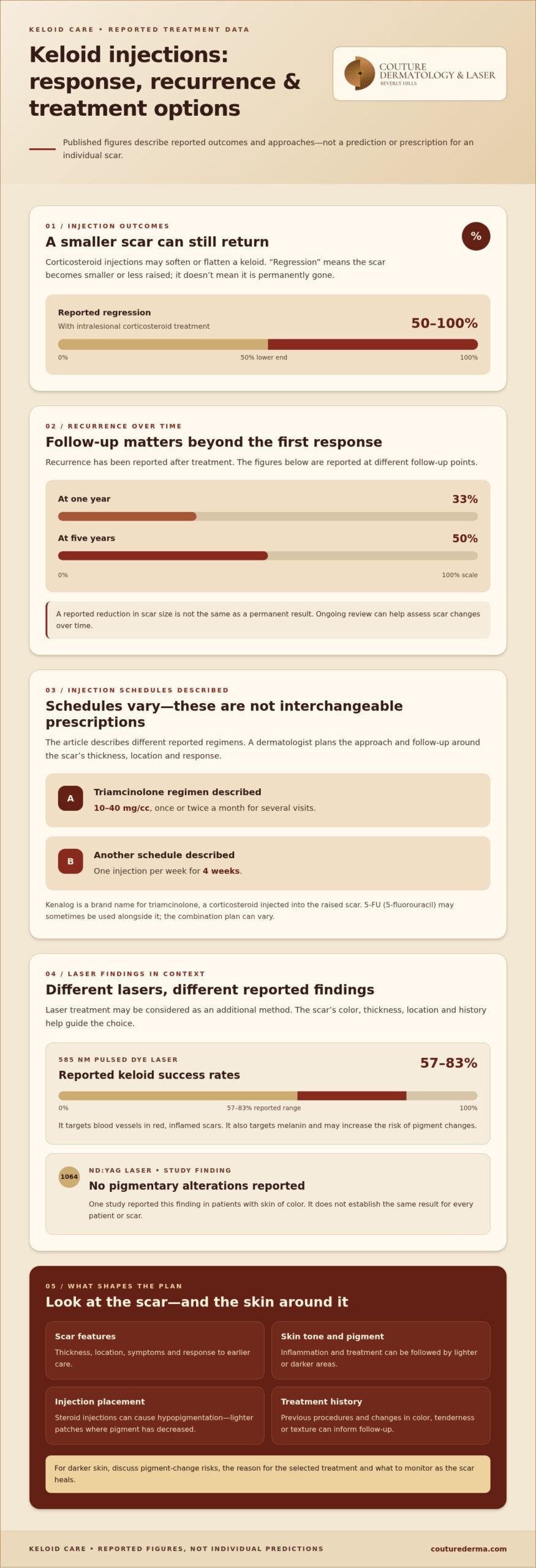
The 585 nm pulsed dye laser has reported keloid success rates of 57 to 83 percent, but it targets melanin and can increase pigment-change risk. A study of the 1064 nm Nd:YAG laser reported no pigmentary alterations in patients with skin of color. These findings describe different lasers, not a guarantee for an individual scar.
Laser treatment or microneedling may sometimes be considered as an adjunct, or an additional method rather than the entire plan. For example, a clinician may discuss them when a scar also has pigmentation. The scar’s color, thickness, location, and history help guide the choice.
Treatment Complexity and Recurrence
Keloid care can be complex because a scar may extend beyond the original injury and continue growing after treatment. Depending on the scar and its response, options may include injections, laser treatment, silicone, pressure therapy, or surgery, sometimes in combination.
Surgery alone can be followed by renewed growth, so removal needs a recurrence-prevention strategy. For chest and back keloids, skin tension can make recurrence more likely; a combined approach may include CO2 laser, excision, and pressure therapy. This is why the plan should address both the raised tissue and forces acting on the healing skin.
Before treatment, note when the scar began changing, whether it itches or hurts, and any previous procedures. This history can help distinguish a new response from regrowth and guide what to monitor at follow-up.
Treatment Risks for Dark Skin
For darker skin, treatment planning should consider the possibility of pigment becoming lighter or darker after inflammation. Steroid injections can cause hypopigmentation, or lighter patches where pigment has decreased. Dose and placement matter, so discuss how the injection approach will be tailored to the scar.
Laser risks also vary by device: the 585 nm pulsed dye laser targets melanin and carries increased risk of pigmentary changes. The 1064 nm Nd:YAG finding offers a different data point, but one study does not establish the same result for every patient. Ask which laser is being considered and why it fits your scar.
Radiation may be used after surgery in some keloid treatment plans, but it requires a separate discussion of risks and benefits. Clarify its role, possible effects, and how follow-up will track scar growth and pigment. A dermatologist experienced in treating Black skin can help weigh these considerations alongside the keloid’s location and treatment history.
Corticosteroid injections
Corticosteroid injections deliver medicine directly into a raised scar to reduce inflammation and excess collagen, the protein that gives scar tissue structure. The injection choice and schedule depend on the keloid’s thickness, symptoms, and response to treatment.
Corticosteroid Injection Options
Kenalog is a brand name for triamcinolone, a corticosteroid injected into the scar. It can reduce inflammation and collagen overproduction, which may soften or flatten a keloid and ease itching or burning. The medicine is placed within the raised tissue, not into unaffected skin.
Published treatment schedules differ. One described regimen uses triamcinolone at 10-40 mg/cc once or twice a month for several visits; another typical regimen describes one injection per week for 4 weeks. These are reported approaches, not interchangeable prescriptions. The scar’s size, location, and response guide how a dermatologist plans follow-up.
Reported regression with intralesional corticosteroid treatment ranges from 50 to 100 percent. Regression means the scar becomes smaller or less raised; it does not mean the keloid is permanently gone. Recurrence has been reported in 33 percent of cases at one year and 50 percent at five years after treatment. Keep follow-up appointments so changes can be assessed over time.
Combining Kenalog and 5-FU
5-FU, short for 5-fluorouracil, is a medication that can be injected into a keloid, sometimes alongside Kenalog. The combination offers a way to address scar inflammation and overactive tissue growth through two medicines. A dermatologist selects whether to use one medication or both based on the scar and treatment goals.
Combination injections don’t follow one fixed recipe. The injection plan, spacing, and number of visits can vary with the scar’s thickness, location, and response. Tell your dermatologist about previous injections and any changes in color, tenderness, or texture afterward. This information can guide adjustments instead of repeating an approach that hasn’t helped.
Kenalog can cause hypopigmentation, or lighter areas where skin pigment decreases. This matters for darker skin because the contrast may be noticeable. Ask how the injection will be placed within the scar and what color changes to watch for. A clear photo taken before treatment can help you track changes between visits.
At follow-up, I assess both scar height and skin color, not just whether the area feels flatter. If injections are being considered, bring a list of previous treatments and note when itching or burning occurs. These details give the treatment plan a more precise starting point.
Surgical excision and recurrence prevention
Surgical excision removes raised keloid tissue, but removal alone doesn’t control how the healing tissue responds. Preventing recurrence is part of the plan, not an optional afterthought.
Recurrence Following Excision
Recurrence means scar tissue grows again after a surgeon removes the raised portion. Reported recurrence rates after surgical keloid excision range from 45 to 100 percent. The range is wide because results depend on the scar, its location, and the care paired with surgery.
The key distinction is that excision changes the visible tissue, but the healing wound can still form excess scar tissue. Standard removal may even be followed by a larger growth. Before considering surgery, discuss care after the incision closes and how follow-up will monitor renewed thickening.
Location matters. Chest and back scars are exposed to skin tension, which can contribute to recurrent growth. A keloid on the earlobe has a different prevention option: surgery followed by a pressure dressing, earring, or garment has been reported as 90–100% effective in preventing return.
Preventing Return After Removal
Recurrence prevention pairs excision with care intended to influence healing. Options may include pressure, silicone sheeting, steroid injections, or radiation after surgery. The right combination depends on the keloid’s location and history, not removal alone.
For an earlobe keloid, pressure devices may need to be worn for up to 16 hours a day for 6–12 months. That commitment can shape the decision to have surgery, so discuss device fit, daily wear, and follow-up before the procedure. A pressure earring or garment is part of the aftercare plan, not a substitute for it.
Radiation after excision has been associated with recurrence rates dropping to 22 percent. It is one option among several, and its role should be weighed alongside the scar’s location, past treatment, and healing needs. Ask how the proposed plan addresses both regrowth and changes in the surrounding skin.
For large or recurrent scars, a combined approach may include excision followed by radiation therapy or silicone-based wound care. Chest and back keloids may need a plan that addresses tension, such as pressure therapy alongside other measures. The goal isn’t simply to remove tissue, but to support healing while limiting the chance of another raised scar.
Before deciding, note where the keloid has returned, which procedures it has had, and how it changed afterward. Bring this history to your surgical discussion. It can help clarify whether excision fits the scar’s pattern and which recurrence-prevention steps should accompany it.
How common are keloids on black skin, and what causes them?
Keloids can follow everyday skin injuries, not just major operations. Their formation involves excess collagen, the protein that helps build scar tissue.
Skin Injuries That Trigger Keloids
Acne, piercings, surgery, burns, and minor cuts can all precede keloids. Even a small injury can heal with raised tissue that grows beyond the original wound. If a scar keeps enlarging after the skin has closed, discuss the change at a dermatology consultation.
Timing offers another clue. A keloid’s first sign usually appears 3–12 months after an injury, so a scar may begin changing well after a piercing or incision seems healed. Keep a simple record of when the injury occurred and when thickening, itching, or color changes first appeared.
Risk also varies by location. Keloids often form on the ears, shoulders, chest, and face, where acne, piercings, or surgical incisions can leave visible marks. If you’re prone to raised scars, tell your clinician before an elective piercing or procedure and discuss ways to limit avoidable skin trauma.
Keloid Causes and Symptoms
Keloids form when the body produces excess scar tissue during wound healing. Fibroblasts, the cells that build connective tissue, can remain active and produce too much collagen. The tissue may become firm, raised, and larger than the original injury instead of settling into a flat mark.
Keloids are more likely in people between 10 and 30 years old, although age alone doesn’t determine whether one will form. Family history is another useful clue: about one-third of people who develop keloids have a first-degree blood relative with keloid scarring. Mention that history at a consultation, even if your own scar followed a small cut.
Symptoms can include persistent itching, tenderness, sensitivity to touch, or throbbing pain. On darker skin, a thick scar may appear brown, dark brown, or purplish as it changes. Track discomfort as well as appearance. Photos can help show whether the area is growing between visits.
A raised scar isn’t automatically a keloid. Hypertrophic scars stay within the original wound’s boundaries and often improve over time, while keloids extend beyond them. Bring the injury timeline, family history, and symptom changes to an appointment to help clarify the diagnosis and which treatment options fit the scar.
Choosing a dermatologist experienced with Black skin
For keloid care, look for a dermatologist experienced in managing keloids and treating Black skin. This experience matters because assessment includes scar growth, symptoms, and potential pigment changes. A keloid scar specialist for African American skin in California should explain how skin tone may inform decisions about injections, lasers, or surgery, rather than treating every raised scar the same way.
What should relevant experience include?
During a consultation, expect the dermatologist to ask where the scar began, how it changed, and whether itching or pain affects you. This information helps distinguish a keloid from another raised scar and informs treatment options. Ask how the plan accounts for pigment changes, since steroid injections can cause lighter patches and some lasers carry pigment risks.
Relevant experience includes explaining the reason for each proposed approach. If surgery is discussed, ask how the plan addresses possible recurrence after removal. If injections or laser therapy are suggested, ask how progress will be assessed and which texture or color changes warrant follow-up. Clear answers help you understand the process before choosing a treatment.
How can you assess the consultation?
Bring a brief timeline noting the original injury, when the scar started growing, previous procedures, and changes in color or symptoms. A photo from an earlier stage can help show its progression. Mention relatives with keloids, too. This history gives the dermatologist useful context for discussing your scarring pattern and possible next steps.
Notice whether the conversation addresses both comfort and appearance. Itching or tenderness deserves attention alongside cosmetic goals, and your concerns should shape the discussion. A keloid scar specialist for African American skin in California should explain how your scar history, skin tone, and priorities inform the proposed approach, including follow-up.
African Americans make up about 3% of the U.S. dermatology workforce. That statistic doesn’t determine any individual dermatologist’s skill; relevant experience and clear communication matter. Before an appointment, write down your main concern and the questions you want answered. Use the visit to discuss diagnosis, treatment choices, pigment risks, and follow-up. If you’re ready to talk through your concerns, book an appointment.
Couture Dermatology & Laser Beverly Hills: Laser Skin Resurfacing
Couture Dermatology & Laser in Beverly Hills offers laser skin resurfacing and laser treatment for selected skin concerns. If you’re considering a laser for a keloid, an evaluation can help determine whether it suits the scar’s appearance, location, and treatment history. Laser care may be one part of a broader plan, rather than a replacement for approaches such as injections or recurrence-prevention care.
In my practice, I consider how a proposed laser may affect scar texture and pigment, especially in darker skin. The right approach depends on the specific scar and its response to previous treatment. If your main concern is a growing, itchy, or painful keloid, start with a medical assessment before pursuing resurfacing for appearance alone.
For information about care, visit couturederma.com.
Move Forward With a Clear Care Goal
Your appointment can be more useful when you arrive with one clear priority. Decide whether you most want to address discomfort, changes in appearance, or concern about future growth. Write down what you hope will feel or look different, so the conversation starts with what matters to you.
Choosing a keloid scar specialist for African American skin in California also means finding someone who listens and explains the reasoning behind each recommendation. Bring questions about expected changes, possible pigment effects, and how progress will be reviewed. You should leave with a clearer understanding of the proposed approach and next steps.
It’s reasonable to take time to consider your options. Your goals can guide a thoughtful discussion, even if you’re still deciding whether to begin care. If you’re ready to continue the conversation, connect with Couture Dermatology & Laser Beverly Hills. A considered next step can help you feel more informed and in control.
Frequently Asked Questions
What Are Keloid Scars?
Keloids are benign, non-cancerous growths made of excess scar tissue, and they aren’t contagious. They differ from ordinary scars because they can keep changing after the original wound has healed. A dermatologist can assess a raised mark’s borders, texture, and history to distinguish a keloid from another type of scar. This distinction matters because the two may call for different care.
What do keloids look like?
Keloids often appear as firm, raised growths with a smooth or shiny surface. Their shape may initially follow the injury, then become broader or uneven as the scar grows. For example, an earlobe piercing may leave a rounded lump around the piercing site. Take a photo if you notice a change, so you can compare its appearance at a later appointment.
Are keloids symptoms of a more serious condition?
Keloids are benign and aren’t cancerous, so their presence alone doesn’t mean you have a more serious disease. They can still cause persistent itching, tenderness, or throbbing discomfort that deserves attention. If a spot changes quickly, bleeds, or looks unlike your usual scar, arrange a medical assessment rather than assuming it’s a keloid. A clinician can examine it and recommend an appropriate next step.
Can keloids flatten naturally?
A keloid’s appearance can change over time, but whether it will flatten without treatment is uncertain. A 2014 study found spontaneous flattening in approximately one-third of cases. While observing a stable scar, note any increase in size, new discomfort, or changes in the surrounding skin. If it keeps growing or bothers you, a dermatologist can discuss whether monitoring or treatment makes sense.
Do They Look Different on Darker Skin?
They can. On darker skin, a keloid may appear brown, deep brown, or purple, and its color can shift as the scar changes. The raised shape and surface may be easier to notice than redness. If you’re tracking a mark, take photos in consistent lighting and include nearby unaffected skin. This can make changes in color and size easier to describe during an appointment.
How can people prevent keloids?
Prevention focuses on reducing avoidable skin injury and caring for wounds while they heal. If you’re prone to keloids, consider avoiding elective piercings or tattoos, and don’t pick or irritate a healing area. Keep a wound clean and moisturized, and seek care for acne early to reduce the chance of lasting scars. Protect healing skin from sun exposure; apply sunscreen 15 minutes before going outside.
What increases the risk of developing keloids?
A personal history of keloids and close relatives with keloid scars can indicate a higher tendency to form them. Skin injuries in areas under tension, such as the chest or shoulders, can also be relevant. Before a planned procedure or piercing, tell the clinician if you’ve developed raised scars before. That history can inform a discussion about avoiding unnecessary injury and monitoring the healing site.
Which populations are at higher risk?
Keloids are more common among people of African, Asian, and Hispanic descent, and they often first develop in younger people. Risk is higher in some populations, but ancestry doesn’t mean someone will develop a keloid. Family history or a previous raised scar can add useful context. If you’re concerned about a new mark, describe your history and when it began changing at a dermatology visit.