
Atopic
Dermatitis
Atopic dermatitis is not simply sensitive skin that needs a better moisturizer. It is a chronic inflammatory disease driven by a defective skin barrier and a dysregulated immune response — the two must be addressed together. At Couture Dermatology and Laser, we build a long-term, stepwise management plan that controls flares, reduces itch, and repairs the barrier so your skin can hold its own between visits.
plus immune control
stepwise therapy
Dermatologist
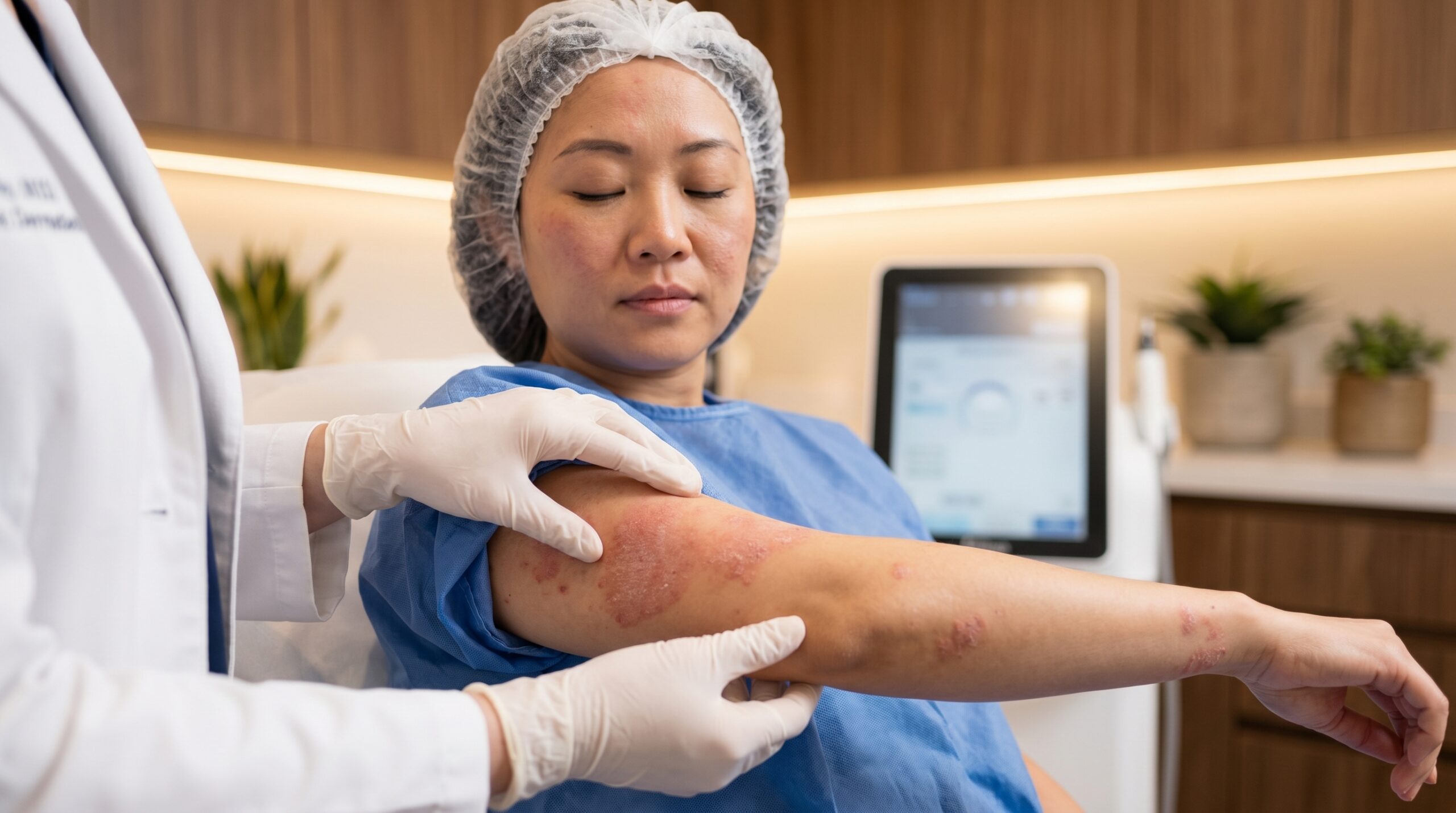
"Atopic dermatitis is a disease of the barrier and the immune system. Treating just one side of that equation leaves the other still firing."
Two Mechanisms.
One Disease.
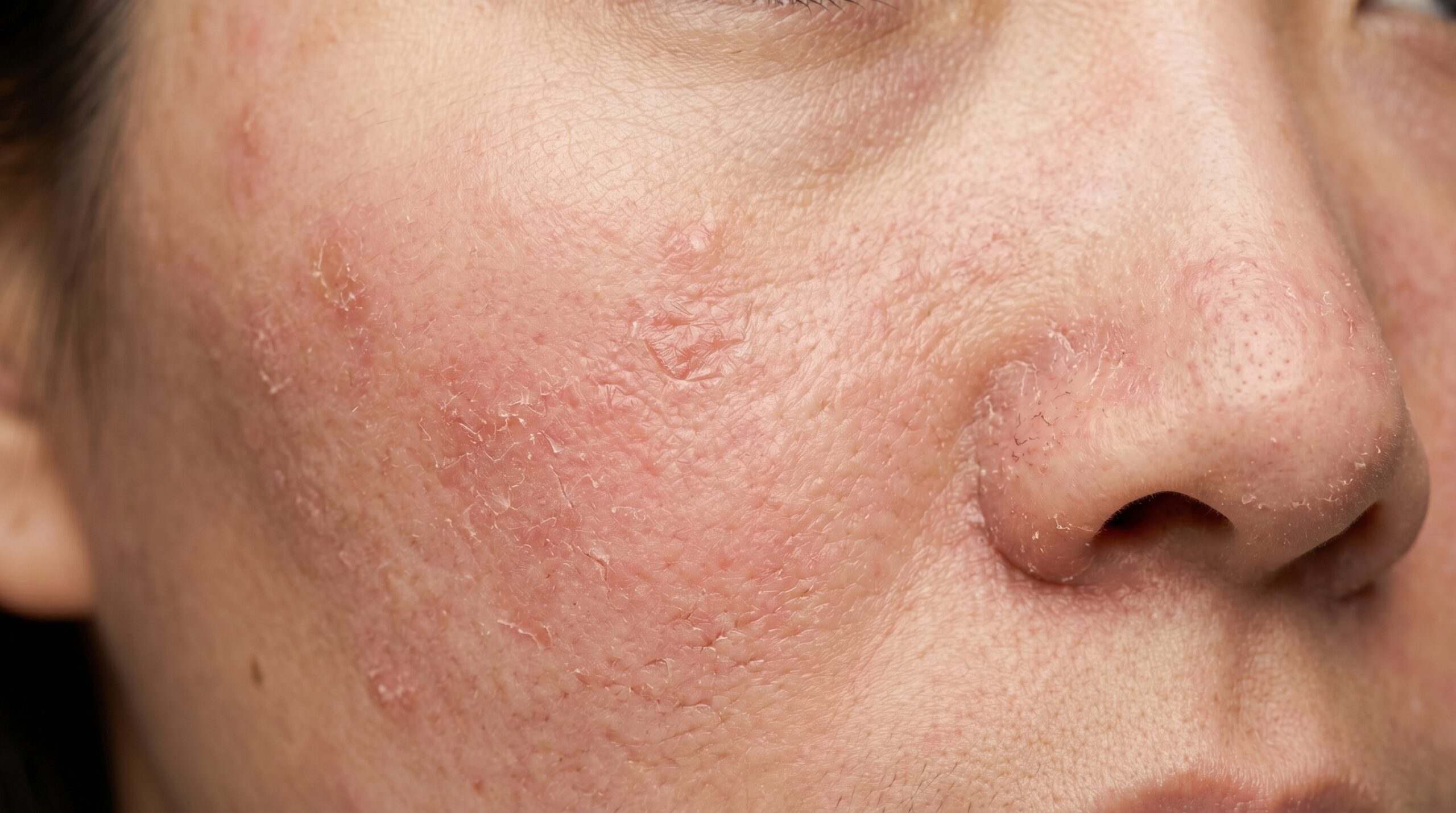
Atopic dermatitis begins with a skin barrier that cannot do its job. Mutations or reduced expression of filaggrin — a structural protein that holds the outer skin layer together — allow water to escape and environmental irritants and allergens to enter. The immune system responds with a type-2 inflammatory cascade, driven by cytokines IL-4 and IL-13, producing redness, swelling, and the hallmark intense itch.
That itch is not incidental. Scratching physically disrupts the barrier further, triggering more inflammation and completing the itch–scratch cycle that sustains every flare. In infants, the rash typically appears on the face and scalp; in older children and adults it migrates to the flexural areas — elbow and knee creases, neck, and hands — and can also involve the eyelids and lips.
Atopic dermatitis is the first manifestation of the atopic march: many patients go on to develop asthma and allergic rhinitis. Managing it well early matters beyond skin comfort alone.
From Diagnosis
to Long-Term Control
Atopic dermatitis is managed in a structured, stepwise program. Each phase builds on the last, calibrated to your disease severity and response.
Clinical Assessment
Disease severity, distribution, and morphology are evaluated. Trigger history, skincare products, occupation, and family history are reviewed to build a complete clinical picture.
At every visitBarrier Repair & Trigger Avoidance
A fragrance-free emollient regimen is established and applied within minutes of bathing. Irritants and potential contact allergens are identified; patch testing is ordered when the clinical picture warrants it.
Foundational — ongoingPrescription Topical Therapy
Corticosteroids are prescribed for active flares in appropriate strengths for each body region. Steroid-sparing agents — tacrolimus, pimecrolimus, crisaborole, or topical ruxolitinib — are used for sensitive areas or long-term maintenance.
Adjusted per flare activityAdvanced Therapy if Needed
Patients with inadequate topical response are evaluated for narrowband UVB phototherapy or systemic treatment — typically dupilumab (Dupixent) for moderate-to-severe disease, or oral JAK inhibitors where appropriate.
Moderate-to-severe diseaseThe Clinical
Toolkit
No single prescription addresses every aspect of atopic dermatitis. These four pillars of treatment are combined and adjusted based on disease severity, location, and individual response.
Flare Control & Barrier Support
Topical Corticosteroids
The most established anti-inflammatory tool in atopic dermatitis management. Low to mid-potency steroids are used for the face and skin folds; higher potencies are reserved for thickened lichenified patches on the body. Short, targeted courses protect against the skin-thinning risks of continuous use.
Steroid-Sparing Maintenance
Calcineurin Inhibitors & Newer Topicals
Tacrolimus (Protopic) and pimecrolimus (Elidel) inhibit T-cell activation without causing skin thinning, making them ideal for the face, eyelids, and neck. Crisaborole (Eucrisa) and topical ruxolitinib (Opzelura) offer additional non-steroidal options for mild-to-moderate disease with favorable long-term safety profiles.
Moderate-to-Severe Disease
Dupilumab (Dupixent)
A subcutaneous biologic that blocks the IL-4 and IL-13 receptors central to type-2 inflammation. Dupilumab is among the most effective treatments currently available for moderate-to-severe atopic dermatitis, producing substantial reductions in itch and skin involvement for many patients within weeks. It does not cause systemic immunosuppression.
When Topicals Are Insufficient
Phototherapy (Narrowband UVB)
Narrowband UVB light suppresses the inflammatory cells driving atopic dermatitis in the skin without systemic drug exposure. It is typically delivered two to three times per week for several months and is particularly suitable for patients who prefer to avoid systemic medications or have widespread disease not fully controlled by topicals alone.
The Control Goal.
Life Without the Itch.
Itch Reduced Significantly
Itch is the dominant symptom of atopic dermatitis and the one that most disrupts sleep, work, and daily life. Effective treatment — particularly dupilumab for severe disease — targets the neuroimmune mechanisms driving itch, not just the surface inflammation.
Flare Frequency Cut
A structured maintenance plan — combining daily emollients, trigger avoidance, and proactive topical therapy — reduces how often flares occur and shortens their duration when they do. The goal is months of clear or near-clear skin between active episodes.
Skin Barrier Rebuilt
Daily ceramide-containing emollients and barrier-repair strategies reduce transepidermal water loss over time, making the skin less reactive and less dependent on repeated prescription treatment — a measurable improvement in underlying disease biology.
Sleep and Quality of Life Restored
Nocturnal itch is one of the most disabling aspects of atopic dermatitis. When itch is controlled, sleep follows, and the downstream effects — concentration, mood, and productivity — improve in parallel. This is a core clinical endpoint, not a secondary benefit.
Responsible Long-Term Plan
Atopic dermatitis cannot be cured, but it can be managed well. Treatment is stepped up when disease flares and scaled back during remission. The plan evolves with you — including reassessment as better therapies become available.
"Atopic dermatitis management isn't measured in cleared patches alone — it's measured in nights slept, days worked, and skin that no longer dictates your wardrobe."— Couture Dermatology and Laser
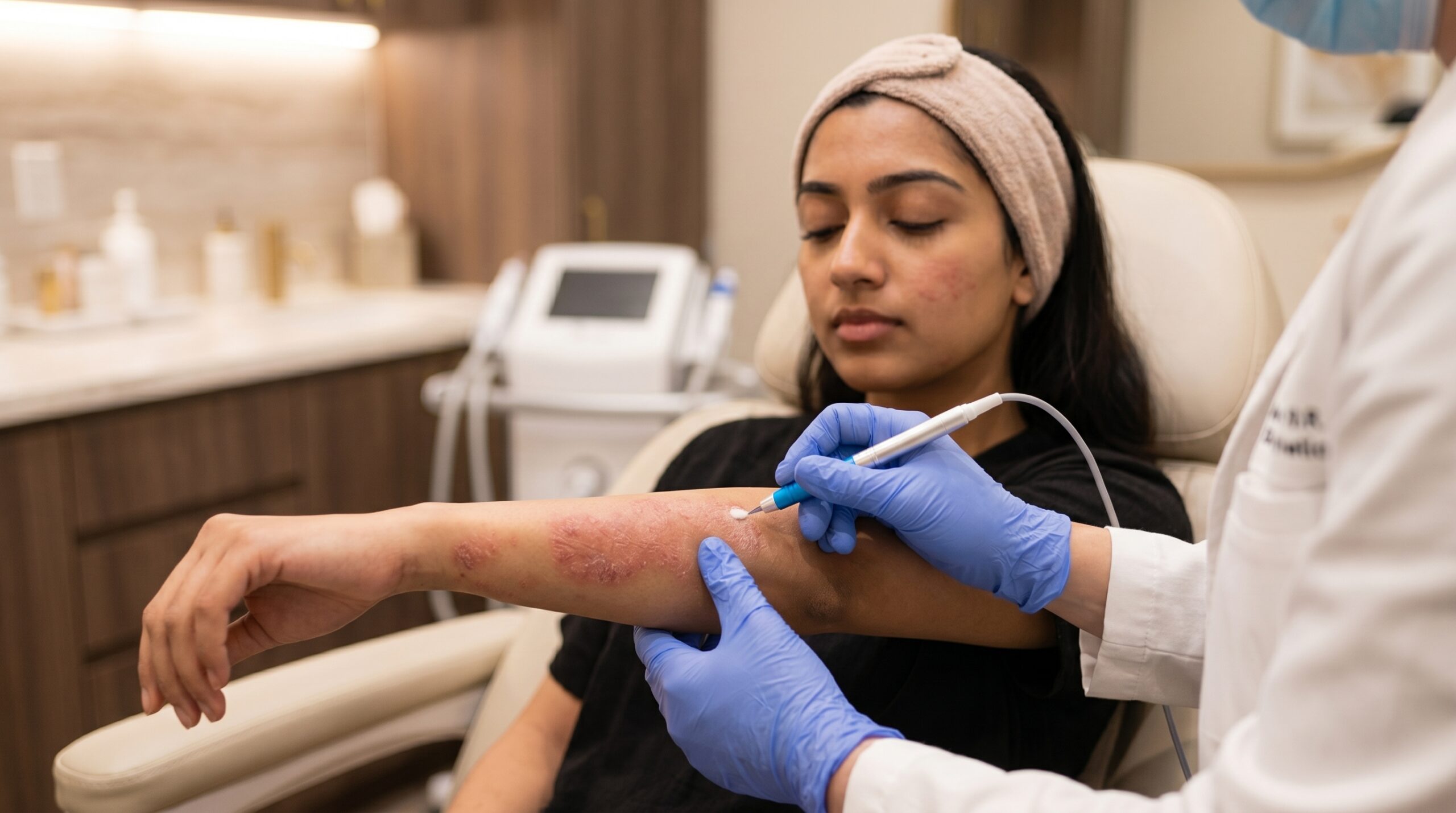
relief with dupilumab
Board-Certified
Every atopic dermatitis management plan is led by Dr. Chinonso Kagha Abisogun, MD, FAAD — a Fellow of the American Academy of Dermatology
Stepwise Precision
Treatment is calibrated by disease severity and stepped up or down based on your clinical response — not a one-size prescription
Trigger Identification
Patch testing, allergen review, and skincare auditing to find and eliminate the factors sustaining your flare cycle
Modern Biologics
Access to dupilumab and newer targeted therapies for patients whose disease exceeds what topicals can manage
Where Atopic Dermatitis
Presents
Distribution shifts across life stages, but atopic dermatitis rarely confines itself to one area. We assess and treat the full extent of your disease.
Elbow & Knee Creases
The classic flexural presentation in older children and adults — dry, thickened, intensely itchy skin in the antecubital and popliteal fossae.
Face & Eyelids
Common in infants and adults alike. Eyelid involvement is particularly challenging; steroid use here requires careful monitoring and non-steroidal alternatives are often preferred.
Neck & Upper Chest
Areas prone to sweat accumulation and friction, both common triggers. Lichenification from chronic scratching is frequently seen in these regions.
Hands & Wrists
Hand eczema in atopic patients is worsened by frequent handwashing, irritant exposure, and occupational factors. Barrier emollients and glove use are key components of management.
Scalp & Behind the Ears
Scalp involvement causes itch, flaking, and discomfort. Medicated shampoos and topical solutions are used alongside standard eczema management.
Widespread or Generalized
Patients with extensive body-surface involvement often require phototherapy or systemic treatment. Disease burden — including sleep loss and psychological impact — is assessed at every visit.
Is This the Right
Care for You?
- Patients with persistent or frequently relapsing eczema that has not been well managed with over-the-counter moisturizers and mild hydrocortisone.
- Adults or children whose atopic dermatitis disrupts sleep, triggers anxiety about skin appearance, or limits physical activities due to itch and discomfort.
- Patients concerned about long-term steroid use who want access to non-steroidal prescription alternatives for sensitive areas like the face and eyelids.
- Those with moderate-to-severe disease who have been told about dupilumab or biologic therapy but want a board-certified dermatologist to evaluate whether it is appropriate for them.
- Patients who suspect contact allergens are contributing to their eczema and want formal patch testing to identify and eliminate specific triggers.
- Anyone managing atopic dermatitis without a structured plan who wants a dermatologist-led, evidence-based approach to flare prevention and long-term skin health.
Setting Realistic Expectations
Atopic dermatitis is a chronic condition. A structured plan can achieve prolonged remission — sometimes many months without a significant flare — but there is currently no treatment that eliminates the underlying genetic predisposition permanently.
The practical goals of treatment are concrete: fewer flares, shorter episodes when they occur, less itch, better sleep, and a prescription regimen you can maintain safely over the long term. Dr. Chinonso will be direct with you about what is achievable for your specific disease pattern.
Often Seen
Alongside…
Atopic dermatitis rarely exists in isolation. These conditions frequently coexist or are confused with it — accurate diagnosis determines whether treatment should be combined or separated.
Contact Dermatitis
Allergic contact dermatitis can coexist with or mimic atopic dermatitis. When a patient's eczema fails to respond as expected, patch testing can identify contact allergens — fragrances, preservatives, nickel — that are perpetuating inflammation independently.
Explore skin rashes →Seborrheic Dermatitis
Seborrheic dermatitis affects the scalp, face, and chest and is sometimes confused with atopic dermatitis. They can co-occur — a condition sometimes called "sebo-atopic" overlap — and each responds to distinct treatments.
Explore seborrheic dermatitis →Psoriasis
Psoriasis and atopic dermatitis are both chronic inflammatory skin diseases but have different immunological drivers and respond to different therapies. Accurate clinical differentiation — and occasionally biopsy — ensures you receive the correct diagnosis and the treatment matched to it.
Explore psoriasis →Rosacea
Facial redness, sensitivity, and a disrupted skin barrier are features of both atopic dermatitis and rosacea. When facial involvement is prominent, distinguishing between the two — or identifying overlap — determines whether treatment targets inflammation, barrier repair, or both.
Explore rosacea →Results That Speak for Themselves
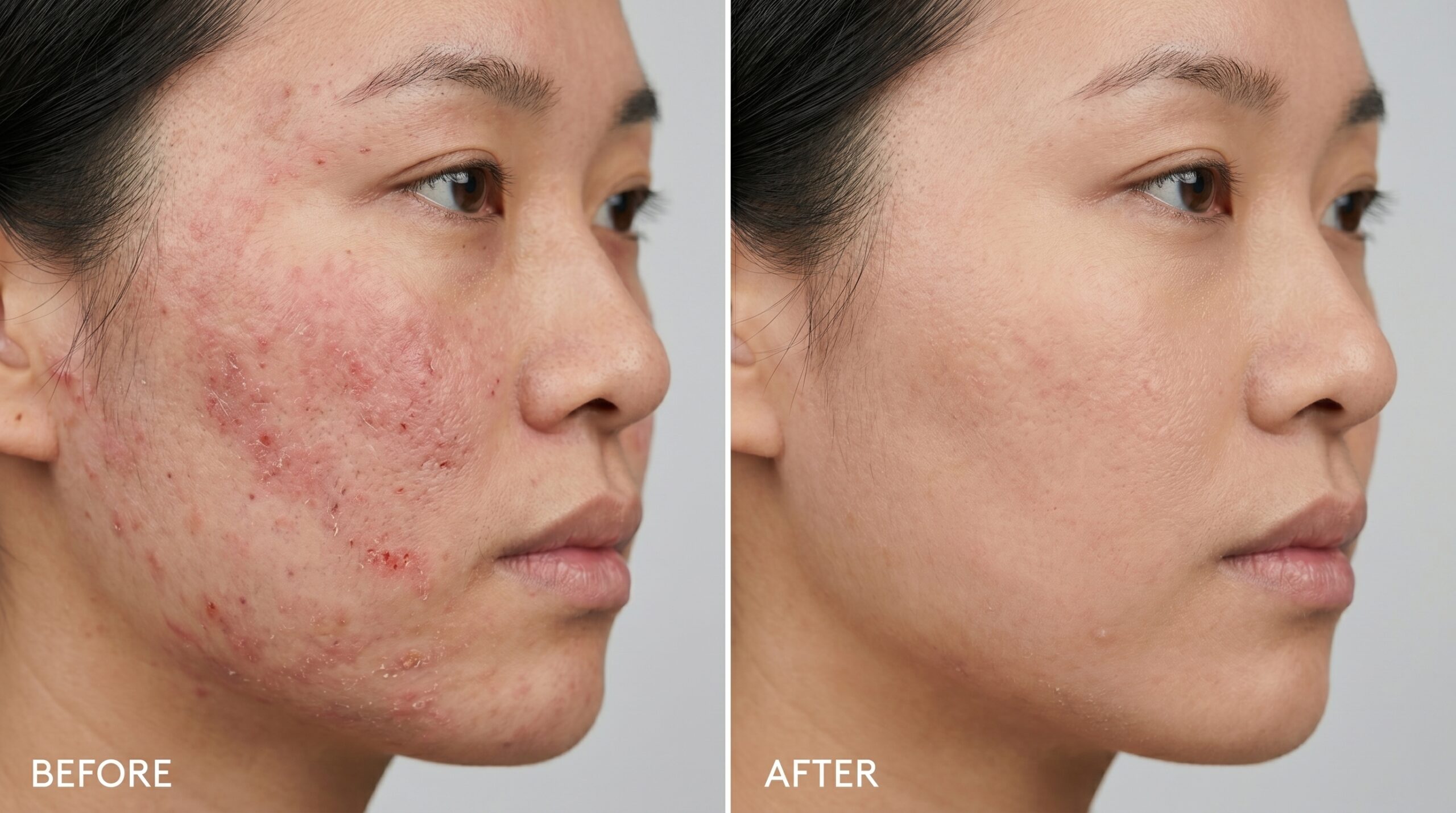
Individual results vary. Atopic dermatitis management is ongoing; the images shown represent responses to a structured, dermatologist-led treatment plan and are not guarantees of outcome.
Controlling Eczema.
One Thoughtful Plan at a Time.
Atopic dermatitis responds to structure. At Couture Dermatology and Laser, Dr. Chinonso builds an individualized management plan that addresses barrier, inflammation, and triggers — then adjusts it with you over time. No prescription is committed before your disease pattern and goals are discussed honestly.
Sat · By Appointment Only
"I had been applying the same over-the-counter cream for years and just living with it. Dr. Chinonso actually looked at my skin, asked about everything I used, and put together a real plan. Three months in, I'm sleeping through the night for the first time in years."
Priya K.
Verified Patient · Beverly Hills
Frequently
Asked Questions
Direct answers to the questions patients most commonly bring to their first atopic dermatitis consultation — on diagnosis, treatment options, dupilumab, and what long-term management actually looks like.
Atopic dermatitis is a chronic inflammatory skin disease driven by two interacting problems: a defective skin barrier (often involving the filaggrin protein) that allows irritants and allergens to penetrate, and an overactive type-2 immune response that triggers intense, relentless itch. Ordinary dry skin lacks this immune component. The itch in atopic dermatitis is a clinical symptom, not a side effect — it drives scratching, which breaks the barrier further and perpetuates the flare cycle.
There is currently no permanent cure for atopic dermatitis. The goal of treatment is long-term control: reducing flare frequency, minimizing itch severity, repairing the skin barrier, and improving sleep and quality of life. Many patients achieve prolonged remission — months or even years without a significant flare — with a well-structured, individualized plan. Some children do outgrow the condition, though it often persists or re-emerges in adulthood.
Dupilumab (Dupixent) is an injectable biologic that blocks the IL-4 and IL-13 signaling pathways central to type-2 inflammation. It is considered for patients with moderate-to-severe atopic dermatitis whose disease is not adequately controlled by topical treatments. Most patients see significant itch reduction and skin clearing within 4 to 16 weeks. Your dermatologist will determine eligibility based on disease severity, prior treatment history, and any relevant medical factors.
Common triggers include wool or synthetic fabrics, harsh soaps and detergents, sweat, low-humidity environments, stress, and certain foods in children with food allergy. When contact allergy is suspected — for example, when a rash pattern is unusual or fails to clear with standard treatment — patch testing can identify specific allergens in skincare products, fragrances, or metals. Your dermatologist will review your environment, products, and history to build a personalized trigger-avoidance plan.
Daily emollient use is the foundation of atopic dermatitis management, not an optional add-on. Thick creams or ointments applied within minutes of bathing seal in moisture and reinforce the compromised skin barrier, reducing the frequency and severity of flares. Consistent emollient use decreases the amount of prescription topical medication needed over time. Fragrance-free, ceramide-containing formulations are generally preferred.
Topical corticosteroids are highly effective for flare control but are typically used in short bursts rather than continuously to minimize the risk of skin thinning, especially on the face or skin folds. Steroid-sparing alternatives — including tacrolimus, pimecrolimus, crisaborole, and topical ruxolitinib — are prescribed for sensitive areas or when long-term maintenance therapy is needed. Your dermatologist will choose the right class and strength for each body area and monitor for any side effects over time.