
Wart
Removal
Warts are benign HPV-driven growths that are stubbornly good at persisting, spreading, and returning. Common, plantar, flat, and periungual warts each behave differently and respond to different treatments. At Couture Dermatology and Laser, we match the right clinical tool to your specific wart type — cryotherapy, cantharidin, immunotherapy, bleomycin, or laser — and manage recurrence as part of the plan from the start.
wart types
needed for clearance
Dermatologist
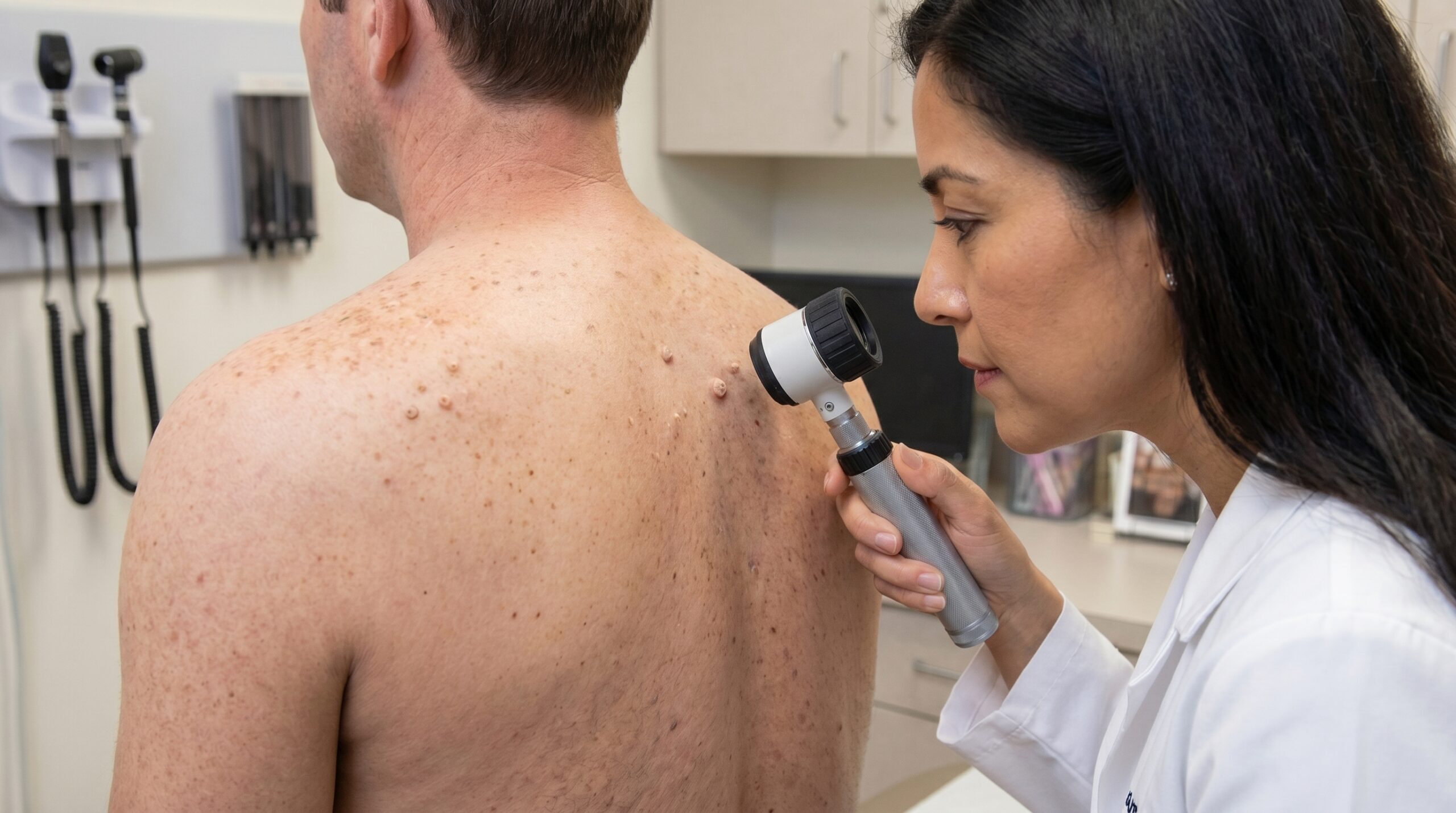
"No treatment kills HPV directly — the goal is to destroy infected tissue and prompt the immune system to finish the job."
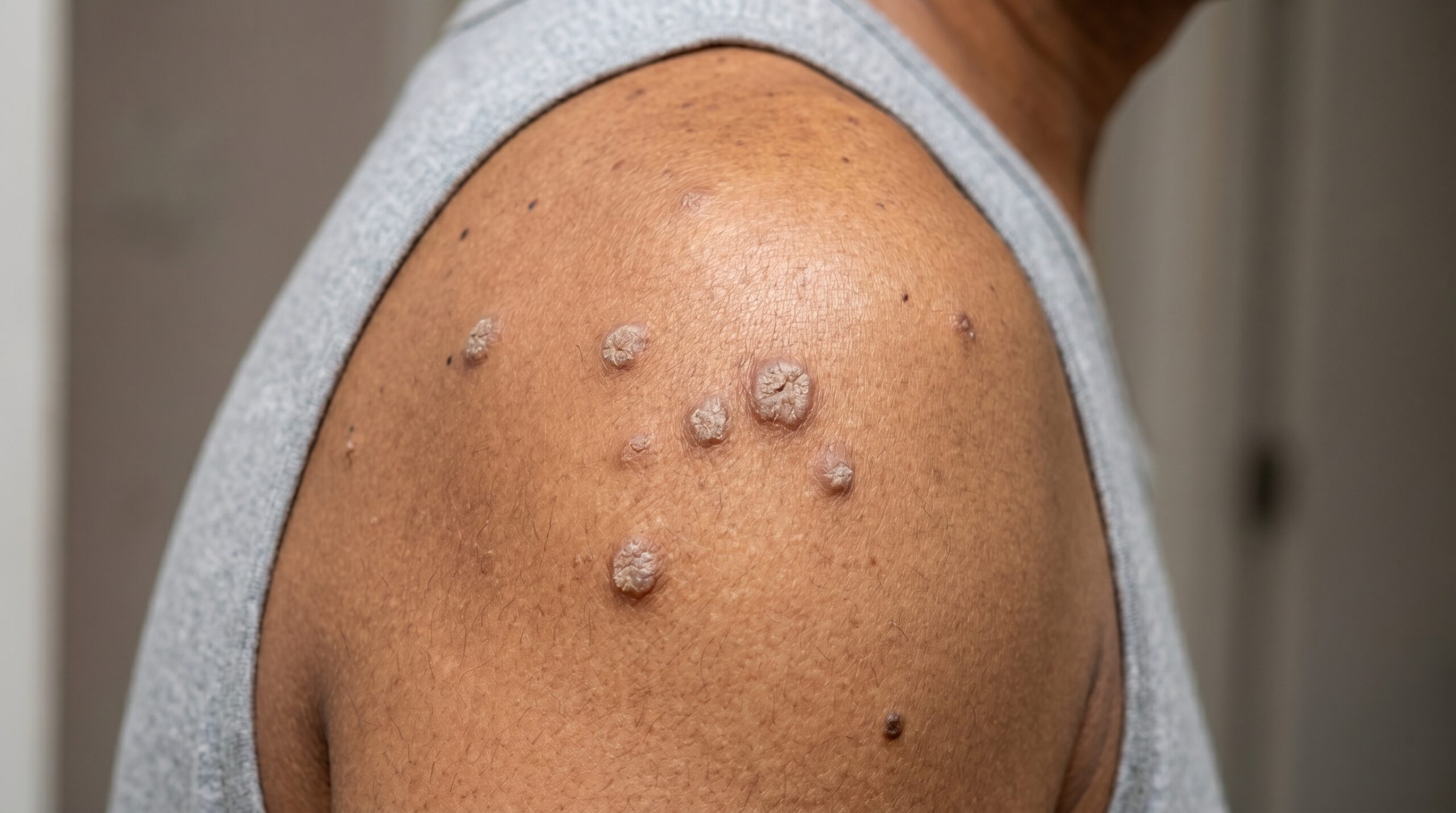
An HPV Infection
of the Skin.
Warts are caused by the human papillomavirus (HPV), which enters through small breaks in the skin — a minor cut, a hangnail, or softened skin from a pool deck. The virus infects cells in the top layer of skin, causing them to proliferate into the rough, raised growths we recognize as warts. They spread by direct contact, shared surfaces, and by autoinoculation — touching one wart and then another site on your own skin.
Many warts will clear on their own as the immune system eventually recognizes the infected cells, but in adults this can take one to two years. That timeline is reasonable for an asymptomatic wart on the hand, but not for a painful plantar wart affecting your gait, a spreading cluster on the fingers, or lesions in cosmetically prominent locations. Treatment is also appropriate whenever warts have simply persisted past a few months with no sign of resolution.
The clinical reality is that no available treatment directly eradicates HPV from the skin. Every approach — from cryotherapy to bleomycin — works by destroying infected tissue, causing an inflammatory response, or stimulating the immune system to clear the virus. That is why recurrence is common and why a series of treatments, rather than a single session, is the norm.
From First Visit
to Clearance
Wart removal is rarely a single-session procedure. A methodical plan — matching treatment to wart type and adjusting if needed — produces the best long-term clearance.
Wart Classification
The dermatologist confirms the diagnosis and classifies the type — common, plantar, flat, filiform, periungual, or genital — since location and morphology dictate the right treatment approach.
Included at every visitModality Selection
First-line treatment is chosen based on wart type, size, location, and prior treatment history. Cryotherapy is often the starting point; cantharidin or combination protocols are selected for resistant lesions.
Customized each visitIn-Office Treatment
Treatment is performed in-office and typically takes under 30 minutes. Cryotherapy is applied in freeze-thaw cycles; cantharidin is painted on and covered; bleomycin is injected directly into the wart tissue.
Under 30 minutesFollow-Up & Reassessment
Return visits every 2 to 4 weeks allow the treated tissue to be assessed and the approach escalated if needed — adding immunotherapy for persistent warts or switching to laser for cases that fail standard measures.
Every 2–4 weeksClinical Tools for
Wart Clearance
Different wart types — and warts at different stages of treatment resistance — call for different tools. These four modalities form the core clinical approach used at Couture Dermatology and Laser.
First-Line Standard
Cryotherapy
Liquid nitrogen is applied to the wart in freeze-thaw cycles, destroying the infected epidermal cells and triggering a local immune response. Multiple sessions spaced 2 to 3 weeks apart are typically required for complete clearance, particularly for plantar and periungual warts which are thicker and deeper.
Painless Application
Cantharidin
A topical blistering agent applied in-office and covered. Over 24 to 48 hours, a blister forms beneath the wart, separating infected tissue from normal skin. The application itself is painless, making it especially well-tolerated in younger patients and useful on the hands and feet. A follow-up debridement appointment removes the blister roof and assesses clearance.
Stimulating Immune Clearance
Immunotherapy
For warts that persist through repeated standard treatment, immunotherapy recruits the body's own immune response. Intralesional Candida antigen is injected into the wart, creating a localized immune reaction that can clear not just the treated lesion but satellite warts elsewhere. Topical imiquimod can supplement this approach between visits.
Resistant & Periungual Warts
Bleomycin & Laser
Intralesional bleomycin is injected directly into treatment-resistant warts — particularly stubborn plantar and periungual lesions — and is highly effective for cases that have failed cryotherapy and cantharidin. Pulsed-dye laser targets the wart's blood supply; CO2 laser ablates the tissue directly. Both are reserved for cases unresponsive to other approaches.
Reasons to Treat
Rather Than Wait.
Plantar Wart Pain Relieved
Plantar warts grow inward under the weight-bearing pressure of the foot. The thrombosed capillaries (the characteristic black dots) sit directly below the walking surface, making every step painful. Treatment relieves that pain and restores normal gait.
Spread Interrupted
Each treated wart is a viral source eliminated. Left untreated, warts spread to adjacent skin through autoinoculation — a single wart on a finger can seed a cluster of periungual lesions within months. Getting ahead of the spread matters.
Stubborn Warts Finally Cleared
Warts that have persisted through over-the-counter salicylic acid and one or two rounds of cryotherapy at another office are not untreatable — they need escalation to cantharidin, bleomycin, or immunotherapy. A board-certified dermatologist has access to that full clinical toolkit.
Cosmetic Lesions Removed
Filiform warts around the lips or face, flat warts on the forehead, and periungual warts around visible nails are cosmetically bothersome and can affect confidence. In-office treatment clears them precisely, without the scarring risk of inappropriate home treatment.
Recurrence Reduced with Immunotherapy
Because no treatment eliminates HPV from the skin, warts can recur after clearance. Immunotherapy — intralesional Candida antigen — helps train the immune system to recognize and suppress the virus, making recurrence less likely than with destructive treatments alone.
"Plantar warts and periungual warts are among the most stubbornly treatment-resistant lesions in dermatology — they require persistence and the right escalation plan."— Couture Dermatology and Laser
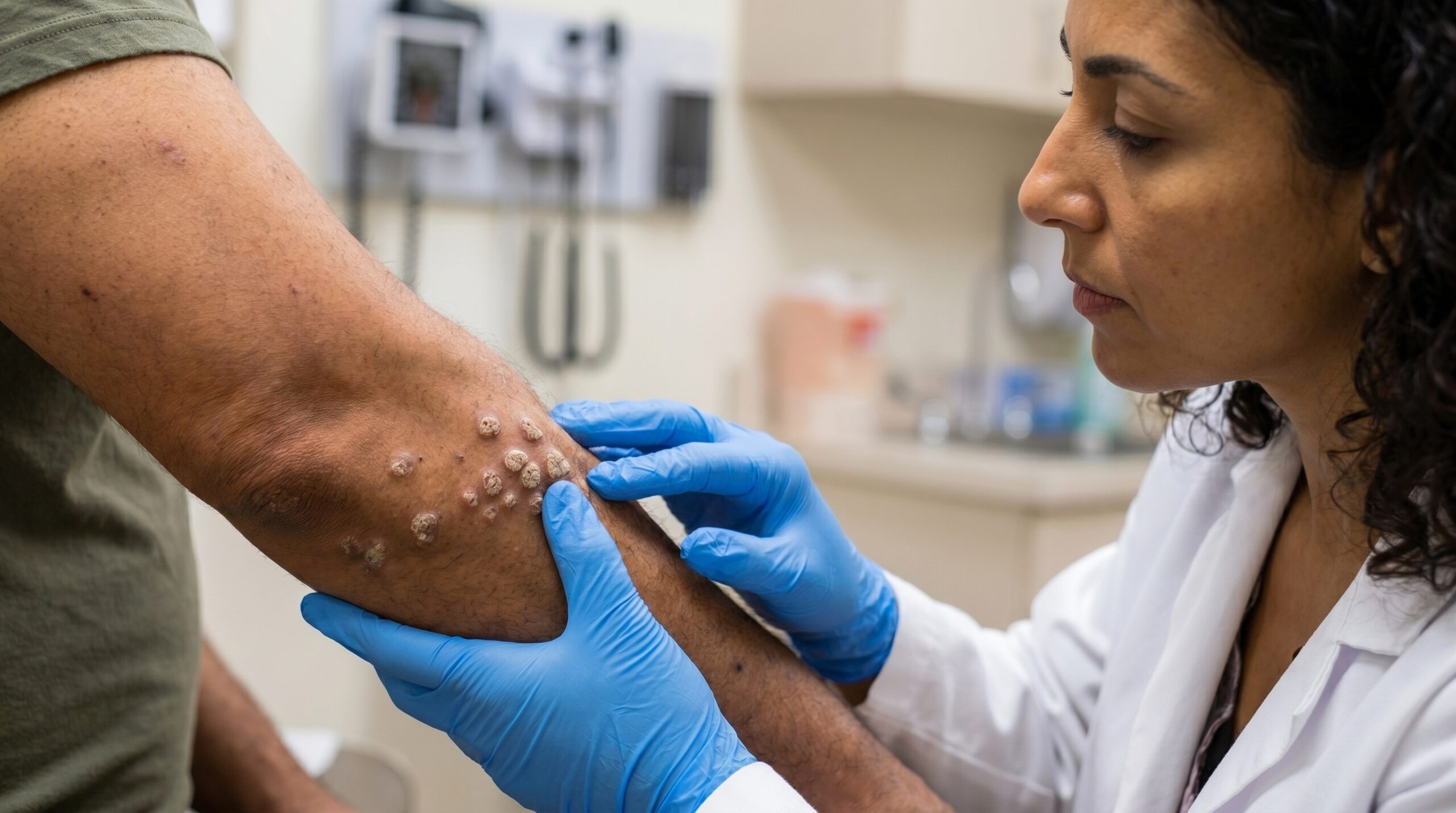
treatment sessions
Board-Certified
Every wart removal program is led by Dr. Chinonso Kagha Abisogun, MD, FAAD — a Fellow of the American Academy of Dermatology
Full Clinical Toolkit
Cryotherapy, cantharidin, Candida immunotherapy, bleomycin, and laser — not just a single modality applied to every patient
Resistant Wart Specialists
Patients with plantar and periungual warts that have failed prior treatment elsewhere frequently achieve clearance with escalated in-office protocols
Honest About Recurrence
HPV cannot be eliminated by any current treatment — we tell patients this plainly and build recurrence management into the plan from day one
Six Types.
One Practice.
HPV produces distinct wart types depending on the skin site and viral strain. Each has its own clinical behavior, treatment challenge, and appropriate management approach.
Common Warts
Verruca vulgaris — rough, dome-shaped growths on the hands and fingers. The most frequently treated type; typically responds well to cryotherapy or cantharidin.
Plantar Warts
Grow inward on the soles under body weight, often painful, identified by thrombosed black capillary dots. Among the most treatment-resistant wart types, often requiring bleomycin or combination protocols.
Flat Warts
Small, smooth, slightly elevated lesions that appear in clusters on the face, forehead, or legs. Typically treated with topical retinoids, gentle cryotherapy, or imiquimod to avoid post-inflammatory pigment.
Filiform Warts
Long, thread-like projections that grow rapidly around the lips, eyes, and nose. Treated with careful cryotherapy or curettage to preserve surrounding facial skin.
Periungual Warts
Grow around and beneath the nails — a notoriously stubborn location. Nail matrix proximity limits aggressive treatment; cantharidin and bleomycin are often preferred over aggressive cryotherapy here.
Genital Warts
Condyloma acuminata caused by low-risk HPV strains. Managed with trichloroacetic acid, imiquimod, or cryotherapy; treatment is handled discretely with full discussion of HPV counseling and vaccination.
Is Wart Treatment
Right for You?
- Adults and adolescents with warts that have persisted for several months or are actively spreading to new sites.
- Patients with plantar warts causing pain with walking, running, or prolonged standing.
- Those with warts that have not responded to over-the-counter salicylic acid products or a previous round of cryotherapy elsewhere.
- Patients with periungual warts affecting nail appearance or causing discomfort around the nail fold.
- People with cosmetically visible warts on the face, fingers, or other prominent areas who want precise, scar-minimizing removal.
- Patients wanting an honest discussion of recurrence risk and a structured plan that goes beyond a single-session approach.
Honest Expectations
Wart removal takes time and often multiple sessions. No single treatment reliably clears every wart on the first application — cryotherapy, the most common approach, has clearance rates well under 100% after a single round. Plantar and periungual warts are the most likely to require three or more sessions or escalation to bleomycin or laser.
Recurrence after treatment is common. Because HPV persists in the surrounding skin even after the visible wart is gone, a new wart can appear in the same area weeks to months later. Immunotherapy approaches help reduce this risk by engaging the immune system rather than relying solely on tissue destruction. We will be direct with you about what is realistic for your specific situation.
Often Seen
Alongside Warts
Warts are one of several contagious or benign skin conditions managed in our medical dermatology practice. These related concerns are frequently treated in the same visit or as part of a broader skin health plan.
Molluscum Contagiosum
Like warts, molluscum is a viral skin infection that spreads by contact. Small, dome-shaped papules with a central dimple are treated with cantharidin, cryotherapy, or curettage — the same clinical toolkit used for warts.
Learn about molluscum →Skin Tags
Often confused with small warts, skin tags (acrochordons) are benign fibrovascular growths at sites of friction. They are not HPV-related but are quickly removed in the same office visit with snip excision or cryotherapy.
Learn about skin tags →Nail Fungus
Periungual warts and onychomycosis (nail fungus) both affect the nail unit and are sometimes present simultaneously. Accurate diagnosis distinguishes the two — nail dystrophy from HPV is managed differently from fungal infection.
Learn about nail fungus →Skin Rashes
Some inflammatory rashes — particularly around the fingers, feet, and face — can mimic or coexist with warts. A dermatologist can differentiate and treat both in the same consultation rather than treating one and missing the other.
Learn about skin rashes →Results That Speak for Themselves
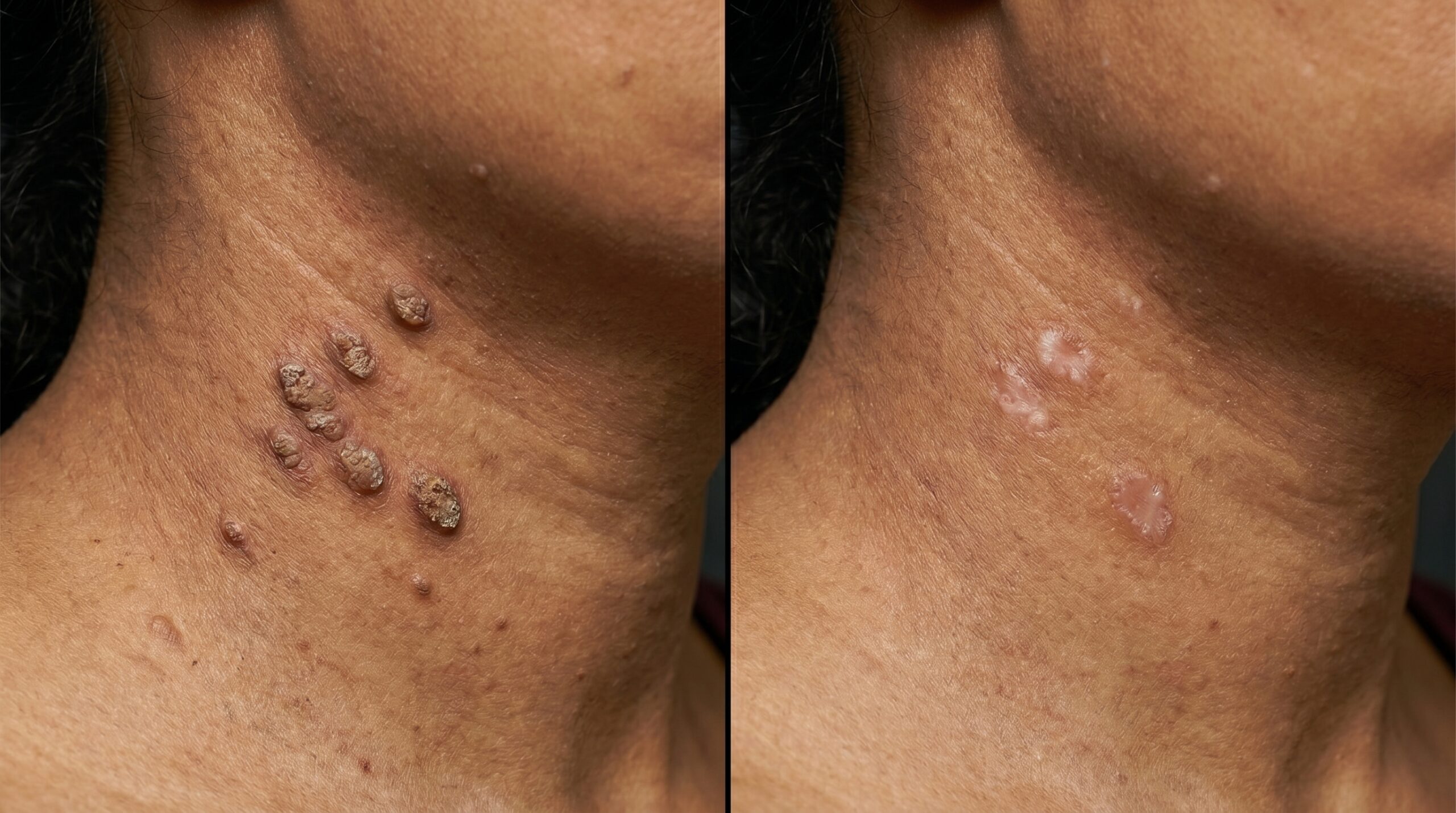
Individual results vary. Complete clearance typically requires a series of treatments spaced 2 to 4 weeks apart. Recurrence is possible after any wart treatment modality.
Clearing Warts.
One Visit at a Time.
Warts respond best to a consistent, correctly sequenced plan — not a single aggressive session. At Couture Dermatology and Laser, Dr. Chinonso classifies each lesion carefully, selects the right first-line treatment, and escalates when the clinical picture calls for it. No treatment is performed until your options and realistic expectations have been discussed fully.
Sat · By Appointment Only
"I had a plantar wart on my foot for over a year — painful with every step. Two other places had tried and failed. After three sessions here with cantharidin and cryotherapy combined, it's completely gone. Dr. Chinonso was honest about what to expect and the results matched exactly."
Marcus T.
Verified Patient · Beverly Hills
Frequently
Asked Questions
Straightforward answers to the questions patients most often ask about wart removal — on recurrence, treatment options, plantar warts, and what to expect from a series of visits.
Some warts do clear spontaneously as the immune system eventually recognizes the HPV-infected cells, but this can take months to years, and is less reliable in adults than in children. Treatment is reasonable for painful plantar warts, spreading lesions, or any wart that has persisted beyond several months.
Recurrence happens because no currently available treatment destroys the HPV virus itself — the goal is to eliminate infected tissue and provoke an immune response. If a small viral reservoir remains in the surrounding skin, regrowth is possible. A series of treatments, and in some cases immunotherapy, addresses this directly.
Most warts require 2 to 6 sessions spaced 2 to 4 weeks apart. Plantar and periungual warts are among the most treatment-resistant lesions in dermatology and may need more aggressive or combination approaches, including bleomycin or laser.
Cantharidin is a blistering agent derived from the blister beetle. The dermatologist applies it in-office and covers the area. A blister forms over 24 to 48 hours, lifting the wart tissue away from normal skin. The application itself is painless, though the blister that follows can be uncomfortable for a day or two.
Yes, notably so. Plantar warts grow inward under the weight-bearing pressure of the foot, making them deeper and frequently more painful than surface warts. The overlying callus must often be pared before treatment. They are among the most stubborn wart types and commonly require repeated cryotherapy, cantharidin, or intralesional bleomycin.
Limiting spread involves avoiding direct contact with warts on your own skin (autoinoculation), keeping affected skin dry, covering warts in shared spaces like gyms and pool decks, and not picking or shaving over wart sites. Getting warts treated promptly while they are small reduces the risk of seeding new sites.