Eczema & Atopic
Dermatitis
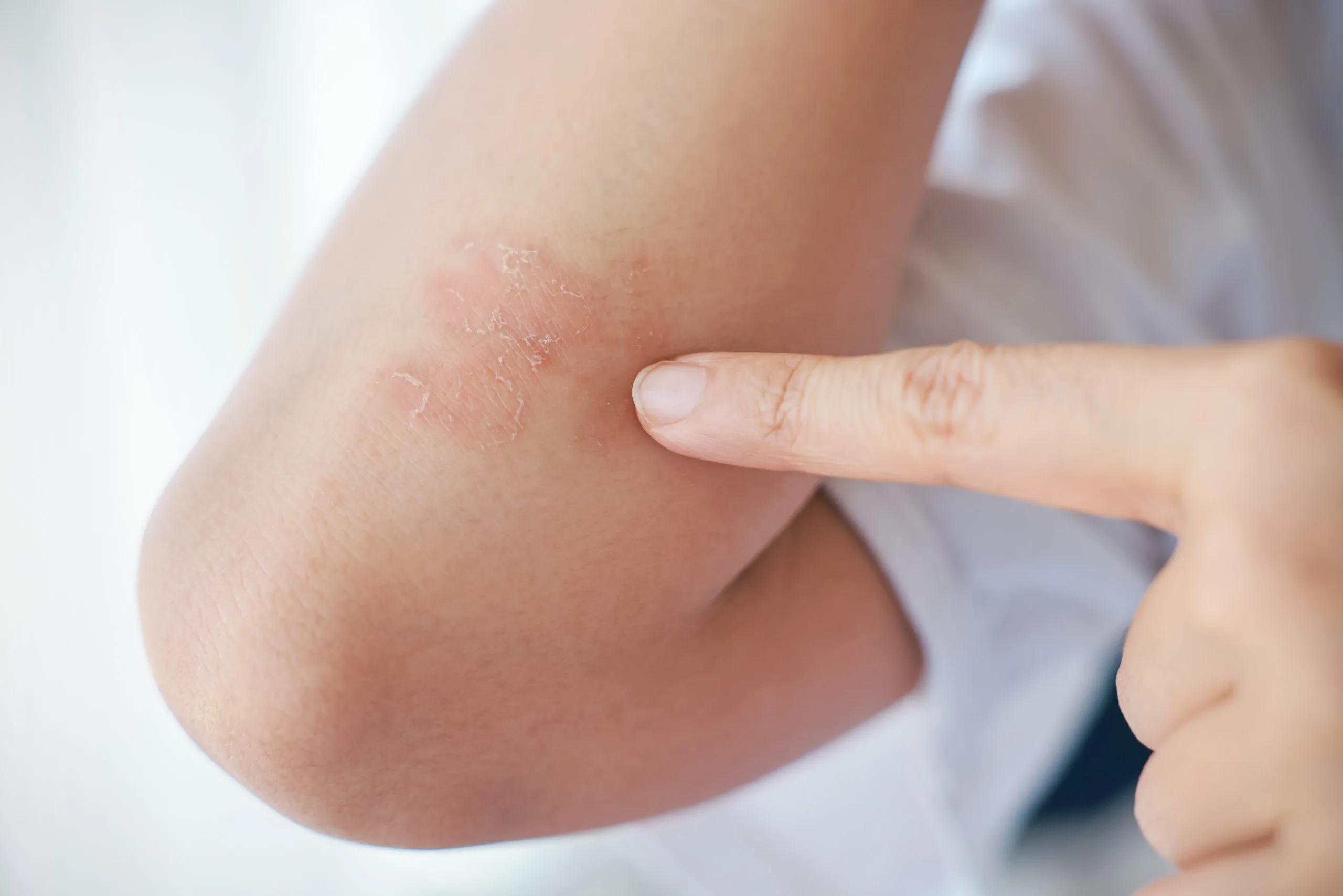
Eczema — specifically atopic dermatitis — is a chronic inflammatory skin condition driven by a defective skin barrier and an overactive immune response, not by poor hygiene or an allergen that simply needs to be avoided. At Couture Dermatology and Laser, eczema management is calibrated to your severity, skin type, and flare pattern — from prescription topicals through to biologic therapy for moderate-to-severe disease.
each treated differently
moderate-severe AD
Dermatologist

"Eczema is not an allergy to be avoided. It is an immune condition that requires clinical management."
A Barrier & Immune Condition.
Not a Sensitivity.
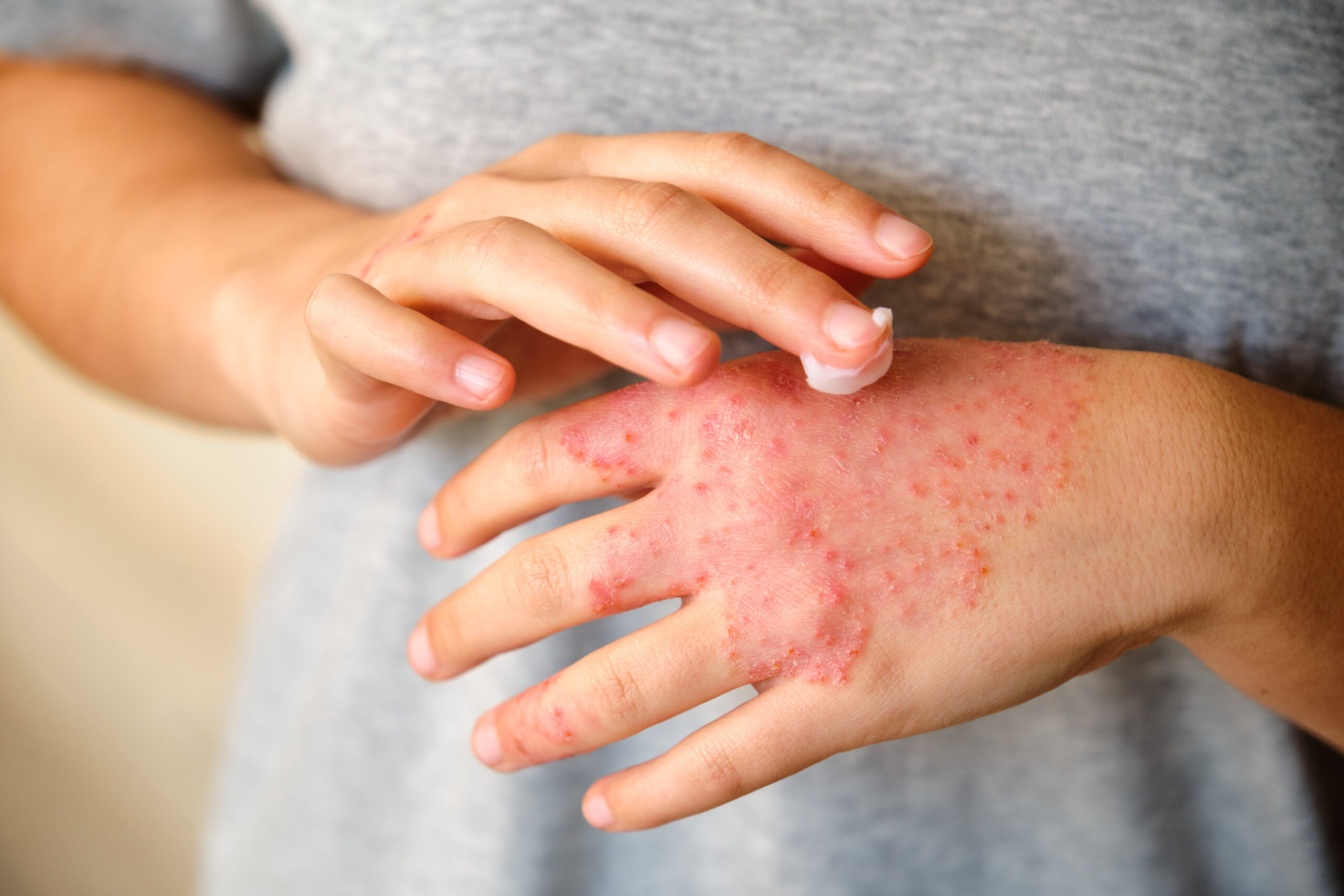
Atopic dermatitis begins with two co-occurring defects: a compromised skin barrier and an overactive Th2 immune response. The skin barrier has insufficient filaggrin — a protein essential for tightness. Without it, the skin loses water rapidly, becomes chronically dry, and allows environmental allergens and bacteria to penetrate.
The immune response is skewed toward Th2 cytokines — principally IL-4, IL-13, and IL-31. IL-4 and IL-13 drive the inflammatory cascade that produces redness, swelling, and weeping. IL-31 acts directly on sensory neurones, producing the intense pruritus (itch). The itch-scratch cycle is neurologically driven, not a habit.
This mechanistic understanding drives modern eczema treatment. Knowing exactly which pathways are overactive explains why targeted biologic therapies produce outcomes that broad immunosuppressants cannot match for safety and durability.
From Diagnosis
to Control
Eczema management begins with a full assessment — not with a prescription pad. Your protocol is built around your specific diagnosis.
Diagnosis
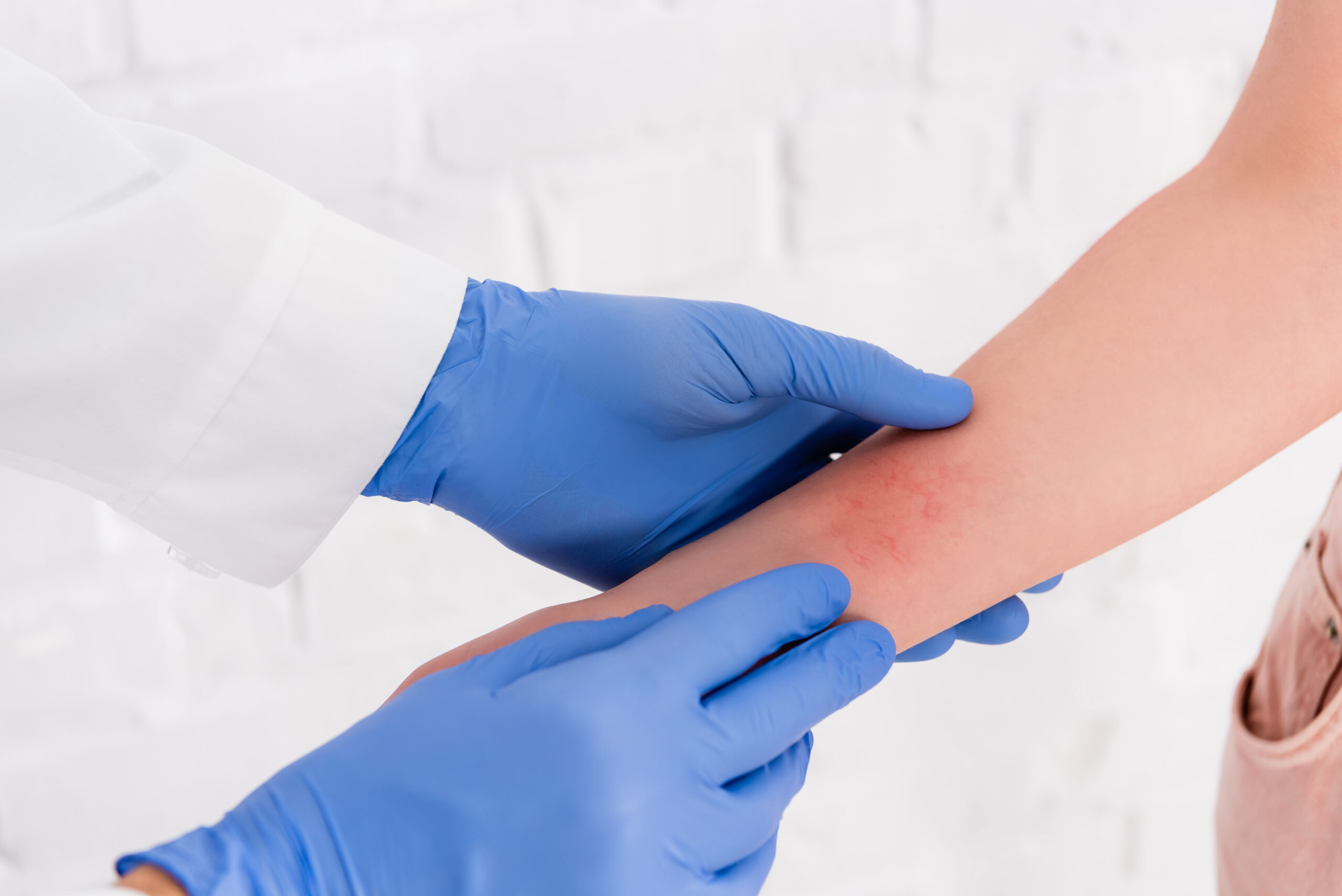
Your dermatologist confirms the eczema type and classifies severity based on body surface area involvement, itch intensity, sleep disruption, and prior treatment response.
Included at every visitTrigger Identification
A personalised avoidance framework is established: specific soaps, fabrics, dust mite reduction, sweat management, and temperature control.
Personalised mapPrescription Treatment
Treatment is selected from the appropriate tier: prescription topicals for mild disease; topical calcineurin inhibitors, dupilumab, or JAK inhibitors for moderate-to-severe disease.
Scaled to severityMonitoring
Eczema management requires follow-up. Response to treatment is assessed at 4–8 weeks. Treatment is adjusted, and step-down is planned when sustained control is achieved.
4–8 week follow-upAdvanced Clinical
Modalities
Modern eczema treatment has progressed enormously — from broad immunosuppression to targeted therapies that address specific immune pathways.
Mild–Moderate & Anti-Inflammatory
Topical Corticosteroids
The first-line treatment for atopic dermatitis flares. They suppress the local inflammatory response, reducing redness, swelling, itch, and weeping. Potency is the most important variable: mild-potency steroids are appropriate only for the face and folds, while moderate-to-high potency is required for the body and limbs.
Moderate & Steroid-Sparing
Calcineurin Inhibitors
Topical calcineurin inhibitors (tacrolimus/pimecrolimus) suppress T-cell activation without the skin thinning associated with prolonged steroid use. This makes them the preferred maintenance treatment for sensitive areas like the face, eyelids, and flexures. Used for proactive maintenance to prevent flares.
Moderate–Severe & Biologic
Dupilumab (Dupixent)
A fully human monoclonal antibody that blocks IL-4 and IL-13 signalling — the two cytokines central to the Th2 immune dysregulation. Dupilumab dramatically reduces skin inflammation and the neurogenic itch signal. It does not broadly suppress the immune system and requires no routine blood monitoring.
Moderate–Severe & Oral
JAK Inhibitors
Oral small-molecule therapies (upadacitinib, abrocitinib) that block the JAK-STAT pathway downstream of multiple cytokine receptors. Their key clinical advantage is speed of onset — meaningful itch reduction is often reported within the first week. Ideal for patients whose primary burden is uncontrolled itch.
Reducing What
Provokes Your Flares.
Skin Irritants
Soaps, detergents, and fragranced products strip the skin's lipid barrier. Switching to fragrance-free, soap-free cleansers is one of the highest-yield trigger modifications.
Insufficient Moisturisation
A defective skin barrier loses water rapidly. Thick creams and ointments applied immediately after bathing deliver essential barrier repair and reduce flare frequency.
Staphylococcus Aureus
Atopic skin is frequently colonised by S. aureus, which directly activates T cells and perpetuates inflammation independent of other triggers. Managed medically.
Aeroallergens
House dust mites and pet dander contact the skin directly and worsen barrier dysfunction. Practical reduction in the sleeping environment is discussed.
Heat, Sweat & Stress
Elevated temperature triggers pruritus through direct neural stimulation, while psychological stress suppresses barrier recovery. Both must be managed.
"Prescription therapy suppresses active eczema. Trigger management reduces the frequency of new flares. Both are required for the best long-term outcome."— Couture Dermatology and Laser
for reassessment
Board-Certified FAAD
Every eczema programme designed by Dr. Chinonso Kagha Abisogun, MD, FAAD — a Fellow of the American Academy of Dermatology
Biologic Prescribing
Dupilumab and JAK inhibitors prescribed and monitored directly in-practice
Paediatric & Adult
Age-appropriate treatment across the full spectrum, from young children to adults
Clinical Outcomes
Evidence-based protocols targeting sustained control for every severity tier of eczema
Presentations We
Address
Eczema presents differently across ages and anatomical sites, each requiring specific topical potencies and clinical strategies.
Atopic Dermatitis
The most common form, characterized by an immune-mediated defective skin barrier, intense itch, and episodic flares.
Facial & Eyelid Eczema
Highly sensitive skin requiring steroid-sparing agents (TCIs) to prevent atrophy while resolving persistent redness and flaking.
Flexural Creases
Inner elbows and behind the knees — the classic presentation in children and adults, prone to lichenification from scratching.
Contact Dermatitis
Triggered by specific irritants or allergens (like fragrance or nickel). Patch testing is utilized for definitive identification.
Dyshidrotic Eczema
Intensely itchy, deep-seated blisters primarily on the palms and sides of the fingers, often exacerbated by stress or moisture.
Seborrhoeic Dermatitis
Scaly, flaky patches focused on sebum-rich areas like the scalp, nasolabial folds, and chest, requiring targeted anti-yeast therapy.
When to See a
Dermatologist for Eczema
- Adults or children with eczema not adequately controlled with over-the-counter treatments or experiencing persistent itch.
- Patients experiencing sleep disruption from nocturnal itch — a marker of moderate-to-severe disease requiring prescription-grade therapy.
- Those prescribed topical steroids repeatedly without achieving sustained remission, indicating the need for steroid-sparing maintenance therapy.
- Patients interested in dupilumab or JAK inhibitor therapy for moderate-to-severe atopic dermatitis, requiring specialist assessment.
- Anyone with eczema who suspects a contact allergen may be contributing, requiring specialist patch testing.
- Parents seeking early intervention for childhood eczema to prevent progression into the "atopic march" (asthma, allergies).
Honest Expectations
Atopic dermatitis cannot be permanently cured. The underlying genetic predisposition — reduced filaggrin expression, Th2 immune skewing — does not resolve with treatment. What does change, substantially, is the level of disease activity.
Modern treatment — particularly dupilumab — can produce skin that is functionally clear, with itch so well-controlled that the condition is no longer a daily burden. The most important prognostic factor is treating the right severity with the right tier of therapy.
Extend the Result
With…
Eczema management is comprehensive. These secondary protocols support your primary treatment plan and address related complications.
Patch Testing
For suspected contact dermatitis, specialised patch testing identifies specific chemical, metal, or fragrance allergens contributing to your skin inflammation.
Explore rash diagnosis →Skin Infection Management
Atopic skin is prone to Staphylococcus colonisation. We provide medical management to clear bacterial or viral superinfections that perpetuate eczema flares.
Explore medical derm →Phototherapy (NB-UVB)
Narrowband UVB phototherapy is utilized for widespread, moderate-to-severe disease that is not responding to topicals, suppressing the immune response safely.
Explore light therapy →Barrier Repair Skincare
Dermatologist-recommended emollient therapy programs are tailored to restore your skin's deficient lipid barrier, acting as the foundation of your ongoing care.
Explore barrier repair →Eczema That Is Finally
Under Control.
If your eczema is not controlled by what you have tried, it is almost certainly a question of whether the treatment matches the severity. Modern dermatology has a treatment option for every tier of atopic dermatitis.
Sat · By Appointment Only
"I had been dealing with eczema flares for over a decade. Dr. Chinonso put me on Dupixent after properly classifying my severity, and within six weeks the itch was gone. I sleep through the night now for the first time in years. This is what real dermatology looks like."
Michael T.
Verified Patient · Beverly Hills
Results That Speak for Themselves
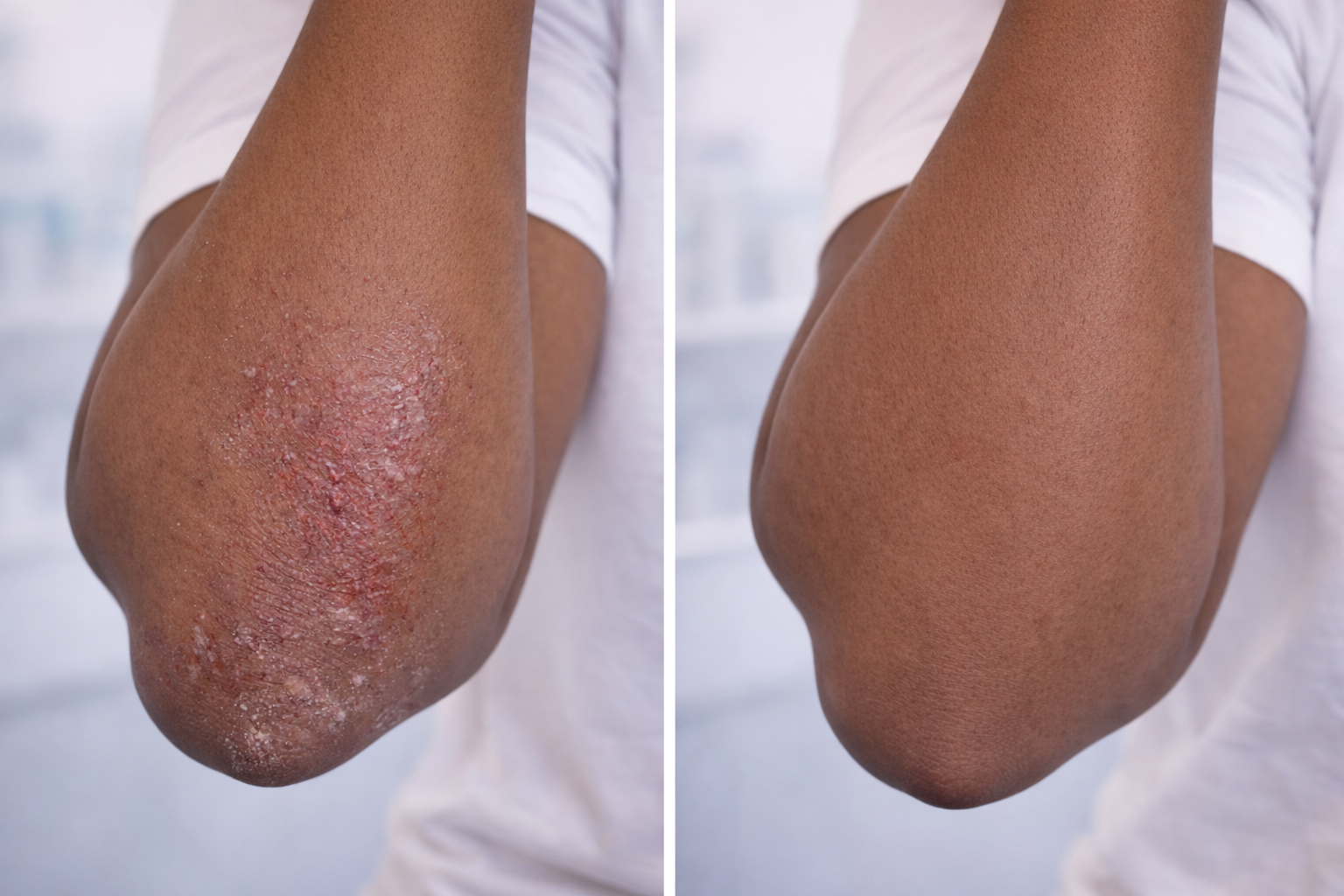
Individual results vary. Images represent outcomes achievable through a personalised treatment programme at Couture Dermatology and Laser.
Frequently
Asked Questions
Direct answers to the questions eczema patients most commonly ask before their consultation — on the condition itself, treatment options, and realistic expectations.
Eczema is a broad umbrella term for several inflammatory skin conditions; atopic dermatitis is the most common and most studied form. When most people say eczema, they mean atopic dermatitis — a chronic, immune-mediated condition driven by a defective skin barrier and Th2-skewed immune response, characterised by intense itch, inflamed skin, and episodic flares.
Eczema (atopic dermatitis) is a chronic condition — it cannot be permanently cured, but it can be very effectively managed. With an appropriate treatment programme — combining prescription topicals, trigger management, and systemic therapy when indicated — the vast majority of patients achieve sustained periods where eczema is not visibly apparent or significantly disruptive. The goal is control, not cure.
Common eczema triggers include dry skin, skin irritants (soaps, detergents, fragranced products), allergens (dust mites, pet dander), environmental factors (cold dry air, sweat), stress, and skin infections (particularly Staphylococcus aureus). Individual trigger profiles vary significantly, and identifying them is an important part of management.
Treatment is calibrated to severity. Mild-to-moderate eczema is managed with prescription topical corticosteroids or topical calcineurin inhibitors. Moderate-to-severe eczema is treated with systemic therapy: dupilumab (an IL-4/IL-13 biologic) or JAK inhibitors (upadacitinib, abrocitinib). Phototherapy is used for extensive disease. All systemic therapies require dermatologist prescribing and monitoring.
Dupilumab (Dupixent) is a biologic that blocks IL-4 and IL-13 signalling — the two cytokines central to atopic dermatitis. It is the first biologic specifically approved for moderate-to-severe atopic dermatitis and has robust long-term safety data. It does not suppress the immune system broadly. Whether it is appropriate for your severity is assessed at consultation.
Yes — and early, effective management in children is important to prevent the progression to asthma or allergic rhinitis. Mild paediatric eczema is managed with consistent moisturisation and mild prescription topical steroids. Dupilumab is approved for children aged 6 months and older with moderate-to-severe atopic dermatitis. Your dermatologist will select age-appropriate therapies.
Related Conditions We Treat