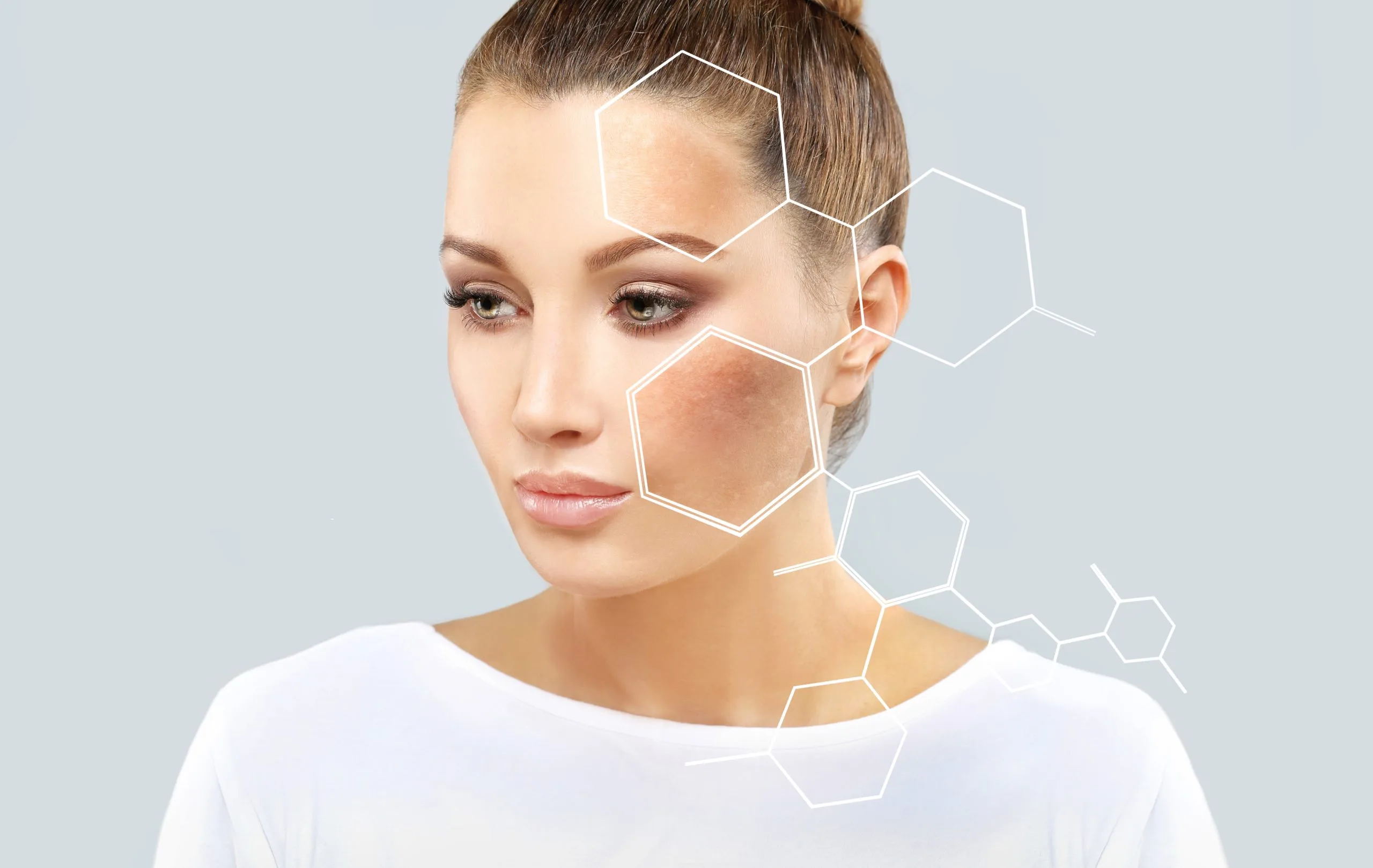
Melasma
Treatment
Melasma is a chronic, hormonally-driven condition — not a surface discolouration that a brightening serum can resolve. At Couture Dermatology and Laser, every melasma programme is designed individually, starting with skin type assessment and a clear-eyed understanding of what clinical management requires to keep pigmentation suppressed.
in typical program
non-negotiable
Dermatologist
"Melasma is not a skin condition you treat once. It is one you manage — and manage well."
A Chronic Condition.
Clinically Managed.
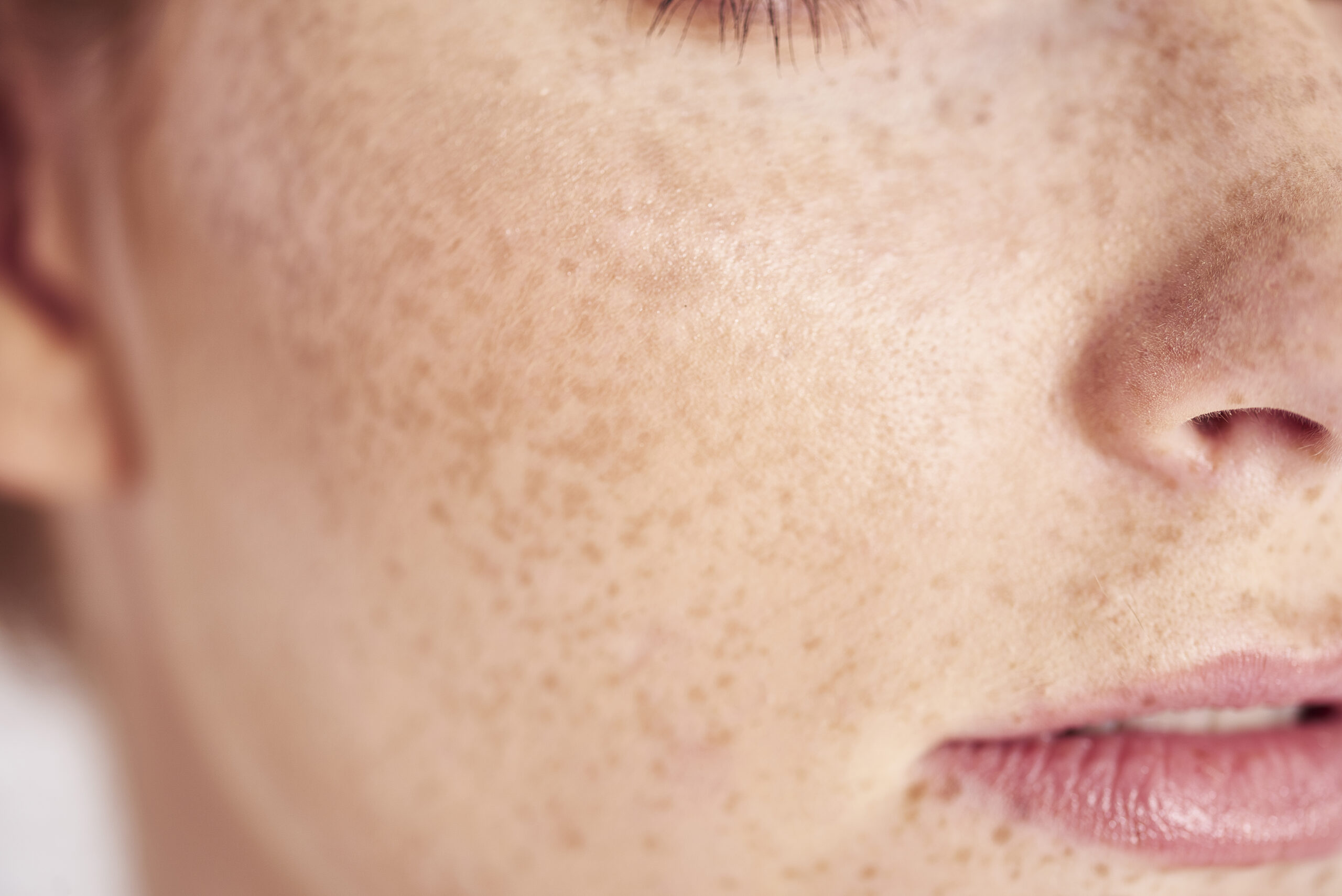
Melasma is a hormonally-driven pigmentation condition characterised by symmetric brown or grey-brown patches — most commonly on the forehead, cheeks, upper lip, temples, and nose. It is triggered by oestrogen and progesterone fluctuations, which overstimulate melanocytes. UV exposure significantly amplifies this effect.
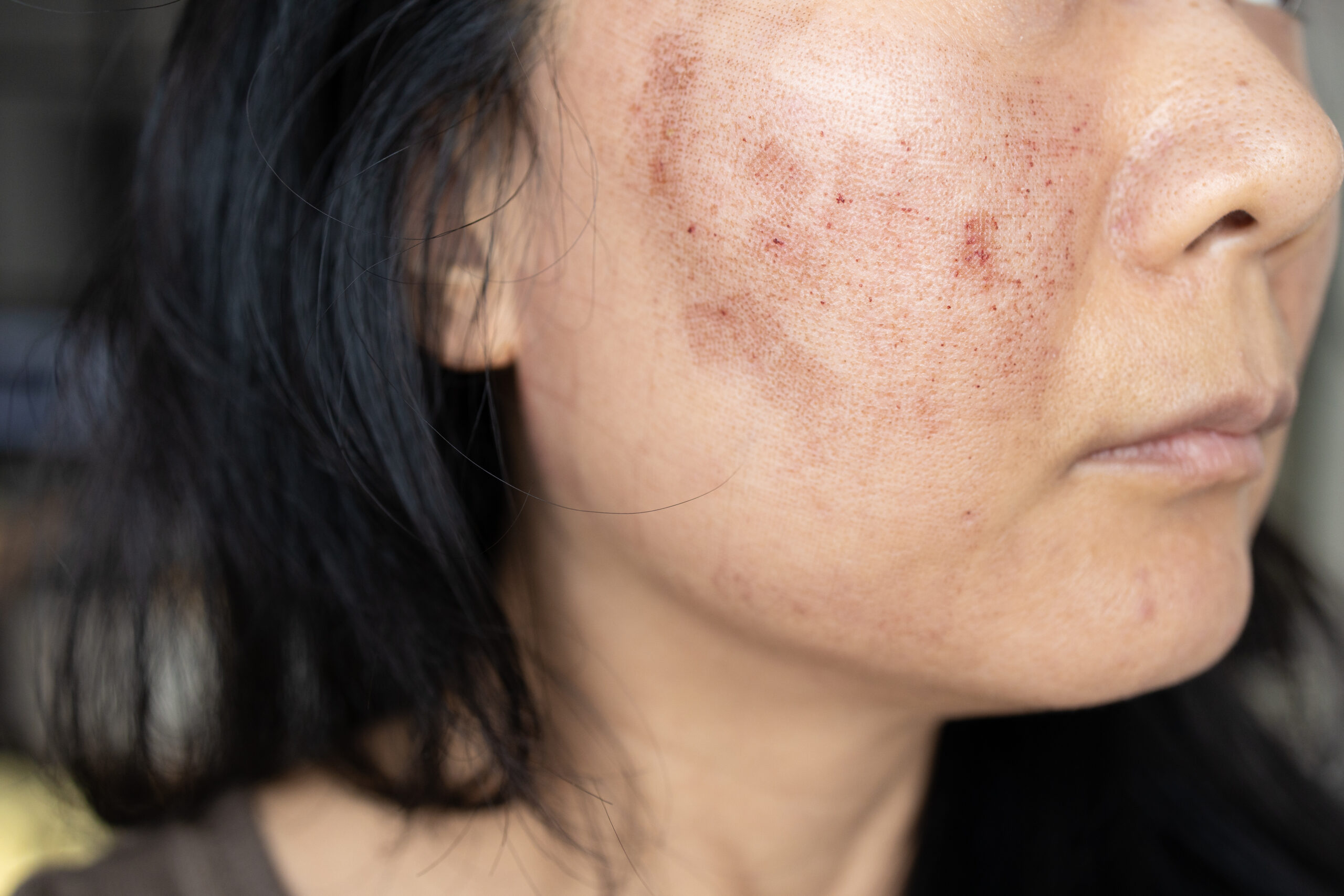
Unlike UV-induced sun spots, melasma has a dermal component in many cases, making it significantly harder to clear. The hormonal stimulus driving it does not simply disappear after treatment. This is why patients treated with aggressive laser settings elsewhere often return with paradoxically darker patches.
At Couture Dermatology and Laser, melasma management begins with an honest conversation about what clinical treatment can achieve — and what it requires from the patient in terms of ongoing commitment to sun protection and maintenance.
How a Melasma Programme
Is Designed
Melasma treatment is a sequenced programme, not a procedure. Every step is designed to maximise results while protecting reactive skin.
Assessment
Your dermatologist evaluates distribution, depth, and hormonal triggers. Fitzpatrick skin type is classified to determine safe laser fluence.
Included at every visitTopical Priming
A prescription topical protocol (e.g., hydroquinone 4%) is applied nightly for 4–6 weeks before laser to suppress melanocyte activity.
4–6 weeks priorClinical Treatment
Conservative laser parameters or chemical peels are applied to avoid triggering hyperpigmentation. Sessions are spaced 4–6 weeks apart.
20–40 min · 3–6 sessionsMaintenance & SPF
Treated areas may darken and shed initially. Strict SPF 50+ is mandatory indefinitely. Prescription maintenance resumes after recovery.
Indefinite SPF 50+ dailyThe Modalities of
Effective Management
Melasma cannot be adequately managed with a single modality. Every effective programme combines all components to address different dimensions of the condition.
Cellular Suppression
Prescription Topicals
Tyrosinase inhibitors suppress melanocyte activity. Hydroquinone 4% is the clinical gold standard. Tranexamic acid interrupts specific melasma signalling pathways, and Azelaic acid provides gentler maintenance. Retinoids accelerate turnover to improve penetration.
Dermal Pigment Clearance
Conservative Laser
Clinical sessions accelerate clearance when delivered with conservative parameters. Q-switched Nd:YAG laser delivers selective energy to melanin with minimal thermal injury, making it the safest choice for melasma across all skin tones.
Epidermal Renewal
Chemical Peels
Superficial to medium-depth chemical peels — glycolic, salicylic, Jessner's, or low-concentration TCA — are preferred for patients with deeper skin tones or melasma where laser carries higher paradoxical pigmentation risk.
Relapse Prevention
Daily SPF 50+
UV radiation is the primary trigger for melasma. A single day of sun exposure can reverse weeks of clinical progress. Broad-spectrum SPF 50+ must be applied every morning without exception. Tinted SPF (iron oxide) provides added protection against visible light.
Why Melasma Needs
A Different Approach.
Melasma vs. UV Spots
Solar lentigines (sun spots) clear predictably in 1-3 sessions. Melasma is hormonally triggered with a dermal component. Treating melasma like a simple sun spot is the most common clinical mistake.
Persistent Stimulus
Post-inflammatory hyperpigmentation fades once the trigger resolves. Melasma has an ongoing hormonal stimulus that requires continuous management, especially if patients remain on oral contraceptives.
Paradoxical Darkening Risk
Melanocytes in melasma are hyperreactive. Aggressive laser thermal injury triggers them to produce more melanin, darkening the patch. Conservative settings and topical priming are absolute requirements.
The Role of Visible Light
Beyond UVA/UVB, high-energy visible (blue) light from screens and the sun also triggers melanogenesis in susceptible patients. Iron oxide-tinted SPF provides critical additional defense.
before clinical laser
Board-Certified FAAD
Every melasma programme is designed and delivered personally by a Fellow of the American Academy of Dermatology.
Mandatory Priming
Topical priming is completed before every session — the step most responsible for preventing paradoxical pigmentation.
Conservative Laser
Skin type confirmed first; fluence and wavelength set conservatively for melasma, never adapted from an age-spot protocol.
Beverly Hills Location
Couture Dermatology and Laser · Beverly Hills, CA 90212 · (310) 444-0946
Common Melasma
Triggers & Zones
Melasma presents symmetrically across specific facial zones and is activated by a distinct set of hormonal and environmental triggers.
Centrofacial Pattern
The most common distribution, affecting the forehead, cheeks, upper lip, nose, and chin symmetrically.
Malar Pattern
Pigmentation concentrated heavily on the cheeks and nose, often requiring targeted Q-switched laser management.
Mandibular Pattern
Appearing along the jawline; less common, but effectively treated with our multimodal chemical peel and topical approach.
Hormonal Contraceptives
Oestrogen and progesterone in birth control pills are significant triggers that maintain melanocyte hyperreactivity.
Pregnancy (Chloasma)
Often called the "mask of pregnancy," triggered by drastic hormonal shifts, which may or may not fade completely postpartum.
UVA / UVB / HEV Light
Unprotected sun exposure or visible screen light aggressively darkens melasma, making daily broad-spectrum SPF essential.
Is Melasma Treatment
Right for You?
- Adults with symmetric brown or grey-brown patches on the forehead, cheeks, or upper lip, suspected to be hormonal in origin.
- Patients whose pigmentation noticeably worsens in summer or after sun exposure.
- Those who have used over-the-counter brightening products without satisfactory improvement and want a prescription-grade programme.
- Patients of any Fitzpatrick skin type — including darker tones — who want melasma managed by a clinician who treats paradoxical risks safely.
- Anyone whose melasma worsened after aggressive laser elsewhere and seeks conservative parameters.
- Patients who are committed to daily SPF 50+ and understand that management is an ongoing programme.
Honest expectations for melasma
Melasma is a chronic condition. Clinical treatment can produce significant and visible improvement — reducing or eliminating the appearance of patches during the programme. But it does not permanently eliminate the underlying melanocyte hyperreactivity.
Patients who stop SPF or resume hormonal triggers without management will typically see recurrence. The goal at Couture Dermatology and Laser is a management programme you understand fully before it begins.
Treatments That Work
Alongside Melasma Management
Melasma management addresses hormonal pigmentation. These treatments address the skin surface and other pigmentation concerns around it.
Hyperpigmentation Correction
A comprehensive programme addressing melasma alongside solar lentigines, PIH, and other discolouration in a coordinated plan.
Explore hyperpigmentation →Age Spot Removal
Where UV-induced spots coexist with melasma, a coordinated programme treats both simultaneously using calibrated settings.
Explore age spot removal →Laser Skin Resurfacing
Fractional laser resurfacing can be sequenced with the melasma programme to address texture, pores, and fine lines.
Explore laser resurfacing →Microneedling
Used alongside melasma treatment to improve skin quality and enhance topical penetration without UV sensitivity risks.
Explore microneedling →Melasma Management
Honest From the Start.
Melasma is commonly overtreated with aggressive laser and undertreated with weak skincare. At Couture Dermatology and Laser, your programme begins with a frank conversation about your Fitzpatrick skin type, pigment depth, and hormonal triggers.
Sat · By Appointment Only
"I had been to three clinics before Couture. Each one lasered my melasma aggressively and it came back darker every time. Dr. Chinonso was the first to explain why — and the conservative programme she designed actually worked. My skin is the most even it has been in years."
Priya S.
Verified Patient · Beverly Hills
Results That Speak for Themselves
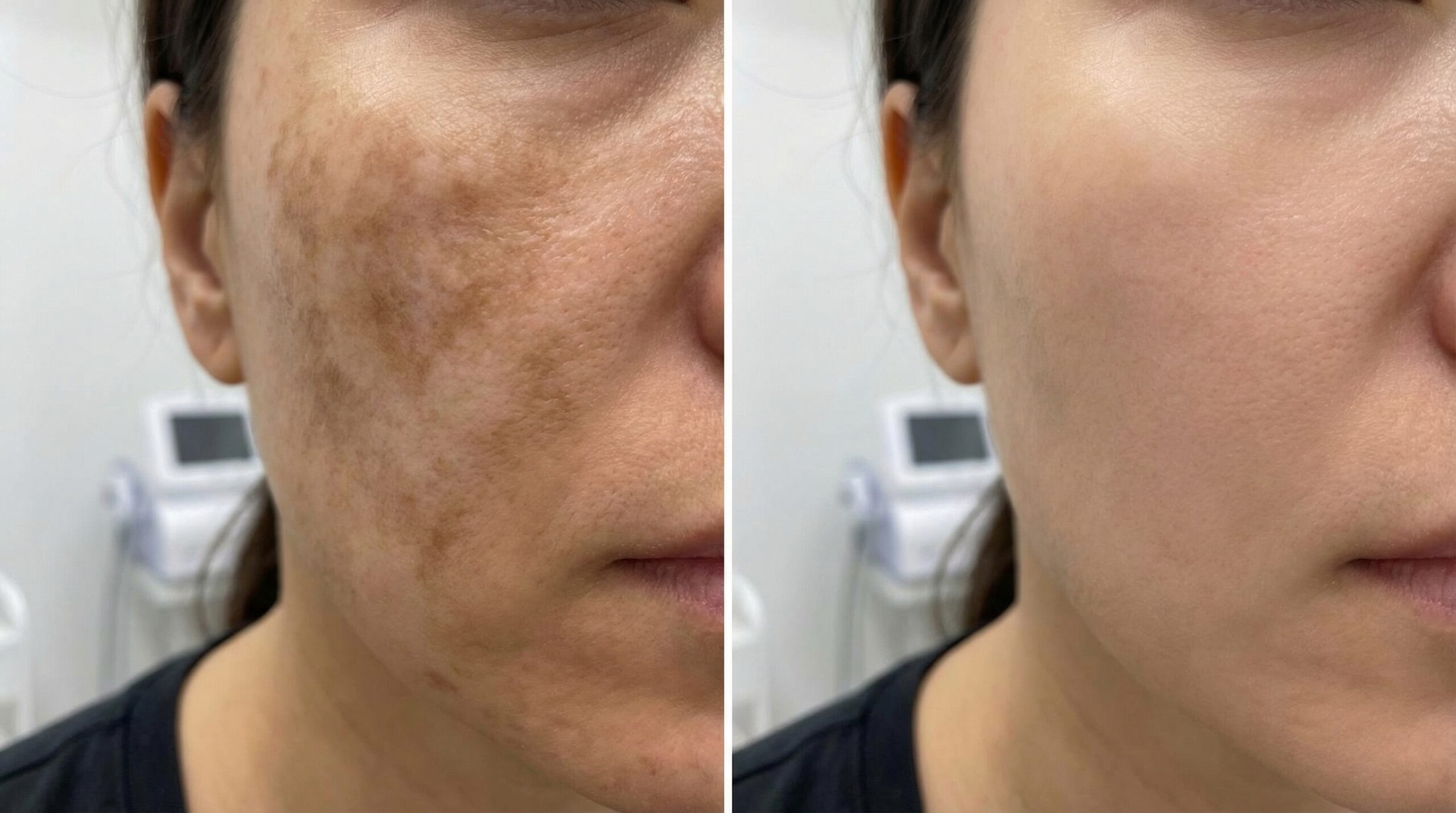
Individual results vary. Images represent outcomes achievable through a personalised treatment programme at Couture Dermatology and Laser.
Frequently
Asked Questions
Direct answers to the questions melasma patients most commonly bring to consultation — on what the condition is, how it is treated, and what to honestly expect.
Melasma is a chronic, hormonally-driven pigmentation condition characterised by symmetric brown or grey-brown patches on the forehead, cheeks, upper lip, temples, and nose. It is triggered by hormonal fluctuations and significantly worsened by UV exposure.
Melasma is a chronic condition — it can be significantly improved and well-managed but not permanently cured. With proper ongoing management — consistent SPF 50+, prescription topicals, and periodic maintenance sessions — melasma can be kept at a level where it is not visibly apparent.
Yes — aggressive laser settings can trigger post-inflammatory hyperpigmentation in melasma patients, paradoxically darkening the areas. At Couture Dermatology and Laser, melasma is always treated with conservative laser parameters combined with pre-treatment topical priming.
Prescription-grade agents are the foundation of treatment. Hydroquinone 4% is the clinical standard. Tranexamic acid interrupts melasma signalling pathways, and Azelaic acid provides gentler long-term maintenance. Daily broad-spectrum SPF 50+ is mandatory.
Melasma typically requires 3–6 clinical sessions — laser or chemical peels — combined with an ongoing prescription topical protocol. The exact number depends on the depth of pigmentation and the patient's skin type.
Daily broad-spectrum SPF 50+ is non-negotiable. UV exposure is the primary environmental trigger, and even brief sun exposure can retrigger pigmentation. It must be applied every morning without exception, year-round.
Related Treatments