
Chemical
Peels
A chemical peel is not a one-size-fits-all "facial" — it is a medical exfoliation that uses precisely chosen acid concentrations to remodel the skin at the layer that matters. Superficial peels brighten dull tone. Medium-depth peels resurface pigment, fine lines, and texture. The clinical decision is choosing the right peel for your skin type, pigmentation history, and goal — which is why a dermatologist-led peel programme delivers measurably better results than a spa menu.
For visible results
For deeper renewal
Dermatologist
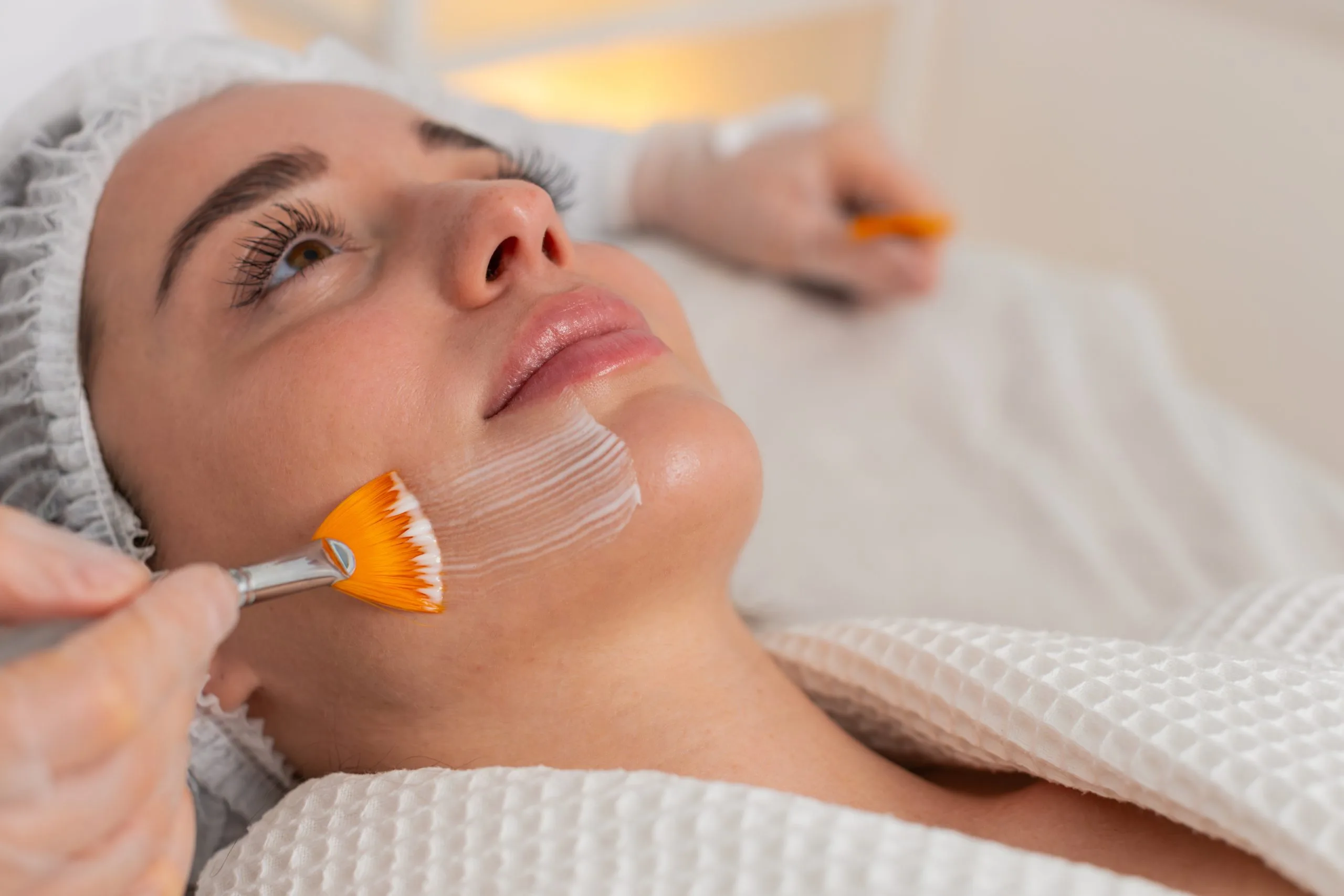
"The right peel is the one matched to your skin type, your concern, and your tolerance — not the one on the price list."

Different Acids.
Different Layers.
A chemical peel works by applying a controlled acid solution that intentionally injures the skin at a specific depth, prompting the body to shed the damaged layer and reveal fresher, more uniform skin underneath. Different acids penetrate to different depths — and choosing the wrong depth is the most common reason peels disappoint or, worse, cause pigment problems.
Glycolic acid brightens dull tone. Salicylic acid targets active acne by clearing oil-filled pores. Lactic acid is gentle and hydrating — ideal for sensitive or melasma-prone skin. TCA (trichloroacetic acid) reaches into the upper dermis for deeper pigment and fine line work. Jessner's, VI Peel, and Cosmelan are formulated blends designed for specific clinical targets.
At Couture Dermatology and Laser, every chemical peel begins with a proper skin assessment — Fitzpatrick type, pigment history, photo damage level, and your tolerance for downtime. The peel that suits your specific anatomy is then selected. This is the difference between a peel that delivers and a peel that simply happens.
From Selection
to Renewal
Chemical peels are deceptively simple in application but precise in selection. The clinical sequence — assess, prime, peel, protect — is what produces consistent, safe, predictable results.
Skin Assessment
Your dermatologist evaluates Fitzpatrick type, pigment history (melasma, PIH risk), photo damage, and active acne. The right acid and concentration are then selected for your skin.
Custom peel choicePre-Peel Priming
For medium-depth peels or skin of colour, a 2 to 4 week priming protocol with retinoids, vitamin C, and tyrosinase inhibitors prepares the skin and reduces pigment risk.
Optional, by indicationPeel Application
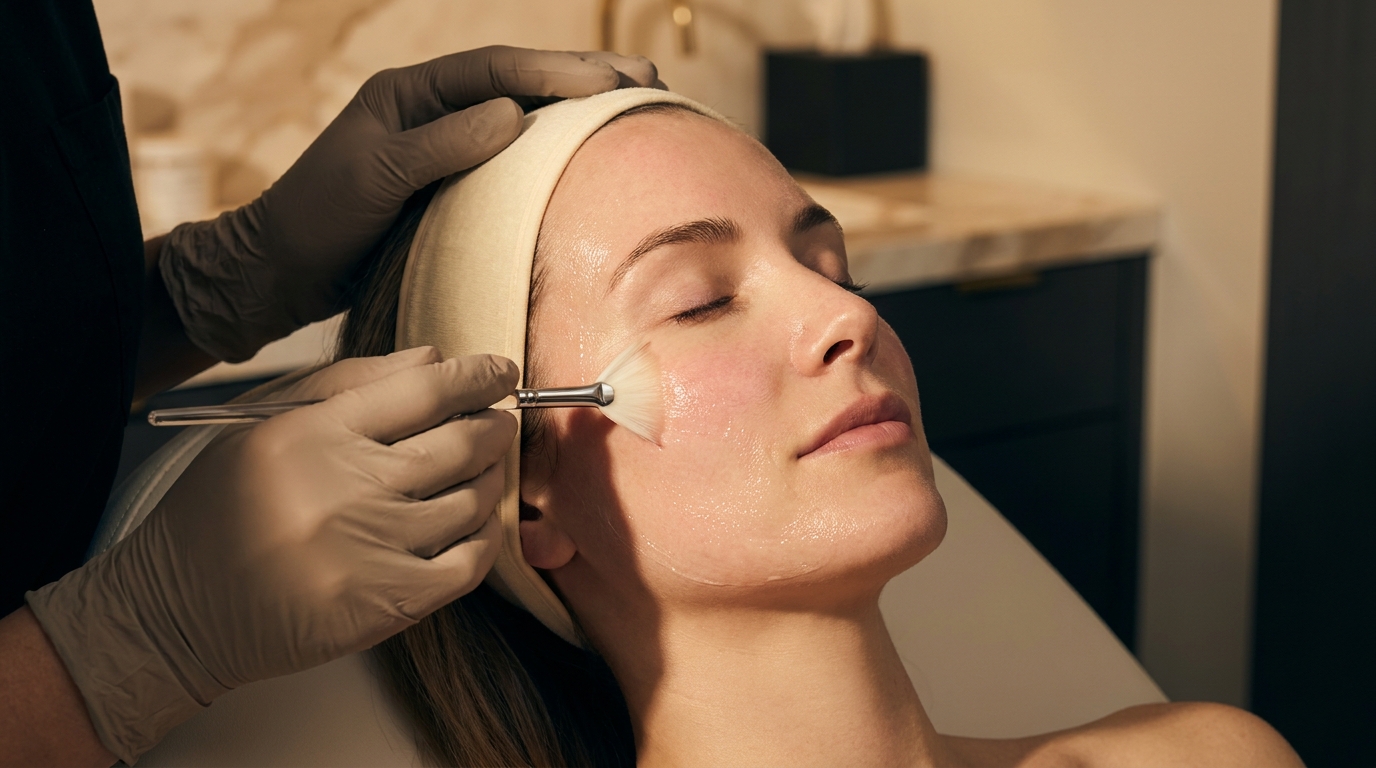
Skin is degreased, and the peel solution is layered onto the face under close observation. The acid is neutralised (where required) when the clinical endpoint is reached. Session: 30 to 45 minutes.
30–45 minutesRecovery & Protection
Mild flaking for 2 to 3 days (superficial) or visible peeling for 5 to 7 days (medium). Strict SPF 50+, gentle cleansers, and barrier-supportive moisturisers protect the renewed skin underneath.
SPF non-negotiableChemical Peel
Families
Different peels reach different depths and target different concerns. These four families form the clinical toolkit — chosen based on your indication, skin type, and downtime tolerance.
Brightening & Maintenance
Glycolic Acid Peels
Alpha hydroxy acid (AHA) at 20–70% concentrations. Brightens dull skin, evens tone, refines surface texture, and reduces fine lines over a cumulative series. Minimal downtime — the workhorse of monthly maintenance peeling for most skin types.
Active Acne & Oily Skin
Salicylic Acid Peels
Beta hydroxy acid (BHA) — lipophilic, so it penetrates oil-filled pores. The peel of choice for active acne, blackheads, and oily congestion. Anti-inflammatory action also fades post-inflammatory pigmentation and shrinks pore appearance.
Deeper Renewal
TCA & Jessner's Peels
Trichloroacetic acid (15–35%) and Jessner's solution reach the upper dermis for stronger results in sun damage, melasma, fine lines, and texture. Produces visible peeling over 5 to 7 days and a single treatment delivers cumulative results.
Targeted Brands
VI Peel & Cosmelan
VI Peel is a proprietary blend safe across all skin tones and effective for pigment, acne scars, and texture. Cosmelan is a medical-grade depigmentation programme specifically designed for melasma and stubborn hyperpigmentation in skin of colour.
Brighter Skin.
Even Tone.
Brighter, More Even Tone
Controlled exfoliation removes the dull, damaged outer layer of skin to reveal smoother, brighter, more uniform skin underneath. Sun spots, post-inflammatory pigment, and uneven discoloration visibly fade over a series.
Clearer Skin & Fewer Breakouts
Salicylic acid peels clear oil-clogged pores at the source — measurably reducing active acne, blackheads, and inflammatory breakouts. Combined with medical acne management, peels are a cornerstone of a complete acne protocol.
Smoother Texture & Refined Pores
Cumulative peeling stimulates new collagen and remodels the upper dermis — visibly smoothing fine lines, tightening pores, and refining the overall surface quality of facial, neck, and chest skin.
Melasma & Pigment Improvement
Carefully chosen peels — particularly lactic acid, Cosmelan, and VI Peel — lift stubborn melasma and post-inflammatory hyperpigmentation without the recurrence risk of aggressive laser pigment treatments.
Affordable, Accessible Renewal
Chemical peels remain one of the most cost-effective ways to deliver real, visible skin improvement — particularly compared to laser resurfacing or injectables. A series can be built around your budget and downtime tolerance.
"A great chemical peel is the result of three correct choices — the acid, the depth, and the patient. Get any of them wrong and the result is at best mediocre, at worst harmful."— Couture Dermatology and Laser
safely accommodated
Board-Certified
Every chemical peel is selected and performed personally by Dr. Chinonso Kagha Abisogun, MD, FAAD — a Fellow of the American Academy of Dermatology
Full Peel Library
Glycolic, salicylic, lactic, TCA, Jessner's, VI Peel, and Cosmelan on site — selected by your skin type, not what is in stock
Skin-of-Colour Expertise
Calibrated protocols for Fitzpatrick IV-VI — including pre-peel priming and Cosmelan for melasma and stubborn pigmentation
Diagnosis-First
No peel is recommended without a proper assessment of skin type, pigment history, and concern — the foundation of safe peeling
Concerns We
Address
Chemical peels address an extraordinarily wide range of dermatologic concerns — but the secret is always matching the right peel to the right concern.
Dull, Tired Skin
A monthly glycolic or lactic peel cuts through accumulated dead skin and restores brightness, glow, and a refreshed complexion.
Hyperpigmentation & Sun Spots
Targeted peels and Cosmelan lift surface and deeper pigment for an evenly toned complexion — particularly valuable for sun-damaged skin.
Melasma
Cosmelan and gentle lactic acid protocols, combined with medical management, deliver measurable melasma improvement in skin of colour.
Active Acne & Breakouts
Salicylic acid peels clear oil-clogged pores at the source — reducing active acne and fading the dark marks left behind.
Fine Lines & Mild Wrinkles
Medium-depth TCA peels resurface fine lines around the mouth, eyes, and forehead alongside overall texture refinement.
Keratosis Pilaris & Body
Glycolic and salicylic peels can be safely applied to body areas — back, chest, upper arms — for breakouts and rough textured patches.
Are Chemical Peels
Right for You?
- Adults with dull skin, uneven tone, or accumulated photo damage seeking a brighter, more even complexion through cumulative renewal.
- Patients with hyperpigmentation, post-inflammatory marks, or melasma requiring carefully selected pigment-safe peels.
- Those dealing with active acne or chronic breakouts who want to add a clinical peel to their existing acne treatment programme.
- Patients in their 30s, 40s, and beyond addressing fine lines, texture, and surface skin quality with medium-depth resurfacing.
- Patients of all Fitzpatrick types — including IV-VI skin of colour — who need an expert peel selection to avoid pigment complications.
- Those seeking an affordable, accessible, and well-established treatment that complements existing injectable, laser, or skincare protocols.
Honest Expectations
Chemical peels are not magic. A single superficial peel produces modest improvement — meaningful results require a series. Deeper TCA peels deliver stronger single-session results but with real downtime. The right depth depends on your concern, skin type, and how much recovery time you can accommodate.
Strict SPF 50+ daily is non-negotiable during and after a peel series — UV exposure on freshly peeled skin can cause significant post-inflammatory hyperpigmentation. Active herpes outbreaks, recent isotretinoin use, and certain inflammatory skin conditions are contraindications. Your dermatologist will discuss candidacy honestly.
Pairs Beautifully
With…
Chemical peels refine the surface story. These adjacent treatments address volume, dynamic lines, regenerative collagen, and surrounding pigment for a complete dermatologic plan.
Microneedling
Microneedling builds collagen from within while peels remodel the surface — together they form a complete texture and tone protocol that no single treatment can match.
Explore microneedling →Hyperpigmentation Correction
For stubborn pigment and melasma, Cosmelan-led depigmentation paired with maintenance lactic acid peels delivers measurable, sustainable improvement.
Explore pigment correction →Botox
Botox softens dynamic wrinkles; peels refine surface tone and texture. Together they form the foundation of preventative dermatologic care for patients in their 30s and beyond.
Explore Botox →Medical-Grade Skincare
A dermatologist-prescribed retinoid, vitamin C, and SPF 50+ protocol extends and protects the brightening effect of every peel — non-negotiable for lasting results.
All treatments →Results That Speak for Themselves
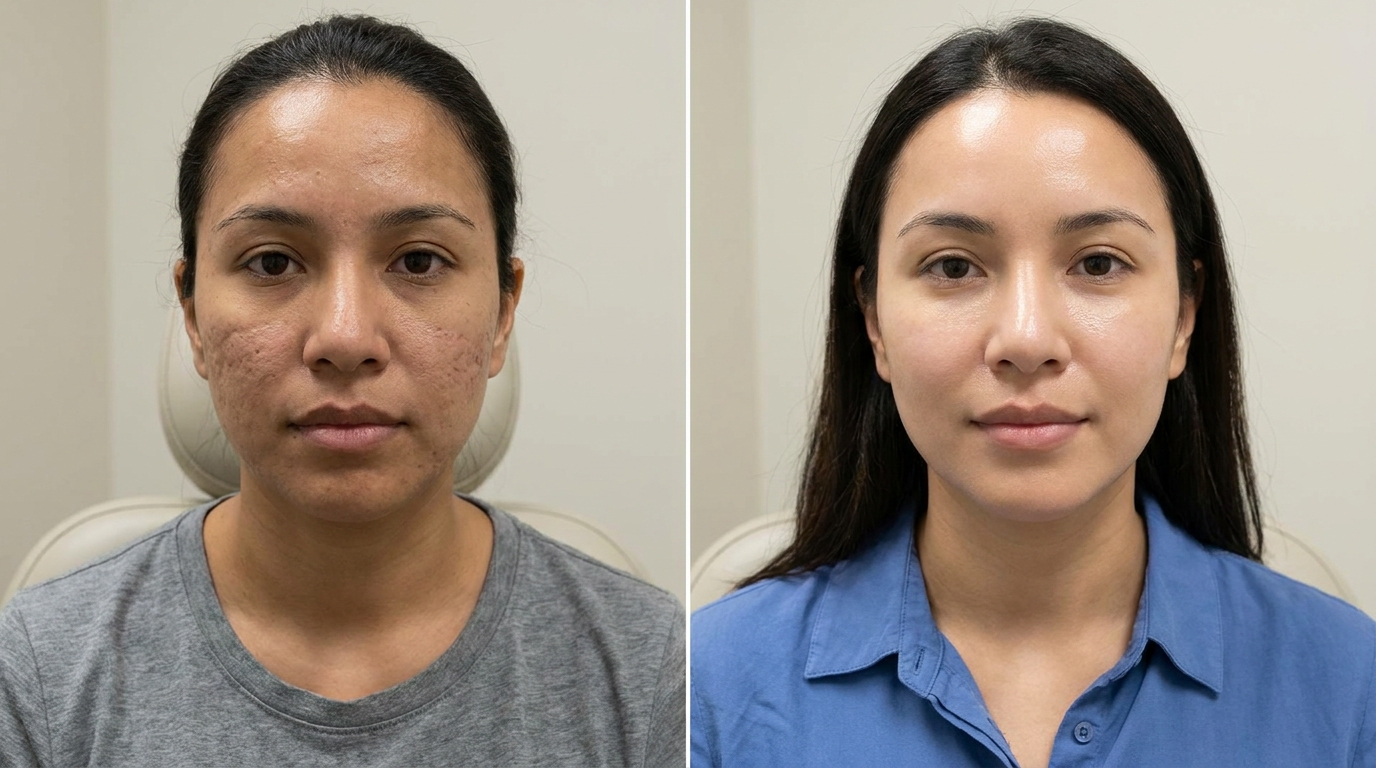
Individual results vary. Cumulative improvement from superficial peel series is typically visible after 3 sessions. Medium-depth peels deliver visible renewal 7 to 10 days after a single treatment. Daily SPF 50+ is essential to preserve the result.
The Right Peel.
For the Right Skin.
No chemical peel is correct without first identifying your skin type, pigment history, and the specific concern you want to address. At Couture Dermatology and Laser, Dr. Chinonso evaluates every patient personally before recommending an acid, concentration, and depth. The goal is always real skin renewal — never a generic medspa peel menu.
Sat · By Appointment Only
"I had melasma that no laser or over-the-counter cream had touched in five years. Dr. Chinonso put me on a Cosmelan protocol with maintenance lactic peels, and within four months my skin was the clearest it had been since college. Finally a peel programme designed for my skin instead of against it."
Maya P.
Verified Patient · Beverly Hills
Frequently
Asked Questions
Direct answers to the questions patients most commonly ask before their chemical peel consultation — on depth, downtime, skin tone safety, and realistic expectations.
Superficial peels (glycolic, salicylic, lactic) typically require a series of 3 to 6 sessions spaced 2 to 4 weeks apart to deliver visible cumulative improvement. Medium-depth peels (TCA, Jessner's, VI Peel) are usually performed as a single treatment with annual or seasonal repetition for maintenance.
Superficial peels remove the outermost layer of dead skin cells — gentle, no downtime, ideal for brightening and maintenance. Medium-depth peels reach the upper dermis to address deeper pigmentation, fine lines, and texture — they produce 3 to 7 days of visible peeling and stronger, longer-lasting results.
Yes — when the correct peel is selected. Superficial peels (lactic acid, mandelic acid, salicylic acid) and Cosmelan are well-tolerated and effective in Fitzpatrick IV-VI skin. Stronger TCA-based peels require careful protocols to avoid post-inflammatory hyperpigmentation. Your dermatologist will choose the peel suited to your specific skin type.
Superficial peels typically have no downtime — possibly mild flaking for 2 to 3 days. Medium-depth peels involve 3 to 7 days of visible peeling and redness, with full skin recovery in 7 to 10 days. Strict sun protection and a gentle post-peel skincare protocol are essential throughout the recovery period.
Yes — salicylic acid peels are particularly effective for active acne because the acid is lipophilic and penetrates clogged pores. Combined with proper medical acne management, peels reduce active breakouts, fade post-inflammatory pigmentation, and refine pore appearance over a series.
Not necessarily — visible flaking is more common with medium-depth peels and varies by individual. Superficial peels often produce only mild, fine flaking. The clinical benefit happens whether or not you peel visibly, so do not measure results by visible shedding.
Related Treatments