
Excessive Sweating
Hyperhidrosis
Hyperhidrosis is sweating in excess of what the body needs for temperature control. It is not a hygiene issue or a personal failing — it is a recognized medical condition with well-established, effective treatments. At Couture Dermatology and Laser, we build a stepwise clinical plan starting from the correct diagnosis, because primary focal hyperhidrosis and secondary generalized sweating require fundamentally different approaches.
relief typically lasts
for underarm sweating
Dermatologist
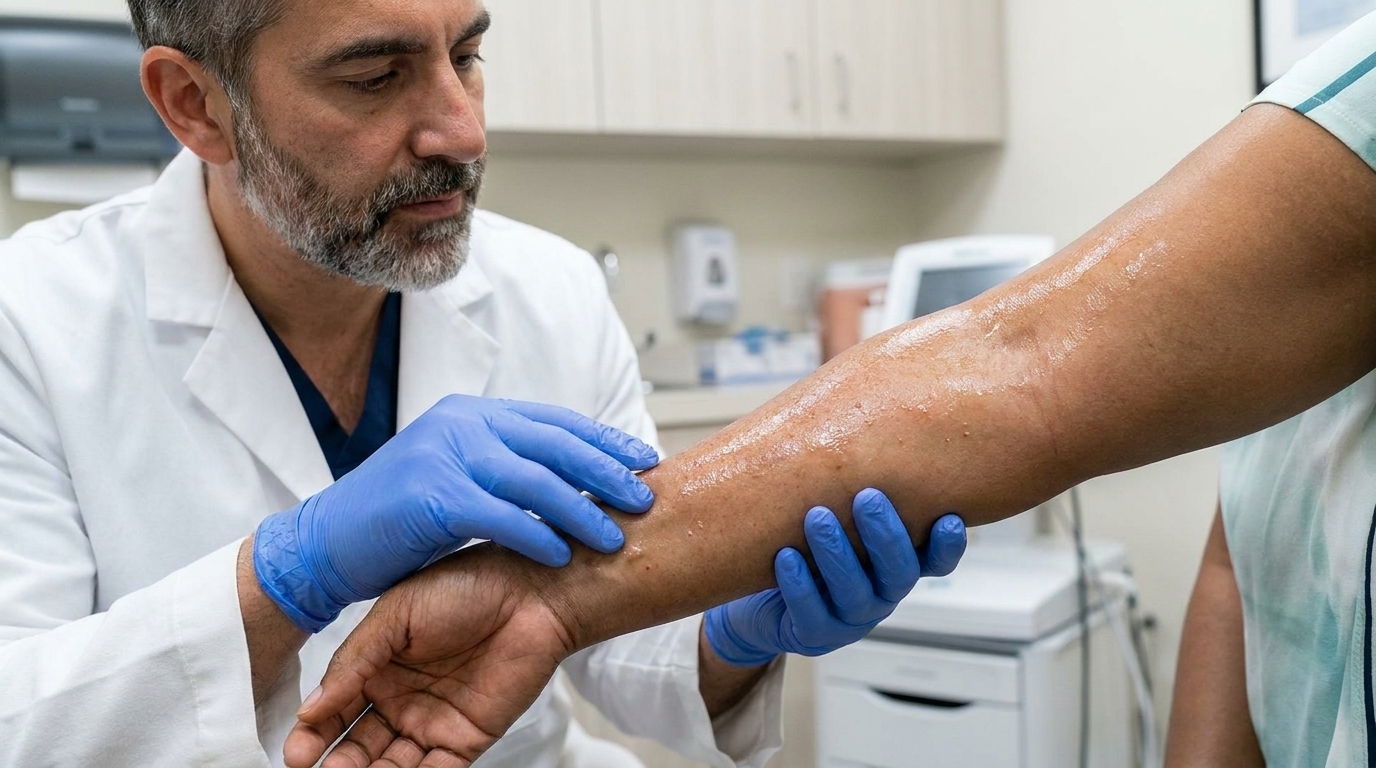
"Treating excessive sweating correctly starts with knowing whether the cause is focal and primary, or systemic and secondary."
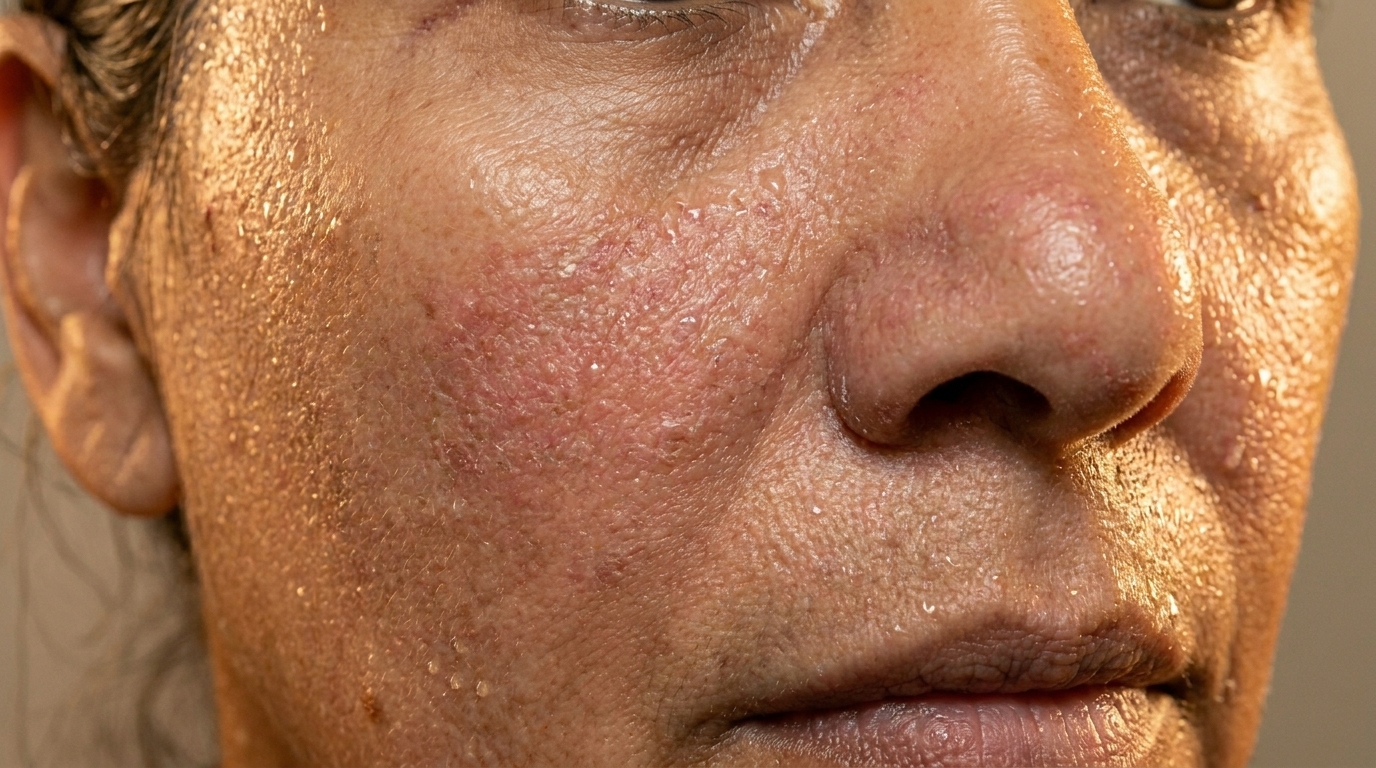
Two Types.
One Must Be Ruled Out.
Primary focal hyperhidrosis is the most common form. It is symmetric, localized to specific sites — underarms (axillae), palms, soles of the feet, or the face and scalp — and typically begins in childhood or adolescence. Critically, it stops during sleep. There is no identifiable medical cause; the sweat glands are structurally normal but overstimulated by the nervous system.
Secondary generalized hyperhidrosis is different in character: it tends to be widespread rather than focal, can occur during sleep, and may signal an underlying condition — thyroid dysfunction, an infection, lymphoma, menopause, or a medication side effect. Ruling this out is not optional.
Diagnosis is clinical. Severity is graded using the Hyperhidrosis Disease Severity Scale (HDSS), and the starch-iodine (Minor's) test can map the precise distribution of active sweat glands before treatment. Getting the diagnosis right determines the entire treatment plan.
From Assessment
to Relief
Hyperhidrosis responds best to a structured, escalating approach. We confirm the diagnosis, assess severity, and build a treatment plan matched to your specific sites, lifestyle, and tolerance.
Thorough History & Diagnosis
We distinguish primary focal from secondary hyperhidrosis using a detailed history, HDSS scoring, and where indicated, starch-iodine testing to map active sweat zones precisely.
Included at consultationFirst-Line Measures
Prescription aluminum-chloride antiperspirants, topical glycopyrronium wipes (Qbrexza), or topical glycopyrrolate are trialed based on the affected site and severity before advancing to procedural options.
Non-invasive firstProcedural Treatment
For patients who need more than topical therapy, we move to iontophoresis for palms and soles, botulinum toxin (Botox) injections for underarms and palms, or miraDry microwave thermolysis for durable underarm reduction.
20–45 minutes per sessionMaintenance Planning
Botox requires repeat treatment every 4 to 9 months. Iontophoresis needs ongoing maintenance sessions. miraDry results are long-lasting. We schedule follow-up before your results begin to wane so you are never caught off guard.
Proactive schedulingA Clinical Toolkit
for Every Site
No single treatment works equally well for all sites and severities. These four modalities form the core of our hyperhidrosis management — selected and sequenced based on where you sweat and how much.
Underarms · FDA-Approved
Botulinum Toxin (Botox)
Botox is injected intradermally into the underarm to block acetylcholine release at the neuromuscular junction of sweat glands. It reduces axillary sweating by approximately 80 to 90% in most patients, with results lasting 4 to 9 months. It is also used off-label for palms, with topical anesthesia applied beforehand to manage sensitivity.
Underarms · Long-Lasting
miraDry Microwave Thermolysis
miraDry delivers focused microwave energy to the dermis-subcutaneous junction, permanently disabling sweat and odor glands. Because sweat glands do not regenerate, results are durable. Most patients achieve significant reduction after one session; a second treatment optimizes results further. Suitable only for the underarm — not palms or soles.
Palms & Soles · First-Line Procedure
Iontophoresis
Iontophoresis delivers a mild electrical current through water to temporarily reduce sweat gland activity. It is the standard first-line procedural option for palmar and plantar hyperhidrosis, requiring 3 to 4 sessions per week initially, then weekly maintenance. Non-invasive and well-tolerated, with no systemic effects.
Topical & Oral Options
Anticholinergic Therapy
Glycopyrronium tosylate wipes (Qbrexza) and topical glycopyrrolate are applied once daily for underarm and facial sweating respectively. Oral anticholinergics (glycopyrrolate, oxybutynin) are reserved for diffuse or refractory cases. They work systemically and are dosed carefully to balance efficacy against side effects like dry mouth.
The Goal Is Dry.
The Gain Is Confidence.
Dramatically Reduced Sweating
Botox reduces underarm sweating by 80 to 90% in most patients. miraDry achieves long-lasting sweat reduction by permanently disabling glands — so the relief you feel after treatment is not temporary.
Professional and Social Freedom
Hyperhidrosis routinely limits clothing choices, handshakes, presentations, and social interactions. Effective treatment allows patients to re-engage fully — without the constant mental overhead of managing sweat.
Treated at the Correct Site
Different sites require different tools. We do not apply a single modality everywhere. Underarms, palms, soles, and the face are each managed with the evidence-based option best matched to that anatomy.
Safe, Well-Studied Treatments
Botox for hyperhidrosis has decades of clinical evidence behind it. miraDry is FDA-cleared. Iontophoresis has been used for palmar sweating since the 1950s. None of these are experimental — they are a dermatologist's standard toolkit.
Systemic Causes Screened First
Because secondary hyperhidrosis can be the first sign of a thyroid problem, lymphoma, or medication issue, your consultation includes a screening history. Treating the right condition from the start protects your health — not just your shirts.
"Hyperhidrosis is not vanity. It is a quality-of-life condition with effective treatments, and patients deserve the same systematic approach we bring to any other skin disease."— Couture Dermatology and Laser
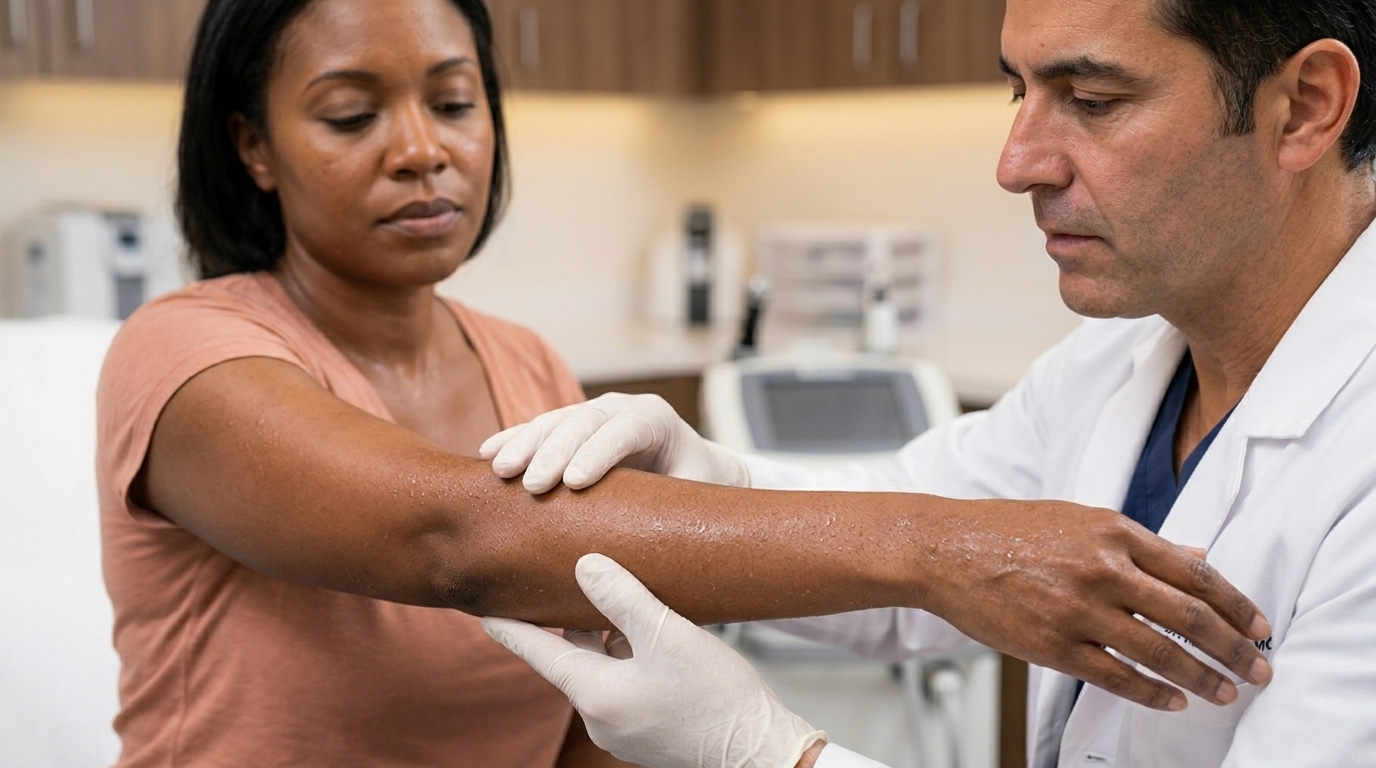
treatment cycle
Board-Certified
Every hyperhidrosis program is led by Dr. Chinonso Kagha Abisogun, MD, FAAD — a Fellow of the American Academy of Dermatology
Correct Diagnosis First
We distinguish primary focal from secondary hyperhidrosis before any treatment is selected — because the wrong diagnosis gives the wrong result
Site-Specific Protocols
Underarms, palms, soles, and face are each managed with the clinically appropriate modality — not a single blanket approach
Proactive Maintenance
Repeat Botox timing is planned in advance so patients are never left managing a return of symptoms without a scheduled visit
Sites We
Treat
Excessive sweating in primary focal hyperhidrosis follows predictable anatomical patterns. Each site has its own first-line treatment and its own clinical considerations.
Underarms (Axillae)
The most common site. Botox (FDA-approved) and miraDry microwave thermolysis are both highly effective and can be combined over time for optimal durable relief.
Palms (Hands)
Palmar hyperhidrosis responds well to iontophoresis as a first-line procedure, with Botox injections (off-label) reserved for more severe cases. Topical anesthesia is applied before palm injections to manage sensitivity.
Soles (Feet)
Plantar hyperhidrosis is frequently treated alongside palmar sweating. Iontophoresis is the primary procedural option; Botox can be used for refractory cases though the dense nerve supply of the sole requires careful anesthesia.
Face & Scalp
Craniofacial hyperhidrosis — sweating of the forehead, nose, or scalp — can be particularly visible and distressing. Topical glycopyrrolate and carefully placed Botox injections are the main options, with attention to avoiding adjacent muscle effects.
Groin & Inframammary
Less commonly discussed but equally impactful, sweating in the groin or under-breast area can be managed with Botox injections or prescription topical anticholinergics depending on severity and patient preference.
Secondary / Generalized
When sweating is diffuse, occurs at night, or accompanies other symptoms, we investigate for a systemic cause first. Treatment is directed at the underlying condition — not just the sweat glands.
Is Hyperhidrosis Treatment
Right for You?
- Adults and adolescents with focal sweating at the underarms, palms, soles, or face that is excessive relative to ambient temperature or activity level.
- Patients who have already tried clinical-strength or prescription antiperspirants without sufficient control, or who cannot tolerate their side effects.
- Those whose sweating stops during sleep — a hallmark of primary focal hyperhidrosis that helps confirm the diagnosis and guide treatment selection.
- Individuals whose quality of life — professionally, socially, or emotionally — is meaningfully affected by the condition on a consistent basis.
- Patients with palmar or plantar sweating who are looking for a non-invasive, evidence-based procedural option before considering injections.
- Anyone who wants a structured, dermatologist-led plan rather than switching between products without a clear diagnosis or treatment ladder.
Honest Expectations
Hyperhidrosis is a manageable condition — but most treatments require ongoing commitment. Botox for underarms provides 4 to 9 months of relief per injection cycle, meaning most patients return two to three times per year. Iontophoresis for palms requires regular maintenance sessions to sustain results.
miraDry offers a more durable underarm option because it permanently disables sweat glands. For patients who want to reduce the frequency of repeat treatments, it is worth discussing whether miraDry is appropriate for your anatomy and goals. Dr. Chinonso will be direct about what each modality can realistically deliver for your specific case.
Conditions We Also
Treat
Hyperhidrosis sometimes coexists with or exacerbates other dermatological conditions. These are conditions we manage at Couture Dermatology that may be relevant to your care plan.
Rosacea
Flushing and facial redness in rosacea can be worsened by heat and sweating. Addressing both conditions — vascular reactivity alongside craniofacial hyperhidrosis — can improve overall facial skin stability significantly.
Explore rosacea treatment →Skin Rashes & Dermatitis
Excessive moisture from hyperhidrosis can trigger or worsen intertrigo, contact dermatitis, and irritant dermatitis in skin folds. Controlling the underlying sweating is often the most effective way to reduce rash recurrence.
Explore skin rash treatment →Seborrheic Dermatitis
Oiliness and sweating of the scalp can exacerbate seborrheic dermatitis flares. Managing craniofacial hyperhidrosis alongside seborrheic dermatitis treatment provides a more comprehensive and durable result for scalp and facial skin.
Explore seborrheic dermatitis →Nail Fungus (Onychomycosis)
Chronic moisture from plantar hyperhidrosis creates conditions that favor fungal nail infections. Treating the sweating environment alongside antifungal therapy improves cure rates and reduces recurrence of onychomycosis.
Explore nail fungus treatment →Results That Speak for Themselves
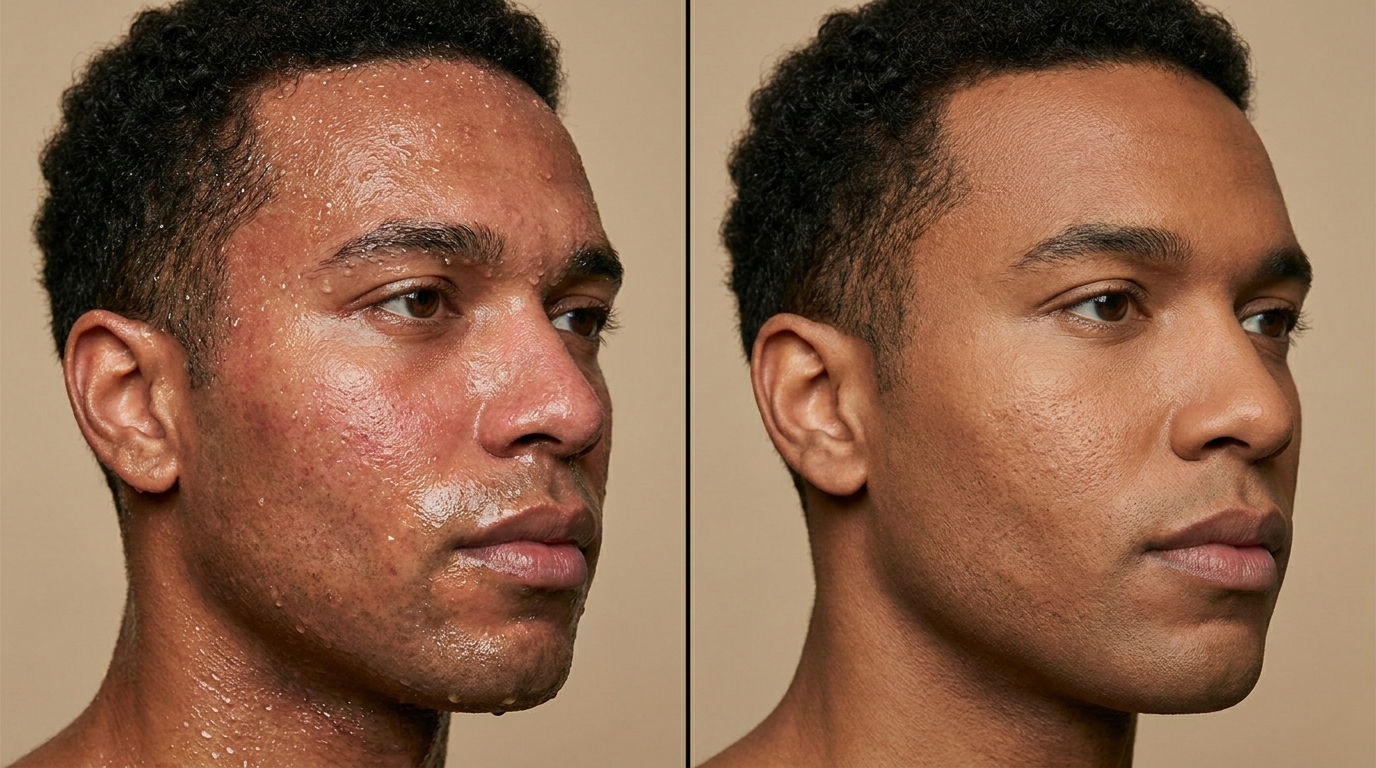
Individual results vary. Botox for hyperhidrosis typically reduces sweating for 4 to 9 months; miraDry results are long-lasting. Maintenance plans are discussed at follow-up.
Stopping the Sweat.
One Plan at a Time.
Effective hyperhidrosis treatment begins with the correct diagnosis. At Couture Dermatology and Laser, Dr. Chinonso takes a full history, scores severity on the HDSS, and designs a treatment plan that matches your sites, lifestyle, and goals — before any procedure is discussed.
Sat · By Appointment Only
"I had been hiding behind dark clothes for years because of underarm sweating. After Botox with Dr. Chinonso, I went three weeks without thinking about it once. She explained exactly what to expect and when to come back. I've already rebooked."
Simone R.
Verified Patient · Beverly Hills
Frequently
Asked Questions
Straightforward answers to the questions patients most commonly bring to their hyperhidrosis consultation — on diagnosis, treatment options, duration, and what to realistically expect.
Primary focal hyperhidrosis is idiopathic — it has no underlying medical cause. It is symmetric, affects specific sites (underarms, palms, soles, face or scalp), typically begins in childhood or adolescence, and stops during sleep. Secondary generalized hyperhidrosis has an underlying cause such as thyroid disease, infection, menopause, or a medication side effect. Distinguishing between the two matters because secondary hyperhidrosis requires investigation and treatment of the root cause first.
Botulinum toxin (Botox) is FDA-approved for axillary hyperhidrosis and is highly effective, reducing underarm sweating by approximately 80 to 90% in most patients. Results typically last 4 to 9 months before repeat treatment is needed. Botox can also be used off-label for palmar and plantar hyperhidrosis, with palm injections often requiring topical anesthesia due to sensitivity.
miraDry uses microwave energy to permanently disable sweat and odor glands in the underarm. Because sweat glands do not regenerate once destroyed, results are long-lasting. Most patients see significant reduction after one session, and a second treatment can optimize results further. It is only appropriate for the underarms, not for palms or soles.
Iontophoresis delivers a mild electrical current through water to temporarily suppress sweat gland activity. It is the first-line procedural option for palmar and plantar hyperhidrosis (excessively sweaty palms and soles) and requires regular sessions — typically 3 to 4 times per week initially, then weekly for maintenance. It is non-invasive and well-tolerated.
Yes. At your consultation, Dr. Chinonso will take a thorough history to screen for secondary causes including thyroid dysfunction, medication side effects, infection, lymphoma, or menopause-related sweating. If secondary hyperhidrosis is suspected, appropriate workup is ordered before any focal treatment begins. Treating the wrong type gives the wrong result.
This concern is called compensatory sweating and is more commonly associated with endoscopic thoracic sympathectomy (ETS surgery), which Couture Dermatology does not perform as a first-line treatment. Botox and miraDry work locally — they do not redirect sweating to other body sites in any significant clinical way for the vast majority of patients. The body's overall thermoregulation is not meaningfully impaired by treating focal sites.