Seborrheic
Dermatitis
Seborrheic dermatitis is one of the most common inflammatory skin conditions — and one of the most frequently mismanaged. The greasy scale on your eyebrows, the persistent flaking on your scalp, the redness around your nose: these are not hygiene failures. They are a chronic inflammatory response driven by Malassezia yeast and individual immune sensitivity. The goal is long-term control, and with the right prescription regimen, that is very achievable.
not cured
antifungals available
Dermatologist
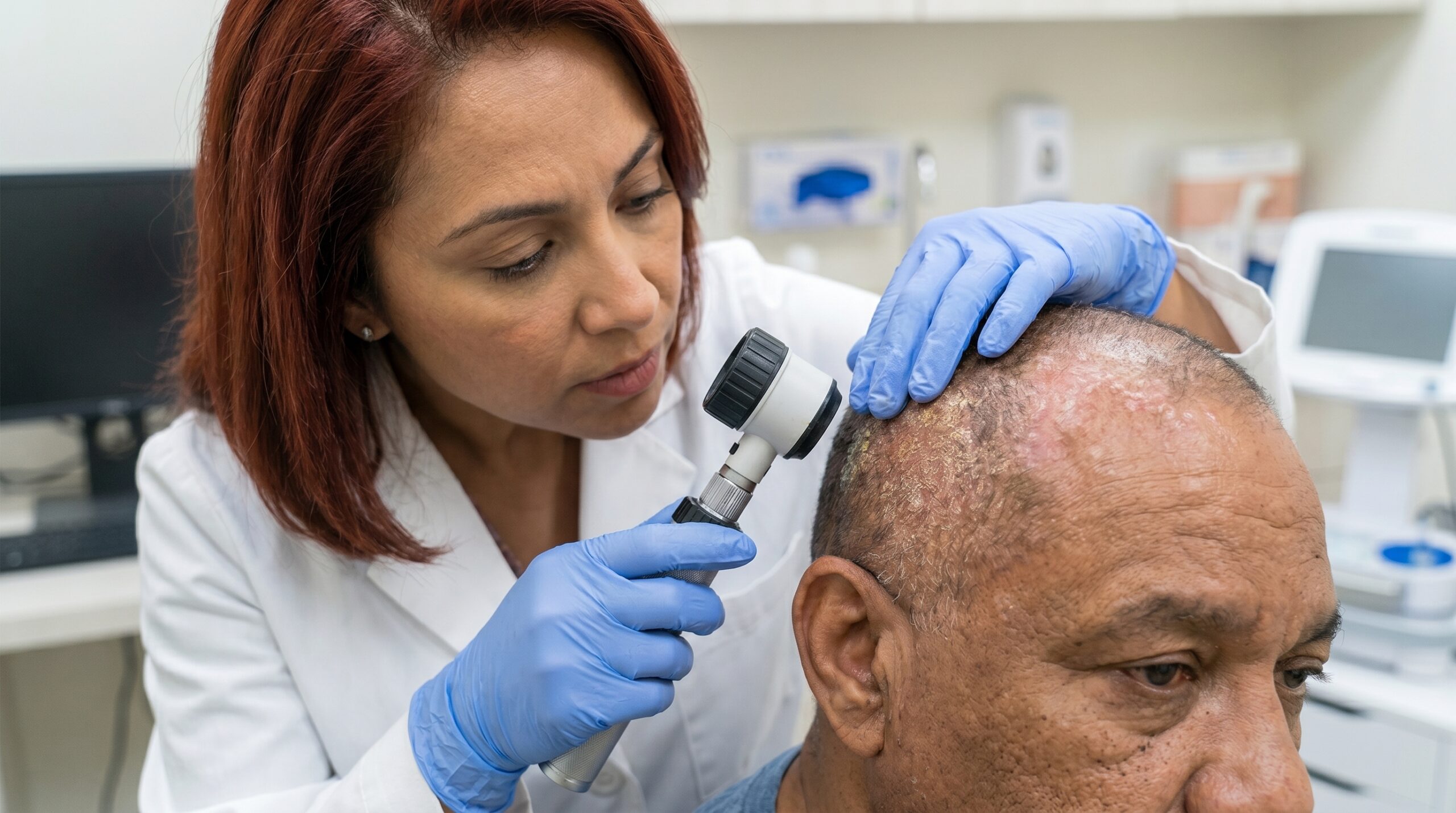
"Seborrheic dermatitis is not about cleanliness — it is a yeast-driven inflammatory response that requires a medical approach."
Not Hygiene.
Inflammation.
Seborrheic dermatitis is a chronic inflammatory skin condition that preferentially affects areas with a high density of sebaceous glands — the scalp, eyebrows, nasolabial folds, ear canals, and central chest. The hallmark is greasy or flaky yellowish scale with underlying redness and intermittent itch.
The underlying cause is multifactorial: an abnormal inflammatory response to Malassezia — a lipophilic yeast present on all human skin — combined with individual sebum composition and immune sensitivity. It is not contagious. It is not caused by infrequent washing. Washing too aggressively can in fact disrupt the skin barrier and worsen flares.
Flares are predictable in some patients: cold, dry weather, psychological stress, and certain medications are well-documented triggers. The condition is also more prevalent and more severe in Parkinson's disease and in immunosuppressed patients. Recognizing your personal trigger pattern is part of building an effective long-term management plan.
From Diagnosis
to Lasting Control
Seborrheic dermatitis requires a staged approach: clearing the active flare, protecting sensitive sites (especially the face), and then building a maintenance routine that keeps the condition quiet long-term.
Clinical Diagnosis
Dr. Chinonso evaluates all affected sites — scalp, face, ears, trunk — and distinguishes seborrheic dermatitis from psoriasis, rosacea, atopic dermatitis, and tinea capitis, each of which requires a different approach.
Included at consultationActive Flare Treatment
Prescription antifungal shampoos (ketoconazole 2%, ciclopirox) clear the scalp. Facial disease is treated with topical antifungal creams; brief courses of low-potency corticosteroids address acute inflammation where appropriate.
2–4 week clearing phaseFace-Safe Long-Term Therapy
Topical calcineurin inhibitors — tacrolimus or pimecrolimus — are prescribed for ongoing facial seborrheic dermatitis. They suppress inflammation without the skin-thinning risks associated with prolonged steroid use on the face.
Steroid-sparing approachMaintenance & Relapse Prevention
A maintenance schedule — using antifungal shampoos once or twice weekly, adjusting for seasonal triggers, and knowing when to restart treatment — is designed so patients stay in control between follow-ups.
Ongoing management planThe Clinical
Toolkit
Effective seborrheic dermatitis management combines antifungal agents for the yeast component with anti-inflammatory therapies selected by site — scalp, face, and body each require a tailored approach.
Scalp & Body Disease
Antifungal Shampoos
Prescription ketoconazole 2% and ciclopirox shampoos are the cornerstone of scalp seborrheic dermatitis treatment. Applied regularly, they reduce Malassezia colonization and calm the inflammatory response driving scale and itch. Zinc pyrithione and selenium sulfide are effective over-the-counter options for maintenance between prescription cycles.
Facial Seborrheic Dermatitis
Topical Antifungal Creams
For eyebrow, nasolabial fold, and periauricular disease, prescription antifungal creams (ketoconazole, ciclopirox, or miconazole) are applied directly to affected facial skin. They target the yeast component without the irritation of detergent-based shampoo formulations on the more sensitive facial skin barrier.
Face — Steroid-Sparing Option
Topical Calcineurin Inhibitors
Tacrolimus (Protopic) and pimecrolimus (Elidel) are preferred for long-term facial seborrheic dermatitis management. They inhibit the T-cell-driven inflammatory cascade without causing skin atrophy, telangiectasia, or the rebound flares associated with prolonged topical corticosteroid use on the face — a particular concern around the eyes and nasolabial folds.
Acute Flare Management
Short-Course Topical Corticosteroids
Low-potency topical corticosteroids are appropriate for short-course use during acute flares to rapidly reduce redness and itch — but they are not suitable for indefinite facial use. On the scalp, medium-potency steroid solutions or foams are sometimes used alongside antifungal shampoos during severe exacerbations before transitioning to maintenance therapy.
Controlled.
Not Cured — Controlled.
Flaking Reduced
Prescription antifungal shampoos and creams directly reduce Malassezia load and the inflammatory cascade it triggers, clearing visible scale from the scalp, eyebrows, and beard area within the first treatment cycle.
Redness and Itch Calmed
The inflammatory component of seborrheic dermatitis — driven by immune response rather than by Malassezia alone — responds well to topical calcineurin inhibitors on the face and appropriately selected steroids during scalp flares.
Relapse Intervals Extended
A well-structured maintenance regimen — using antifungal cleansers regularly and restarting active treatment at the first sign of recurrence — stretches the time between symptomatic flares significantly for most patients.
Facial Skin Protected Long-Term
By using topical calcineurin inhibitors instead of prolonged steroids for facial disease, we preserve normal skin thickness and avoid steroid-related side effects around the eyes, nose, and cheeks — areas where the skin is already thin.
Trigger Awareness and Patient Control
Understanding personal triggers — seasonal cold, stress, certain hair or skincare products — gives patients the tools to anticipate flares and intervene early, reducing severity and duration when recurrence does happen.
"Seborrheic dermatitis does not need to run your skin. With the right regimen, most patients achieve long, clear stretches with minimal interference."— Couture Dermatology and Laser
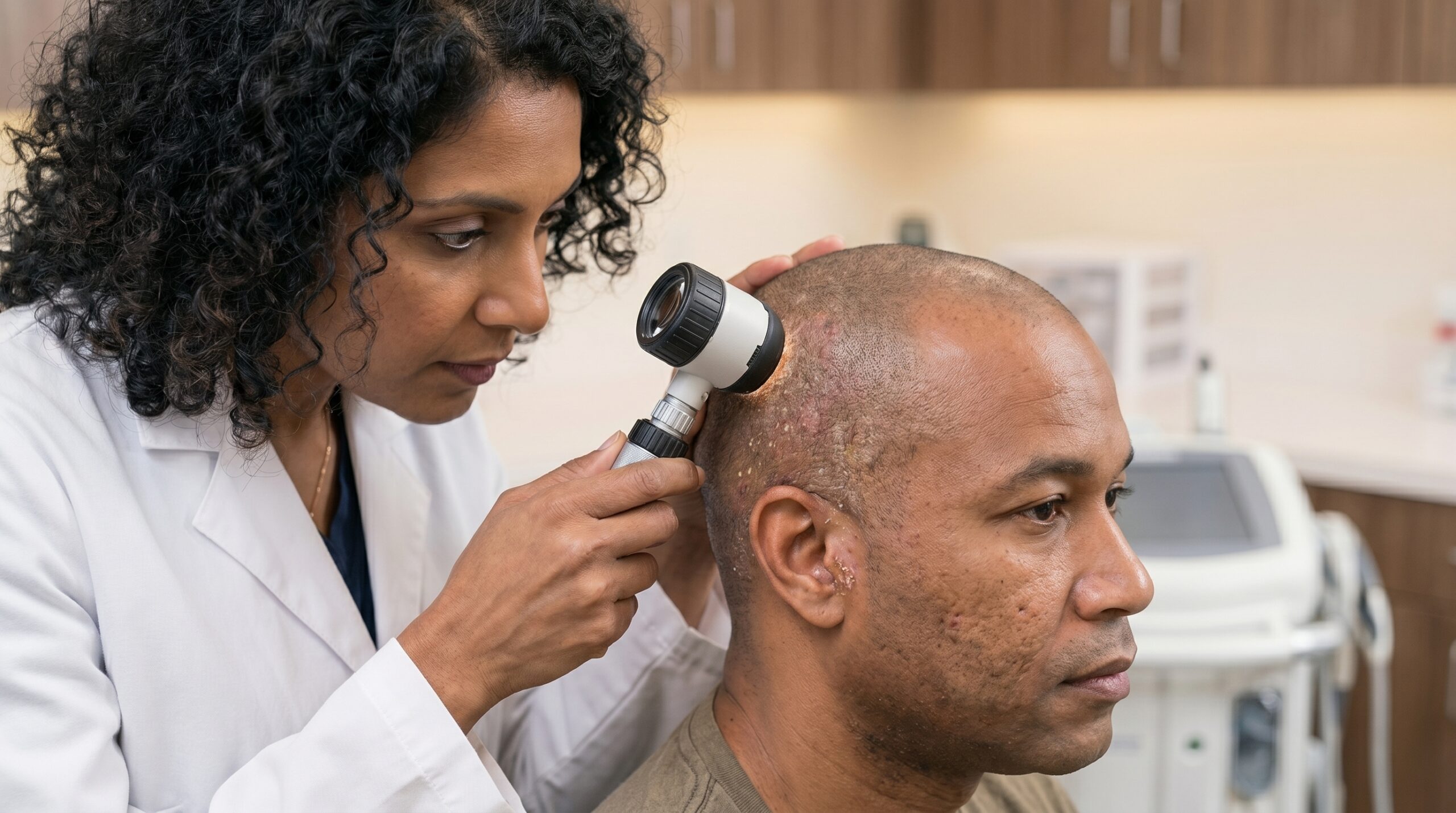
maintenance plan
Board-Certified
Every treatment plan is led by Dr. Chinonso Kagha Abisogun, MD, FAAD — a Fellow of the American Academy of Dermatology
Accurate Diagnosis
Seborrheic dermatitis is distinguished from psoriasis, rosacea, and tinea before any treatment is selected — misdiagnosis leads to inadequate results
Face-Safe Protocols
Topical calcineurin inhibitors prescribed for facial sites — avoiding the atrophy and rebound risk of long-term steroid use on sensitive facial skin
Maintenance-First Mindset
Patients leave with a clear plan for long-term control, not just a prescription for the current flare — reducing future recurrence frequency and severity
Where Seborrheic
Dermatitis Appears
Seborrheic dermatitis follows sebaceous gland distribution. Most patients have more than one affected site, and each location benefits from a targeted, site-specific treatment approach.
Scalp & Dandruff
The most common presentation, ranging from fine dry flaking (dandruff) to thick, greasy scale with visible erythema and itch. Managed with ketoconazole 2% or ciclopirox shampoos.
Eyebrows & Nasolabial Folds
Facial seborrheic dermatitis favors the medial eyebrows, nasolabial folds, and the glabella. Produces redness with fine, greasy scale. Treated with topical antifungal creams and calcineurin inhibitors.
Ears & Behind the Ears
Scale and redness in and around the external ear canal, concha, and retroauricular folds. Can be mistaken for external otitis or psoriasis. Responds well to antifungal drops or topical creams.
Chest & Upper Trunk
The central chest and upper back are sebaceous-rich and can develop petal-shaped or annular seborrheic plaques. Antifungal body washes applied regularly are effective for truncal involvement.
Beard Area
The beard and mustache region is a common site in men, with flaking within the hair follicle and surrounding skin redness. Antifungal shampoos used as a facial wash, or topical antifungal creams, address beard-area disease effectively.
Infantile Cradle Cap
In infants, seborrheic dermatitis appears as yellowish, greasy scale on the scalp (cradle cap) and may extend to the face and diaper area. It typically resolves without treatment, though gentle management options are available when needed.
Is a Dermatologist
the Right Next Step?
- Adults with persistent scalp flaking or redness that has not responded to over-the-counter dandruff shampoos after 4 to 6 weeks of consistent use.
- Patients with facial seborrheic dermatitis — redness and scale around the eyebrows, nose, or ears — where a precise diagnosis and face-safe treatment plan is needed.
- Those who have been using topical corticosteroids on the face for an extended period and need a steroid-sparing alternative to avoid skin thinning.
- Patients experiencing frequent, predictable flares who want a structured maintenance protocol rather than repeatedly treating the same outbreak.
- Individuals with Parkinson's disease, HIV, or other conditions associated with more severe or refractory seborrheic dermatitis requiring closer clinical oversight.
- Anyone whose scalp or facial condition has been assumed to be seborrheic dermatitis but has not been formally diagnosed — psoriasis, rosacea, and tinea require entirely different treatments.
What to Expect: Honest Expectations
Seborrheic dermatitis cannot be permanently cured. It is a relapsing inflammatory condition with a genetic and immune basis that does not resolve with any currently available treatment. What a well-designed medical regimen can achieve is very good long-term control: reduced flare frequency, shorter and milder flares when they do occur, and an understanding of your personal trigger pattern.
The distinction between seborrheic dermatitis and psoriasis, rosacea, or contact dermatitis matters enormously — each requires a different therapeutic approach. An accurate diagnosis from a board-certified dermatologist is the most important first step in getting this condition under proper control.
Conditions That
Overlap or Co-exist
Seborrheic dermatitis frequently co-exists with or is confused with other inflammatory skin conditions. Treating each accurately — and recognizing overlap — is central to a complete management plan.
Psoriasis
Scalp psoriasis can look strikingly similar to seborrheic dermatitis. Distinguishing the two — psoriasis typically has thicker, silvery scale and sharper margins — determines whether antifungal therapy or immune-modulating treatment is the right choice.
Learn about psoriasis treatment →Atopic Dermatitis
Atopic dermatitis (eczema) can co-exist with seborrheic dermatitis, particularly on the face and scalp. The two conditions have different drivers — filaggrin barrier defects vs. yeast-driven inflammation — and may need treatment concurrently.
Learn about atopic dermatitis →Eczema
Eczema encompasses several inflammatory skin conditions that overlap with seborrheic dermatitis. Accurate classification guides treatment selection and helps avoid the frustration of applying eczema protocols to a primarily yeast-driven condition.
Learn about eczema treatment →Rosacea
Facial redness and scaling in the nasolabial folds and central face can be seborrheic dermatitis, rosacea, or both simultaneously. The distinction matters because rosacea responds to different topical agents, and combining treatments incorrectly can trigger worsening of one while clearing the other.
Learn about rosacea treatment →Results That Speak for Themselves
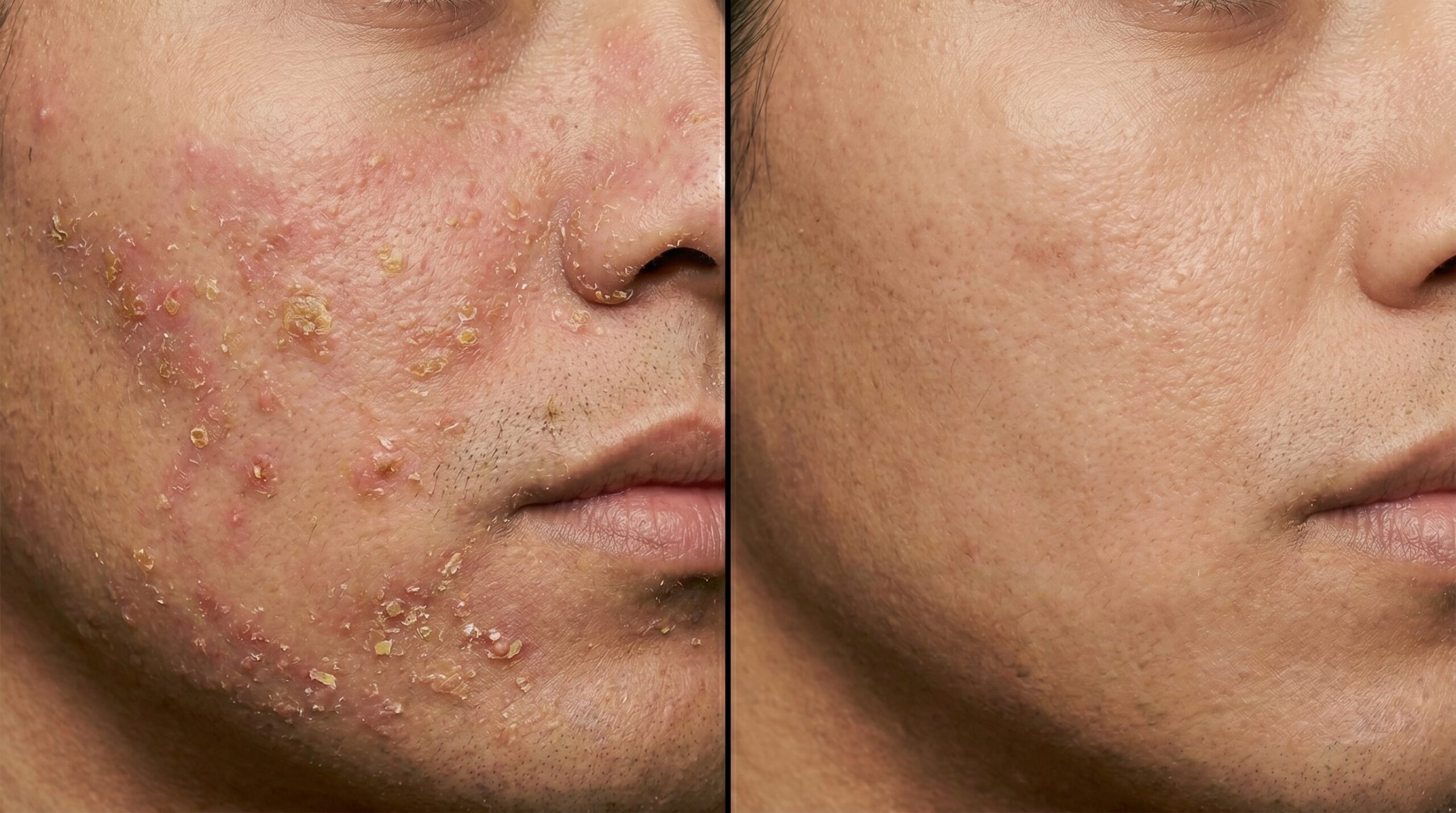
Individual results vary. Seborrheic dermatitis is a chronic, relapsing condition — visible improvement is achievable with appropriate treatment, but ongoing maintenance is required to sustain results.
Managing Seborrheic Dermatitis.
One Clear Plan at a Time.
Seborrheic dermatitis responds well to the right prescription regimen — but only once it has been correctly diagnosed and distinguished from conditions that look similar. At Couture Dermatology and Laser, Dr. Chinonso evaluates each affected site and prescribes a plan built for long-term control, not just the current flare.
Sat · By Appointment Only
"I'd had flaking eyebrows and a red patch on my nose for years — I assumed it was just dry skin. Dr. Chinonso diagnosed it in about five minutes, explained exactly what was driving it, and gave me a simple routine that cleared it within three weeks. The difference is real."
Daniel W.
Verified Patient · Beverly Hills
Frequently
Asked Questions
Direct answers to the questions patients most commonly ask before their seborrheic dermatitis consultation — on cause, treatment options, realistic expectations, and long-term management.
No. Seborrheic dermatitis is an inflammatory skin condition driven by an individual's immune response to Malassezia, a yeast that lives on all human skin. Washing more frequently does not prevent it and can sometimes worsen irritation. It is not contagious and carries no stigma — it is simply a chronic skin condition that requires proper medical management.
There is no permanent cure. The condition is chronic and relapsing by nature, meaning it can be controlled very effectively but will require ongoing maintenance. With a consistent regimen — antifungal cleansers used regularly, topical treatments as needed, and scheduled follow-ups — most patients achieve long stretches of clear skin with minimal flares.
Facial involvement (eyebrows, nasolabial folds, around the ears) is treated with prescription topical antifungal creams such as ketoconazole or ciclopirox. For acute flares, a brief course of low-potency topical corticosteroid is sometimes used. Topical calcineurin inhibitors — tacrolimus or pimecrolimus — are preferred for long-term facial use because they control the inflammatory component without the skin-thinning risk associated with prolonged steroid use on the face.
Stress alters immune regulation and sebum production, both of which influence how the skin responds to Malassezia yeast. Cold, dry weather reduces the skin barrier's resilience and can increase scaling. Identifying personal triggers — stress, diet, seasonal changes, or certain skincare ingredients — is part of the management plan we develop with each patient.
Yes. Seborrheic dermatitis is significantly more common and more difficult to control in individuals with Parkinson's disease and in those who are immunosuppressed, including HIV/AIDS. If your seborrheic dermatitis is unusually severe or sudden in onset, your dermatologist may recommend evaluation for underlying conditions.
Dandruff (pityriasis capitis) is generally considered a mild, non-inflammatory form of the same condition. It produces fine, dry or greasy flaking without significant scalp redness. Seborrheic dermatitis of the scalp involves visible inflammation, thicker scale, and sometimes itching or soreness. Both are managed with antifungal shampoos, but more severe scalp disease may require prescription-strength treatment.