
Skin Tag
Removal
Skin tags are among the most common benign growths a dermatologist sees — soft, harmless, and entirely treatable in a single in-office visit. At Couture Dermatology and Laser, we confirm the diagnosis first, choose the right removal method for the location and size, and have you out the door within minutes. No home remedies, no guesswork, no scarring.
most skin tags
procedure time
Dermatologist
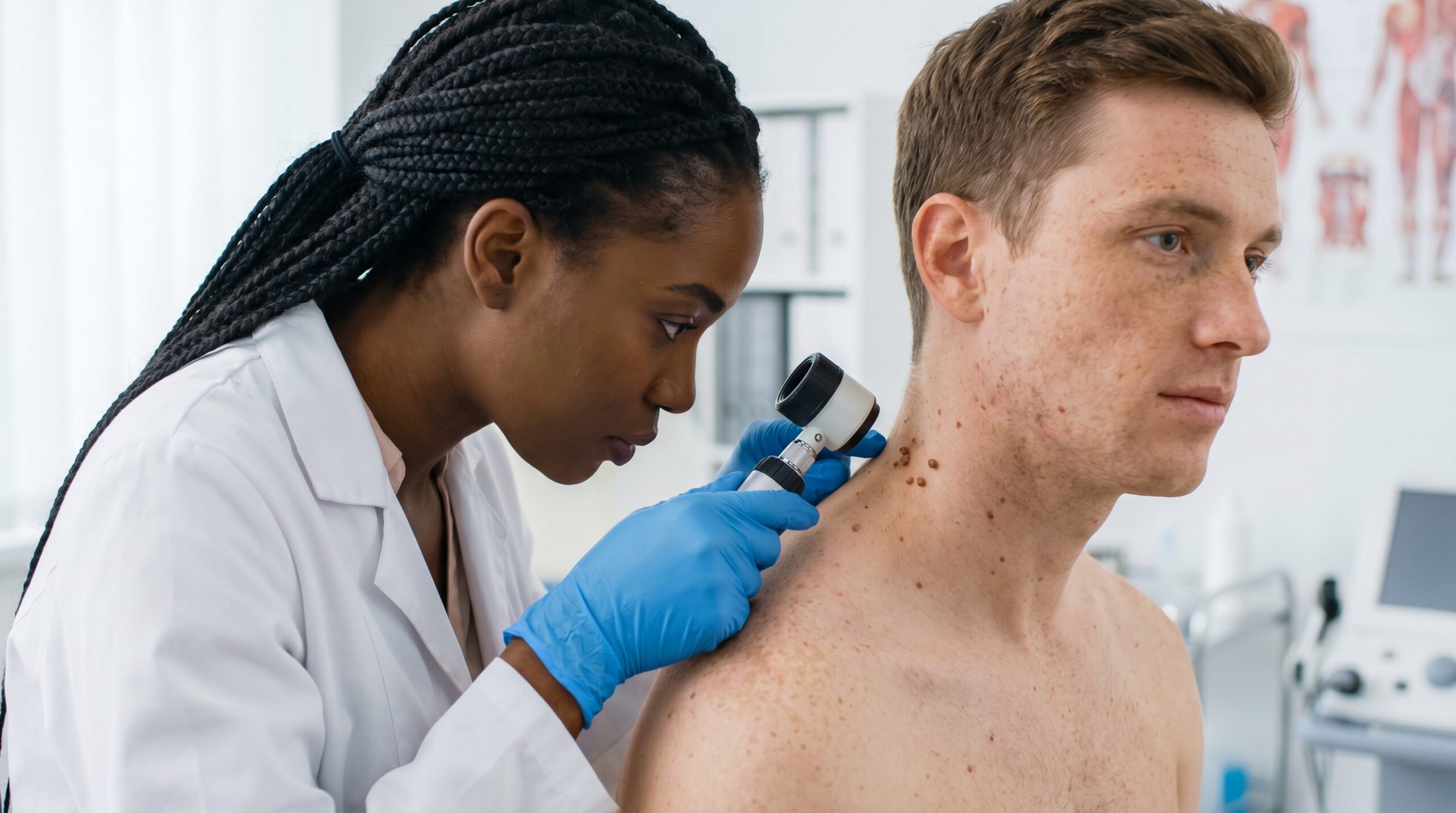
"Every growth deserves a proper look. Diagnosis before removal — not the other way around."
Soft. Benign.
Easily Removed.
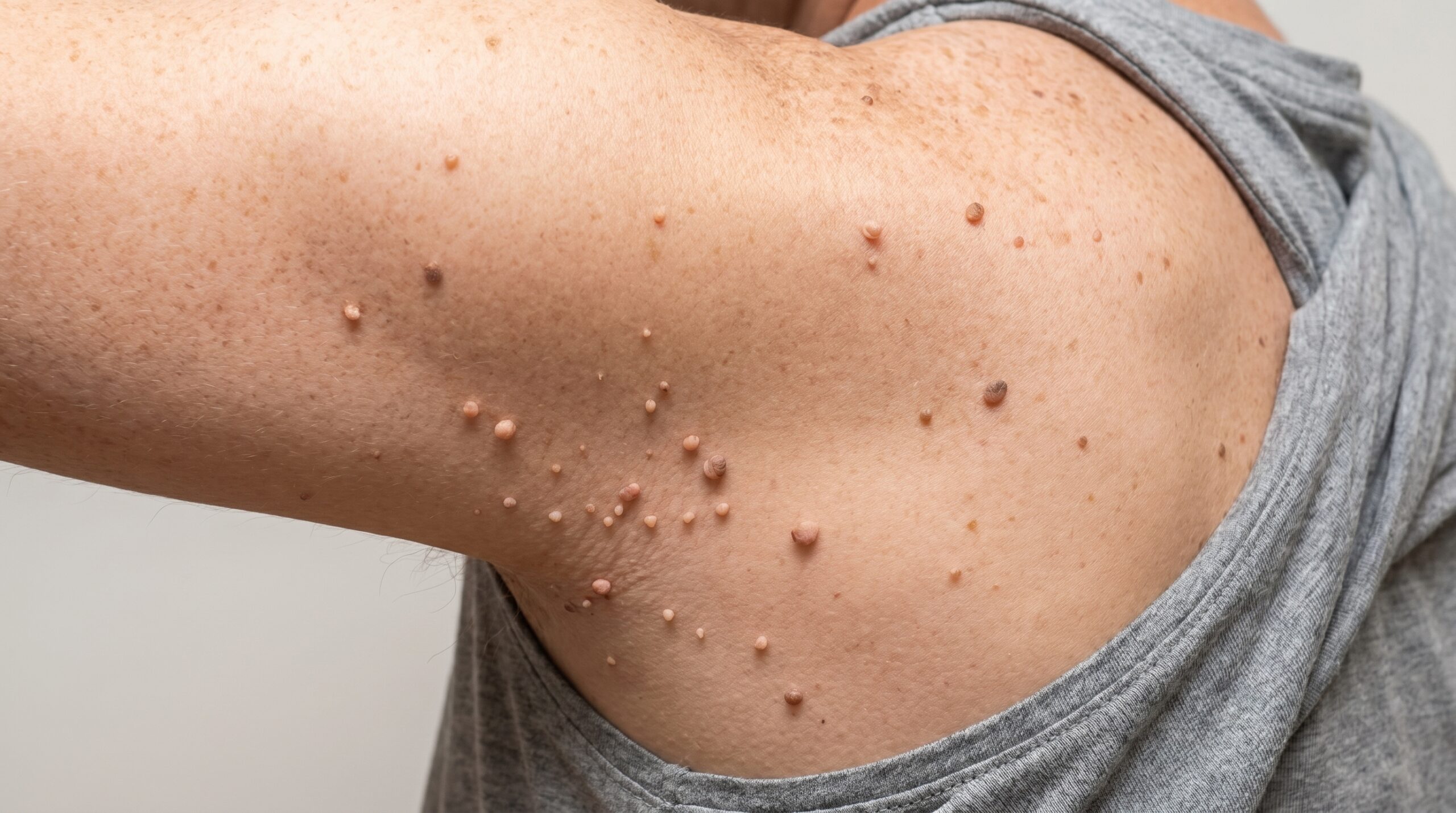
A skin tag — clinically an acrochordon or fibroepithelial polyp — is a small, soft growth attached to the skin by a thin stalk called a peduncle. They are skin-colored to slightly tan or darker, and they cause no medical harm. What they do cause is friction against clothing and jewelry, occasional twisting and inflammation, and for many patients, simply the nagging awareness that they are there.
They form where skin rubs against skin or fabric — neck creases, underarms (axillae), eyelid margins, groin folds, and under the breasts are the most common spots. Contributing factors include friction, obesity and insulin resistance, pregnancy, advancing age, and genetics. They are not contagious and cannot spread from person to person.
A dermatologist should examine any growth that bleeds without trauma, is changing rapidly, or looks different from a typical soft tag — other lesions including warts, seborrheic keratoses, and rarely something more serious can look similar to the untrained eye.
From Exam
to Done
Skin tag removal at Couture Dermatology and Laser follows a straightforward clinical sequence: confirm the diagnosis, select the right method, remove it cleanly, and advise on healing.
Clinical Examination
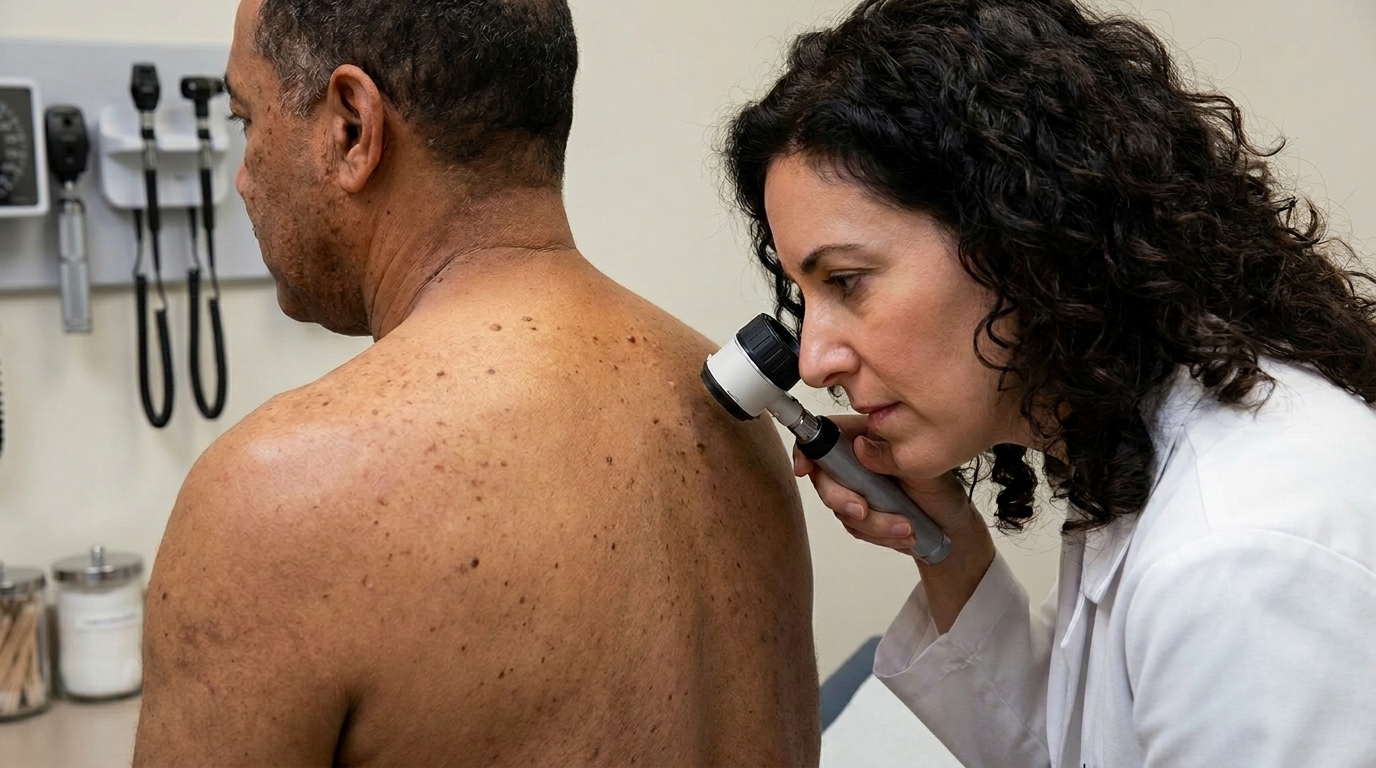
Dr. Chinonso examines each growth carefully. A tag that is soft, pedunculated, and skin-colored in a friction zone is typically straightforward. Anything that bleeds, changes, or looks atypical gets a closer look — and pathology if indicated.
Diagnosis firstMethod Selection
Small tags on the neck or underarm are usually snipped with fine sterile scissors — fast and precise. Cryotherapy suits certain smaller lesions. Larger or more vascular tags, and those in delicate areas, may be treated with electrocautery for clean hemostasis.
Tailored to location & sizeIn-Office Removal
The procedure itself takes minutes. Local anesthetic is used when comfort warrants it — particularly for eyelid-area tags or clusters of larger lesions. The site is cleansed and dressed; most patients leave without a bandage at all.
Same visitHealing & Follow-Up
Treated sites typically heal within one to two weeks. Once a tag is properly removed, that site does not regrow. New tags may develop elsewhere over time — we counsel patients on friction reduction and let them know when to return.
Heals in 1–2 weeksThree Precise
Techniques
The right removal method depends on the tag's size, location, and vascularity. Each technique has its place — and the choice matters for comfort, healing, and cosmetic outcome.
Most Common Method
Snip Excision
Fine sterile scissors cut the tag cleanly at its stalk in a single motion. This is the preferred approach for the majority of skin tags — it is fast, precise, and leaves minimal evidence of the procedure. Bleeding is negligible and stops quickly with gentle pressure.
Cold Destruction
Cryotherapy
Liquid nitrogen freezes the tag, causing the cells to die and the lesion to fall off within one to two weeks. Well-suited to smaller tags where a needle or scissors would be disproportionate. A brief stinging sensation is normal during application.
Larger or Vascular Tags
Electrocautery
A fine electric current destroys the tag tissue and seals the blood supply simultaneously — the cleaner choice for larger or more vascular lesions where a snip alone may cause more bleeding. Local anesthetic is typically applied first to ensure patient comfort.
When Warranted
Pathology Review
Any removed growth that appears atypical — unusual pigmentation, irregular border, rapid growth, or bleeding — is submitted for histopathologic review. This is not routine for every tag, but it is the responsible step when clinical appearance raises any question.
Quick. Safe.
Done Right.
Correct Diagnosis Before Removal
Warts, seborrheic keratoses, moles, and even rare malignant lesions can resemble a skin tag. A board-certified dermatologist confirms the diagnosis before anything is removed — something no home remedy or medispa can safely offer.
Fast In-Office Procedure
Most removals take a few minutes from start to finish. There is no preparation required beforehand and no recovery period afterward. Patients go straight back to their day — no bandage, no downtime, no wound care beyond basic hygiene.
No Risk of Home-Removal Complications
Tying, clipping, or burning a tag at home carries a real risk of bleeding, infection, and scarring — and eliminates the chance to examine the lesion. The in-office procedure is cleaner, safer, and takes no longer than the home attempt would.
Benign Peace of Mind
For patients who have been unsure whether a growth is "just a tag," having it examined and confirmed as benign — or appropriately biopsied if not — is often the most valuable part of the visit. That reassurance has real value.
Multiple Tags, One Visit
There is no clinical reason to treat one tag at a time. Multiple skin tags across different locations can typically be addressed in a single visit, making it efficient and cost-effective for patients with several tags they have been putting off.
"The procedure is minor. The peace of mind from a confirmed diagnosis is not."— Couture Dermatology and Laser
site healing
Board-Certified
Every removal is performed by Dr. Chinonso Kagha Abisogun, MD, FAAD — a Fellow of the American Academy of Dermatology
Diagnosis First
We examine every growth before removal. Atypical or bleeding lesions get pathology — not a rushed snip and send-off
Right Tool, Right Tag
Snip excision, cryotherapy, or electrocautery — the method is chosen to minimize discomfort and optimize the cosmetic result
No Home Risks
Professional removal eliminates the bleeding, infection, and scarring risks that come with ligature or DIY methods
Where Skin Tags
Form
Skin tags favor areas where skin contacts skin or clothing repeatedly. Any of these locations can be treated safely in a single in-office visit.
Neck
The most common site — collar friction and skin-on-skin contact in neck creases make this the classic location for clusters of small tags.
Underarms (Axillae)
Constant arm movement creates persistent skin friction. Tags in the axillae are common and often catch on clothing or deodorant application.
Eyelids
Delicate eyelid-margin tags are among the most bothersome cosmetically. Removal in this area requires a careful, precise technique — and proximity to the eye should always be handled by a dermatologist.
Groin
Skin folds in the inguinal crease are a high-friction zone. Tags here may go unnoticed for years before they begin to cause irritation or discomfort.
Under the Breasts
The inframammary fold is prone to skin tag formation from bra friction and skin-to-skin contact. Tags in this area can become irritated and inflamed if left untreated.
Other Skin Folds
Any area of repetitive friction — including the back, abdomen folds, or inner thighs — can develop acrochordons. We treat all locations in the same visit.
Is Skin Tag Removal
Right for You?
- Anyone with one or more soft growths on a stalk in a friction zone — neck, underarms, groin, eyelids, or under the breasts — that are confirmed or suspected to be skin tags.
- Patients whose tags are catching on clothing, jewelry, or bra straps and causing repeated irritation or bleeding at the stalk.
- Those who have tried to ignore growths but want a professional confirmation that what they have is genuinely benign before deciding whether to remove them.
- Patients with a growth that has recently bled without obvious trauma, changed in appearance, or differs from their other tags — which warrants examination rather than home removal.
- Those who want tags removed for cosmetic reasons — particularly around the neck, face, or eyelids — and want a clean result without scarring from improper removal.
- Patients who have been putting off home removal and want a fast, safe, single-visit solution without the bleeding and infection risk of a DIY approach.
A Word on Home Removal
Tying a tag with thread, clipping it with nail scissors, or burning it with a topical agent are all approaches that carry real risks: uncontrolled bleeding, skin infection, and scarring at the site. They also remove the only chance to have the lesion examined — which matters if the growth is not actually a benign tag.
The in-office procedure takes minutes, causes minimal discomfort, and leaves no meaningful downtime. It is not a procedure patients should feel they need to manage at home. Dr. Chinonso will confirm the diagnosis, select the appropriate technique, and have you done before you would have finished reading instructions for a home kit.
Often Seen
Alongside…
Patients coming in for skin tag removal often have other benign skin growths that can be addressed in the same visit — or concerns that pair naturally with a medical derm evaluation.
Mole Evaluation
Moles and skin tags are often confused. A mole check at the same visit ensures nothing atypical is overlooked — and concerning moles can be biopsied on the spot if needed.
Explore mole evaluation →Cyst Removal
Epidermal cysts are another common benign growth that patients often want addressed alongside skin tags. Both can be handled in a single medical derm visit.
Explore cyst removal →Wart Treatment
Warts are sometimes mistaken for skin tags — they are caused by HPV and require different management. Confirming the diagnosis and treating warts properly is part of what a board-certified dermatologist does at the same evaluation.
Explore wart treatment →Skin Rashes & Irritation
The friction zones where skin tags form are also prone to intertrigo and contact dermatitis. If redness or irritation accompanies your tags, we evaluate and manage both in the same appointment.
Explore skin rash care →Results That Speak for Themselves
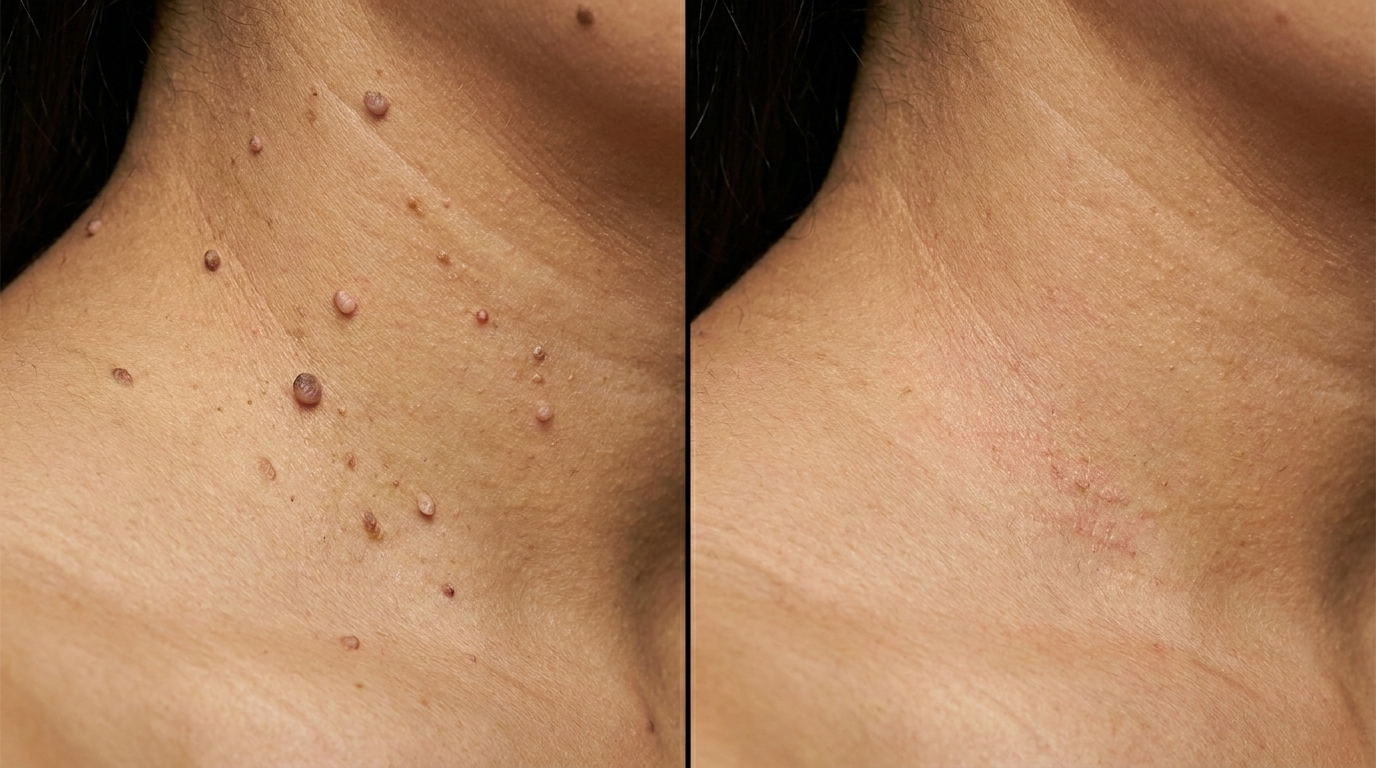
Individual results vary. Treated sites typically heal fully within one to two weeks. New skin tags may develop at other locations over time.
Confirmed Diagnosis.
Gone in One Visit.
At Couture Dermatology and Laser, Dr. Chinonso examines each growth carefully before removing it — confirming it is benign, choosing the right method, and sending anything atypical to pathology. Most patients leave the same day with nothing to show for it but clean, smooth skin.
Sat · By Appointment Only
"I had six tags on my neck I had been too embarrassed to deal with for years. Dr. Chinonso looked at each one, confirmed they were benign, and removed them all in one visit. Genuinely painless, and they were just gone. I wished I had come in sooner."
Diane R.
Verified Patient · Beverly Hills
Frequently
Asked Questions
Straightforward answers to the questions patients most often ask before their skin tag removal visit — on safety, methods, healing, recurrence, and cost.
No. Skin tags are benign fibroepithelial polyps — they do not turn into cancer and are not contagious. However, any growth that bleeds without trauma, changes rapidly in size or color, or looks atypical should be examined by a dermatologist and may warrant a biopsy to rule out other lesions.
We strongly advise against home removal. Tying, clipping, or burning a tag at home risks bleeding, infection, and scarring. Perhaps more importantly, home removal removes the opportunity for a dermatologist to confirm the diagnosis — other lesions such as warts, moles, or rarely something more serious can closely resemble a skin tag to the untrained eye.
The method depends on the size, location, and vascularity of the tag. Small tags on the neck or underarms are typically removed with sterile scissors (snip excision). Cryotherapy is used for some smaller lesions. Larger or more vascular tags, particularly those on the eyelid margin or groin, may be treated with electrocautery or electrodesiccation, sometimes with a small amount of local anesthetic for comfort.
Most small tags can be snipped or frozen with minimal discomfort — many patients describe a brief sting. Larger or more sensitive lesions, particularly near the eyelids or groin, may benefit from a small amount of local anesthetic to ensure the procedure is comfortable. Healing at the treated site is typically complete within one to two weeks.
The treated tag itself will not regrow at the same site once properly removed. However, new skin tags can and often do develop elsewhere over time, particularly in people with contributing factors such as friction, metabolic risk factors, or a genetic predisposition. We discuss realistic expectations during your consultation.
Skin tag removal is typically considered a cosmetic procedure and is not covered by insurance unless the tags are causing documented functional problems such as bleeding or significant irritation. Our team can discuss self-pay pricing and what to expect at your consultation. We do not bill insurance for purely cosmetic removals.