Hair
Restoration
Hair loss is a medical condition, not a cosmetic one. Effective treatment begins with diagnosis — identifying whether your shedding is genetic, hormonal, nutritional, or autoimmune — before any procedure is recommended. At Couture Dermatology and Laser, we combine PRP, exosome therapy, prescription topicals, and laser stimulation into a single, supervised programme that treats the cause and rebuilds density from the follicle level up.
Initial protocol
Peak density gain
Dermatologist
"Hair loss treatment without a diagnosis is just expensive optimism — every protocol must start with knowing why the follicles are failing."

Diagnosis First.
Density Second.
Hair loss is not a single disease. Androgenetic alopecia (genetic pattern hair loss) is driven by DHT sensitivity at the follicle. Telogen effluvium is diffuse shedding triggered by stress, illness, or medication. Alopecia areata is autoimmune. Traction alopecia is mechanical. Each requires a different protocol — and none responds well to a generic "hair growth package."
At Couture Dermatology and Laser, every hair restoration consultation begins with a full medical workup: scalp examination under magnification (trichoscopy), hair density mapping, and a panel of bloodwork to rule out thyroid disease, iron deficiency, vitamin D status, hormonal imbalance, and other systemic contributors that can mimic or worsen pattern hair loss.
Only once the cause is identified do we build the protocol — a combination of in-office regenerative procedures (PRP or exosomes), prescription topicals and oral medications, and adjunctive low-level laser therapy. The result is a programme that treats the cause, not just the cosmetic appearance.
From Workup
to Regrowth
Hair restoration is a long-game protocol. The clinical sequence — diagnose, stabilise, regenerate, maintain — is what separates dermatologist-led care from medspa quick fixes.
Medical Diagnosis
Full scalp examination, trichoscopy, hair density mapping, and bloodwork to identify hormonal, nutritional, or autoimmune causes before any protocol is built.
Bloodwork includedStabilise Shedding
Prescription topical minoxidil and, where appropriate, oral medications (finasteride, spironolactone, oral minoxidil) are started first to halt active shedding before regenerative treatment.
Phase 1: stabilisationRegenerative Sessions
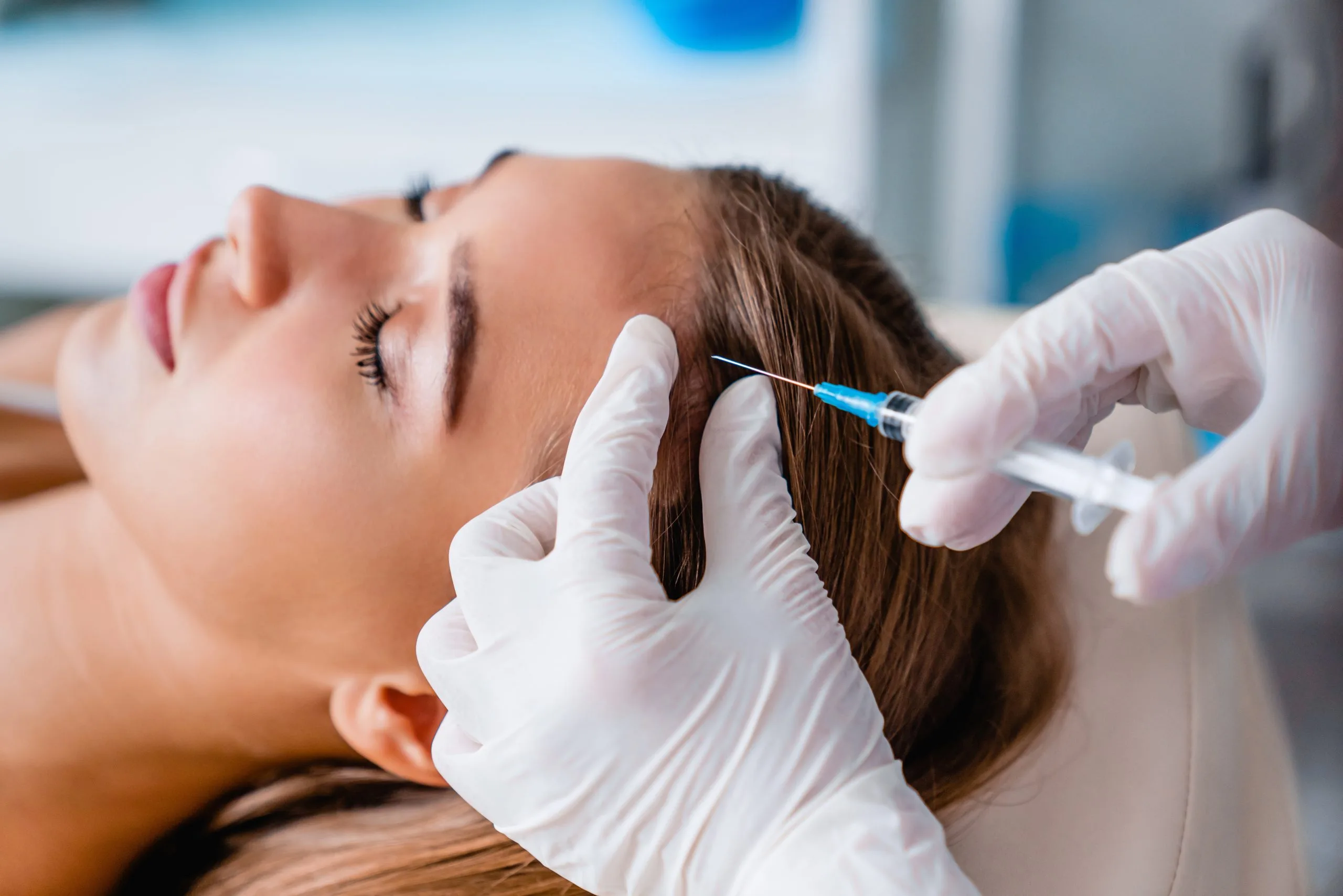
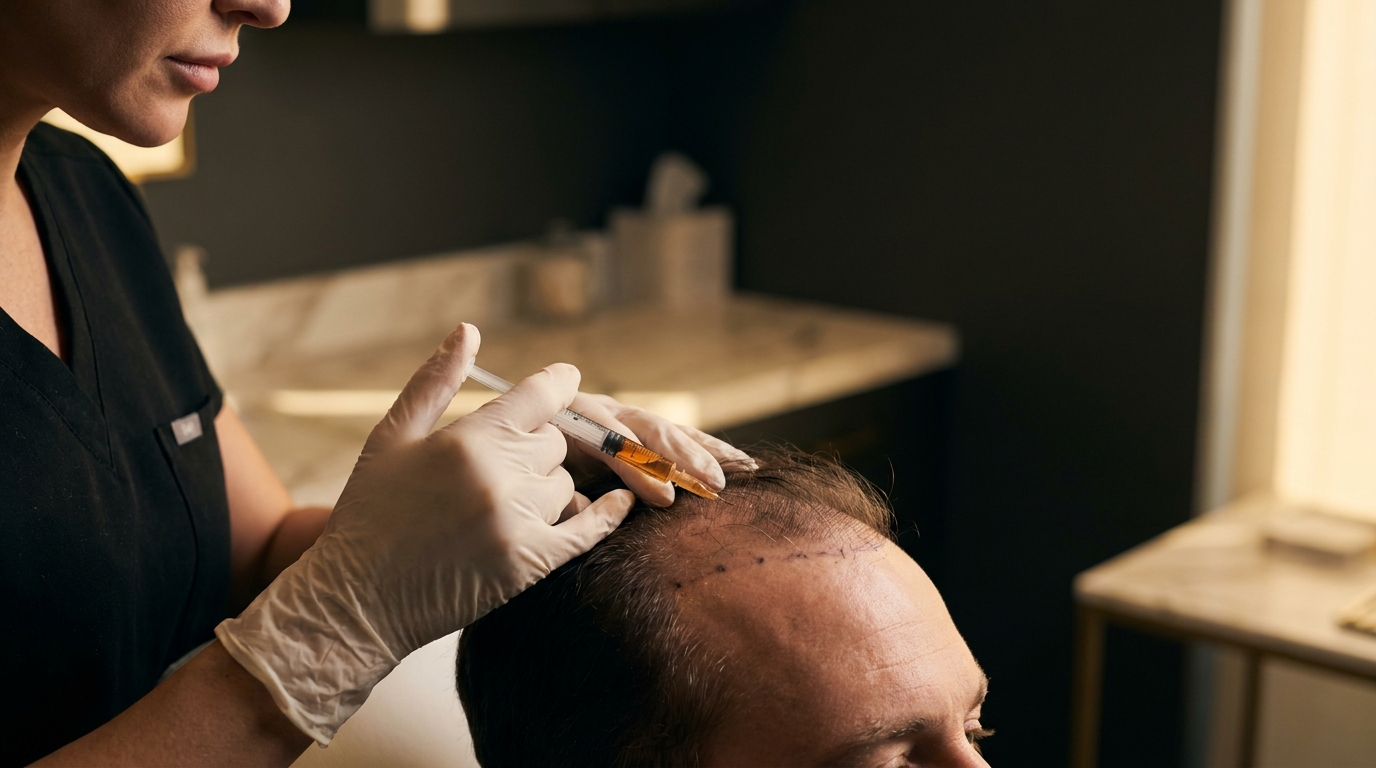
PRP or exosomes are injected into the scalp across the thinning zones using a microneedling delivery technique. Series of 3 to 6 sessions spaced 4 to 6 weeks apart.
45–60 minutes per visitLong-Term Maintenance
Maintenance PRP every 6 to 12 months, ongoing prescription support, and low-level laser cap therapy at home protect the density gains for years to come.
Lifelong protocolHair Restoration
Modalities
No single therapy treats every cause of hair loss. These four clinical components form the toolkit — layered together in the protocol your diagnosis indicates.
The Regenerative Workhorse
PRP (Platelet-Rich Plasma)
Your own blood is drawn, centrifuged to concentrate platelets and growth factors, and injected into the scalp where follicles are miniaturising. Backed by decades of peer-reviewed research for androgenetic alopecia and female pattern hair loss.
Next-Generation Stimulator
Exosome Therapy
Lab-derived signalling vesicles from stem cells deliver a far higher concentration of growth factors and regulatory proteins than PRP. Often produces faster, more potent results — particularly for patients who have plateaued on PRP alone.
Prescription Foundation
Topical & Oral Therapy
FDA-approved topical minoxidil and oral medications — finasteride for men, spironolactone or oral minoxidil for women — form the medical foundation. Compounded formulas are also available for difficult cases or specific intolerances.
Home Maintenance
Low-Level Laser Therapy
FDA-cleared laser caps and combs use red light to stimulate dermal papilla cells and prolong the anagen (growth) phase. Used at home several times per week to extend and protect in-office treatment gains.
Denser Hair.
Healthier Scalp.
Reduced Shedding First
Within 6 to 8 weeks of starting treatment, most patients report a noticeable reduction in daily hair fall — fewer hairs in the shower, on the pillow, on the brush. Stabilising the shedding is the prerequisite for visible regrowth.
Visible Density & Regrowth
Increased hair density, thicker individual shafts, and new vellus-to-terminal hair conversion become visible at 3 to 6 months. The crown, frontal hairline, and parts that had widened progressively become fuller and tighter.
Healthier Scalp Environment
PRP and exosomes do not just stimulate follicles — they improve scalp microcirculation, reduce inflammation, and create a healthier environment for existing hairs to thrive. Many patients also report improvement in scalp itch and irritation.
Non-Surgical, No Anaesthesia
Unlike hair transplant surgery, our protocols are non-invasive — no scalpels, no donor area, no recovery week. Patients return to work the same day with no visible signs of treatment beyond minor scalp redness for a few hours.
Treats the Cause, Not Just the Symptom
Because every protocol begins with a proper diagnosis, we address the actual driver of your hair loss — DHT sensitivity, iron deficiency, thyroid imbalance, post-partum hormonal shift — not just the cosmetic appearance. This is what generic packages cannot offer.
"The patients who succeed at hair restoration are the ones whose dermatologist is willing to say 'I don't know yet — let's run the bloodwork first.'"— Couture Dermatology and Laser
density gain
Board-Certified
Every hair restoration protocol is designed and supervised by Dr. Chinonso Kagha Abisogun, MD, FAAD — a Fellow of the American Academy of Dermatology
Diagnosis-First
Full medical workup before any treatment — bloodwork, trichoscopy, and hair density mapping included as standard
Layered Protocol
PRP, exosomes, prescription medication, and laser therapy combined as your specific cause of hair loss requires
Long-Term Care
Hair loss is a chronic condition — our patients are monitored, adjusted, and maintained over years, not just one billing cycle
Hair Conditions
We Treat
Hair loss has many faces. Each diagnosis has its own protocol — what works for genetic pattern loss is rarely what works for autoimmune or post-partum shedding.
Androgenetic Alopecia
Genetic male and female pattern hair loss — the most common cause of thinning crowns, widened parts, and receding hairlines.
Female Pattern Hair Loss
Diffuse thinning over the crown and widening part — treatable with PRP, oral minoxidil, spironolactone, and exosomes.
Telogen Effluvium
Diffuse shedding triggered by stress, illness, surgery, or medication. Usually reversible once the underlying trigger is addressed.
Post-Partum Hair Loss
The hormonal shedding that begins 2 to 6 months after delivery — responds beautifully to PRP, supplementation, and topical care.
Traction & Scarring Alopecias
Hair loss from tension hairstyles or inflammatory conditions like LPP and CCCA — requires careful medical management.
Eyebrow & Beard Restoration
PRP and exosome microinjection can restore density to sparse eyebrows and patchy beards alongside scalp protocols.
Is Hair Restoration
Right for You?
- Adults noticing increased shedding, widened parts, a thinning crown, or a receding hairline that has progressed over the last 6 to 24 months.
- Women experiencing post-partum hair loss, menopausal thinning, or hormonal shedding linked to PCOS or thyroid disease.
- Men in the early-to-moderate stages of androgenetic alopecia who want to preserve and densify what they have before considering transplantation.
- Patients who have tried over-the-counter products without results and want a properly diagnosed, prescription-supported medical protocol.
- Those seeking a non-surgical alternative to hair transplant, or wanting to optimise scalp condition before considering a transplant procedure.
- Patients comfortable with a long-term protocol — hair grows slowly, and meaningful improvement requires consistency over months and years.
Honest Expectations
Hair restoration is not magic. PRP and exosomes can wake dormant or miniaturising follicles, but they cannot regrow hair where the follicle has been permanently lost (scarred or end-stage bald skin). Patients with very advanced loss may benefit from a combined plan including hair transplantation.
Results are also gradual — measured in months, not weeks. The first 6 to 8 weeks may show only reduced shedding; visible regrowth takes 3 to 6 months minimum, with peak results at 6 to 12 months. Long-term maintenance is non-negotiable — stopping treatment typically means returning to baseline within 6 to 12 months.
Extend the Result
With…
Hair restoration works best when paired with treatments that improve scalp health, support general dermatologic care, and refine the surrounding facial framework.
Scalp Microneedling
Microneedling the scalp enhances absorption of topical minoxidil and supports collagen and microcirculation around the follicles — pairs powerfully with PRP for amplified results.
Explore microneedling →Medical Skincare
Many patients with hair concerns also benefit from professional dermatologic care of seborrheic dermatitis, scalp psoriasis, or dandruff — all of which compromise the hair growth environment.
All treatments →Nutritional Support
Iron, vitamin D, zinc, biotin, and protein status are reviewed via bloodwork. Targeted supplementation — not generic "hair vitamins" — addresses identified deficiencies.
Book consultation →Botox & Fillers
For patients investing in hair density, refining the facial frame around the hairline with neuromodulator and filler completes the overall refreshed appearance.
Explore Botox →Results That Speak for Themselves
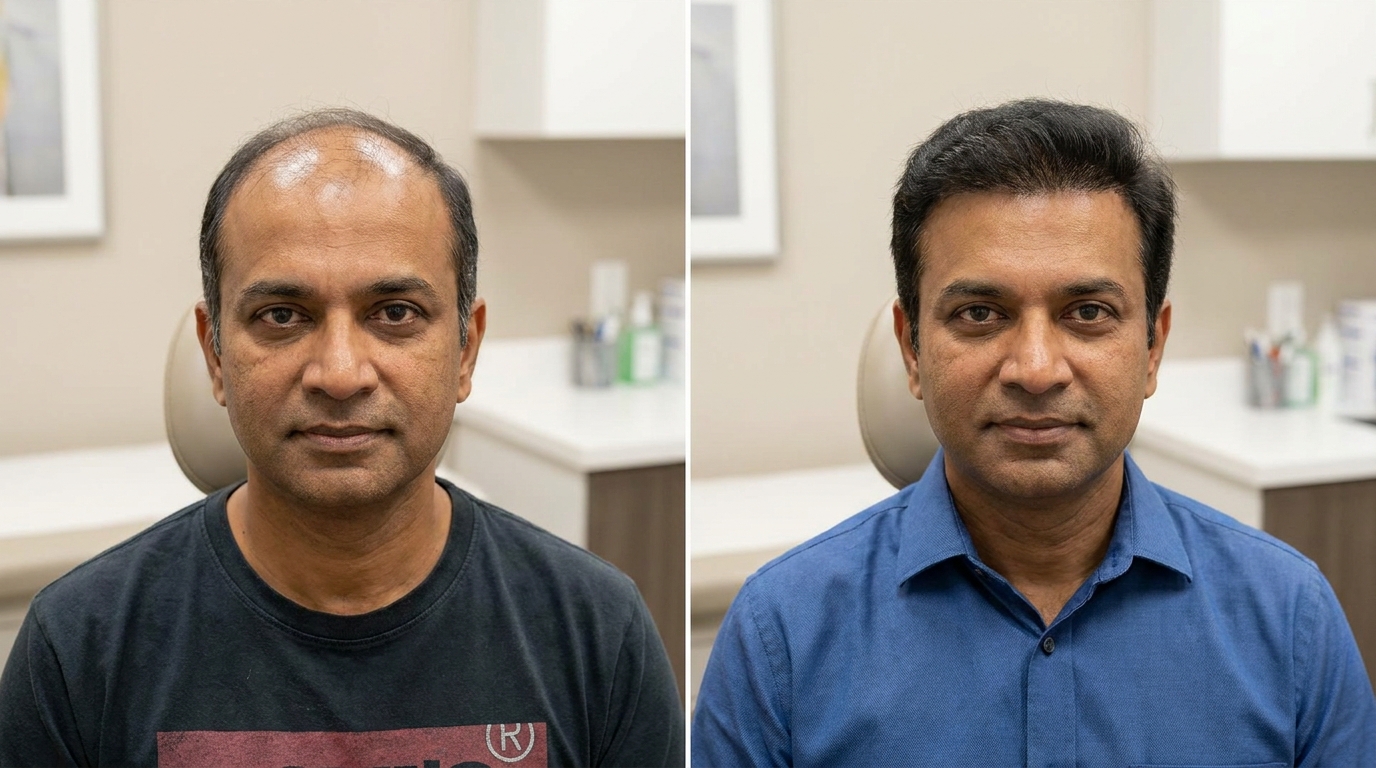
Individual results vary. Peak density gain is typically visible 6 to 12 months after starting a complete hair restoration protocol. Long-term maintenance is essential to preserve the gains.
Real Diagnosis.
Real Regrowth.
No hair restoration plan is effective without first identifying why your follicles are failing. At Couture Dermatology and Laser, Dr. Chinonso runs a full medical workup before recommending any treatment. The goal is always durable regrowth on a properly identified cause — never a one-size-fits-all hair package.
Sat · By Appointment Only
"I spent two years buying hair vitamins and topical foams that did nothing. Dr. Chinonso ran bloodwork and discovered my iron and thyroid were both off. Six PRP sessions and corrected supplementation later, my part is closing back up. The difference between a real diagnosis and a guess is everything."
Rachel S.
Verified Patient · Beverly Hills
Frequently
Asked Questions
Direct answers to the questions patients most commonly ask before their hair restoration consultation — on PRP, exosomes, timelines, and realistic expectations.
Most patients require an initial series of 3 to 6 PRP sessions spaced 4 to 6 weeks apart, followed by maintenance every 6 to 12 months. The exact protocol depends on the cause and severity of hair loss, your response to early sessions, and whether PRP is combined with exosomes or prescription medications.
Reduced shedding is often the first sign of improvement, appearing 6 to 8 weeks after starting treatment. Visible density and regrowth typically become apparent at 3 to 6 months, with peak results visible 6 to 12 months in. Hair growth is biologically slow — patience is essential.
Hair loss has many causes: androgenetic alopecia (genetic pattern hair loss), telogen effluvium (stress, illness, medication), hormonal imbalance (thyroid, PCOS, post-partum), nutritional deficiencies (iron, vitamin D, zinc), autoimmune conditions (alopecia areata), and traction or scarring alopecias. A proper diagnosis is the foundation of any effective treatment plan.
Yes — multiple peer-reviewed studies confirm that PRP increases hair density, hair thickness, and counts in patients with androgenetic alopecia. It works best in patients with miniaturizing follicles that are still alive — it cannot regrow hair in completely dormant follicles or fully scarred scalps.
PRP uses your own blood, processed to concentrate growth factors and platelets, then injected into the scalp. Exosomes are lab-derived signalling vesicles from stem cells that deliver a higher concentration of growth factors and regulatory proteins. Exosomes can produce faster, more potent results — PRP remains the well-established standard. Both can be used together.
Yes. Female pattern hair loss is highly treatable with a combination of PRP, topical and oral medications (such as minoxidil, spironolactone, or oral minoxidil), and exosomes. The clinical workup for women must rule out hormonal, thyroid, and nutritional causes before starting treatment — which we do as standard.
Related Treatments