Sclerotherapy
for Legs
Leg veins are not a surface problem. The blue-purple spider veins on your thighs and calves are fed by deeper reticular veins that laser light cannot reach. Sclerotherapy is the gold-standard medical treatment for these vessels — a precise injection of sclerosant that closes the entire vein from within. Once treated, the vessel is permanently destroyed and gradually reabsorbed by the body.
Significant clearance
Reduction achieved
Dermatologist
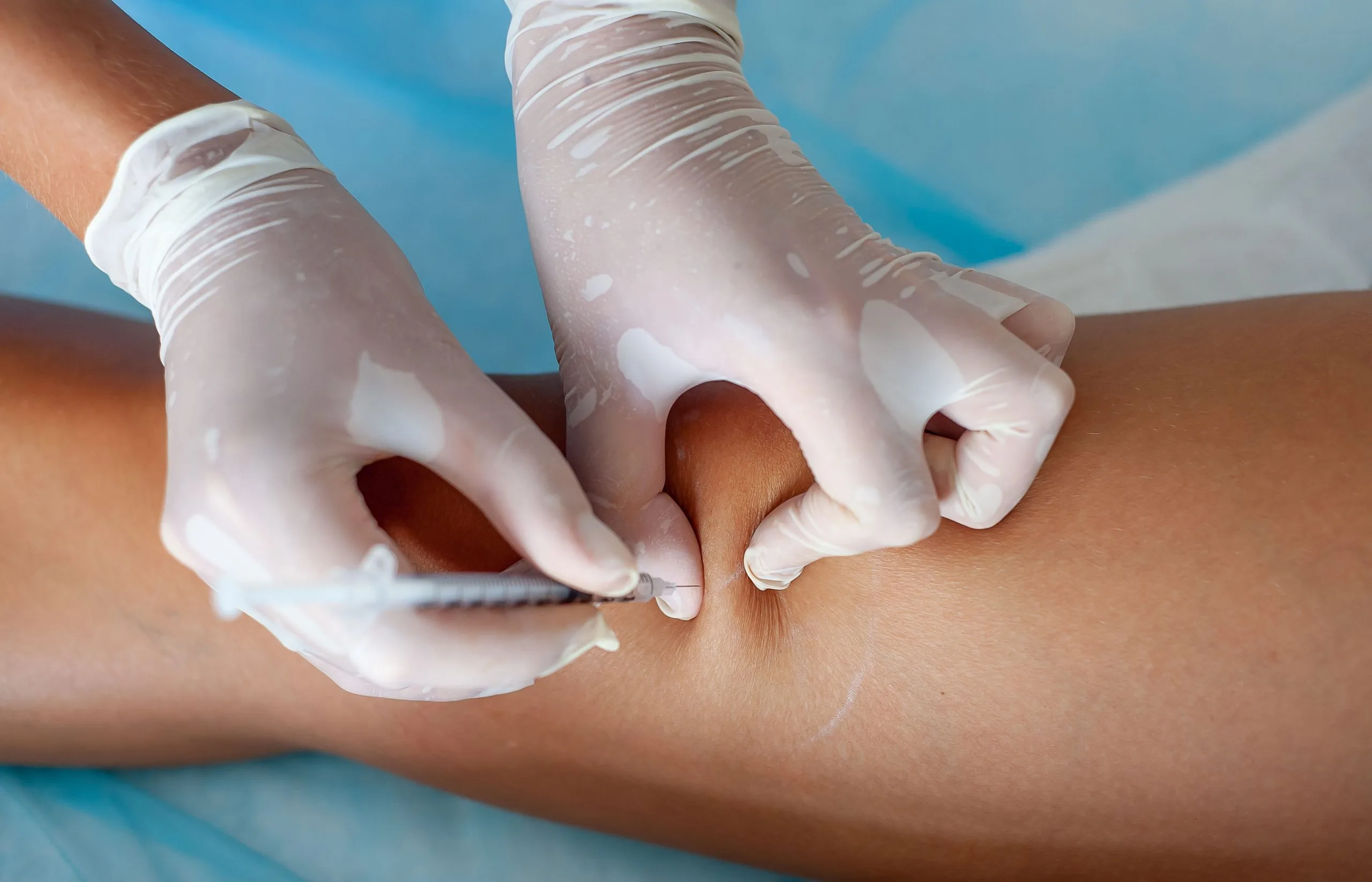
"The reticular vein feeding the surface cluster is invisible to the eye — but it is the reason laser-only protocols often fail on legs."

Treat the Feeder.
Clear the Cluster.
Sclerotherapy uses a sclerosant solution — typically polidocanol or sodium tetradecyl sulfate (Sotradecol) — injected directly into the unwanted vein. The chemical irritates the vessel's inner lining (the endothelium), causing the vein to spasm, the walls to seal against each other, and the vessel to gradually be cleared by your lymphatic system over several weeks.
The clinical insight that separates excellent results from disappointing ones is treating the reticular feeder first. The visible blue-purple "starburst" of spider veins on your leg is almost always supplied by a deeper, larger reticular vein you cannot see. If only the surface cluster is treated, new spider veins reappear within months — refilled by the same feeder.
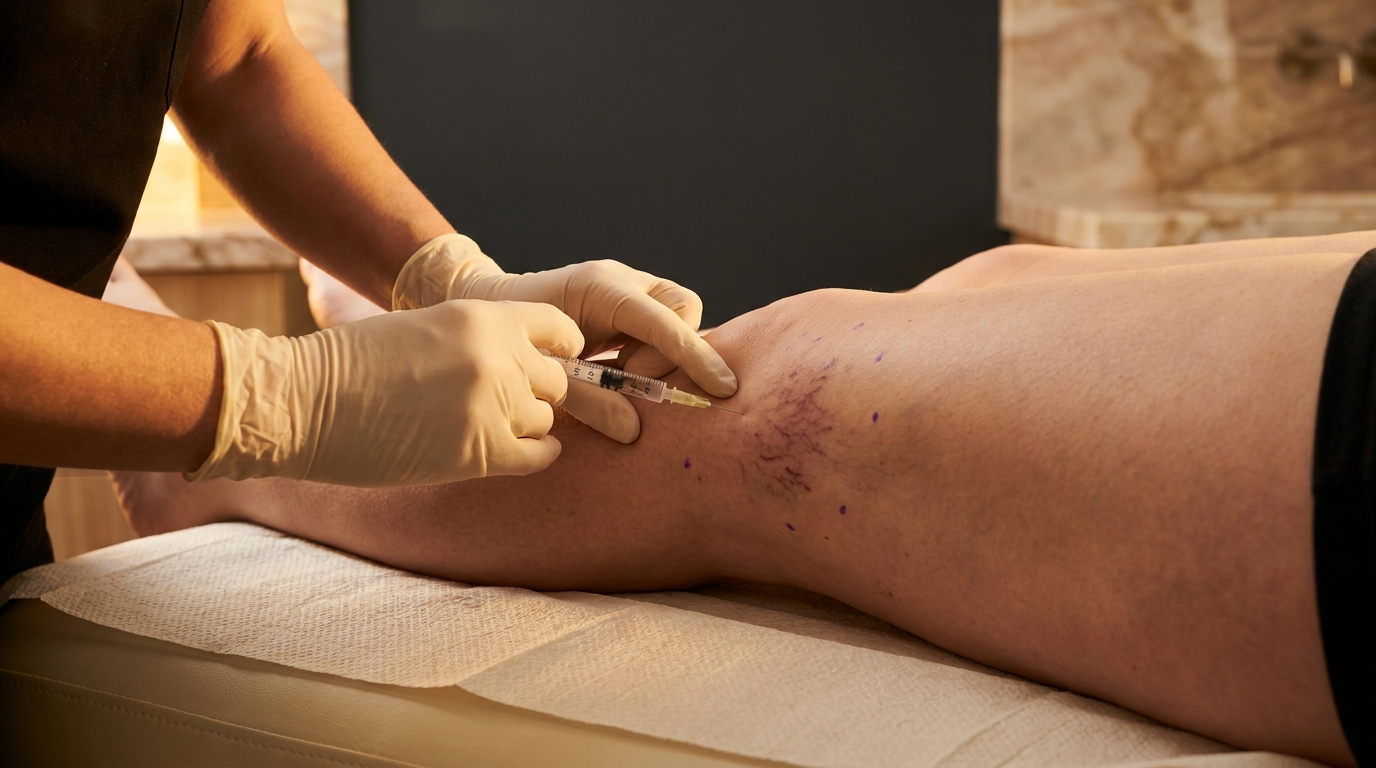
At Couture Dermatology and Laser, every leg vein assessment includes mapping the deeper venous anatomy using transillumination. We treat the reticular feeder first, then the surface cluster — the sequence that produces durable, comprehensive clearance.
From Mapping
to Clearance
Sclerotherapy is a precision procedure, not a quick spa injection. Each session is built around a careful map of your specific venous anatomy.
Vascular Mapping
Your leg veins are traced under magnification and transillumination to identify both visible vessels and the deeper reticular feeders supplying them. Photographed for record.
Reticular feeders foundSclerosant Selection
Concentration and volume are calibrated to each vein's diameter. Larger reticular feeders receive higher concentrations; fine surface telangiectasias receive diluted solutions.
Calibrated per vesselPrecision Injection
Ultra-fine 30-gauge needles deliver the sclerosant directly into each marked vessel. Reticular feeders are treated first, then surface clusters. Session length: 30 to 60 minutes.
30–60 minutesCompression & Clearance
Compression stockings are worn for 1 to 2 weeks. Treated vessels darken, then fade as they are reabsorbed over 4 to 8 weeks. Follow-up assesses any vessels needing additional treatment.
Final clearance @ 8 weeksSclerotherapy
Approaches
Not all sclerotherapy is the same. These four approaches form the clinical toolkit — chosen based on vessel size, location, and the specific pattern of your leg venous anatomy.
The Workhorse
Liquid Sclerotherapy (Polidocanol)
The gold standard for fine to medium spider veins and small reticular veins. Polidocanol is well-tolerated, FDA-approved, and contains a mild anaesthetic that softens the stinging sensation as it is injected — ideal for the vast majority of cosmetic leg vein patients.
Larger Vessels
Foam Sclerotherapy
For larger reticular and small varicose veins, the sclerosant is mixed with air to create a foam that displaces blood and contacts more vessel wall per unit volume. More effective on broader feeders that would dilute liquid sclerosant before fully working.
Stronger Concentration
Sotradecol (STS)
Sodium tetradecyl sulfate — a stronger sclerosant reserved for resistant or larger leg vessels that have not fully responded to polidocanol. Carefully selected and dosed by your dermatologist for difficult cases.
Combined Vascular Care
Sclerotherapy + Laser
For comprehensive results, sclerotherapy handles the deeper feeders and larger leg vessels; long-pulse Nd:YAG laser cleans up the finest surface telangiectasias that are too small to needle. The two modalities work synergistically.
Clearer Legs.
Lasting Confidence.
Permanent Vessel Destruction
The veins we treat are permanently closed and reabsorbed by the body. Once cleared, a treated vein cannot return — what looks like recurrence is actually new vessel formation, which is a separate phenomenon.
More Effective Than Laser for Leg Veins
For blue-purple reticular and spider veins on the legs, sclerotherapy outperforms laser-only treatment because the sclerosant reaches the entire vessel length — including the deeper feeders that laser cannot see or penetrate.
No Anaesthesia, No Surgery
A series of in-office injection sessions replaces what once required surgical vein stripping. No general anaesthesia, no incisions, no recovery week — just a brief stinging sensation per injection and a return to normal activities the same day.
Confidence in Shorts & Dresses
Patients who have spent years covering their legs with self-tanner, leggings, or jeans report a tangible shift after sclerotherapy — choosing shorts, swimsuits, and short dresses without the daily mental calculation about visible veins.
Decades of Proven Safety
Sclerotherapy is the most studied leg vein treatment in dermatology — used for over 80 years, with FDA-approved sclerosants and an extremely well-established safety profile when delivered by a board-certified physician.
"Patients return wearing the dress they had not worn in ten years. That is the real measure of a successful sclerotherapy programme."— Couture Dermatology and Laser
visible reduction
Board-Certified
Every sclerotherapy session is performed personally by Dr. Chinonso Kagha Abisogun, MD, FAAD — a Fellow of the American Academy of Dermatology
Feeders First
Reticular feeders identified and treated before surface clusters — the sequence that prevents rapid refill and disappointing recurrence
Multi-Sclerosant
Polidocanol, Sotradecol, and foam sclerotherapy on site — agent and form selected based on vessel size, not what is convenient
Combined Vascular Care
Sclerotherapy paired with Nd:YAG laser for the finest surface telangiectasias — comprehensive clearance, not selective treatment
Vessels We
Treat
Sclerotherapy is uniquely effective on the leg vascular pattern — from fine surface telangiectasias to broader reticular feeders and small varicosities.
Spider Veins (Telangiectasias)
The fine red and blue threadlike vessels visible at the skin surface — the most common cosmetic sclerotherapy indication.
Reticular Veins
The deeper blue veins that feed surface spider clusters — the critical target that prevents rapid recurrence after treatment.
Starburst Clusters
Radiating spider vein patterns around a central feeder — classic appearance, classic sclerotherapy response when the feeder is found.
Small Varicose Veins
Foam sclerotherapy can address small varicose veins under 4 mm in diameter — larger varicosities may need vascular surgical referral.
Ankle & Foot Vessels
Carefully treated with diluted protocols — these areas are more prone to pigment changes and require conservative dosing strategy.
Behind-Knee Web Veins
The fine vessel webbing behind the knee is a common sclerotherapy area — typically responds well to a single session with proper feeder identification.
Is Sclerotherapy
Right for You?
- Adults with visible spider veins, reticular veins, or small varicose veins on the thighs, calves, knees, or ankles.
- Patients tired of camouflaging leg veins with self-tanner, body makeup, leggings, or by avoiding shorts and dresses.
- Those who have tried laser-only treatments and seen disappointing or short-lived results — sclerotherapy reaches what laser cannot.
- Patients comfortable wearing compression stockings for 1 to 2 weeks after treatment — a non-negotiable for optimal results.
- Those seeking a non-surgical solution before considering vein stripping, EVLT, or other vascular surgical procedures.
- Patients seeking a dermatologist-led vascular protocol — not a one-size-fits-all medspa injection package.
Honest Expectations
Sclerotherapy will not stop new veins from forming. Genetics, pregnancy, hormonal shifts, prolonged standing, and sun exposure all contribute to new vessel development over time. Periodic maintenance is common — for new vessels, not previously treated ones.
Larger varicose veins (typically over 4 mm) often exceed sclerotherapy's effective range and may require ultrasound-guided foam sclerotherapy, endovenous laser, or vascular surgery referral. Pregnancy, breastfeeding, history of deep vein thrombosis, and sclerosant allergy are contraindications. Your dermatologist will discuss candidacy honestly.
Extend the Result
With…
Sclerotherapy clears the discrete vessels. These adjacent treatments handle the finest surface vessels, refine overall leg skin quality, and address related concerns.
Laser Spider Vein Removal
Nd:YAG laser handles the finest surface telangiectasias too small to needle — the complete vascular protocol pairs sclerotherapy for feeders with laser for the surface finishing.
Explore laser vein removal →Laser Hair Removal
For patients investing in cosmetically refined legs, permanent hair reduction is a natural pairing — smooth, vein-free, and stubble-free legs in one comprehensive care plan.
Explore laser hair removal →Body Skin Resurfacing
Fractional laser resurfacing for leg skin texture, stretch marks, and tone — completing the cosmetic story of refined, even-toned legs alongside vessel clearance.
Explore laser resurfacing →Medical-Grade Skincare
SPF 50+ is non-negotiable during a sclerotherapy series to prevent post-treatment hyperpigmentation. A dermatologist-prescribed protocol protects the investment.
All treatments →Results That Speak for Themselves
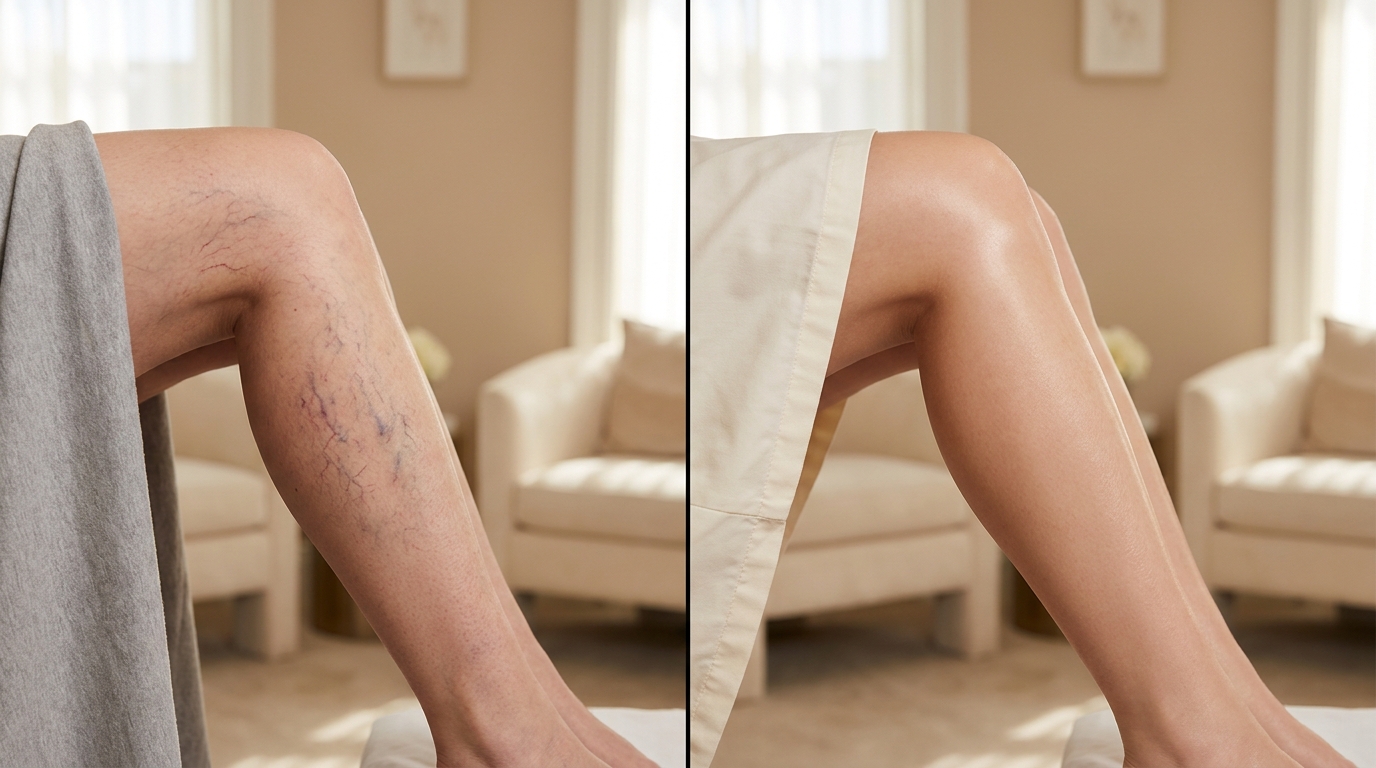
Individual results vary. Final vessel clearance is typically assessed 8 to 12 weeks after the last session as treated veins are gradually reabsorbed by the body's lymphatic system.
Clearer Legs.
One Map at a Time.
No sclerotherapy programme is effective without first mapping the deeper reticular anatomy that feeds your surface vessels. At Couture Dermatology and Laser, Dr. Chinonso traces your full venous pattern under magnification before any injection is delivered. The goal is always durable clearance — never selective treatment of what is most visible.
Sat · By Appointment Only
"I had been treated elsewhere with laser only — the veins came back within six months every single time. Dr. Chinonso found the reticular feeder I never knew about, treated that first, and then the surface clusters. Three sessions later, my legs are the smoothest they have been since my twenties."
Elizabeth M.
Verified Patient · Beverly Hills
Frequently
Asked Questions
Direct answers to the questions patients most commonly ask before their sclerotherapy consultation — on sessions, compression, comparison to laser, and realistic expectations.
Most patients require 2 to 4 sessions spaced 4 to 6 weeks apart for significant clearance. The exact number depends on the volume, depth, and pattern of visible vessels. Patients with extensive vein networks may need additional sessions; those with isolated clusters often resolve in 1 to 2 visits.
Yes — for most leg veins, sclerotherapy remains the gold-standard treatment. Laser is better for fine facial telangiectasias and patients who cannot tolerate needles, but for blue-purple reticular and spider veins on the legs, sclerotherapy delivers superior clearance with fewer sessions because the sclerosant reaches the entire vessel length, not just what the laser can see.
The needle used is ultra-fine (30-gauge), and most patients describe each injection as a brief stinging sensation. Discomfort is mild and temporary. No anaesthesia is required. The treated vessels may feel firm or tender for a few days as the body begins the reabsorption process.
There is no formal downtime — most patients return to work the same day. However, compression stockings must be worn for 1 to 2 weeks, and high-impact exercise, hot baths, and prolonged sun exposure should be avoided for 1 to 2 weeks. Mild bruising and darkened vessel lines fade over 2 to 8 weeks.
The veins we treat are permanently destroyed and gradually reabsorbed — they cannot return. However, new spider veins can develop over time due to genetics, hormonal changes, pregnancy, prolonged standing, or sun exposure. Periodic maintenance sessions may be needed to address new vessels — not previously treated ones.
Compression stockings keep the treated vessel walls closed against each other after the sclerosant has been injected, supporting optimal collapse and reabsorption. Skipping compression significantly reduces results and increases the chance of post-treatment hyperpigmentation or residual vessel staining.
Related Treatments