

If you’re searching for alopecia treatment beverly hills after noticing a widening part or more hair in the shower, the first step is to find out what may be causing the change. Hair loss can have several causes, and a supplement or product may not address the one affecting you. A dermatologist can assess your scalp and hair loss pattern, then discuss appropriate next steps.
Couture Dermatology & Laser Beverly Hills is a cosmetic and medical dermatology clinic in Beverly Hills, serving patients in the Los Angeles area. Led by Harvard-trained dermatologist Dr. Chinonso Kagha Abisogun, the practice provides personalized skincare treatments, including hair restoration and medical dermatology. The right approach to hair loss depends on your diagnosis, hair texture, skin tone, and goals.
This guide explains what a professional evaluation may involve, how treatment choices can vary by cause, and why follow-up may matter. It also covers questions to ask when comparing care options in Beverly Hills and greater Los Angeles.
Key Takeaways
- Hair loss has different possible causes, so identifying what is behind thinning is an important first step toward choosing an appropriate approach.
- A scalp assessment can help a dermatologist evaluate your hair loss pattern and consider how it fits with your history.
- When comparing alopecia treatment in Beverly Hills, look for care tailored to your diagnosis, hair texture, and skin tone rather than a one-size-fits-all remedy.
- Hair restoration is usually gradual. A consultation can help set expectations and clarify possible next steps.
- Couture Dermatology offers hair restoration and medical dermatology, which can help inform a personalized discussion about your needs.
Understanding Alopecia: Why Is My Hair Thinning?
You may notice more strands in the shower drain or on your pillowcase and wonder whether the change will pass or continue. Alopecia is the medical term for hair loss, which can be temporary or permanent. Because thinning can feel personal, it is understandable to want clear information about what is happening and what to do next.
If you’re searching for “alopecia treatment beverly hills,” look for care that considers the cause, not just the visible change. Hair restoration starts with understanding the type and pattern of loss. A clinician can then discuss options in light of your scalp, hair, and goals instead of applying a standard solution to every case.
For a visual introduction to hair loss, watch this video:
What are the different types of alopecia?
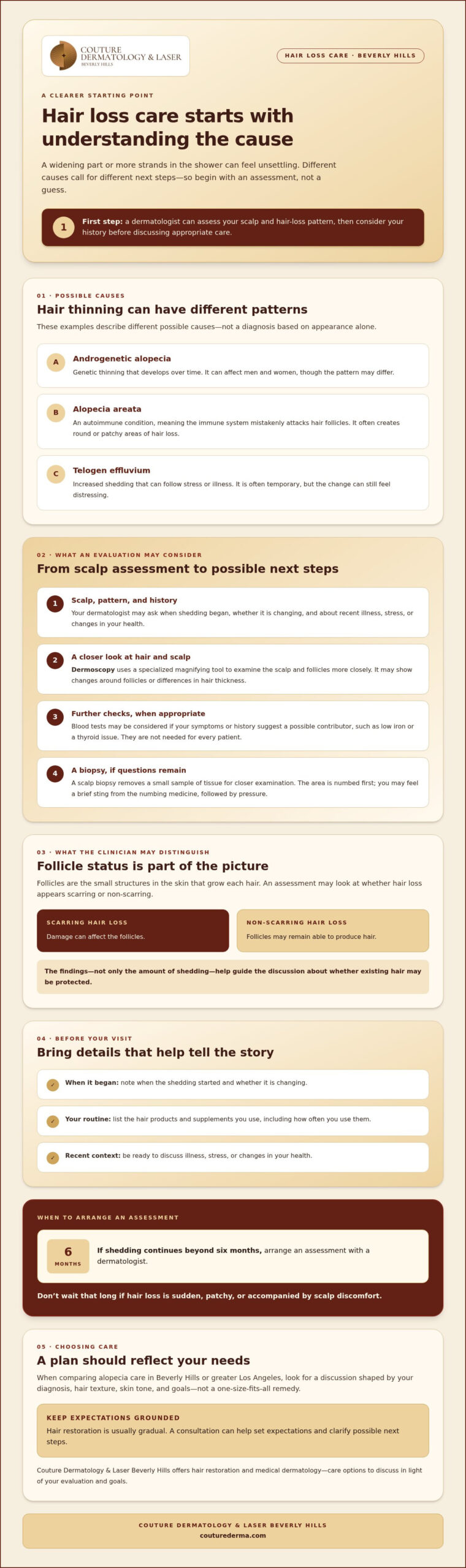
Androgenetic alopecia is genetic thinning that develops over time and can affect men and women, though the pattern may differ. Alopecia areata is an autoimmune condition in which the immune system mistakenly attacks hair follicles, often creating round or patchy areas of hair loss. Telogen effluvium is increased shedding that can follow stress or illness. It is often temporary, but the change can still be distressing. For a broader overview of hair loss types and causes, see Understanding Alopecia.
Is my hair loss permanent or temporary?
A clinician may look for signs of scarring hair loss, where damage can affect the follicles, and non-scarring hair loss, where follicles may remain able to produce hair. Follicles are the small structures in the skin that grow each hair. An evaluation can help identify the cause and assess whether existing hair may be protected. The appropriate plan depends on the findings, not only on how much hair you are shedding.
A practical guide: Note when the shedding began and whether it is changing. If it continues beyond six months, arrange an assessment with a dermatologist. Don’t wait that long if hair loss is sudden, patchy, or accompanied by scalp discomfort. If you are comparing “alopecia treatment beverly hills” options, a medical evaluation can help clarify possible causes and suitable care.
The Science of Growth: How We Diagnose Hair Loss
Before considering treatment, a dermatologist may assess your scalp, hair loss pattern, and medical history. In a Beverly Hills clinic, this evaluation can help distinguish among possible causes and determine whether further investigation is needed. Hair loss care should be based on what the assessment shows, rather than guesswork or a treatment chosen before the cause is understood.
Hair grows in cycles. The anagen phase is the active growth stage, when a hair is produced by its follicle. Examining how the hair is growing or shedding can help a clinician interpret what is happening alongside your history. This is one part of the assessment, not a diagnosis on its own.
What happens during a professional scalp exam?
A dermatologist may use dermoscopy, a specialized magnifying tool for examining the scalp and hair follicles more closely. It can reveal details such as changes around follicles or differences in hair thickness that may be hard to see with the naked eye. The clinician may also ask when the shedding began, whether you have had a recent illness or stress, and whether anything has changed in your health.
Blood tests may be appropriate if your symptoms or history suggest a possible contributor, such as low iron levels or a thyroid issue. They are not needed for every patient. The Mayo Clinic’s overview of how clinicians diagnose hair loss also describes the role of medical history, scalp examination, blood tests, and biopsy.
Before your visit: Make a list of the hair products and supplements you use, including how often you use them. Sharing this information can help your dermatologist understand your routine and consider whether anything may be affecting your scalp or hair.
Why is a biopsy sometimes necessary?
If an exam leaves important questions unanswered, a dermatologist may recommend a scalp biopsy. This involves removing a small sample of scalp tissue for closer examination and can help clarify complex causes of hair loss when other findings are not enough. The area is numbed first. You may feel a brief sting from the numbing medicine, followed by pressure. Your clinician should explain why a biopsy is being considered and what to expect before proceeding.
Additional information from an exam or biopsy can help guide a plan toward the underlying cause. If ongoing thinning concerns you, you can request a dermatology appointment to discuss an evaluation and whether alopecia treatment in Beverly Hills may suit your needs.
Couture Treatment Options: Tailoring Your Restoration
There is no single answer for thinning hair. A treatment plan depends on the cause, your scalp, and your preferences. Medical options may be considered first, with other approaches discussed when appropriate. The best next step is to understand what is driving the loss and which options fit your diagnosis. Couture Dermatology offers hair restoration and medical dermatology, so a consultation can help you discuss your concerns and possible care.
Can medical prescriptions stop my hair loss?
Minoxidil is a medicine that can support hair growth. Depending on the form prescribed or recommended, it is applied to the scalp skin as directed, rather than simply smoothed over the hair. Finasteride is a pill that reduces the effect of a hormone linked to pattern hair thinning. For some patients, it may be part of a longer-term plan to help maintain hair. Neither option suits everyone, so a clinician considers the cause of hair loss and medical history before discussing them.
Set realistic expectations: visible changes from medical treatment often take time. A practical guide is to allow at least 4 to 6 months before judging whether a plan is helping, while following your dermatologist’s instructions and checking in about concerns. For an overview of options for alopecia areata, the American Academy of Dermatology explains alopecia areata diagnosis and treatment.
What is PRP therapy for hair restoration?
Platelet-rich plasma (PRP) is a concentration of platelets and growth factors prepared from your own blood. Blood is drawn and spun in a centrifuge, a machine that separates its components. The prepared plasma is then used in the scalp with the aim of supporting hair follicles. PRP is not suitable for every cause of hair loss, and it should not replace a medical evaluation. Ask a dermatologist whether it is relevant to your diagnosis and what alternatives may be considered.
Hair restoration can also be part of a broader aesthetic plan. If you’re exploring facial treatments as well, learn about our jawline contouring treatment.
How do lasers help with hair growth?
Low-level laser therapy uses light to stimulate cell activity and is a non-invasive option for some people. Its role depends on the type and pattern of hair loss, and it may be considered alongside other care rather than as a universal solution. Laser treatments can serve different purposes, so do not assume a laser used for skin resurfacing or hair removal is a hair-loss treatment. In Beverly Hills, begin by getting a clear diagnosis and asking which options, if any, fit your needs.
Inclusive Care: Hair Restoration for All Skin Types
Your hair texture, styling routine, and skin tone are relevant details to discuss when assessing hair loss and possible treatment. A personalized evaluation can account for these factors rather than relying on a standard plan. Couture Dermatology offers care for all skin types, and its medical dermatology and hair restoration services can support a discussion about your individual concerns.
Traction alopecia is hair loss caused by repeated pulling on the hair, often from tight braids, extensions, or other styles that place tension on the roots. Addressing the source of tension early may help reduce further strain. A scalp assessment can also help determine whether another cause may be involved.
How do we treat hair loss in skin of color?
Melanocytes, the cells that produce skin pigment, affect how skin responds to some procedures. With darker skin tones, certain laser settings may carry a higher risk of burns or pigment changes if they are not chosen carefully. That does not mean every laser is unsuitable. The device, settings, skin, and reason for treatment all need to be considered by an experienced clinician.
A history of keloids, raised scars that can grow beyond the original injury, is also worth sharing when discussing procedures. This information can help guide decisions about treatment and aftercare, though no approach removes all risk. If braids or extensions create tension, loosening the style and giving your hair a break may help reduce strain. A break every 6 to 8 weeks may be a practical reminder, but appropriate timing depends on your hair and styling routine.
What are the best options for textured hair?
Curly and coily hair may need a different approach to handling and cleansing. Consider scalp comfort and the condition of the hair strand, not just visible density. A shampoo that cleans without leaving your hair feeling stripped may suit your routine. If you have scalp symptoms or ongoing dryness, ask your dermatologist what to look for. Couture Dermatology does not sell over-the-counter hair products, but your routine can be discussed as part of your care plan.
Hair restoration should take your texture and scalp into account, as well as the cause of thinning. If you would like to discuss a personalized evaluation, request an appointment to discuss hair restoration and whether alopecia treatment in Beverly Hills may fit your needs.
Your Transformation Journey: What to Expect
A hair restoration consultation should be a conversation about your health and goals. Useful details include when you first noticed a change, what you have tried, and what you hope to improve. If you are researching “alopecia treatment beverly hills,” look for an evaluation that considers these details before discussing possible next steps.
Hair restoration is gradual. Hair grows in cycles, so improvement takes time, and the pace depends on the cause of hair loss and the approach chosen. Some treatments may involve a temporary increase in shedding. To track changes, take photos of the areas you are watching in the same lighting and from the same angles once a month. Consistent images can make subtle differences easier to see.
Why choose a dermatologist?
A medical dermatology practice can assess hair loss as a health concern, not only an appearance issue. When comparing clinicians, ask about their dermatology training, who will evaluate your scalp, and who will guide your care. You can also check a clinician’s credentials directly.
Couture Dermatology in Beverly Hills provides personalized skincare, medical dermatology, and hair restoration. For “alopecia treatment beverly hills,” ask how a proposed plan relates to your diagnosis, skin tone, hair texture, and preferences, and how progress will be reviewed. The right approach depends on your situation, and a thoughtful discussion can help clarify your next steps.
Take the Next Step Toward a Personalized Hair Plan
Hair loss can feel deeply personal, but you do not have to guess at its cause or sort through options alone. A careful evaluation can help guide next steps. The approach should reflect your hair, scalp, skin tone, and the likely cause of the loss. Progress takes time, and the right options depend on what is driving the change.
Couture Dermatology is a cosmetic and medical dermatology clinic in Beverly Hills, serving the Los Angeles area. Led by Harvard-trained dermatologist Dr. Chinonso Kagha Abisogun, the practice offers personalized skincare treatments, including hair restoration and medical dermatology. For alopecia treatment in Beverly Hills, start with a conversation about what you have noticed and what you hope to address.
Book an appointment with Couture Dermatology to discuss hair restoration and possible next steps.
Frequently Asked Questions
Is alopecia treatment in Beverly Hills covered by insurance?
Coverage depends on your diagnosis, treatment, and insurance plan. Care for a medical cause, such as alopecia areata, an autoimmune condition that affects hair follicles, may be handled differently from treatment for pattern thinning, which may be considered cosmetic. Some procedures, including PRP, are often paid for out of pocket. Before starting care in Los Angeles, ask your insurer which services are covered and whether you need approval or a referral.
Can I regrow hair if my scalp is completely smooth?
Possibly, but a smooth-looking scalp alone cannot show whether regrowth is likely. A dermatologist would need to assess whether hair follicles, the small structures that grow hair, are still able to produce hair or have been damaged by scarring. Alopecia areata, an autoimmune condition, may cause smooth patches, while some scarring conditions can permanently damage follicles. An examination can help clarify the cause and discuss realistic options.
How many PRP sessions will I need for my hair loss?
There is no one session schedule that fits everyone. Some providers use an initial course of several platelet-rich plasma (PRP) treatments, followed by maintenance, but the plan depends on your diagnosis, degree of thinning, and response. PRP uses a prepared portion of your own blood and is not appropriate for every type of hair loss. Ask your dermatologist what outcome they will track, when they will reassess, and whether other care may be needed.
What happens if I stop using hair loss medications?
Hair loss may gradually resume if a medication was helping maintain growth, though what happens depends on the medicine and the cause of your thinning. For example, stopping minoxidil may mean losing hair growth supported by its use. Do not stop or change a prescribed medicine without discussing it with your clinician. Ask what to expect if you pause treatment, whether tapering is needed, and how a maintenance plan could fit your goals.
Are there any side effects to medical hair restoration?
Possible side effects depend on the treatment. Minoxidil applied to the scalp can cause irritation, while prescription medicines such as finasteride can have other risks that your clinician should review with you. Procedures may also cause temporary tenderness or irritation. Before starting, share your medical history and current medicines, and ask which changes should prompt a call to your dermatologist. The aim is to weigh likely benefits against your individual risks.
Can stress really cause my hair to fall out in clumps?
Yes, significant stress can be followed by telogen effluvium, a temporary increase in shedding that can occur after physical or emotional strain. Shedding may become noticeable after the stressful event rather than right away, and it can feel alarming. Stress is not the only possible cause, so do not assume it explains sudden or heavy hair loss. Track when shedding began and discuss it with a dermatologist, especially if it continues or you notice bare patches.
How do I know if my hair loss is genetic or hormonal?
You cannot reliably tell from appearance alone. Genetic pattern thinning often develops gradually in recognizable areas, while hormones, health changes, and other causes may contribute to shedding or changes in density. A dermatologist may review your timeline, family history, scalp findings, and symptoms. Blood tests may be considered when your history points to a possible medical cause. A diagnosis helps distinguish these possibilities and guide a plan suited to your hair loss.
What is the best age to start hair restoration treatments?
There is no single best age. Consider seeking an evaluation when you notice persistent thinning, a widening part, patchy loss, or a change in shedding that concerns you. Earlier assessment may help identify a treatable cause and protect existing hair where possible. Treatment choices depend on your diagnosis, health, and age, so a dermatologist can help weigh benefits and risks rather than relying on age alone.