

You’ve found a laser treatment that might help with dark spots, but you’re worried it could leave your skin looking more uneven. I hear this concern from Asian patients in Los Angeles, and the question of laser treatments safe for asian skin ca deserves a personal answer, not a blanket yes or no. Your skin tone matters, but so do your pigment history, the concern you want to address, and how the treatment is planned.
As a board-certified dermatologist with 15 years of experience, I consider those details before discussing whether a laser may suit you. In this guide, I’ll explain what I assess, why pigment-related risks deserve attention, and what to discuss about preparation and recovery. If you’ve had melasma or dark spots after irritation, tell me during your consultation. That history can help shape a thoughtful plan, whether we’re considering laser resurfacing or an option such as the Fotona laser for melasma. In our Beverly Hills practice, the goal is individualized care, not a promise that one setting or device is right for everyone.
Key Takeaways
- Asian heritage alone doesn’t determine whether a laser is appropriate. Your pigment history and treatment goal help shape the decision.
- Melanin, the pigment produced by melanocytes, can affect how your skin responds to some laser energy.
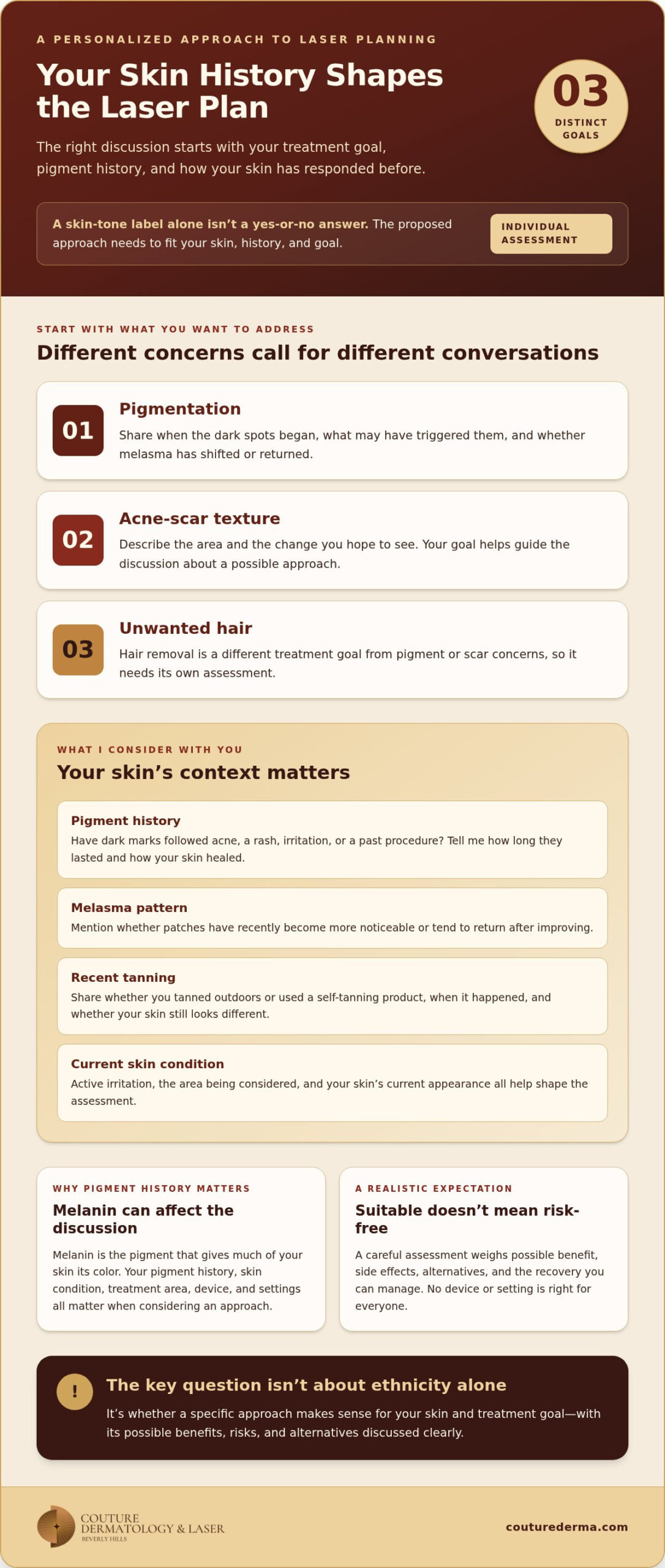
- Match the consultation to your goal: pigmentation, acne-scar texture, and unwanted hair call for different considerations.
- Before treatment, share any history of melasma, prior skin reactions, recent tanning, medications, or active irritation.
- Whether laser treatments safe for asian skin ca depends on an individual assessment and carefully considered settings, not a one-size-fits-all choice.
Are Laser Treatments Safe for Asian Skin in California?
A patient comes in hoping to soften uneven tone, but she’s afraid a laser could leave darker marks. I understand that hesitation. In my practice, I don’t treat Asian heritage as a yes-or-no answer to whether a laser is appropriate. I look at your skin, your history, and the specific concern you want to address before we discuss a plan.
Post-inflammatory hyperpigmentation, or PIH, is darkening that can follow skin irritation or injury. If you’ve noticed a dark mark after acne, a rash, or a past procedure, tell me what happened and how your skin healed. That history doesn’t determine the answer by itself, but it helps me weigh possible risks and consider whether another approach may make more sense.
Laser devices differ in how they’re designed and used. A general Laser medicine overview can introduce the range of laser applications, but it can’t tell you what fits your skin or treatment goal. That decision calls for an individual medical assessment, not a broad promise about a device or an ethnic group.
What does safe laser treatment mean for your skin?
For me, safety means weighing the likely benefit against possible side effects, alternatives, and the recovery you can manage. A carefully selected treatment can still have side effects. A laser may be suitable for you, but no assessment can promise a risk-free result.
During an assessment, I consider the area you want treated, your skin’s current condition, and whether your expectations fit what the procedure may realistically address. You can help by describing what bothers you most and what kind of recovery would be difficult to manage, such as visible redness during work or school.
Does Asian skin describe one skin type?
No. Asian identity includes people with a wide range of visible skin tones and pigment histories. The Fitzpatrick skin phototype scale is one tool for describing how skin tends to respond to sun exposure, including whether it burns or tans. It provides useful context, but it isn’t a complete assessment or a substitute for examining your skin and reviewing your history.
If you’re considering treatment in California, come prepared to describe how your skin responds to sun and irritation, including any past pigment changes. I’ll consider that information alongside an examination and your goals. The question isn’t whether a laser is broadly safe for every Asian patient. It’s whether a specific approach is reasonable for you, with its benefits, risks, and alternatives clearly discussed.
Why Can Laser Energy Affect Pigment Differently?
Here’s the part I want you to understand: pigment isn’t just a surface detail. Melanin is the pigment that gives much of your skin its color, and melanocytes are the cells that produce it. Their activity and the way pigment is distributed can vary from person to person, so a skin-tone label alone doesn’t tell me how your skin may respond to a procedure.
Laser energy is selected and used for a specific purpose, such as addressing a pigment concern or another treatment goal. The device, its settings, the area treated, and your skin’s condition all matter. That’s why I avoid simple claims that one laser type is automatically safe or unsafe for everyone with Asian heritage. The relevant question is how the proposed approach fits your skin and history.
How do melanin and post-inflammatory hyperpigmentation matter?
As discussed earlier, post-inflammatory hyperpigmentation is a dark mark that can follow irritation or injury. Your own history gives me useful context. Perhaps a small breakout left a mark for months, or a previous procedure caused redness that faded without discoloration. Those different experiences help frame the conversation, but they can’t predict your response with certainty.
Tell me what happened after past irritation, how long any marks lasted, and whether they appeared in the same area as the original concern. If you’ve never noticed lingering dark marks, share that too. I consider this alongside your current skin and treatment goal, rather than assuming everyone with a similar skin tone has the same pigment response.
Why do melasma and recent tanning change the discussion?
Melasma can shift in appearance or return over time, so I want to understand its pattern and what has happened with it before. If patches have recently become more noticeable, or tend to return after improving, mention that during your assessment. The Fotona laser may be discussed as an option for melasma in our practice, but it isn’t automatically the right choice for every patient.
Recent tanning also belongs in the discussion because it changes your skin in a way I need to assess before planning treatment. Tell me whether you’ve tanned outdoors or used a self-tanning product, when it happened, and whether your skin still looks different. Share any current irritation as well. These details help me decide whether to discuss treatment now, adjust the plan, or wait until your skin can be assessed more clearly.
If pigment changes are a concern, note when they began and what seemed to trigger them. Bring that timeline to your consultation in Beverly Hills. It gives us a more useful starting point than choosing a laser based on ethnicity alone and helps me discuss an approach with your individual history in view.
Which Laser Approach Fits Pigmentation, Scars, or Hair?
A dark mark, an uneven scar, and unwanted hair can look like similar “laser concerns” from a distance, but they call for different conversations. I start by clarifying what you want to change. Then I consider your history and examine the area before discussing whether a laser approach is relevant. The device and settings are part of that decision, not a shortcut around it.
| Your goal | History I’ll consider | A useful question |
|---|---|---|
| Dark spots or melasma | Whether pigment is isolated or recurring, prior dark marks, and sun exposure | What may be contributing to this pattern, and what options fit my history? |
| Acne-scar texture | Whether the main concern is uneven texture, color, or both | Which part of the scar would the treatment address? |
| Unwanted hair | Hair color and texture, skin characteristics, and treatment area | How do my hair and skin affect the plan? |
What should you consider for dark spots or melasma?
A single dark spot and a broader pattern that changes or returns aren’t automatically the same concern. I’ll ask when you first noticed the pigment, whether it has changed, and what you’ve tried. Sun exposure and past pigment changes help me understand the context, but they don’t select a device on their own. The Fotona laser may be discussed for melasma in our practice; whether it suits you depends on an individual assessment, not just the device name.
Laser skin resurfacing is a broad term for approaches intended to improve the skin’s surface, rather than one fixed procedure. If you’re exploring a laser skin resurfacing guide, keep your goal in view: a plan for a defined spot may differ from one for wider areas of uneven tone. I’ll explain what a proposed approach is meant to address and what it may not address, so you can weigh the options realistically.
What changes when the goal is acne scars or hair removal?
With acne scars, texture and leftover discoloration can appear together, yet they may need separate consideration. Tell me which bothers you most, and point out whether the area feels uneven or mainly looks darker. Our acne scar refinement care focuses the discussion on the scar concern, rather than assuming every mark needs the same treatment.
Hair removal is a different goal. Hair color and texture, the area being treated, and your skin characteristics all inform the assessment. Mention any prior hair-removal reactions and describe the result you’re hoping for. I can then discuss whether laser hair removal fits your situation and explain how the plan would be tailored, rather than treating one setting or device as universal.
How Can You Prepare for Laser Treatment and Recovery?
A thoughtful plan starts before the laser is used. I want to understand how your skin behaves, what you currently apply to it, and what you hope to change. Preparation isn’t a fixed checklist for everyone. It should reflect the treatment being considered, your skin history, and any concerns found during the assessment.
What should you share before your appointment?
Tell me about previous laser treatments, peels, or skin-care products that caused a reaction. Describe what you noticed in your own words: redness, discomfort, irritation, or dark marks that appeared later. Mention melasma, recent tanning, and any active skin symptom, such as a rash or an inflamed breakout. These details help me assess whether your skin is ready for the planned approach.
Bring a complete list of medications and skin-care products, including prescriptions and items you apply to skin only occasionally. Don’t stop a medication or pause a product on your own. I’ll review what you use and give guidance tailored to the procedure and your health history. If you’re unsure of a product’s name, a photo of its label can help us identify it.
Before your visit, write down when you last tanned or noticed a pigment change, and what happened after any previous treatment. That short timeline can help distinguish a past reaction from your current concern. Share it even if the change seemed mild or resolved.
What should you expect after treatment?
Recovery depends on the laser approach, the area treated, and how your skin responds. I’ll explain the aftercare for your plan rather than give you a universal timeline for returning to every product or activity. Follow those instructions and attend the recommended follow-up so we can review your healing and discuss next steps.
Sun protection is part of caring for treated skin. Apply sunscreen 15 minutes before sun exposure, and follow the specific sun-care directions I give you. If you notice an unexpected symptom or a change that concerns you, contact our practice for guidance instead of adding strong products or trying to treat it yourself.
To prepare, share your history, bring your medication and skin-care list, follow your individualized instructions, and keep your follow-up. If you’d like to discuss your skin history and recovery questions with me, book a laser treatment consultation.
What Happens at a Personalized Beverly Hills Laser Consultation?
You may come in focused on one dark spot, then realize you’re also concerned about old acne marks or how your skin might react. In my practice, I start by understanding your history before discussing a device. We’ll talk about what you want to change, what you’ve tried, and what matters most to you in a treatment plan.
How do I tailor a plan to your skin and goals?
I review the concern you want addressed, your pigment history, any past treatment reactions, and how your skin tends to respond to irritation. I’ll also consider your priorities, including how much recovery you can manage and whether you’re comfortable with a gradual approach. Those details help guide whether a laser is worth discussing or if another option may better suit your needs.
For melasma, the Fotona laser may be one option we discuss, but that doesn’t make it an automatic fit. I consider your history and current skin before weighing that approach. A staged plan may also make sense, with steps chosen thoughtfully rather than trying to address every concern at once.
Bring a short list of your main goals and questions about recovery. It can help to name the concern that bothers you most, then mention any secondary goals. That gives us a clear starting point and keeps the discussion centered on what you value.
If you’re weighing whether laser treatments safe for asian skin ca may suit you, the answer begins with your individual assessment, not ethnicity alone. A consultation is a chance to discuss possible benefits, risks, alternatives, and what a plan could involve, without assuming you’re eligible for a specific procedure or promising a result.
When is it time to discuss a dermatologist-guided option?
If a persistent concern hasn’t improved after 8 to 12 weeks of over-the-counter care, it may be worth discussing other approaches with a dermatologist. Prescription treatments or laser care could be considered, depending on the concern and your skin history. They aren’t automatic next steps, and a laser isn’t the only possible path.
At Couture Dermatology & Laser Beverly Hills, I tailor the conversation to your skin and goals, whether you’re coming from nearby or elsewhere in the Los Angeles area. Bring your product list, note previous reactions, and tell me what outcome would feel meaningful to you. Book an online consultation to discuss your concerns and possible next steps.
Take the Next Step With a Plan That Fits
You don’t need to arrive with a device already chosen. Decide what you’d most like to address and bring notes about how your skin has responded to past treatments or irritation. That gives us a practical place to begin and keeps the conversation focused on your priorities.
If you’re still wondering whether laser treatments safe for asian skin ca may be appropriate for you, I can help you weigh that question against your skin history and goals. I’m Dr. Chinonso Abisogun, a board-certified, Harvard-trained dermatologist, and I approach laser care as an individual medical decision, not a promise of a particular outcome. Sometimes a laser may be worth discussing; in other cases, another approach or a gradual plan may make more sense.
At Couture Dermatology & Laser Beverly Hills, we can discuss your concerns and possible next steps in a personalized consultation. Book an online consultation to discuss a laser plan tailored to your skin. You deserve clear guidance and a plan that feels considered, so you can move forward with greater confidence.
Frequently Asked Questions
Can laser treatment cause dark spots on Asian skin?
Yes, laser treatment can sometimes be followed by darker marks, especially if your skin becomes irritated or inflamed. A personal history of lingering marks after acne, a rash, or a previous procedure is useful context for your dermatologist. Before treatment, point out any areas that darkened after irritation and mention how long those marks took to fade. That history can help guide the discussion, though it can’t predict your exact response.
Is laser hair removal safe for Asian skin?
Laser hair removal may be an option for Asian skin, but the plan needs to account for your skin tone, hair characteristics, and treatment area. Laser energy is directed toward pigment in the hair, so the surrounding skin also matters to the assessment. In a consultation at our Beverly Hills practice, describe any past reactions to hair removal or pigment changes. Those details help me discuss whether this approach fits your goals.
Can laser treatment make melasma worse?
It can. Irritation from a procedure may contribute to darker patches in some people, and melasma can change over time. Tell me if your patches have recently shifted, become more noticeable, or returned after earlier care. That information may affect whether laser treatment is considered now, whether another approach is discussed first, or whether the timing should be reconsidered. A planned treatment shouldn’t be treated as a guarantee against a flare.
How long should I wait between laser treatments?
There isn’t one interval that fits every laser treatment or concern. The timing depends on the approach used, how your skin has healed, and what the next session is meant to address. Don’t schedule another treatment based only on a general online timetable. Before leaving your appointment, ask when your skin should be reviewed and what signs of healing I want to see before discussing another session.
Can I have laser treatment if I have a tan?
A tan is important to disclose before treatment, since it can change how your skin responds to laser energy. Tell me when you tanned and whether the color is still visible, even if it came from outdoor activity or a self-tanning product. I’ll assess your skin and decide whether to proceed, adjust the plan, or wait. Don’t try to hide a tan or rely on a fixed waiting period.
Should a dermatologist test a laser on a small area first?
A small test area may be considered in some situations, but it isn’t necessary or suitable for every treatment. I can weigh the device, treatment goal, skin history, and how useful a test would be before deciding. If we do one, ask how long to wait before assessing the response and whether it reflects the planned treatment area. A test can offer information, but it can’t guarantee how all your skin will react.