
Clear + Brilliant is generally performed with numbing cream, though you may still feel warmth or prickling during treatment. Before a clear and brilliant laser facial in Los Angeles, discuss what the session may feel like so you know what to expect. Mild redness, tenderness, or swelling can follow, and your skin may look different for a short time afterward.
If you’re considering whether the treatment will feel comfortable, it’s reasonable to want a clear picture first. Understanding what happens during a session and how your skin may respond matters as much as knowing what results it may support.
This guide covers what treatment may feel like, how Clear + Brilliant may refine texture, tone, and fine lines, and when changes may appear. It also compares this approach with stronger lasers and explains when gradual resurfacing may align with your goals.
Key Takeaways
- Expect numbing cream to help with comfort; learn what sensations and short-term skin changes can occur during and after treatment.
- A series of 3 to 6 sessions is commonly recommended for more noticeable improvement, with the plan shaped around your skin goals.
- Compare the original treatment and Perméa to understand how each approach addresses texture, tone, and brightness.
- Know when skin may start to look brighter and feel softer, and what can influence how long results last.
- See how Clear + Brilliant’s more superficial resurfacing approach differs from stronger lasers and which concerns may call for a different option.
Is Clear + Brilliant painful?
Clear + Brilliant is usually performed with topical numbing cream, and the practice information says topical anesthetic is all that is needed. You may still notice warmth or prickling during the laser treatment. Mild redness, tenderness, or swelling can follow, so plan for some visible downtime rather than expecting skin to look unchanged immediately.
Clear + Brilliant is used for concerns such as uneven texture, dull tone, fine lines, and pigmentation, including dark spots. In Los Angeles, Couture Dermatology & Laser offers Laser Resurfacing. A dermatologist can assess your goals and skin, explain the planned handpiece and treatment approach, and discuss what recovery may look like.
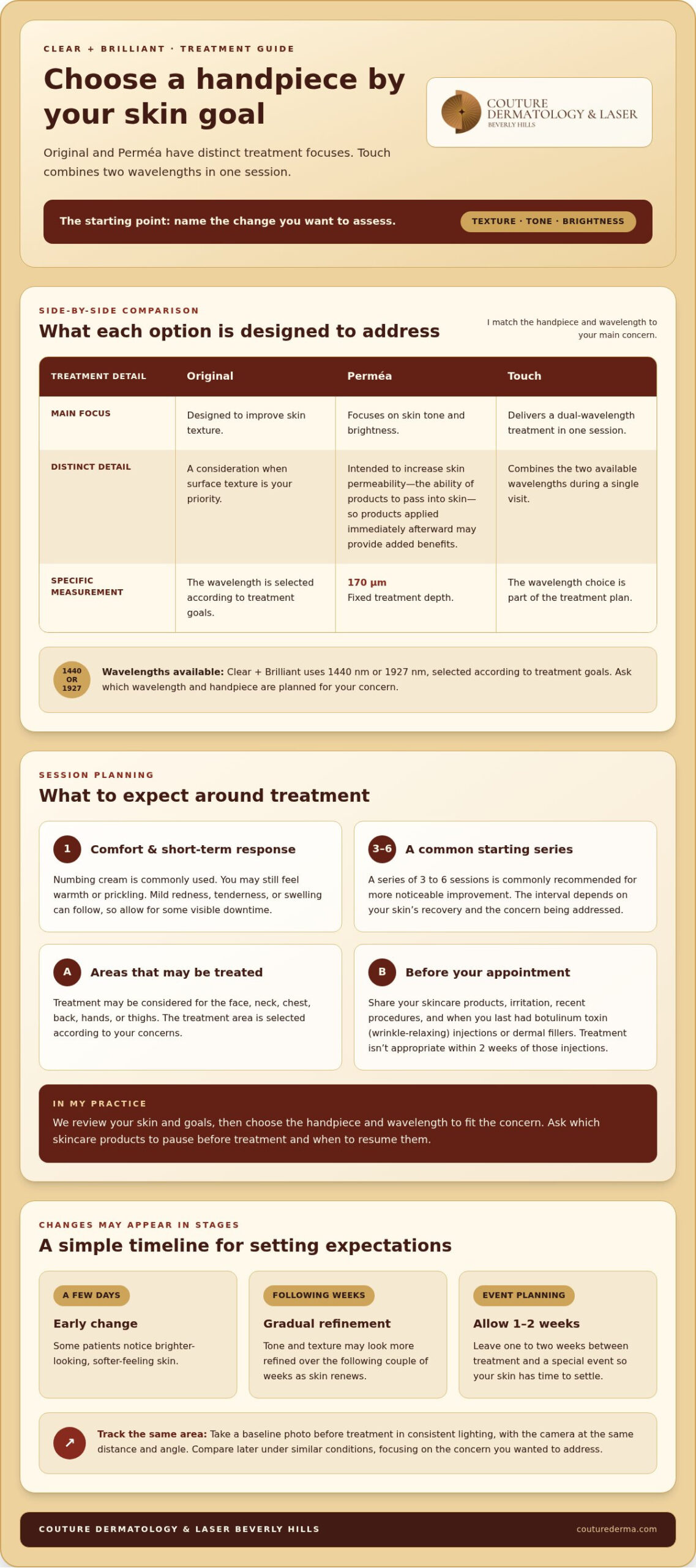
A common starting plan is 3 to 6 sessions for more obvious improvement. The interval between sessions is shaped by how your skin recovers and the concern being addressed, so the schedule should leave time to assess your response before the next session. Ask for a plan that identifies both the intended result and how progress will be reviewed.
Treatment may be considered for areas such as the face, neck, chest, back, hands, or thighs. The laser can address fine surface texture and uneven-looking tone, with the treatment area selected according to your concerns. For example, a plan for facial texture may differ from one focused on spots on the hands.
Clear + Brilliant Original and Perméa are distinct options, not interchangeable names. Original is designed to improve texture; Perméa focuses on tone and brightness and is intended to increase skin permeability, allowing products applied immediately afterward to provide added benefits. Perméa has a fixed treatment depth of 170 µm.
The available information describes 1440 nm or 1927 nm wavelengths, selected according to treatment goals. “Ultra” may appear in descriptions of treatment options, but the meaningful point for your plan is which wavelength and handpiece will be used, and why it fits your concern. Clear + Brilliant Touch can also deliver a dual-wavelength treatment in one session.
Before treatment, tell the clinician about skincare products and recent procedures. Ask your clinician which skincare products to pause before treatment and when to resume them. Clear + Brilliant isn’t appropriate for people who’ve had botulinum toxin injections or dermal fillers within the past 2 weeks, so include those dates when discussing your plan.
Benefits for skin texture, tone, and fine lines
At a Clear + Brilliant appointment, I start by asking what you want to change, because rough texture and uneven tone call for different treatment choices. We review your skin and goals, then select the handpiece and wavelength accordingly. A cooling gel or numbing cream may be applied before the laser, and I explain each step so you know what to expect.
Clear + Brilliant uses a fractional, non-ablative approach. In my practice, I discuss it with patients seeking gradual improvement in surface concerns such as dullness, uneven texture, pigmentation changes, or fine lines. It creates small treatment zones in the upper skin layers while leaving surrounding skin intact. The aim is refined-looking skin, not a dramatic change in a single visit.
The wavelength helps shape the treatment goal. Clear + Brilliant uses 1440 nm or 1927 nm, depending on the concern being addressed. I explain the distinction this way: the original handpiece is designed to improve texture, while Perméa focuses on tone and brightness. Perméa also increases skin permeability, so products applied immediately afterward may provide added benefits.
Age by itself doesn’t decide whether treatment fits. I see patients in their 20s and 30s who are beginning to notice uneven tone or fine lines, and patients at other ages with different priorities. Clear + Brilliant is described as suitable for all skin types. I still consider your skin type, current condition, and goals when discussing a tailored approach.
Preparation matters. Before treatment, discuss your skincare routine, any irritation, and recent procedures. Follow the retinoid pause discussed during planning, and arrive with clean skin if that is part of your pre-treatment instructions. Numbing cream may be applied before the laser treatment, followed by aftercare guidance tailored to your skin.
If cheek texture is your main concern, discuss whether the original handpiece aligns with that goal. If uneven tone is more noticeable, Perméa may be worth discussing. Name your priority before the session so the plan can focus on a change you’ll be able to assess.
After treatment, follow the skincare directions provided for your selected approach, including guidance on products applied immediately afterward. If you’d like to discuss which resurfacing goals fit your skin, you can arrange an appointment to talk through your options.
How quickly will I see results?
Visible changes may develop in stages, so distinguish an early glow from the gradual improvement that follows. Consider both your event calendar and the specific skin changes you want to track.
Expected Results Timeline
Some patients notice brighter, softer-feeling skin a few days after treatment. Tone and texture may look more refined over the following couple of weeks as skin renews. The first change can be subtle, so focus on the areas you wanted to address rather than expecting every concern to change at once.
If you’re scheduling around a special event, allow one to two weeks between treatment and the occasion. This gives you time to see how your skin settles and whether the result suits your plans. Avoid booking close to an event if you’re expecting an immediate, finished-looking change.
For a clearer comparison, take a baseline photo before treatment in consistent lighting, keeping the camera distance and angle the same. Later, compare the same area under similar conditions. This record can help you notice gradual changes in brightness or texture that may be difficult to judge from memory alone.
Recovery and Results
Results can last for months, with duration influenced by age, skin condition, skincare, and sun protection. Rather than assuming the outcome is permanent, consider how your everyday routine supports your skin after treatment. Note which products suit your skin and any changes in sun exposure to discuss when reviewing your progress.
Sun protection is especially useful to keep in your post-treatment routine. Apply broad-spectrum sunscreen 15 minutes before sun exposure, and follow the aftercare directions provided for your skin. If you’re planning outdoor activities, build sun protection into the plan instead of relying on treatment alone to maintain a brighter appearance.
Keep your expectations specific. Someone focused on dullness may notice brightness before a change in fine lines, while texture may take longer to assess visually. Track each goal separately and bring your observations to a follow-up conversation. This makes it easier to discuss what changed and whether to keep the focus on the same concern.
Clear + Brilliant can be part of a broader aesthetic plan, but timing matters when pairing procedures. Mention other treatments you’re considering before scheduling, especially injectables, so the sequence can account for your skin’s recovery and desired result. A thoughtful timeline gives each procedure room to be assessed on its own.
Comparison with more aggressive lasers
Clear + Brilliant is a fractional, non-ablative laser treatment, while stronger resurfacing options may suit different goals. The choice depends on the concern being treated, the degree of change you want, and how much recovery time you can accommodate.
Clear + Brilliant uses technology similar to Fraxel, but with a more superficial laser wavelength. This makes it a gentler resurfacing option for concerns such as early unevenness in texture or tone. It may support brighter-looking skin, but it is not a substitute for every stronger laser approach.
Fraxel is a laser family, and treatment settings matter when comparing it with Clear + Brilliant. Rather than comparing names alone, ask which wavelength and treatment depth are planned, what concern they target, and what recovery to expect. Those details help clarify whether the plan prioritizes gradual refinement or more intensive resurfacing.
Pixel is another name you may encounter when researching laser resurfacing. The name alone does not explain the settings, treatment depth, or expected recovery for a particular plan. Ask how the proposed Pixel treatment differs from Clear + Brilliant for your concern, such as fine lines or uneven tone, before weighing the options.
Clear + Brilliant also differs from IPL and microneedling, so these treatments are not interchangeable. IPL uses light rather than Clear + Brilliant’s fractional laser approach, while microneedling uses needles to create controlled skin injury. The right method depends on the concern you want to address and the treatment approach being considered.
Recovery is part of the comparison. Clear + Brilliant can cause mild redness, tenderness, or swelling, and some people experience tight or dry skin for a few days. “Minimal downtime” can still involve visible changes, so plan around work, photos, or an event rather than assuming your skin will look unchanged immediately.
To help prevent avoidable irritation, follow your skin-preparation instructions and disclose recent procedures before treatment. Avoid retinoids for at least two weeks before and during Clear + Brilliant treatment. Recent botulinum toxin injections or dermal fillers within the past two weeks can also affect whether the timing is appropriate.
Consider Clear + Brilliant when you’re looking for a more superficial resurfacing approach and gradual improvement. If you’re comparing it with Fraxel, Pixel, IPL, or microneedling, write down your main concern and ask what each method is intended to improve. Compare treatment goals, depth, and recovery, not just the names.
Clear & Brilliant laser resurfacing
Clear + Brilliant is a fractional, non-ablative laser treatment that creates tiny treatment zones without removing the outer layer of skin. Its focus is gradual surface renewal rather than more aggressive resurfacing. For early signs of aging such as uneven texture or dullness, this distinction helps clarify what the procedure is designed to address.
During resurfacing, the laser creates small treatment zones in the upper skin layers. As the skin renews, the body replaces damaged tissue with healthy tissue. Clear + Brilliant Touch creates hundreds of thousands of microscopic treatment zones, while its fractional design leaves surrounding skin between those zones.
This approach may support smoother-looking texture and a brighter appearance, but it does not erase every sign of aging. Start by naming the change you want most: roughness, uneven tone, or fine surface lines. Then discuss whether surface resurfacing suits that goal rather than choosing a procedure solely because it mentions collagen or promises younger-looking skin.
Clear + Brilliant targets water within the skin rather than pigment, which helps explain how its laser approach differs from treatments designed around other color targets. Perméa is described as suitable for all skin types because it targets water, but your treatment plan still needs to account for your skin type and the concern being addressed.
Preparation and comfort are part of the resurfacing experience. Numbing cream may be applied before treatment, which commonly involves a laser pass across the selected area. Ask which handpiece and wavelength are planned, what skin change they target, and what recovery may look like for your routine.
The key takeaway: Clear + Brilliant is a surface-focused resurfacing option for gradual refinement, not a replacement for every stronger laser. If deeper lines, pronounced damage, or another concern is your priority, discuss how that goal differs from smoother texture or brighter tone. Clear expectations help you judge whether the treatment’s scope matches what you want.
If you’re considering laser resurfacing, you can book a visit to discuss your skin goals and the treatment approach that fits them.
Couture Dermatology & Laser Beverly Hills: Laser Skin Resurfacing
Couture Dermatology & Laser in Beverly Hills offers Laser Skin Resurfacing for patients seeking a refined approach to uneven texture, tone, or visible signs of aging. If you’re weighing Clear + Brilliant against stronger laser options, a personalized discussion can help align the resurfacing approach with your skin concerns, comfort preferences, and recovery expectations.
Bring your priorities to the conversation: for example, whether you’re focused on brighter-looking skin or smoother texture. The treatment plan should reflect those goals rather than a one-size-fits-all idea of renewal. You can contact Couture Dermatology & Laser Beverly Hills or visit couturederma.com to explore the next step.
Choose a resurfacing plan that fits your goals
Before choosing a laser, decide what you most want to change. Is it uneven texture, dullness, or fine lines that catch your attention in certain lighting? Naming your priority gives the consultation a useful starting point and helps keep the treatment plan focused on the skin change that matters to you.
For a clear and brilliant laser facial in Los Angeles, consider how much recovery time you’re comfortable with and whether gradual refinement fits your expectations. Bring your current skincare routine and mention recent procedures so the discussion can account for your skin and timing. The next step depends on your goals, your skin’s condition, and the approach that suits them.
If you’re ready to talk through your options, schedule a conversation with Couture Dermatology & Laser Beverly Hills. A thoughtful plan can help you move toward skin that feels more like you.
Frequently Asked Questions
How many treatments do I need?
A commonly recommended course is 3 to 6 treatments for more noticeable improvement. The number depends on what you want to address, such as rough texture or uneven-looking tone, and how your skin responds between visits. If you’re considering a clear and brilliant laser facial in Los Angeles, identify your main concern and ask how progress will be evaluated. That makes it easier to understand the purpose of each planned treatment.
What kind of results can one expect?
Patients may notice brighter-looking skin, a smoother feel, or more even-looking tone. Changes depend on the concern being treated and the handpiece selected. Texture and brightness are different goals, so ask which one your plan prioritizes. Clear + Brilliant is a resurfacing option for gradual refinement, not a way to remove every line, mark, or sign of sun damage.
How long will it last?
Results can last for months, with duration influenced by age, skin condition, skincare, and sun protection. Think of the outcome as something to maintain rather than a permanent change. To monitor it, take a photo before treatment and compare it later in similar lighting. This can help distinguish gradual skin changes from differences caused by makeup, lighting, or camera angles.
How does it work?
Clear + Brilliant uses fractional laser energy to create small treatment zones in the upper skin layers, supporting renewal as the skin heals. The device targets water within the skin rather than pigment, helping explain its use for concerns such as texture and tone. The handpiece and wavelength are selected according to your goal, so ask what each choice is intended to improve.
How many appointments will I need?
A course often involves 3 to 6 treatment appointments, though the exact plan depends on your goals and skin response. The treatment itself is only part of the visit: preparation and numbing may also be included. Clear + Brilliant Touch appointments can take 30 to 45 minutes, including preparation and consultation. When planning your calendar, ask how the appointment sequence will fit around work, travel, or an upcoming event.
Is this laser suitable for everyone?
Clear + Brilliant is described as suitable for all skin types, but suitability still depends on your skin and treatment goals. If you’re exploring a clear and brilliant laser facial in Los Angeles, share your skincare routine, recent irritation, and any recent cosmetic procedures during planning. Disclose recent botulinum toxin injections or dermal fillers, since timing can affect when treatment is appropriate. This helps guide the treatment area and approach.
What are the goals?
The goal is gradual improvement in concerns such as uneven texture, dullness, uneven tone, or fine lines. Start by choosing one priority, such as roughness around the cheeks or lack of brightness. Then discuss whether the original handpiece or Perméa better matches that aim. A clear goal makes it easier to assess whether the plan addresses what you notice most.
What is a Clear + Brilliant laser facial and how does it work?
Clear + Brilliant is a fractional, non-ablative laser treatment designed to support skin renewal without removing the outer layer of skin. The selected wavelength and handpiece shape the treatment around goals such as improving texture or tone. Before choosing, ask which concern the session targets and what to expect during recovery. This connects the technology to your priorities rather than focusing on the device name alone.