
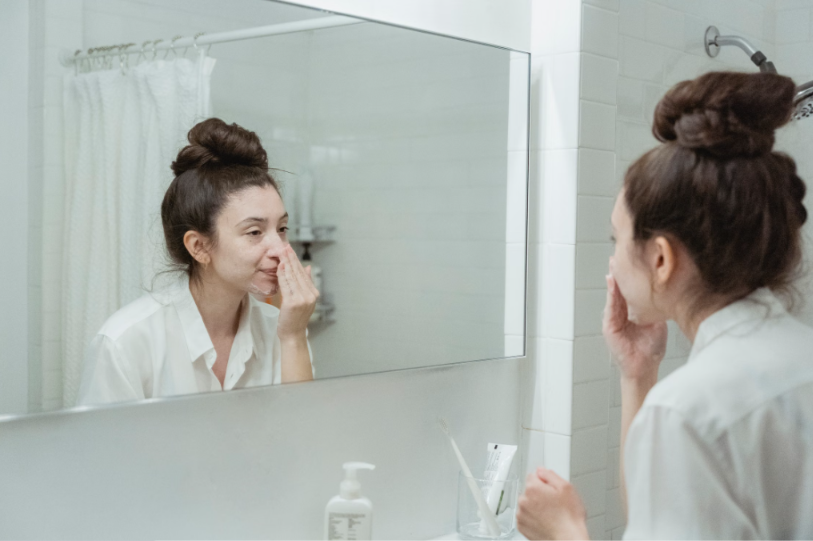
You have heard that a retinoid is the one ingredient worth the hype, so you tried. Within a week your skin was red, flaking, and tight, and a few peels later you decided your skin simply could not handle it. I hear this story constantly, and almost every time the retinoid was not the problem. The way it was started was. A retinoid is one of the most studied, most rewarding ingredients in all of skincare, and with the right slow-build approach, the vast majority of people who think they cannot tolerate one absolutely can.
Why Starting a Retinoid Correctly Matters More Than You Think
The internet has turned the early irritation phase into a rite of passage, as if suffering through redness and peeling is proof the product is working. It is not. That reaction, often called the purge or retinoid dermatitis, is your barrier being pushed faster than it can adapt. For melanin-rich skin especially, that matters, because every episode of inflammation carries a real risk of leaving dark marks behind, which is the exact opposite of what most people start a retinoid to fix. Starting slowly is what actually gets you to results, even though it feels like the overcautious path.
When you start a retinoid the right way, you gain:
- A barrier that stays intact instead of cracking in the first two weeks
- Far lower risk of post-inflammatory dark spots on deeper skin tones
- The ability to stay consistent, which is the only thing that delivers retinoid results
- A clear plan to follow instead of guessing whether to push through or stop
- A foundation that makes every other active in your routine work better
What the Purge Really Looks Like
The classic mistake looks like this. You get a retinoid, you are excited, and you use it three or four nights in the first week on freshly washed skin with nothing to buffer it. By day five your cheeks are stinging, the skin around your nose is flaking, and a tight, papery feeling has set in. So you stop completely for two weeks, your skin calms down, and then you start again exactly the way you did before. The cycle repeats, and each round can leave new pigment behind. The purge is not your skin detoxing, despite the popular myth. It is simply a barrier that was asked to do too much, too soon, without support.
Here’s How to Start a Retinoid Without the Purge
- Follow the Two-Week Increment Schedule
Frequency is the single most important dial, and almost everyone turns it up too fast. Start with a pea-sized amount, no more, twice a week. Hold there for two full weeks. If your skin is comfortable, move to every other night for the next two weeks. From there, increase by one night every two weeks only if your skin stayed calm at the level before. Most people land at four to five nights a week, and some do beautifully at three. There is no prize for nightly use. The goal is the highest frequency your skin tolerates without irritation, reached slowly enough that your barrier is never overwhelmed. Tolerance usually settles somewhere between weeks eight and twelve, so give the process the season it needs.
- Use the Moisturizer Sandwich
This single technique is what moves most people from the cannot-tolerate column to the thriving column. Cleanse, then wait ten to fifteen minutes until your skin is completely dry, because applying a retinoid to damp skin drives it in harder and increases irritation. Apply a thin layer of a plain, barrier-supporting moisturizer first. Then apply your pea-sized retinoid. Then a final light layer of the same moisturizer on top. That cushion on both sides slows absorption just enough to spare you the redness while still delivering the benefit. The research is reassuring here, with buffered applications performing close to as well as bare application, and a retinoid you can actually keep using will always beat the stronger routine you quit. Keep the rest of your routine simple while you adjust, which means no acids, no scrubs, and no benzoyl peroxide on retinoid nights.
- Know Your Off-Ramp Before You Need It
Build the exit before you need it, so a hard week does not send you quitting for good. If irritation flares, you have three calm options, in order. First, drop back one frequency level, to the schedule that felt comfortable before. Second, lean harder on the sandwich, adding a slightly heavier moisturizer layer underneath. Third, for a truly sensitive stretch, try short-contact application, where you apply the retinoid, leave it on for about thirty minutes, then rinse and moisturize. One rule protects you above all others. Never increase frequency and reduce buffering in the same week. Change one thing at a time, give it two weeks, and let your skin tell you what it can handle. And whatever your schedule, sunscreen every single morning is not optional, because a retinoid makes your skin more sun-sensitive, and unprotected sun is the fastest way to undo the work and trigger the very pigment you are trying to clear.
Bringing It All Together
Picture six months from now. You are using your retinoid several nights a week without a second thought. Your skin is smoother, your tone is more even, and the redness that once scared you off is a distant memory. You did not power through the purge. You sidestepped it entirely, with a schedule, a sandwich, and an off-ramp you never had to use much. That is what a slow build buys you, and it is available to almost everyone willing to trade speed for consistency. Your skin, your heritage, your glow.
If you want the full routine framework that shows you exactly where a retinoid fits alongside your other actives, the Flawless Skin for Life course walks you through it step by step, the same way I teach it to my patients. And if you are just beginning, the free 30-Day Flawless Skin Challenge is the simplest way to build the calm, consistent foundation a retinoid needs.