

You’ve followed your laser aftercare, then notice bumps where you expected your skin to be settling. It’s natural to wonder whether you missed a step or should change your routine. In my practice, I hear how quickly a new skin change can turn recovery into worry. Managing post-laser skin breakouts is less about guessing and more about choosing a careful next step.
Your recovery deserves a plan shaped around the treatment you received, not a routine borrowed from someone else. I’ll help you decide what to observe, how to avoid adding unnecessary stress to healing skin, and when a dermatologist’s assessment may help. Keep your aftercare instructions nearby, and note any changes that concern you. That preparation can make a conversation about your skin more useful and help you feel less alone as it heals.
Key Takeaways
- Managing post-laser skin breakouts starts with noticing what has changed and following the aftercare instructions for your specific procedure.
- Pause newly added active products, and don’t pick, squeeze, or apply spot treatments without clinical guidance.
- Use the pattern of symptoms as a guide, not a diagnosis. A photo or timing alone can’t confirm the cause.
- Seek medical guidance if symptoms are worsening, painful, or concerning, especially if you suspect infection.
- A dermatologist can tailor next steps by considering your laser treatment, healing stage, symptoms, and current skincare.
Why can breakouts appear after laser skin resurfacing?
You’ve followed your laser aftercare, then notice tiny bumps where your skin was already tender. It’s understandable to wonder whether you’re seeing managing post-laser skin breakouts, a healing change, or a reaction to something you applied. In my practice, I start by asking what procedure you had and how your skin has changed since. Those details help shape a sensible next step.
A post-laser breakout simply means new bumps after treatment. It describes what you see, not a diagnosis or a single cause. Irritation, acne-like flares, and other skin symptoms can look similar, so appearance alone can’t tell you what’s happening.
For a general overview of how light-based skin treatments and possible complications are discussed, see Photorejuvenation and Laser Complications. Your own aftercare instructions remain the guide for your procedure.
This video discusses bumps after Pico laser treatment. It may offer a useful starting point, but it can’t identify the cause of your symptoms or replace advice from a clinician.
Are bumps after laser treatment part of normal healing?
Depending on the laser and how intensely it treats the skin, healing may include redness, warmth, or sensitivity. Those changes don’t mean a breakout is part of your expected recovery. New bumps, worsening symptoms, or bumps that persist beyond the pattern your clinician described deserve a closer look.
Here’s the thing: timing and appearance are clues, not a diagnosis. Note when the bumps began and whether they’re changing. Share those details with a dermatologist instead of trying to identify the cause from a photo.
What can trigger acne-like bumps after a laser?
Several factors may play a role. Irritated skin can develop acne-like bumps, while rich or occlusive aftercare products, which form a heavier layer on skin, may contribute to pore blockage in some people. Friction from rubbing, tight clothing, or repeatedly touching the area can also add irritation. These are possible clues, not proof of what caused your bumps.
Folliculitis means inflamed hair follicles, the small openings where hairs grow. It can resemble acne, but a clinician needs to assess your skin and treatment history to distinguish it from other causes. Make a note of new products and changes in how the area feels. That context can help guide a more tailored assessment.
How do laser type and healing stage change your skincare?
After laser resurfacing, your skin’s needs can shift as it heals. Some procedures affect the outer layer of skin more than others, so the amount of redness, sensitivity, and care needed can vary. Instructions for one laser treatment may not suit another, and advice can change as your skin moves from active healing toward recovery.
In my practice, I encourage patients to follow the written aftercare from the clinician who performed their procedure rather than adapting a generic routine found online. Dedicated providers, such as Haus of Beauty and Aesthetics, emphasize customized protocols because aftercare choices should reflect your procedure, symptoms, and healing stage. Keeping your routine measured can help you avoid adding irritation while your skin settles.
Rubbing, picking, or adding several new products can create more irritation and make it harder to tell which step is bothering your skin. The Mayo Clinic notes that acne can occur after laser resurfacing and that thick creams or bandages may worsen it for some people. Its overview of Risks and Side Effects of Laser Resurfacing also describes other possible side effects. That’s another reason to follow the aftercare plan for your own procedure.
Which products should you pause while skin is healing?
Exfoliants, retinoids, and acne treatments can irritate skin that is still recovering. Pause them unless your clinician has specifically directed you to use them. A gentle foaming face wash and a moisturizer approved for your procedure may be enough for now, but don’t assume every laser calls for the same products or routine.
If a product stings or seems to increase redness, don’t add another product to counter it. Note what you applied and when, then ask a dermatologist for guidance. With managing post-laser skin breakouts, fewer changes can make it easier to notice how your skin is responding.
When can you restart tretinoin and sunscreen?
Tretinoin, a prescription skin treatment that can irritate sensitive skin, should wait until your clinician clears you to use it again. If cleared, cleanse gently, let your skin dry, then wait 20 minutes after cleansing before applying tretinoin. Don’t restart it while your skin is actively healing without that clearance.
Use sunscreen once it’s appropriate for your healed skin and your clinician’s instructions allow it. Apply it 15 minutes before sun exposure. If you’re unsure whether your skin is ready for a product or outdoor exposure, ask for advice tailored to your procedure and current symptoms. At our Beverly Hills clinic, I assess those details when shaping follow-up care. You can book a dermatology appointment to discuss your recovery and skincare plan.
Is it a breakout, irritation, or a symptom needing medical attention?
A new bump can be hard to interpret while your skin is healing. In my practice, I look at how symptoms are changing, what procedure you had, and what your clinician expected during recovery. The table can help you decide what to report, but it can’t diagnose the cause. Timing, appearance, and a photo alone aren’t enough to tell whether bumps are acne, irritation, or another concern.
Possible pattern
Useful observation
Appropriate next step
Mild redness, warmth, or sensitivity
Compare it with the written aftercare guidance for your procedure; note whether it’s settling or worsening.
Follow your clinician’s instructions. Contact them if the change is unexpected or concerns you.
New bumps or irritation
Record when it began, where it appears, and whether it’s spreading or changing.
Share those details with a dermatologist, especially if symptoms persist or worsen.
Possible infection warning signs
Watch for worsening pain, spreading redness, pus, fever, or eye symptoms such as eye pain or vision changes.
Seek prompt medical advice. Severe or rapidly worsening symptoms need timely attention.
These patterns are guides for deciding what to do, not labels to apply to your skin. If symptoms are getting worse, waiting isn’t your only option. Contact a medical professional for advice, and seek prompt medical attention for possible infection signs or symptoms involving your eyes.
What clues should you note before contacting your clinician?
Write down when the bumps first appeared and whether they’re spreading, changing, or becoming more uncomfortable. Note the laser procedure, products you’ve used since treatment, and any recent changes to your routine. These details help your dermatologist understand what happened without relying on guesswork.
If it’s helpful, take clear photos in consistent lighting, from a similar distance and angle. Photos can show how an area changes over time, but they can’t confirm a diagnosis on their own. For managing post-laser skin breakouts, use photos as a record to share, not as a reason to start treatment without guidance.
When should you contact the clinician who performed the laser?
Get medical guidance about worsening, painful, spreading, or unexpected symptoms rather than trying to manage them by adding products or picking at bumps. Pus, fever, and spreading redness warrant prompt medical advice. If symptoms are severe or changing rapidly, seek timely medical attention instead of waiting for a routine follow-up.
What should you do first when post-laser bumps appear?
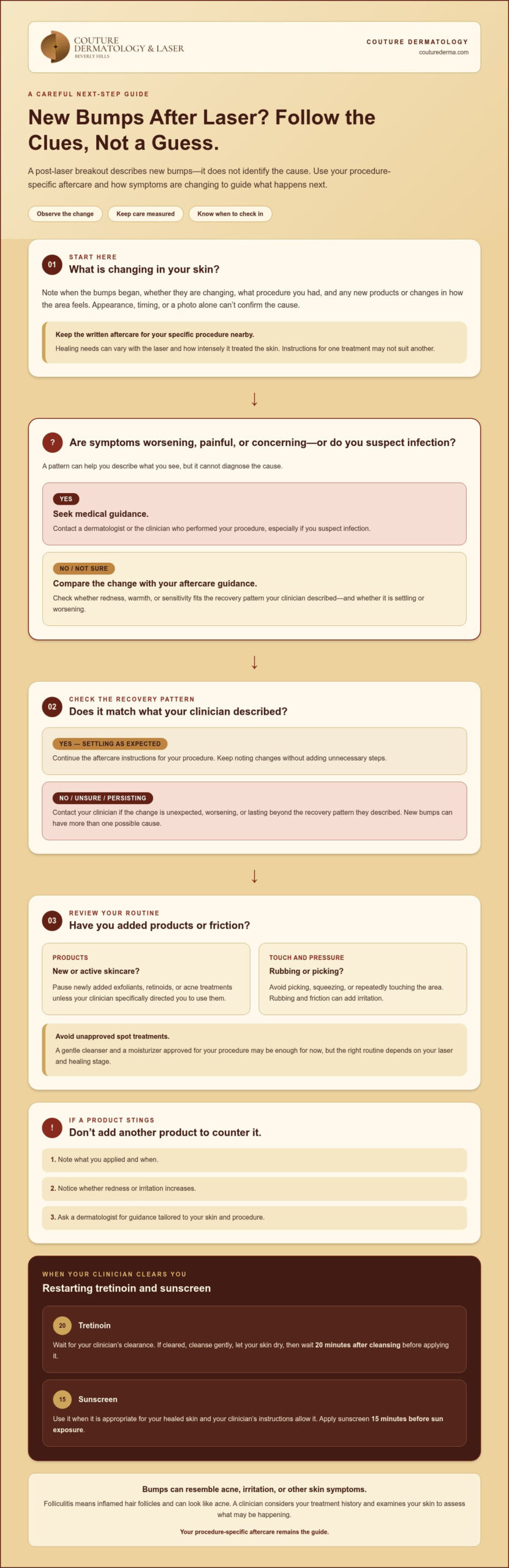
You notice bumps and feel tempted to reach for a familiar acne product. I understand the impulse, but skin that’s healing may react differently than usual. Managing post-laser skin breakouts starts with a calm, conservative response guided by the aftercare instructions for your procedure, not a quick fix.
Try this sequence while you decide whether to book an assessment:
- Pause newly added active products. Set aside exfoliants, retinoids, and acne spot treatments unless your clinician has told you to use them during recovery. Don’t restart a product just because it helped before treatment.
- Keep your hands off the bumps. Avoid squeezing, picking, or scrubbing. These actions can add irritation and may increase the chance of visible marks.
- Follow your written aftercare. Use the cleansing and moisturizing steps your clinician gave you. Choose only products allowed by those instructions rather than building a new routine from online advice.
- Notice what changes. Keep a brief record of new products and whether the bumps or discomfort are getting better or worse. If symptoms are worsening, painful, spreading, or unexpected, seek medical guidance.
How can you care for irritated skin without adding more stress?
Keep your routine simple. If your skin feels reactive, avoid scrubs, rubbing, and unnecessary heat, and stick to products permitted in your procedure-specific instructions. Trying several new remedies at once can make it difficult to work out what your skin is reacting to. Don’t add products without a clear reason and clinical guidance.
Acne care depends on identifying what’s causing the bumps. A breakout, irritation, and another skin symptom can call for different approaches. Don’t apply a spot treatment to healing skin unless your clinician clears it. If you’re unsure whether a product fits your aftercare plan, pause and seek guidance from a dermatologist.
What if bumps leave marks or resemble acne scars?
A lingering flat mark and a change in skin texture are different concerns. A mark may involve color, while a scar affects the skin’s surface or shape. Picking can worsen irritation and raise the risk of visible marks, so let the area heal and have persistent changes assessed rather than trying to correct them on your own.
If you’re concerned about lasting texture after healing, a dermatologist can assess whether it resembles scarring and discuss an appropriate approach. Our acne scar refinement service addresses scar concerns, but the right plan depends on an in-person assessment and your skin’s needs. If you’d like to discuss bumps or aftercare with our team, book a dermatology appointment.
How can a dermatologist tailor care for post-laser breakouts?
You may know a bump appeared after treatment but still be unsure what it means. If it persists, worsens, or remains difficult to interpret, a dermatologist can assess the concern in context rather than relying on a guess. Managing post-laser skin breakouts starts with understanding what your skin is doing and which next step fits your recovery.
What happens during a personalized skin assessment?
I’d review the laser procedure you received, your recovery instructions, when the bumps began, and how they’ve changed. I’d also ask about your skin history and the products you’ve used since treatment. Bring your aftercare notes and a record of recent products so we can make the conversation more specific.
An assessment can help distinguish acne, irritation, infection, or another cause, since each may call for a different approach. A photo can provide useful context, but it can’t replace examining the skin and considering your procedure. Your dermatologist can also explain how resurfacing relates to your recovery and what to watch for as healing continues.
When is an appointment a helpful next step?
Consider an appointment if symptoms persist, worsen, or are hard to interpret, or if you’re unsure whether a product fits your aftercare plan. For severe or rapidly worsening symptoms, seek timely medical attention rather than waiting for a routine visit. Medical dermatology offers careful assessment and guidance, not a promised quick fix.
At Couture Dermatology & Laser Beverly Hills, I consider your treatment and symptoms before discussing an individualized plan. If you’d like to talk through what you’re noticing, book a personalized dermatology appointment. Bring your aftercare instructions and any notes that may help us understand how your skin has changed.
Give your skin a thoughtful next step
A new bump after laser treatment can make you question every part of your routine. You don’t have to solve the cause by trying more products. Managing post-laser skin breakouts can begin with a pause, careful attention to changes, and a plan shaped around your skin’s recovery.
If symptoms persist, worsen, or remain unclear, an appointment can help you decide what to do next with greater confidence. Bring your aftercare instructions and a note of what you’ve applied. That gives your dermatologist useful context to assess your skin and discuss an approach suited to your treatment and healing stage.
At Couture Dermatology in Beverly Hills, care is led by Harvard-trained dermatologist Dr. Chinonso Kagha Abisogun, with a focus on laser skin resurfacing and medical dermatology. When you’re ready for individualized guidance, book a personalized dermatology appointment. Your next step can be calm, informed, and centered on healing.
Frequently Asked Questions
Is it normal to break out after laser skin resurfacing?
A few bumps can appear after treatment, but that doesn’t establish what caused them or whether they fit your recovery. When managing post-laser skin breakouts, I’d consider whether bumps are appearing in places where you typically get acne and compare the affected area with your skin before the procedure. That context can guide an assessment, but it can’t replace one if the change is unexpected.
How long do post-laser breakouts last?
There’s no single duration that applies to every laser treatment or skin response. Rather than setting your own deadline, use the recovery guidance you were given and pay attention to whether the overall pattern is settling, staying the same, or changing. If your clinician gave you a follow-up window, use it as a reference. If the bumps aren’t following the course you expected, seek personalized advice.
Can I use acne products after laser treatment?
Get guidance from a dermatologist before restarting acne products, since familiar ingredients may be too irritating during recovery. Have the product name and ingredient list ready, especially if a label calls it “gentle” or “for sensitive skin.” Those descriptions don’t establish that it’s suitable for healing skin. Your dermatologist can consider the ingredients alongside the procedure and your current symptoms.
What should I put on my skin after a laser breakout?
Let your procedure-specific aftercare instructions guide what you apply. If you’re uncertain about a product, check its full name and ingredients rather than relying on the front-label claims, then ask a dermatologist whether it fits your recovery. Avoid building a layered routine to address the bumps. Once sunscreen is appropriate for healed skin, apply it 15 minutes before sun exposure.
When should I call my dermatologist about bumps after laser treatment?
Seek medical guidance if the bumps are not following the recovery pattern you were told to expect, or if you’re uncertain about a change in your skin. When you call, mention the procedure date, the area involved, and whether the concern is changing. That information helps your dermatologist understand your question and decide what kind of assessment may be appropriate.
Can post-laser breakouts cause acne scars or dark marks?
A breakout doesn’t mean a lasting mark or scar will form. While the skin settles, note whether a change seems mainly about color or whether the surface feels different, such as raised or indented. Don’t start a treatment for discoloration or texture without an assessment, since the cause and your stage of recovery can affect which options make sense. A dermatologist can evaluate changes that remain after healing.