
Nail Fungus
Treatment
Onychomycosis is the most common nail disorder in adults — and one of the most frequently mistreated. Thickened, discolored, crumbling nails are not always fungal; nail psoriasis, trauma, and lichen planus can look nearly identical. At Couture Dermatology and Laser, treatment begins with laboratory confirmation before any antifungal is prescribed, because treating the wrong diagnosis does nothing for the nail and carries real risks.
toenail clearance
before treatment
Dermatologist
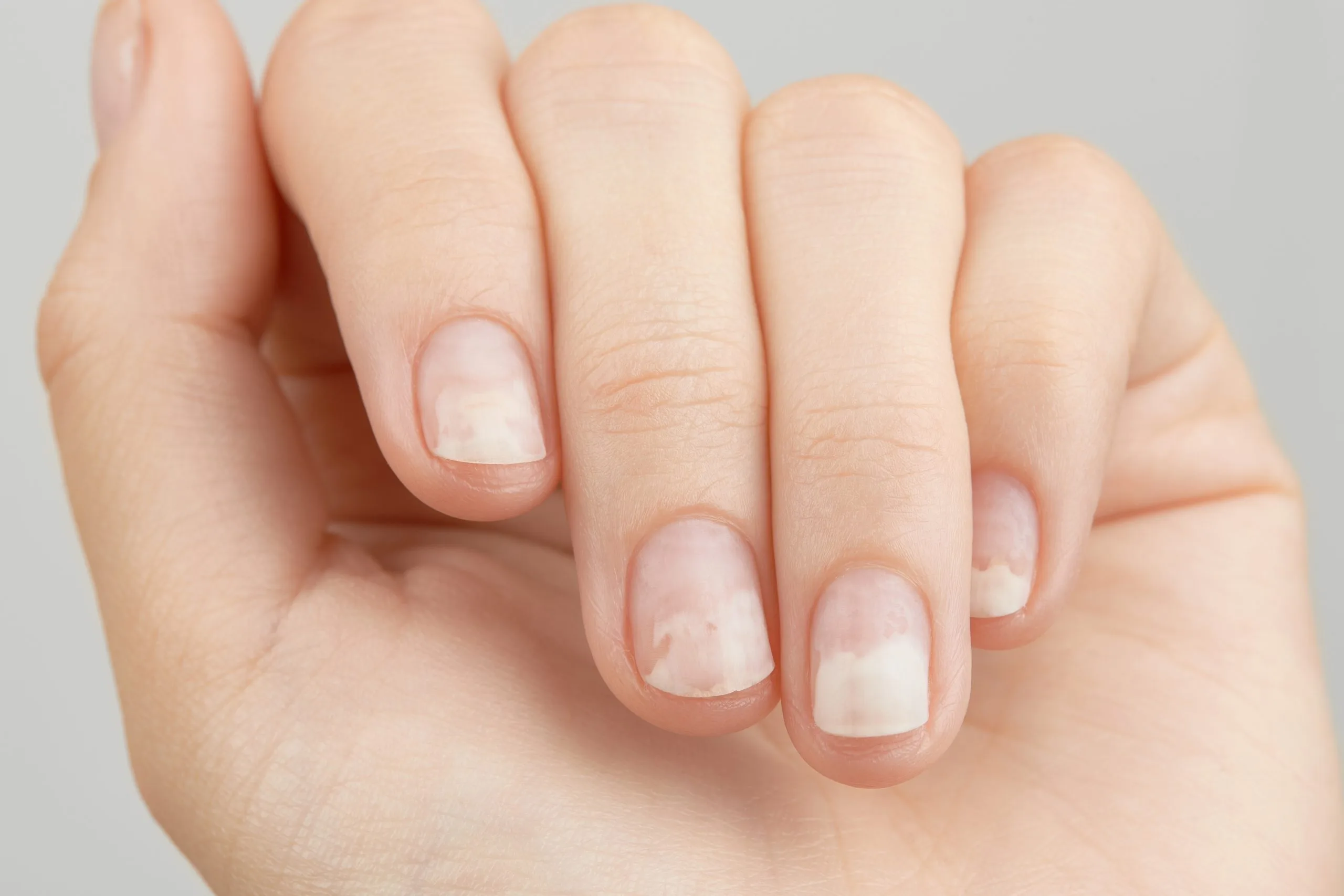
"We confirm the diagnosis before prescribing antifungals — because not every discolored nail is a fungal nail."
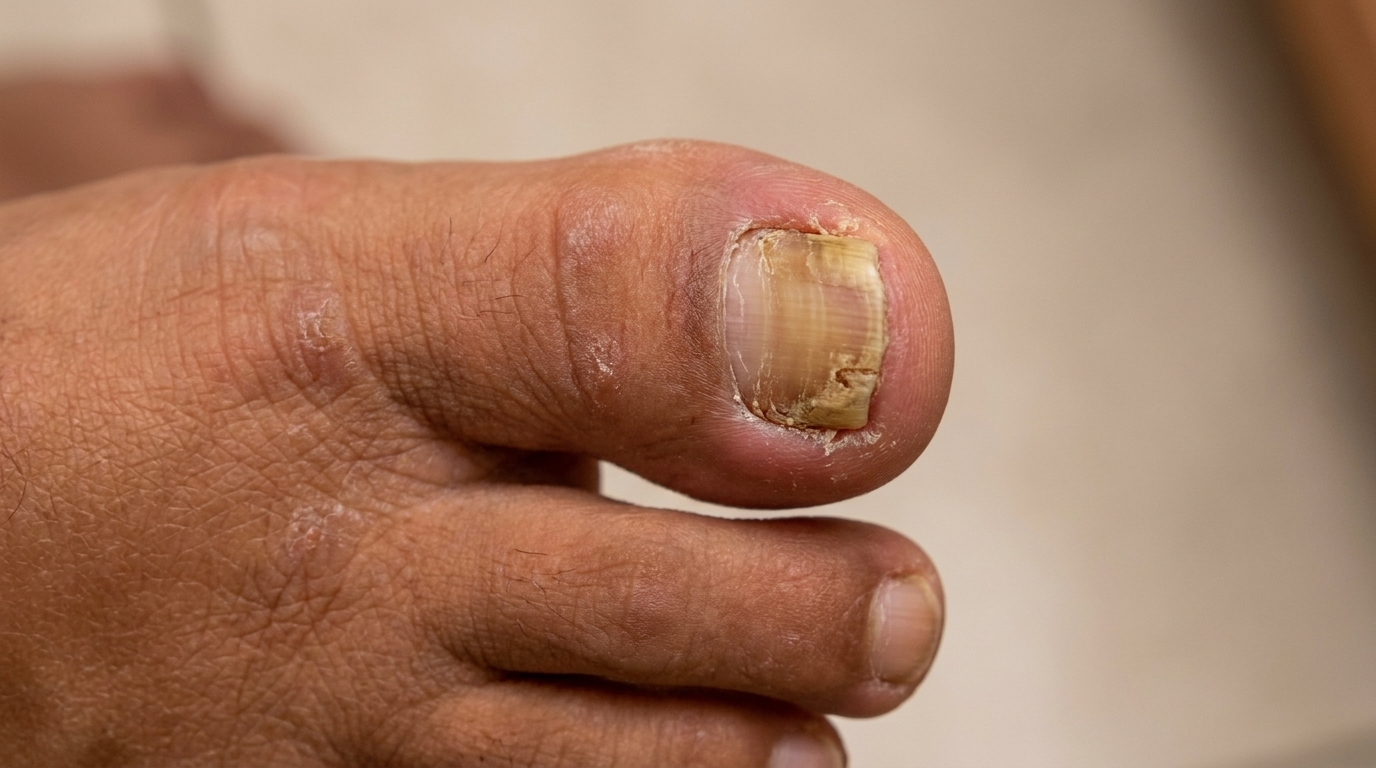
A Fungal Infection.
Not Just Cosmetic.
Onychomycosis is a fungal infection of the nail plate, nail bed, or both. The vast majority of cases — roughly 90% of toenail infections — are caused by dermatophytes, primarily Trichophyton rubrum. Yeasts (especially Candida) and non-dermatophyte molds account for the remainder, and treatment choice can differ depending on the organism.
The classic presentation is a nail that turns yellow-brown, thickens, becomes brittle, and develops crumbling debris under the nail plate. In more advanced cases, the nail separates from the nail bed — a finding called onycholysis. Toenails are affected far more often than fingernails, partly because shoes create the warm, humid environment that fungi favor.
The clinical challenge is that nail psoriasis, repetitive trauma, lichen planus of the nail, and peripheral vascular changes can produce an identical appearance. Treating presumed onychomycosis without confirmation — particularly with oral antifungals — exposes patients to drug interactions and liver toxicity with no benefit if the underlying diagnosis is wrong.
From Diagnosis
to Clear Nail
Treating nail fungus effectively requires confirming it is actually nail fungus, then matching the treatment to severity — not defaulting to the most aggressive option first.
Clinical Evaluation
We assess the nail for signs of onychomycosis and examine for conditions that mimic it — psoriasis, trauma, and lichen planus — to determine whether lab confirmation is needed before proceeding.
Full nail history takenLaboratory Confirmation
Nail clippings and subungual debris are sent for KOH microscopy and PAS-stained histology; fungal culture or PCR may be added to identify the specific organism and guide antifungal selection.
Before any Rx is writtenTargeted Treatment
Mild-to-moderate disease is managed with topical efinaconazole or tavaborole. Moderate-to-severe cases receive oral terbinafine — with baseline liver function tests — or itraconazole pulse therapy as an alternative.
Severity-matched protocolLong-Term Follow-Up
Clearance is assessed as the healthy nail grows forward. Recurrence prevention — footwear hygiene, athlete's foot control, and a preventive topical protocol — is addressed at every follow-up visit.
12–18 months to full clearanceEvidence-Based
Antifungal Therapy
Treatment selection depends on which nails are affected, how many, how severely, and what other medications the patient is taking. There is no single right answer for every patient.
Mild to Moderate Disease
Topical Antifungals
Efinaconazole (Jublia) and tavaborole (Kerydin) penetrate the nail plate and deliver antifungal activity to the nail bed with minimal systemic absorption. Applied daily for up to 48 weeks, they are the preferred option when oral therapy is contraindicated or when only a few nails are involved. Older ciclopirox lacquer remains an option for mild cases.
Moderate to Severe Disease
Oral Terbinafine
Terbinafine is the most effective oral antifungal for dermatophyte nail infections, with mycologic cure rates significantly higher than topical therapy. Standard dosing is 250 mg daily for 12 weeks (toenails) or 6 weeks (fingernails). Because it is hepatically metabolized, baseline liver function tests are required, and it interacts with several common drugs including SSRIs, warfarin, and certain beta-blockers.
Alternative Oral Option
Itraconazole Pulse Therapy
Itraconazole given as pulse therapy — one week on, three weeks off, repeated for two to three cycles — is an effective alternative for patients who cannot tolerate terbinafine, those with non-dermatophyte mold infections, or cases where Candida is the causative organism. It also has a significant drug-interaction profile and requires cardiac risk assessment in certain patients.
Adjunctive Measures
Debridement & Laser
Nail debridement — mechanical reduction of the thickened nail plate — decreases the fungal load and improves penetration of topical antifungals. Laser therapy targets the fungus thermally and can be used as an adjunct in patients who prefer to avoid systemic medications or as part of a combined approach. Neither replaces the need for a confirmed diagnosis or appropriate antifungal therapy.
The Goal of Treatment.
Clear, Healthy Nails.
Accurate Diagnosis First
Identifying the causative organism — dermatophyte, yeast, or mold — guides antifungal selection. Treating the wrong organism with the wrong drug prolongs infection and delays real clearance.
Fungal Infection Eliminated
Oral terbinafine achieves mycologic cure — confirmed absence of fungal elements — in the majority of dermatophyte cases when the full course is completed and lab confirmation guided treatment selection.
Nail Appearance Restored Over Time
The nail plate does not snap back to normal immediately — it must grow out. Fingernails typically show full clearance in about 6 months; toenails, growing at roughly 1.5 mm per month, take 12 to 18 months.
Concurrent Tinea Pedis Managed
Athlete's foot is both a risk factor for onychomycosis and a common source of reinfection after clearance. Treating tinea pedis alongside nail fungus substantially reduces the chance of relapse.
Recurrence Risk Reduced
Post-treatment hygiene guidance — antifungal shoe sprays, moisture-wicking socks, avoiding barefoot exposure in communal areas — and a preventive topical protocol lower the well-documented 20–25% annual relapse rate.
"A 12-week course of terbinafine is a commitment — starting it on a nail that turns out to be psoriasis achieves nothing and carries real risk. We confirm first."— Couture Dermatology and Laser
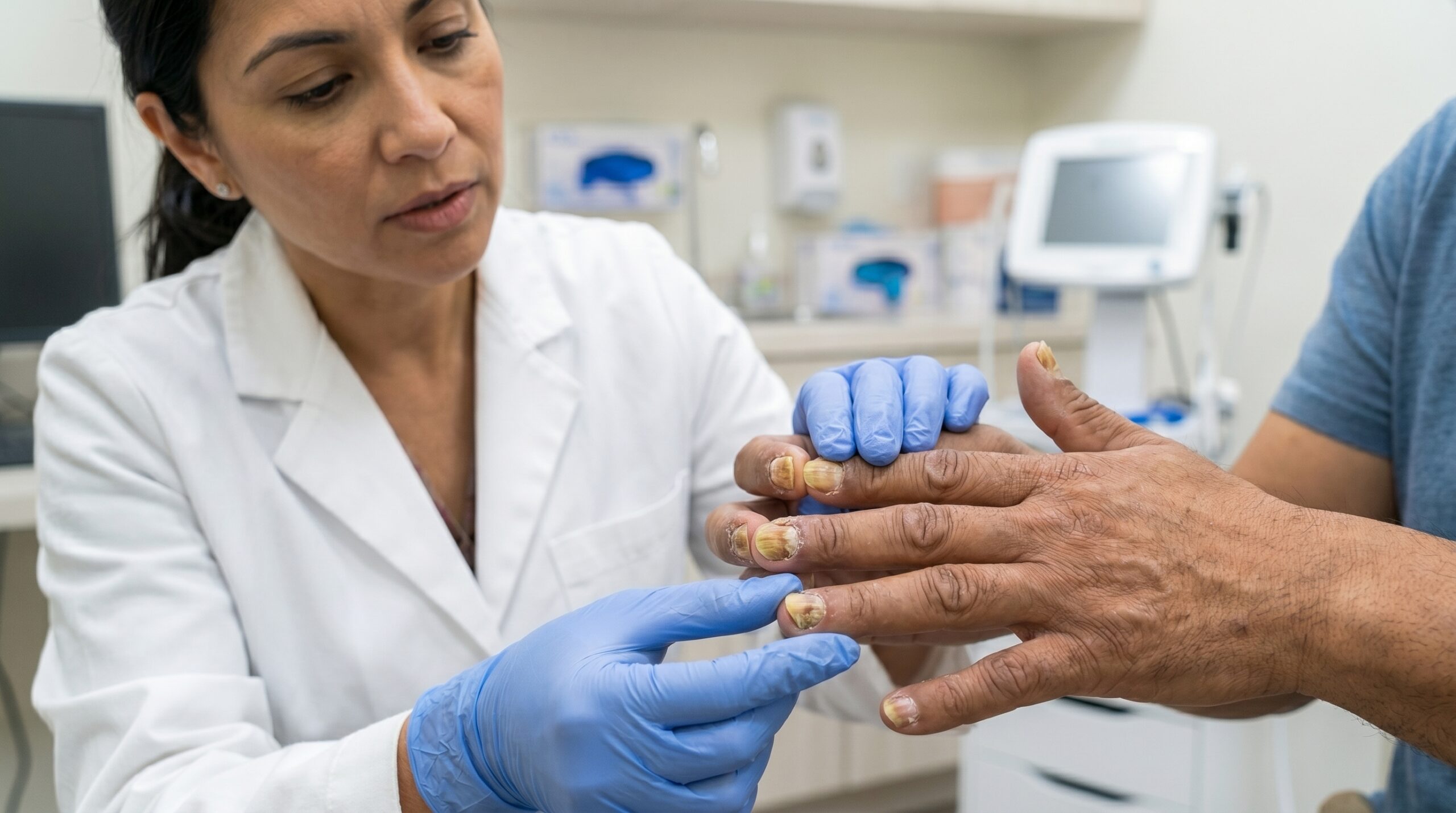
toenail clearance
Board-Certified
Every onychomycosis evaluation and treatment plan is led by Dr. Chinonso Kagha Abisogun, MD, FAAD — a Fellow of the American Academy of Dermatology
Diagnosis Before Treatment
We do not prescribe oral antifungals without laboratory confirmation — KOH, PAS histology, or fungal culture — because lookalikes are common and oral therapy carries real risk
Safe Oral Therapy
Baseline liver function tests and a full drug-interaction review are standard before initiating oral terbinafine or itraconazole
Honest Timelines
We set accurate expectations: antifungals stop the infection, but the nail takes 12–18 months to grow out fully — and recurrence prevention is part of every plan
Nail Conditions
We Evaluate
Onychomycosis has several clinical subtypes, and multiple conditions can mimic it. Accurate identification determines what treatment — if any antifungal at all — is appropriate.
Distal Subungual Onychomycosis
The most common form — infection begins at the free edge of the nail and progresses proximally with yellow-brown discoloration and subungual debris.
Proximal Subungual Onychomycosis
Less common; infection enters through the proximal nail fold and can be a marker for immunocompromise. Requires organism identification before treatment.
White Superficial Onychomycosis
Affects only the surface of the nail plate — typically a chalky white appearance confined to the dorsal nail. Responds well to topical debridement and antifungal therapy.
Candidal Onychomycosis
Yeast-driven infection, more common in fingernails and in patients with chronic paronychia or wet-work exposure. Itraconazole is typically preferred over terbinafine for Candida.
Nail Psoriasis (Lookalike)
Affects up to 50% of people with psoriasis — causing pitting, onycholysis, and subungual debris that mirrors fungal infection. KOH will be negative; treatment is entirely different.
Traumatic Nail Changes (Lookalike)
Repetitive microtrauma — from tight shoes, sports, or occupational pressure — thickens and discolors nails in a pattern indistinguishable from early onychomycosis on visual exam alone.
Is Nail Fungus Treatment
Right for You?
- Adults with one or more nails showing thickening, yellow-brown discoloration, subungual debris, or separation from the nail bed.
- Patients who want a confirmed diagnosis before committing to a 12-week course of oral antifungals with liver monitoring.
- Those with risk factors for onychomycosis: athlete's foot, diabetes, peripheral vascular disease, nail trauma, or history of communal shower use.
- Patients on multiple medications who need a drug-interaction review before starting terbinafine or itraconazole.
- Those who have tried over-the-counter antifungals without improvement and want a clinical evaluation to determine whether the diagnosis is correct or the treatment was inadequate.
- Patients willing to commit to the full treatment timeline and understand that full toenail clearance takes 12 to 18 months to become visible.
Realistic Expectations
Antifungal therapy eradicates the organism — it does not instantly restore the nail. The nail plate must physically grow out, which takes time that cannot be accelerated. Completing the full course of medication is essential; stopping early is a common reason for treatment failure and recurrence.
Recurrence rates after successful treatment are well-documented at 20–25% per year — and higher over longer follow-up. This reflects reinfection from the environment, not failure of the initial treatment. Post-clearance hygiene, continued management of any tinea pedis, and periodic check-ins with your dermatologist are part of the long-term plan. Dr. Chinonso will be direct about what is achievable for your specific nails.
Often Seen
Alongside…
Nail fungus rarely exists in isolation. These conditions frequently coexist with or mimic onychomycosis — and each requires its own evaluation and management approach.
Warts
Periungual warts (HPV) grow around and under the nail, causing disruption that can mimic fungal changes. They require separate diagnosis and treatment — cryotherapy, topical agents, or procedural intervention.
Explore wart treatment →Psoriasis
Nail psoriasis is among the most common lookalikes for onychomycosis. If KOH is negative and clinical findings suggest psoriatic nail disease, a different treatment pathway — including biologics for severe cases — may be appropriate.
Explore psoriasis treatment →Skin Rashes
Tinea pedis (athlete's foot) is both a direct precursor to toenail fungus and a reservoir for reinfection after clearance. Treating the skin fungus alongside the nail is part of a complete management plan.
Explore skin rash treatment →Eczema
Chronic eczema affecting the hands can involve the nails — causing ridging, pitting, and nail plate changes that overlap with both fungal and psoriatic nail findings. Accurate differentiation guides the correct treatment.
Explore eczema treatment →Results That Speak for Themselves
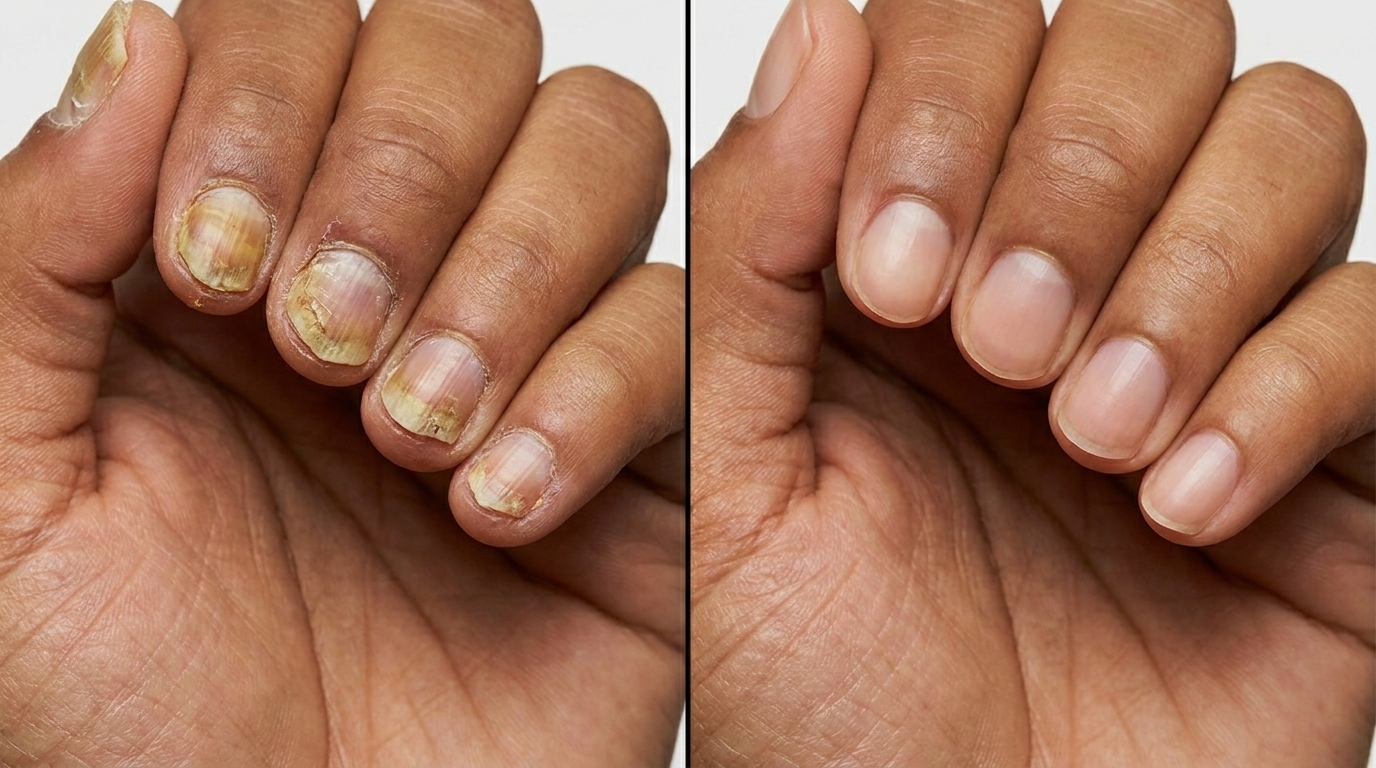
Individual results vary. Full toenail clearance typically requires 12 to 18 months from the completion of antifungal therapy as the healthy nail grows forward. Fingernail clearance is typically seen in approximately 6 months.
Confirmed Diagnosis.
Targeted Treatment.
Toenail fungus is one of the most undertreated and overtreated conditions in dermatology. At Couture Dermatology and Laser, Dr. Chinonso confirms the diagnosis before prescribing anything, matches treatment to severity, and builds a recurrence-prevention plan from the start. No oral antifungal is prescribed without a drug-interaction review and appropriate baseline labs.
Sat · By Appointment Only
"I had been told by two different providers to just 'try some Lamisil' without any testing. Dr. Chinonso actually took nail clippings and confirmed it was fungal before prescribing anything. Fourteen months later, my toenails look completely normal for the first time in years."
Robert T.
Verified Patient · Beverly Hills
Frequently
Asked Questions
Direct answers to the questions patients most commonly ask before their onychomycosis consultation — on diagnosis, treatment options, timelines, and recurrence.
A visual inspection alone is not sufficient — nail psoriasis, trauma, lichen planus, and other conditions can look identical to onychomycosis. At Couture Dermatology and Laser, we confirm the diagnosis before prescribing any antifungal. Nail clippings or scrapings are sent for KOH microscopy, PAS-stained histology, or fungal culture, depending on the clinical picture. Treating an unconfirmed case with oral antifungals carries real risk — and frequently fails — because the nail change may not be fungal at all.
Topical antifungals — including efinaconazole (Jublia) and tavaborole (Kerydin) — penetrate the nail plate and are effective for mild-to-moderate onychomycosis or in patients who cannot take oral therapy. They require daily application for up to a year. Oral antifungals, primarily terbinafine, are more effective for moderate-to-severe disease; a standard toenail course is 12 weeks. Because oral terbinafine is metabolized by the liver, baseline liver function tests are required before starting and the medication needs a drug-interaction review — it interacts with several common prescriptions. Itraconazole given as pulse therapy is an alternative for patients who cannot tolerate terbinafine.
Antifungal drugs stop the fungus from growing, but they do not instantly restore the nail. Clearing depends on how quickly your nail grows out. Fingernails typically clear in about 6 months; toenails, which grow much more slowly, take 12 to 18 months before you see a fully clear nail plate. If you finish a course of oral terbinafine at 12 weeks, the nail will continue to improve for many more months as the healthy nail grows forward.
Recurrence is genuinely common with onychomycosis — studies report relapse or reinfection rates of 20–25% within a year of stopping treatment, and higher over longer follow-up. This is not a treatment failure; it reflects continued exposure to the same environmental fungi. Reducing recurrence requires managing concurrent tinea pedis (athlete's foot), using antifungal sprays in shoes, keeping feet dry, wearing moisture-wicking socks, and avoiding barefoot exposure in communal areas. Your dermatologist may recommend a preventive topical regimen after completing oral therapy.
Laser therapy for onychomycosis has shown modest in-office efficacy in clinical studies — it can reduce fungal load and improve nail appearance — but it is not considered a first-line treatment by most evidence-based guidelines. At Couture Dermatology, laser may be discussed as an adjunct to topical or oral therapy, particularly for patients who cannot take systemic antifungals or want to reduce relapse. It does not replace the need for a confirmed diagnosis.
Several common conditions look nearly identical to onychomycosis: nail psoriasis (affects roughly 50% of people with psoriasis and often causes pitting, onycholysis, and subungual debris), nail trauma with subungual hematoma, lichen planus of the nail, and nail changes from thyroid disease or poor circulation. This overlap is precisely why we do not prescribe oral antifungals without laboratory confirmation — a 12-week course of terbinafine carries real risk, and taking it for a non-fungal nail change achieves nothing while exposing the patient to side effects and drug interactions.