
Actinic Keratosis
Treatment
Actinic keratoses are not a cosmetic concern — they are the earliest clinically recognizable step toward squamous cell carcinoma. Rough, scaly, UV-induced patches on sun-exposed skin warrant evaluation and treatment, not watchful neglect. At Couture Dermatology and Laser, Dr. Chinonso Kagha Abisogun provides individualized lesion-directed and field-directed care to clear existing actinic keratosis, treat the surrounding cancerization field, and establish the surveillance routine your skin needs long-term.
progress if untreated
treats full damage zone
Dermatologist
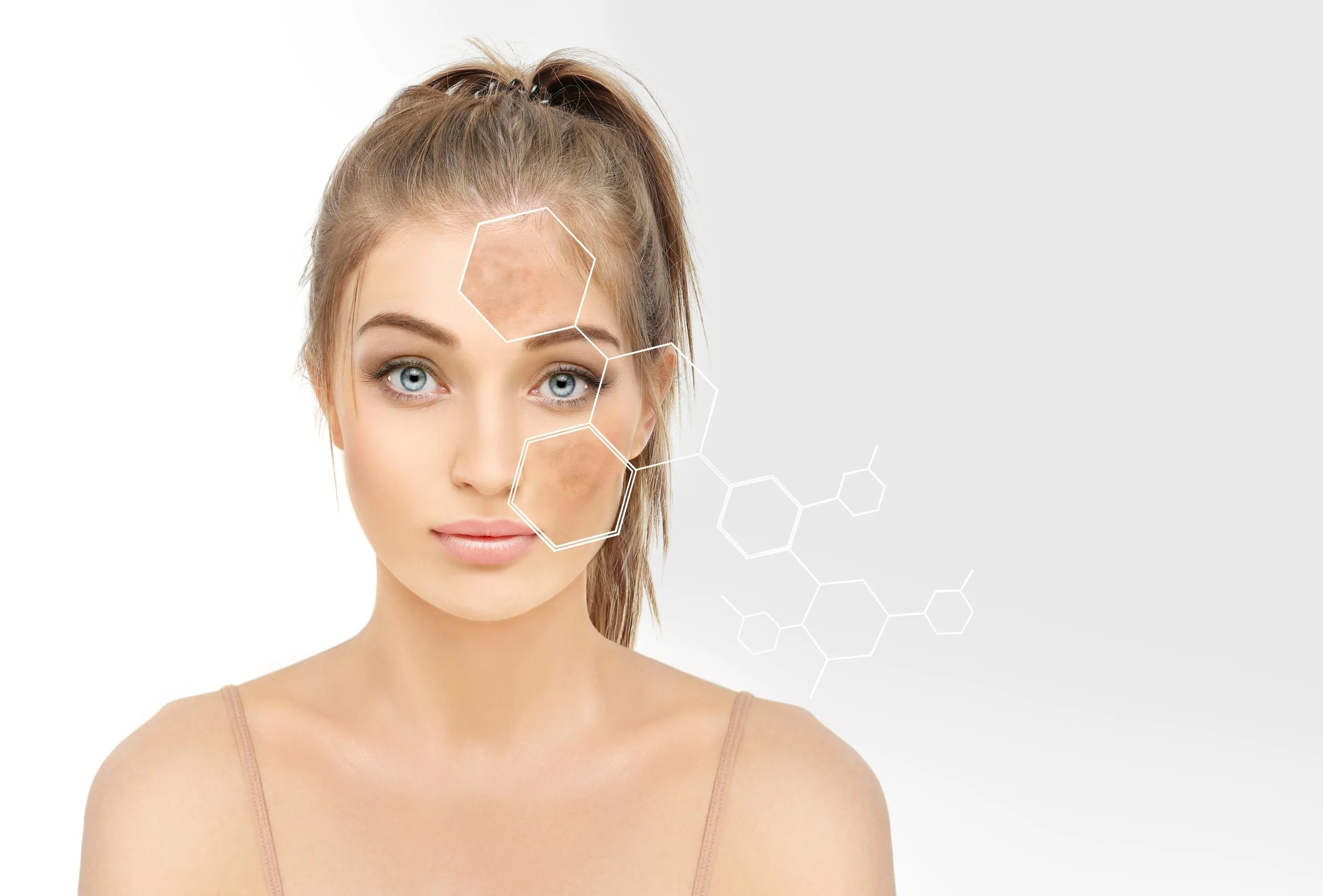
"Treating the lesion you can see is only half the work — field cancerization surrounds it."

Precancer in
Sun-Damaged Skin
Actinic keratosis — also called solar keratosis — is a rough, scaly patch caused by years of cumulative UV exposure. The lesions develop in sun-exposed areas: the scalp, face, ears, lips (actinic cheilitis), forearms, and hands. To the touch they feel sandpaper-rough; some are tender or itch intermittently. A few are barely visible until you run a finger across the skin.
What makes actinic keratosis medically significant is its biological potential. A percentage of untreated AKs will progress to squamous cell carcinoma. Since there is no reliable way to predict which individual lesion will transform, board-certified dermatologists generally recommend treating all of them. The surrounding skin — even where no lesion is visible — may already harbor the same UV-damaged keratinocytes. This concept is called the cancerization field.
Field-directed treatment addresses both visible lesions and that invisible damage zone, reducing new AK formation in the same area. Cryotherapy alone clears individual lesions but does nothing for the field. A complete management plan uses both.
From Diagnosis
to Clearance
Effective actinic keratosis management is a structured sequence — not a single freeze. Each step builds on the last to clear current lesions, treat the field, and protect against recurrence.
Full Skin Evaluation
A thorough head-to-toe skin examination identifies all AK lesions, actinic cheilitis, and any concerning features — thickness, induration, bleeding — that warrant biopsy before treatment begins.
Included at consultationLesion-Directed Treatment
Isolated or clinically distinct AKs are treated with liquid nitrogen cryotherapy or curettage for rapid, precise clearance. Suspicious non-responsive lesions proceed to in-office biopsy.
Same-day, in-officeField-Directed Therapy
Topical agents (5-fluorouracil, imiquimod, or tirbanibulin) or photodynamic therapy treat the entire sun-damaged zone, clearing both visible and subclinical lesions the cryo missed.
2–6 week courseSurveillance & Prevention
Annual skin checks, daily broad-spectrum SPF 50+, and sun-protective habits form the backbone of long-term management. AKs can recur; this is ongoing medical care, not a one-time fix.
Lifelong skin healthEvidence-Based
AK Therapies
No single modality is appropriate for every patient or every lesion distribution. These four treatment approaches are selected and combined based on lesion count, location, skin type, and your tolerance for downtime.
Isolated Lesions · Rapid Results
Cryotherapy
Liquid nitrogen applied directly to individual actinic keratosis lesions destroys the abnormal keratinocytes through freeze-thaw injury. Effective for well-defined, discrete AKs. A blister forms over several days and crusts off within one to two weeks, taking the lesion with it. Does not treat the cancerization field surrounding visible lesions.
Field-Directed · Topical
5-FU / Imiquimod / Tirbanibulin
Topical agents treat the entire damage zone. 5-fluorouracil (Efudex) disrupts DNA synthesis in abnormal keratinocytes over a 2–4 week course. Imiquimod stimulates local immune response over several weeks. Tirbanibulin (Klisyri) is a shorter 5-day regimen with a different mechanism. All cause visible inflammatory reaction — a sign of efficacy, not a side effect.
Field-Directed · In-Office
Photodynamic Therapy (PDT)
Aminolevulinic acid (ALA) is applied topically and selectively absorbed by atypical keratinocytes. Light activation then destroys those cells. PDT is highly effective for diffuse facial or scalp AKs and can treat large areas in a single session. Downtime involves 5–7 days of redness, peeling, and sun avoidance. Confirm availability with the practice.
Diagnostic · When Indicated
Curettage & Biopsy
Any actinic keratosis that is thick, indurated, eroded, or bleeding — or fails to respond to standard treatment — requires a biopsy to rule out squamous cell carcinoma. Curettage physically removes and samples the lesion in the same procedure. A pathology result guides definitive next steps and may change the clinical management plan significantly.
Protecting Skin.
Preventing Cancer.
Squamous Cell Carcinoma Prevention
Treating actinic keratoses before they transform interrupts the progression to squamous cell carcinoma. Early intervention is straightforward; SCC treatment is not.
Cancerization Field Addressed
Field-directed therapy clears the invisible subclinical lesions in sun-damaged skin that cryotherapy alone leaves behind, reducing the rate at which new AKs emerge in the same zone.
Improved Skin Texture and Appearance
Clearing AKs eliminates the rough, sandpaper texture and scaly patches that accumulate on chronically sun-damaged skin, leaving the surface noticeably smoother.
Accurate Diagnosis When It Counts
Board-certified dermatologist evaluation ensures that any lesion with concerning features — thickness, non-healing, bleeding — is biopsied rather than empirically treated, catching SCC at the earliest stage.
A Long-Term Surveillance Partnership
Actinic keratoses recur in sun-damaged skin. Regular skin checks allow new lesions to be caught and treated early, before any opportunity for progression.
"The goal isn't just clearing today's lesions — it's building the surveillance habit that protects skin over years."— Couture Dermatology and Laser

recommended
Board-Certified
Dr. Chinonso Kagha Abisogun, MD, FAAD evaluates every lesion personally — no mid-level-only AK management
Field Thinking
We treat the cancerization field, not just the discrete lesions visible at the time of your visit
Biopsy When Warranted
Any lesion that raises clinical concern is biopsied immediately — we do not treat blindly and hope for clearance
Long-Term Partnership
Annual surveillance, sun protection counseling, and follow-up are built into every patient relationship
Where Actinic Keratoses
Develop
Actinic keratosis appears wherever skin has accumulated significant UV exposure over a lifetime. Lesions are rarely solitary — finding one warrants examining the entire surrounding field.
Scalp
Particularly in patients with thinning hair or a history of prolonged outdoor exposure. Lesions here are often felt before they are seen.
Face
The forehead, temples, nose, and cheeks are the most commonly affected sites — decades of daily ambient UV accumulate even in urban environments.
Ears
The helix and periauricular skin are frequently missed by sunscreen application and represent a high-risk site, particularly in men.
Lips (Actinic Cheilitis)
Diffuse sun damage to the lower lip presents as scaling, pallor, and loss of the vermilion border definition. Requires dedicated evaluation and treatment.
Forearms & Hands
Chronically exposed to incidental sun, the dorsal forearms and hands develop AKs that patients often attribute to age spots until evaluated clinically.
Chest & Décolletage
A common site in patients with a history of sunbathing, sun damage here often coexists with photodamage and warrants both AK treatment and ongoing surveillance.
Is This Lesion
Worth Checking?
- Adults with a history of significant sun exposure — outdoor work, water or snow sports, or decades without consistent sunscreen use.
- Patients who notice rough, scaly, or gritty patches on the face, scalp, ears, lips, or forearms that do not resolve on their own.
- Fair-skinned individuals (Fitzpatrick I–III) who represent the highest-risk group, though AKs occur across all skin types with sufficient UV exposure.
- Immunocompromised patients — organ transplant recipients and those on long-term immunosuppressive therapy — who carry substantially elevated AK and SCC risk.
- Anyone previously diagnosed with AK, basal cell carcinoma, or squamous cell carcinoma who requires structured ongoing surveillance rather than opportunistic evaluation.
- Patients with a lesion that has thickened, become tender, bleeds spontaneously, or has failed prior cryotherapy — features that warrant biopsy to rule out SCC.
Honest Expectations
Clearing your current actinic keratoses is achievable and important — but it does not undo decades of UV-induced DNA damage already present in the surrounding skin. New AKs will very likely appear in the same areas over subsequent years. This is a feature of chronically sun-damaged skin, not a failure of treatment.
What a structured management program does accomplish: clearance of existing lesions, treatment of the subclinical field, prompt identification of any lesion progressing toward SCC, and the ongoing surveillance framework that gives you the best chance of catching any future changes early. Dr. Chinonso will be direct about what is realistic for your specific degree of sun damage.
Conditions We
Evaluate Alongside AK
Actinic keratoses rarely appear in isolation. Patients with AK often have a broader sun-damage history that warrants evaluation of these related conditions at the same visit.
Squamous Cell Carcinoma
The malignancy that actinic keratoses can progress toward. Any AK that thickens, ulcerates, or fails treatment requires biopsy and, if confirmed SCC, surgical excision or Mohs surgery.
Learn about SCC →Basal Cell Carcinoma
The most common skin cancer, sharing the same UV-damage risk factors as AK. Patients with actinic keratoses have a meaningfully elevated lifetime risk of BCC and benefit from regular surveillance.
Learn about BCC →Atypical Moles
A full-body skin check for atypical or changing moles is performed alongside AK evaluation — both reflect cumulative UV exposure and warrant clinical tracking over time.
Learn about moles →Melanoma Surveillance
Patients with chronic sun damage and multiple AKs represent a population with elevated melanoma risk. Dermoscopy and regular total-body photography support early melanoma detection.
Learn about melanoma →Treatment Outcomes
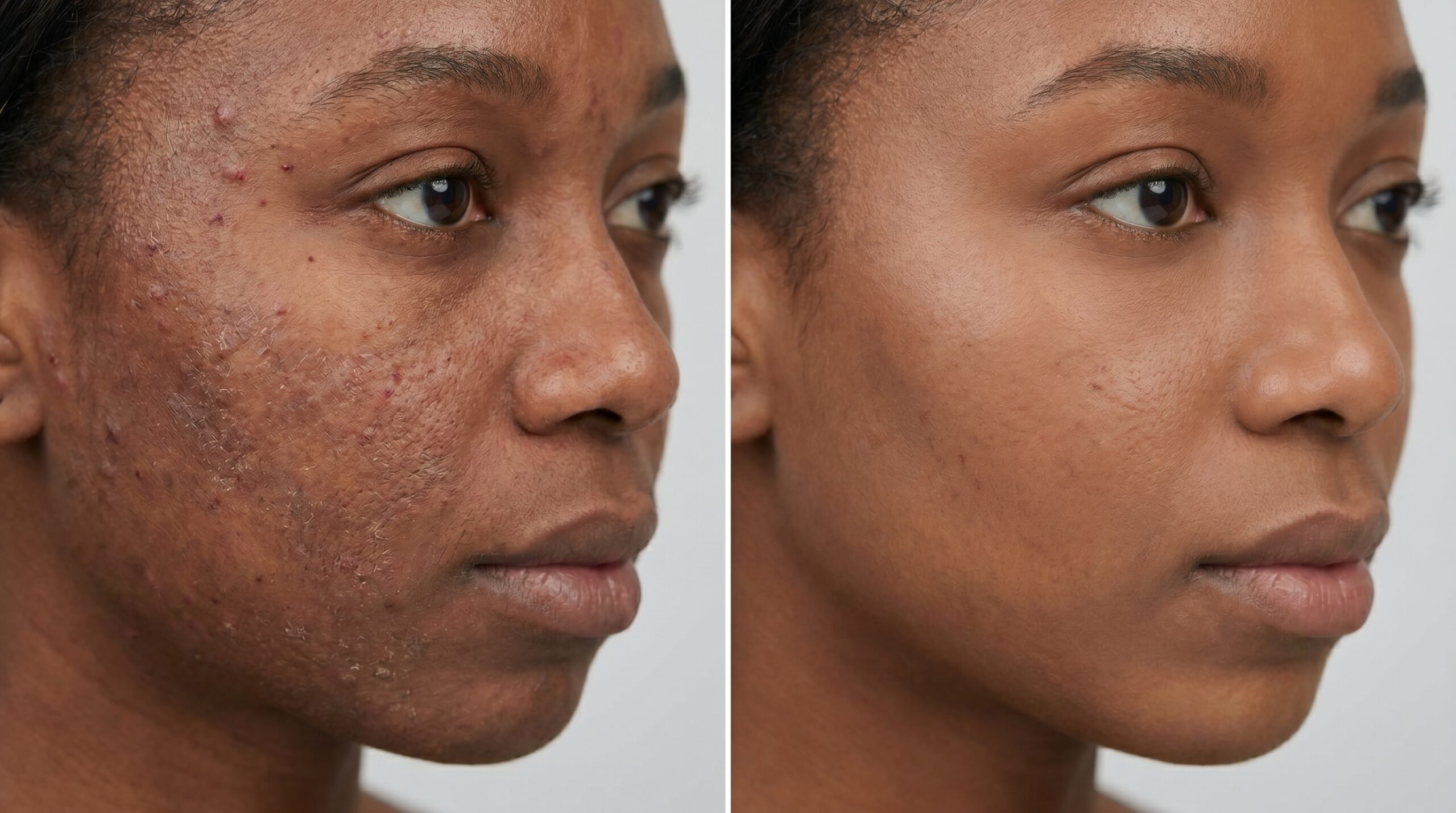
Individual results vary based on lesion burden, treatment modality, and compliance with post-treatment sun protection. Clearance of the treatment field does not preclude future actinic keratosis development.
Protecting Skin.
One Field at a Time.
Actinic keratosis is a medical diagnosis, not a cosmetic annoyance. At Couture Dermatology and Laser, Dr. Chinonso evaluates every lesion in clinical context, selects the appropriate treatment strategy for your specific lesion burden and field, and establishes the surveillance schedule your skin needs going forward. No lesion is treated without a proper examination first.
Sat · By Appointment Only
"I had been ignoring those rough patches for years, thinking they were just dry skin. Dr. Chinonso took one look and explained exactly what they were and why they needed to be treated. The field therapy was not comfortable, but my scalp looks completely different now — and I finally have a plan for checking my skin every year."
Robert H.
Verified Patient · Beverly Hills
Frequently
Asked Questions
Direct answers to the questions patients most commonly ask before their actinic keratosis evaluation — on risk, treatment options, downtime, and realistic outcomes.
Actinic keratoses are not yet skin cancers — they are precancerous lesions caused by cumulative UV damage. However, a percentage will progress to squamous cell carcinoma if untreated, and it is not reliably possible to predict which individual lesion will transform. Treatment and ongoing surveillance are therefore recommended for all AKs.
Field-directed therapy treats the entire sun-damaged area — not just the visible AKs — because surrounding skin harbors invisible subclinical lesions that cryotherapy alone would miss. Topical agents like 5-fluorouracil, imiquimod, and tirbanibulin, as well as photodynamic therapy, treat the full cancerization field and reduce the risk of new lesions developing in that zone.
5-fluorouracil (Efudex) is typically applied twice daily for 2 to 4 weeks; the treated skin becomes significantly red, crusted, and uncomfortable during the active treatment phase before healing. Imiquimod protocols range from several weeks to months depending on the regimen. Tirbanibulin (Klisyri) is a shorter 5-day course. Your dermatologist will select the regimen appropriate for your lesion burden and tolerance.
Any actinic keratosis that is thick, indurated, bleeding, eroded, or fails to clear after appropriate treatment should be biopsied. These features raise concern for progression to squamous cell carcinoma. A biopsy is a minor in-office procedure that provides a definitive diagnosis and guides next steps.
AKs can recur because the underlying cause — decades of UV-induced DNA damage — remains in the skin. Clearance of current lesions does not eliminate that background risk. Annual full-body skin examinations, diligent broad-spectrum SPF 50+ daily sun protection, and sun-protective clothing significantly reduce recurrence and new lesion development.
Cryotherapy involves a brief stinging and burning sensation during and shortly after application — most patients tolerate it without anesthesia. Topical field therapy causes a progressive inflammatory reaction over the treatment course; the skin may feel raw and sore, particularly in the second and third weeks. Photodynamic therapy involves a pre-treatment incubation period followed by light activation that can cause significant burning and stinging during the session; post-procedure redness and crusting last approximately 5 to 7 days.
Related Conditions