Keloid
Treatment
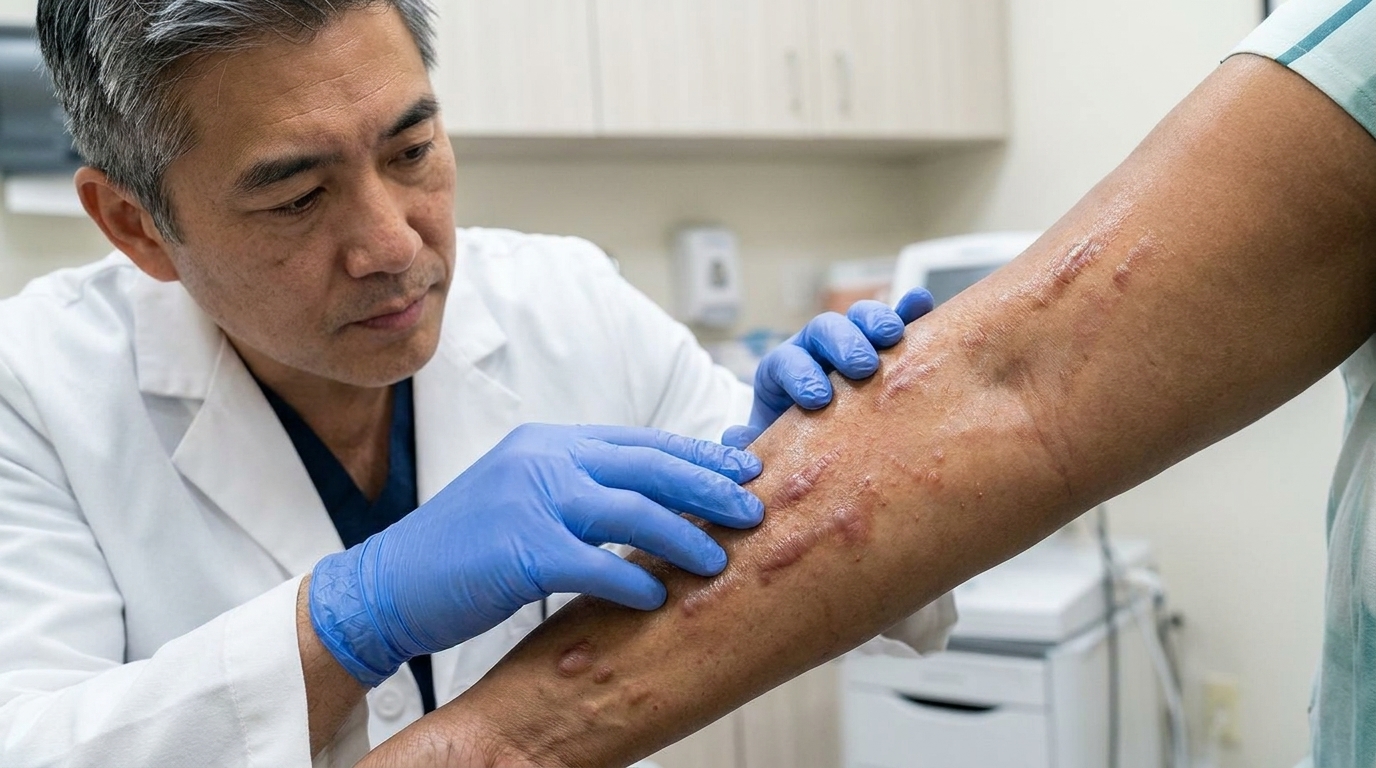
A keloid is not simply a raised scar — it is scar tissue that has escaped the original wound boundary and continues to grow. Unlike hypertrophic scars, keloids do not regress on their own. At Couture Dermatology and Laser, treatment is built around the clinical reality that keloids recur easily: every protocol is designed first for suppression, then for flattening and symptom relief.
for steroid series
single-modality often fails
Dermatologist
"Keloids that recur after treatment are not treatment failures — they are expected biology that requires a suppression strategy from day one."
Beyond the Wound.
Beyond the Border.
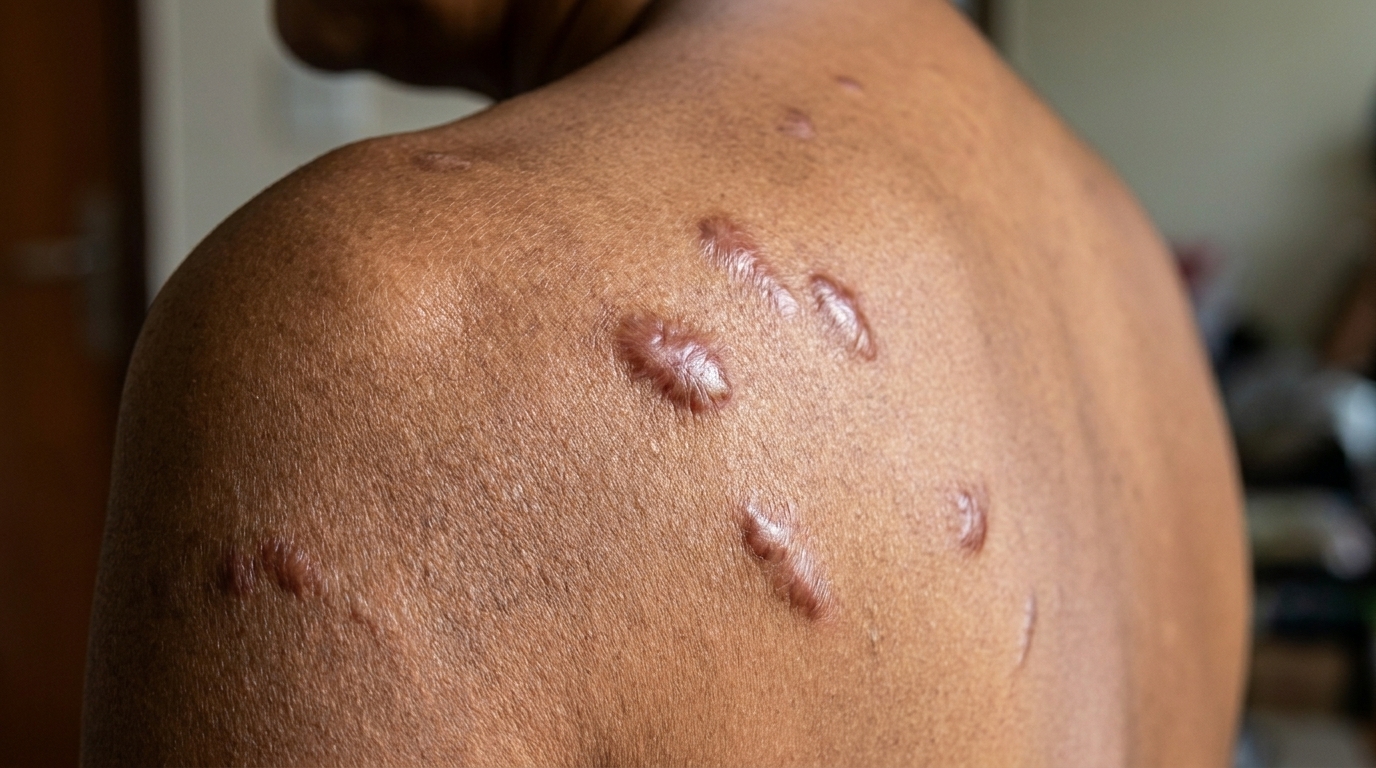
Keloids form when the normal wound-healing process does not switch off. Fibroblasts keep producing collagen long after the wound has closed, creating a firm, raised mass that pushes outward beyond the original scar boundary. This is the defining feature that separates keloids from hypertrophic scars — which also raise above the skin surface but stay within the wound footprint and can soften over time without intervention.
They can develop after any skin disruption: surgical incisions, ear piercings, acne, burns, or even minor cuts. Risk is substantially higher in patients with Fitzpatrick III–VI skin types and in those with a family history of keloids. The chest and sternum, earlobes, shoulders, upper back, and jawline are the most frequently affected sites — areas under tension or with repeated micro-trauma.
Beyond the cosmetic concern, many keloids are genuinely symptomatic: persistent itch, tenderness to touch, and tightness over joints. These symptoms alone justify treatment even when cosmetic improvement is uncertain.
From Assessment
to Suppression
Keloid management is a staged process with recurrence control built in from the first session. There is no single-visit solution — consistent follow-up is part of the treatment.
Clinical Assessment
Size, site, age of the keloid, skin type, family history, and prior treatments are all factored in before any protocol is designed. No two keloids are managed identically.
Included at every visitIntralesional Injections
A series of corticosteroid injections (triamcinolone), often combined with 5-fluorouracil in resistant cases, begins the process of flattening and softening the lesion at ~4-week intervals.
Every 4 weeksAdjuvant Modalities
Pulsed-dye laser addresses redness and vascularity; cryotherapy softens the lesion to improve injection penetration; silicone sheeting provides continuous pressure between sessions.
Combined as neededRecurrence Monitoring
Keloids must be monitored for at least 12 months after the final treatment. Early signs of regrowth are addressed immediately — waiting allows the scar to re-establish.
12-month follow-upEvidence-Based
Modalities
Keloid recurrence is too high for any single tool to carry the whole program. These four components are selected and combined based on the specific characteristics of your lesion.
First-Line Therapy
Intralesional Corticosteroid + 5-FU
Triamcinolone acetonide injected directly into the keloid is the established first-line approach. In resistant or recurrent lesions, combining it with intralesional 5-fluorouracil has a meaningfully better response rate than steroid alone, with reduced atrophy side effects. Sessions are spaced every 3 to 4 weeks.
Vascularity & Erythema
Pulsed-Dye Laser
The 595 nm pulsed-dye laser targets the abnormal blood vessels that sustain keloid growth, reducing redness, scar height, and pliability. PDL is also used post-excision as part of an adjuvant program. It is safe across a range of skin tones and complements injection therapy well.
Texture & Penetration
Cryotherapy
Controlled freezing of keloid tissue causes intracellular damage and disrupts fibroblast activity. Beyond direct tissue effect, cryotherapy softens the scar matrix and improves the penetration depth of subsequent corticosteroid injections — making it a useful combination step rather than a standalone treatment.
Pressure & Maintenance
Silicone Sheeting & Pressure
Silicone gel or sheeting applied continuously between injection sessions helps suppress regrowth by hydrating the scar and reducing the inflammatory signals that drive keloid expansion. For earlobe keloids post-excision, pressure earrings are prescribed as a dedicated adjuvant to reduce recurrence at this high-risk site.
What Treatment
Can Achieve.
Flattening of the Keloid
Repeated intralesional injections reduce scar height by softening and partially destroying the excess collagen matrix. Visible flattening typically progresses over the course of 3 to 6 sessions, though the degree varies by lesion size, age, and location.
Symptom Relief — Itch and Tenderness
Pruritus and tenderness are among the most disruptive aspects of keloid disease. These symptoms frequently improve within the first few injection sessions, often before significant structural change is visible — which is reason enough to treat symptomatic keloids promptly.
Recurrence Reduction with Combination Therapy
No treatment eliminates keloid recurrence entirely, but combination protocols — steroid plus 5-FU, or post-excision steroid plus silicone plus monitoring — consistently show lower recurrence rates than any single modality. The program is built with this in mind.
Colour and Texture Improvement
Pulsed-dye laser reduces the deep red or purple vascularity that makes active keloids visually prominent, while scar softening improves surface texture. Together, these changes can make a treated keloid far less noticeable even when full flattening is not achieved.
Prevention Planning for Future Wounds
Patients who are keloid-prone are at risk with every future procedure, piercing, or skin injury. Part of your treatment program is a prevention protocol — pre- and post-procedure steroid injections, silicone use, and specific aftercare guidance for any future wounds.
"The goal is meaningful flattening, relief from itch and tenderness, and a plan that makes recurrence the exception rather than the rule."— Couture Dermatology and Laser
after final treatment
Board-Certified
Every keloid program is led by Dr. Chinonso Kagha Abisogun, MD, FAAD — a Fellow of the American Academy of Dermatology
Recurrence-First Thinking
Protocols are designed with suppression as the primary objective — not just short-term flattening that is undone by regrowth
Combination Protocols
Steroid, 5-FU, laser, cryotherapy, and silicone are combined in evidence-based sequences rather than applied one at a time
Honest Expectations
We will tell you clearly what your keloid is likely to respond to — and what "success" realistically looks like for your specific lesion
Keloid Locations
We Treat
Keloid behavior and treatment response vary significantly by body site. Location affects the choice of modalities, the likely recurrence risk, and what adjuvant therapy is most appropriate.
Earlobes
The most common post-piercing site. Surgical excision is an option here but requires immediate post-op steroid injections and pressure earrings to prevent regrowth.
Chest and Sternum
Sternal keloids are among the most resistant to treatment due to constant skin tension from breathing and movement. Combination therapy and long follow-up are essential.
Shoulders
A common site after acne, vaccinations, or surgery. Tension from shoulder movement contributes to keloid formation and makes recurrence after treatment more likely.
Upper Back
Keloids following acne or surgical procedures on the upper back can be extensive. Injection therapy is first-line; excision carries significant recurrence risk at this site.
Jaw and Neck
Post-acne keloids along the jaw and neck are common in patients with nodular or cystic acne. Treatment requires concurrent acne management to prevent ongoing scar formation.
Surgical and Wound Scars
Keloids forming after surgical incisions, C-sections, or trauma can be larger and more complex. A prevention protocol is discussed with keloid-prone patients before any elective procedure.
Is Keloid Treatment
Right for You?
- Adults with raised scars that have grown beyond the original wound border and have not softened or flattened on their own after 12 or more months.
- Patients with symptomatic keloids — persistent itch, tenderness, or restricted movement — even when cosmetic improvement is uncertain.
- Individuals with Fitzpatrick III–VI skin types or a documented family history of keloid scarring who have developed raised scars after piercing, surgery, or acne.
- Patients who have tried over-the-counter scar products without effect and are ready for evidence-based medical treatment with realistic expectations.
- Those planning future procedures or piercings who need a prevention protocol given their known keloid-forming history.
- Patients who want a structured, staged plan rather than a single excision — and who understand that ongoing monitoring is part of the commitment.
Honest Expectations
Complete flat, scar-free skin is not a realistic outcome for most established keloids. Recurrence is the central clinical challenge — it is not a sign that treatment failed, but a property of keloid biology that must be managed long-term.
The treatment goals are meaningful flattening, softer texture, reduced redness, symptom relief, and a recurrence suppression program that catches regrowth early. Dr. Chinonso will give you a direct assessment of what your specific keloid is likely to respond to before any procedure begins.
Often Seen
Alongside Keloids
Patients with keloids often have related skin concerns that benefit from concurrent dermatological evaluation and treatment.
Acne Scar Refinement
Post-acne keloids and hypertrophic scarring on the jaw and back often coexist with atrophic acne scarring elsewhere on the face. A comprehensive scar plan addresses both types appropriately.
Explore acne scar refinement →Cysts
Epidermal cysts can rupture and trigger significant scar formation — including keloids in predisposed patients. Treating underlying cysts removes a source of ongoing scar-forming trauma.
Explore cyst treatment →Moles
Patients who are keloid-prone need careful planning before mole removal to minimise post-procedure scar risk. A prevention protocol is discussed and implemented for every excision.
Explore mole removal →Skin Tags
Patients with keloid-forming tendency need to consider removal method before treating skin tags. A dermatologist-led approach accounts for scar risk and chooses the technique least likely to provoke a keloid response.
Explore skin tag removal →Results That Speak for Themselves
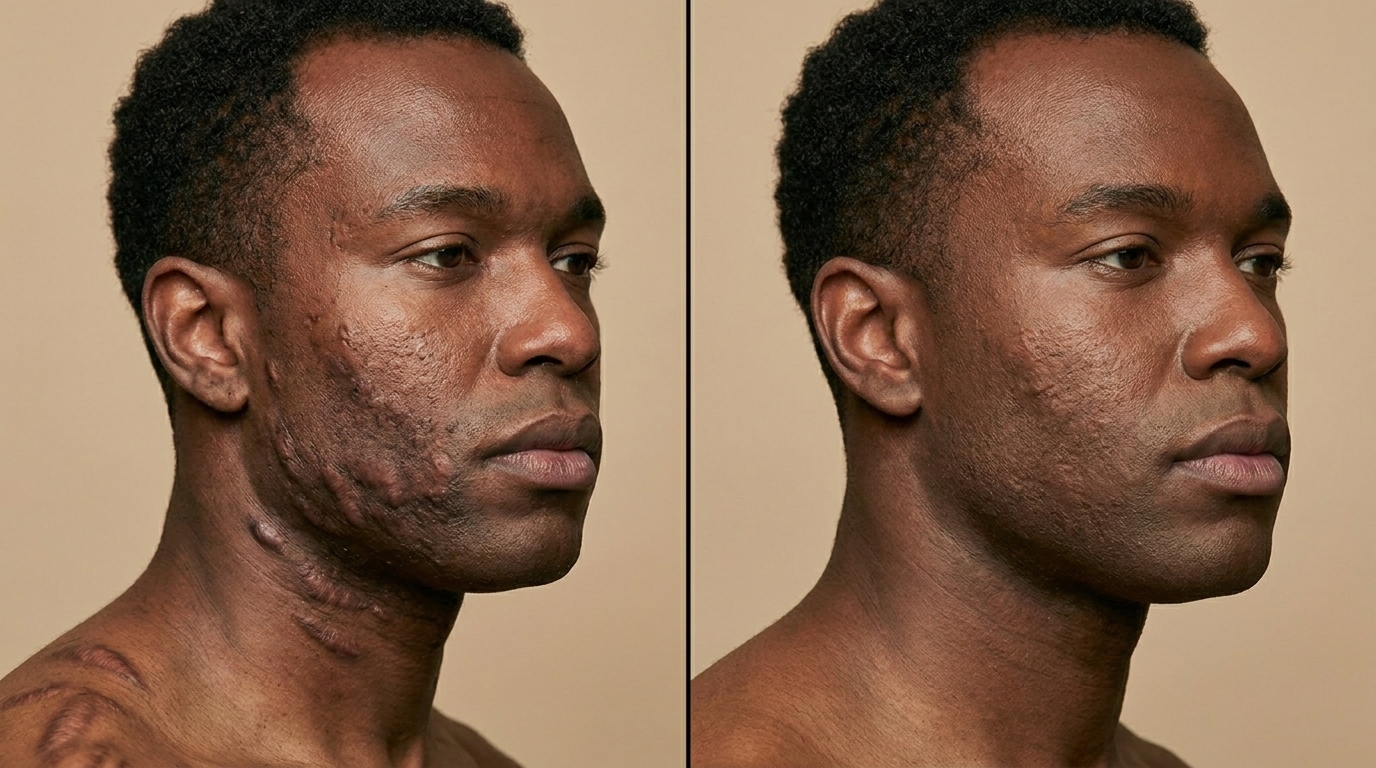
Individual results vary. Keloid response depends on lesion size, site, skin type, and adherence to the full treatment program including maintenance injections and recurrence monitoring.
Managing Keloids.
One Session at a Time.
There is no shortcut with keloids. At Couture Dermatology and Laser, Dr. Chinonso builds a staged, recurrence-aware protocol for each patient — assessing site, lesion history, skin type, and your specific goals before any injection is given. No treatment is recommended until expectations are discussed honestly and in full.
Sat · By Appointment Only
"I had a keloid on my earlobe for years. After three injection sessions and wearing the pressure earring, it's flatter than it's ever been. Dr. Chinonso was straightforward about what the treatment could and couldn't do — I appreciated the honesty more than anything."
Dominique R.
Verified Patient · Beverly Hills
Frequently
Asked Questions
Direct answers to the questions patients most often ask before their keloid consultation — on recurrence, injection protocols, surgical excision, and realistic outcomes.
The key clinical distinction is boundary: a hypertrophic scar stays within the footprint of the original wound and may soften or flatten over 12 to 18 months on its own. A keloid extends beyond the wound border — sometimes dramatically — and does not regress without treatment. Keloids also tend to recur after treatment, which is why single-modality approaches frequently fail.
Recurrence is the defining management challenge with keloids. Intralesional injections alone carry a recurrence rate of 10–50% depending on location and lesion characteristics. Surgical excision without adjuvant therapy recurs in up to 100% of cases at certain sites. Combination therapy — and consistent follow-up — meaningfully reduces recurrence risk, but it cannot be eliminated entirely. We design treatment programs with recurrence suppression as a primary goal.
Most patients require a series of 3 to 6 intralesional injection sessions spaced approximately 4 weeks apart, though larger or more established keloids may need more. The response is assessed after each session, and the steroid concentration or combination with 5-FU is adjusted accordingly. Some patients require ongoing periodic injections to maintain suppression.
Surgery alone is generally not recommended because keloids have a very high recurrence rate after simple excision — in some locations approaching or exceeding 80%. When surgery is indicated, it must be immediately paired with an adjuvant: intralesional corticosteroid injections in the early post-operative weeks, silicone sheeting, pressure therapy, or in select cases, radiation. The decision to operate is made carefully and is not appropriate for all keloids.
Yes. People with Fitzpatrick III–VI skin types — including those of African, Asian, Hispanic, and South Asian descent — have a significantly higher genetic predisposition to keloid formation. A family history of keloids is also a strong predictor. If you are keloid-prone, we can discuss a prevention protocol for any future surgeries, piercings, or procedures.
Yes — and symptomatic keloids are often the strongest indication for treatment. Pruritus (itch) and tenderness are common symptoms caused by the abnormal nerve and mast cell activity within keloid tissue. Intralesional injections typically reduce these symptoms, often providing significant relief within the first few sessions even before visible flattening is complete.