
Molluscum
Contagiosum
Molluscum contagiosum is a common viral skin infection caused by a poxvirus. The characteristic small, dome-shaped bumps with a central dimple spread easily by skin contact, shared towels, and scratching. Whether you are a parent managing a child's widespread case or an adult seeking prompt clearance, a board-certified dermatologist can select the right approach — from gentle cantharidin application to the newer FDA-approved berdazimer gel — to limit spread and protect the skin.
visits to clear
options available
Dermatologist
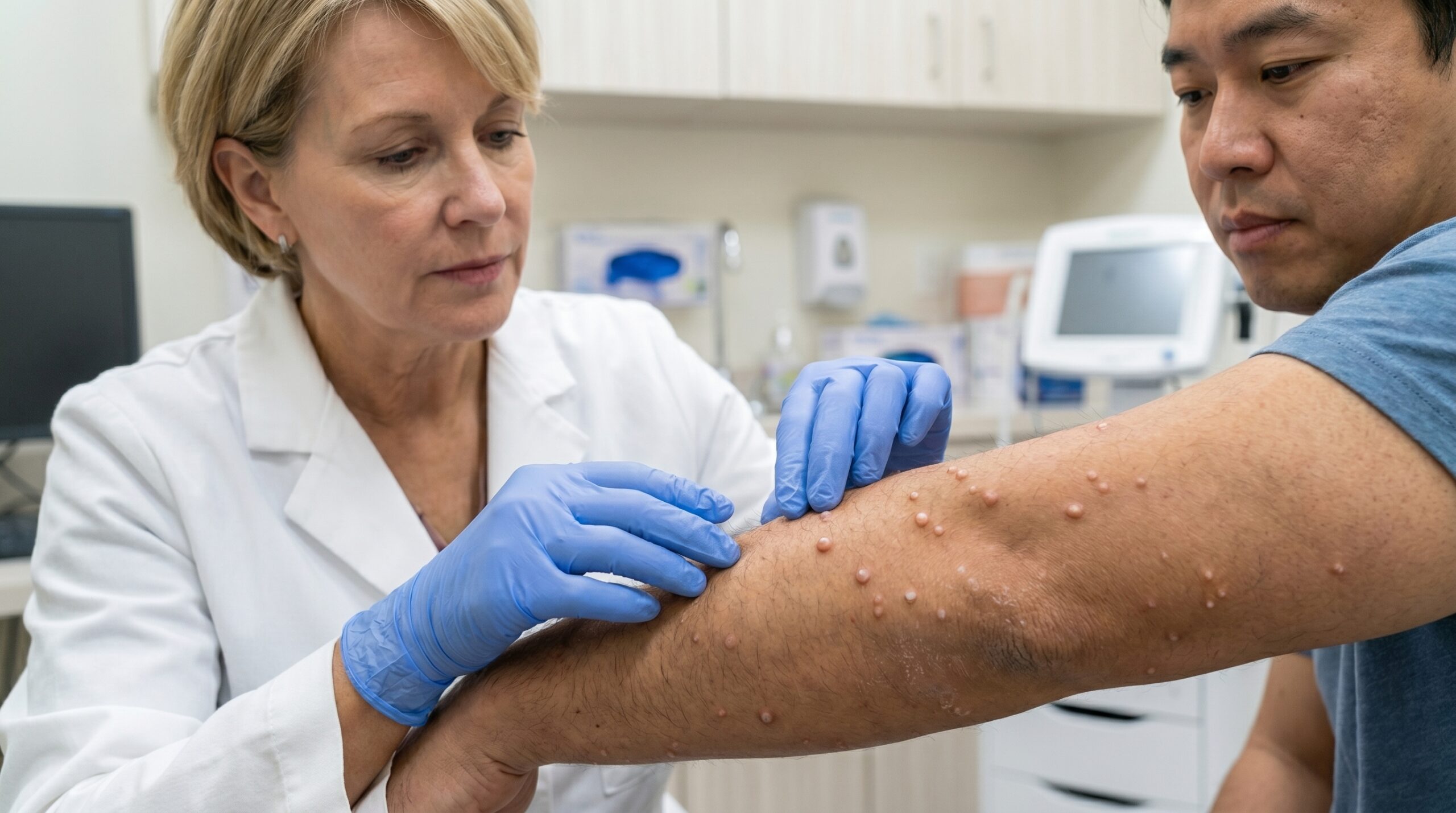
"Treating molluscum is as much about stopping the spread as clearing the existing bumps — approach and hygiene counseling both matter."
Small Bumps.
Real Virus.
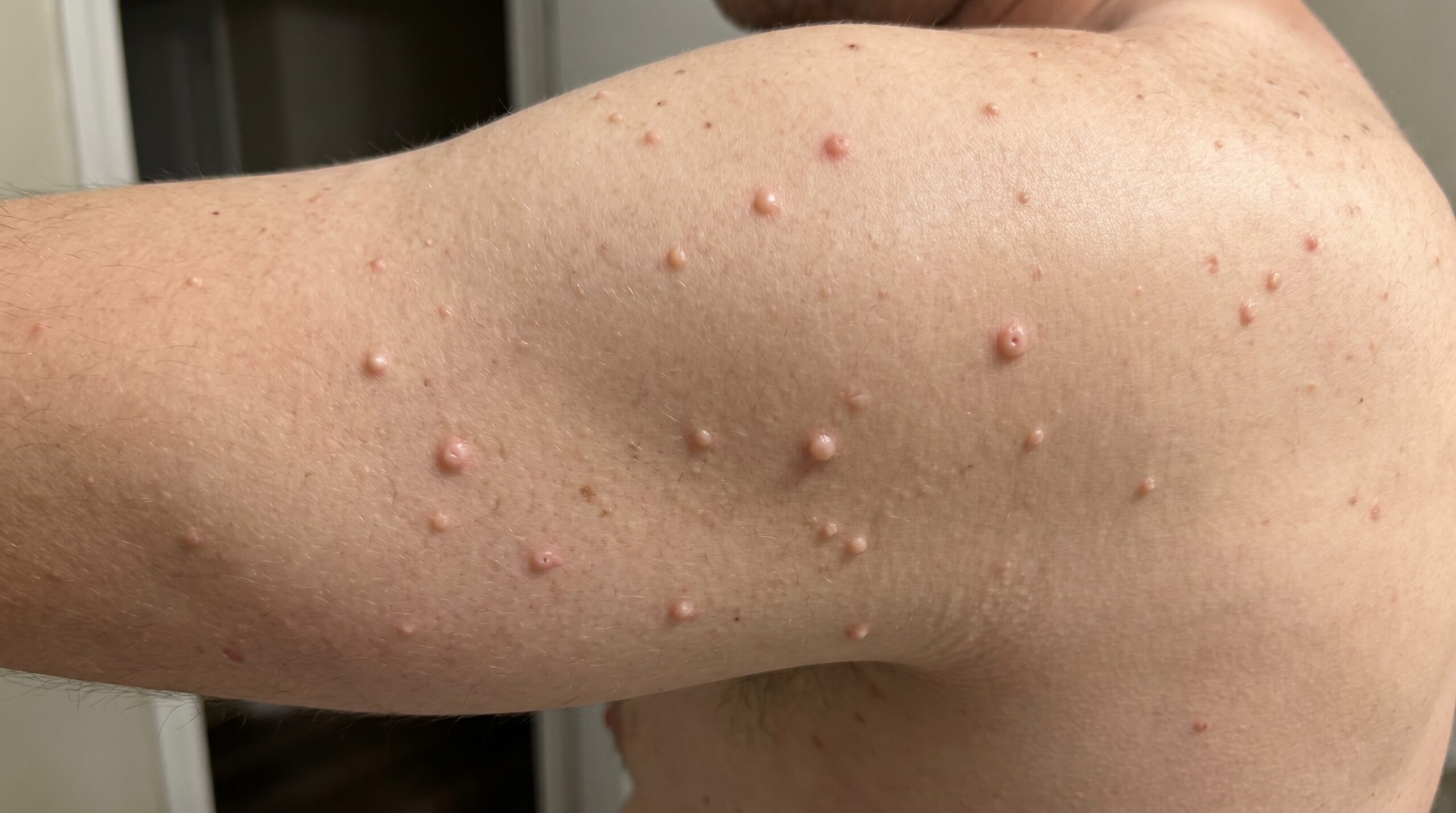
Molluscum contagiosum produces firm, 2–5 mm papules that are flesh-colored or pearly with a telltale central dimple (umbilication) — the clinical hallmark that distinguishes them from warts or milia on exam. They appear wherever the virus made skin-to-skin contact: trunk, arms, face, and neck in children; the genital area and inner thighs in adults where sexual transmission is common.
The infection is caused by a poxvirus — not the HPV family responsible for common warts — and it thrives in the superficial epidermis. Children are the most commonly affected group. Those with atopic dermatitis (eczema) are particularly vulnerable because a disrupted skin barrier makes it easier for the virus to enter and the itch-scratch cycle drives autoinoculation rapidly across the body.
In immunocompetent individuals, molluscum is self-limited and will resolve on its own, often within 6 to 18 months. That said, waiting is a reasonable strategy only if the lesions are few, not spreading, and not causing significant itch or social disruption. Treatment is well justified to limit contagion, prevent scratching-induced scarring, and manage co-existing eczema flares.
From Diagnosis
to Clearance
Molluscum treatment is straightforward when the diagnosis is clear and the approach is matched to the patient's age, lesion count, and overall skin health.
Clinical Diagnosis
Dr. Chinonso examines the lesions and confirms the diagnosis — the characteristic umbilicated papules are usually identifiable on clinical grounds, occasionally with dermoscopy for atypical cases.
Included at every visitEczema Assessment
Co-existing atopic dermatitis is evaluated and treated alongside molluscum — controlling the itch breaks the scratch-and-spread cycle that causes rapid autoinoculation in children.
Critical in pediatric casesIn-Office Treatment
Cantharidin, cryotherapy, or curettage is applied to existing lesions. The right modality is selected based on age, lesion count, location, and patient comfort — gentleness is always weighed against speed.
15–30 minutesHygiene Counseling
Practical guidance on preventing spread to household members and classmates — towel sharing, bathing, sports contact, and nail hygiene — is given at every visit to reduce re-infection and new lesion formation.
Reduces recurrenceChoosing the Right
Modality
There is no single "best" treatment for molluscum contagiosum — the right approach depends on the patient's age, total lesion burden, location, and skin condition alongside the infection.
In-Office · Most Widely Used in Pediatrics
Cantharidin
A topical blistering agent ("beetle juice") applied carefully to each lesion in the office. The blister lifts the infected skin away over 24 to 48 hours. Widely used in children because it causes no immediate pain at application — the blister forms after the patient leaves. Must be applied only by a trained dermatologist.
In-Office · Fast & Precise
Cryotherapy
Liquid nitrogen is applied briefly to each lesion, freezing and destroying the infected tissue. Effective and fast, but produces a stinging sensation that can be difficult for younger children. Better tolerated by older children and adults, particularly for isolated lesions.
In-Office · Physical Removal
Curettage
Each lesion is physically removed with a small curette after topical anesthesia. Provides immediate clearance and allows confirmation of the diagnosis. Practical for a limited number of lesions but less ideal for widespread cases or young children.
Topical · At-Home Options
Topical Agents
Prescription options for home use include berdazimer gel (the first FDA-approved topical specifically for molluscum), imiquimod (an immune-response modifier), tretinoin, and potassium hydroxide. These are useful for widespread cases or patients who prefer a non-procedural approach, applied over several weeks.
Clearing Faster.
Spreading Less.
Limits Spread to Others
Active molluscum lesions are contagious by direct contact and shared items. Treating existing bumps promptly — and covering them during sports and swimming — reduces transmission to siblings, classmates, and close contacts.
Prevents Autoinoculation
Scratching an existing lesion deposits the virus on healthy skin nearby, creating new bumps in a spreading cluster. Treating lesions early and controlling co-existing itch from eczema interrupts this cycle significantly.
Reduces Scarring Risk
Persistent scratching at inflamed molluscum lesions — especially in children with eczema — can leave small pitted scars. Clearing the infection and managing the associated itch protects the skin from this avoidable outcome.
Gentle, Child-Appropriate Methods
We weigh every treatment decision against the comfort of the patient. Cantharidin is often the preferred in-office option for young children precisely because it causes no immediate pain. Topical prescriptions provide a completely pain-free at-home alternative for families who prefer it.
Addresses the Eczema Connection
Children with atopic dermatitis need more than molluscum removal — the compromised skin barrier must be managed or new lesions will keep appearing. We treat both conditions together, which produces faster and more durable clearance.
"Molluscum in a child with eczema is a two-part problem. Clear the virus, repair the barrier — treating only one without the other rarely gets the family to resolution."— Couture Dermatology and Laser
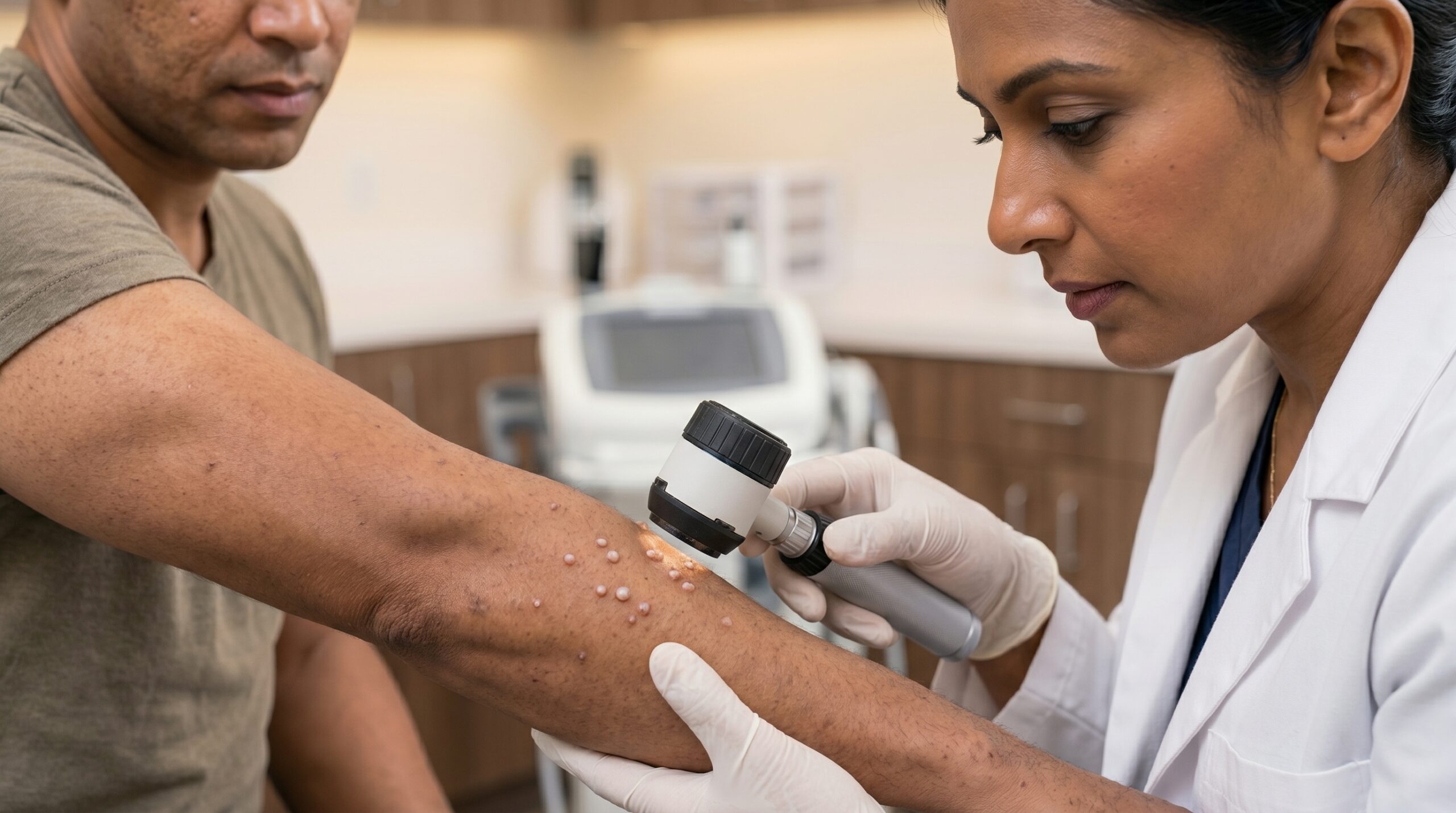
resolution timeline
Board-Certified
Every molluscum consultation is led by Dr. Chinonso Kagha Abisogun, MD, FAAD — a Fellow of the American Academy of Dermatology
Pediatric Gentleness
We select treatment methods based on patient age and tolerance — cantharidin and topical options are prioritized for young children to minimize pain
Eczema Co-Management
Atopic dermatitis is evaluated and treated alongside molluscum — addressing the barrier dysfunction that makes the infection so persistent
Hygiene Guidance
Practical, family-focused counseling at every visit on preventing spread to siblings, classmates, and household contacts
Lesion Patterns
We Treat
Molluscum contagiosum appears differently depending on the patient's age and how the infection was acquired. Distribution guides both diagnosis and choice of treatment modality.
Trunk & Abdomen
The most common location in children — clusters on the chest, belly, and flanks spread via skin-to-skin contact and shared bath items.
Arms & Armpits
Lesions in skin folds and on the arms spread readily by scratching and close contact during play or contact sports.
Face & Neck
Facial molluscum is common in young children and can be mistaken for milia or closed comedones. Gentle cantharidin or topical therapy is preferred near the eyes.
Genital & Groin Area
In adolescents and adults, genital molluscum is typically sexually transmitted and warrants evaluation for co-existing STIs. Treated promptly to reduce transmission.
Eczema-Associated Spread
Children with atopic dermatitis often develop extensive, widespread molluscum tracking along eczema-affected skin. Barrier repair and itch control are treated alongside clearance.
Immunocompromised Patients
Patients with weakened immunity can develop large, atypical, or numerous lesions that require more intensive treatment planning and closer follow-up.
Is Treatment Right
for Your Child — or You?
- Children with multiple or spreading lesions, especially those with eczema where the itch-scratch cycle is driving rapid autoinoculation.
- Parents who want to prevent transmission to siblings, other children at school, or household members sharing towels and bath items.
- Adults with genital molluscum who want prompt clearance and counseling on preventing sexual transmission to partners.
- Patients of any age whose lesions are in cosmetically or socially prominent locations — face, neck, or forearms — causing self-consciousness or discomfort.
- Immunocompromised individuals whose infection is not self-limiting and requires more structured medical management.
- Anyone who has been waiting for natural resolution for several months without improvement and wants to accelerate clearance with a dermatologist-guided plan.
On Watchful Waiting
Molluscum contagiosum is a benign, self-limited infection. In a healthy child with only a few stable lesions, watchful waiting is a perfectly reasonable approach — and we will tell you honestly when that is the case.
When treatment is appropriate, the goal is not perfection — most treated patients clear within 1 to 3 visits. The more important goals are limiting spread, protecting the skin from itch-related scarring, and managing any co-existing eczema that is fueling the infection. Dr. Chinonso will discuss the right plan for your family's situation directly.
Often Treated
Alongside…
Molluscum rarely exists in isolation. These conditions frequently co-exist with or mimic it — addressing them together leads to better outcomes and fewer recurrences.
Warts (HPV)
Common warts and molluscum both appear as skin-colored bumps in children and adults but are caused by different viruses and require different treatments. We assess both in the same visit when needed.
Explore wart treatment →Eczema (Atopic Dermatitis)
The single strongest risk factor for widespread molluscum in children. Repairing the skin barrier with appropriate eczema therapy is essential to achieving durable clearance and preventing new lesions from forming.
Explore eczema treatment →Seborrheic Dermatitis
Seborrheic dermatitis and molluscum can co-exist on the face and trunk. Accurate diagnosis ensures the right treatment is applied to each condition — inflammatory scale responds to different therapy than a viral papule.
Explore seborrheic dermatitis care →Skin Rashes
Molluscum can be confused with or occur alongside various viral and inflammatory skin rashes. An accurate diagnosis ensures the right treatment is selected from the first visit rather than delayed by misidentification.
Explore skin rash evaluation →Results That Speak for Themselves
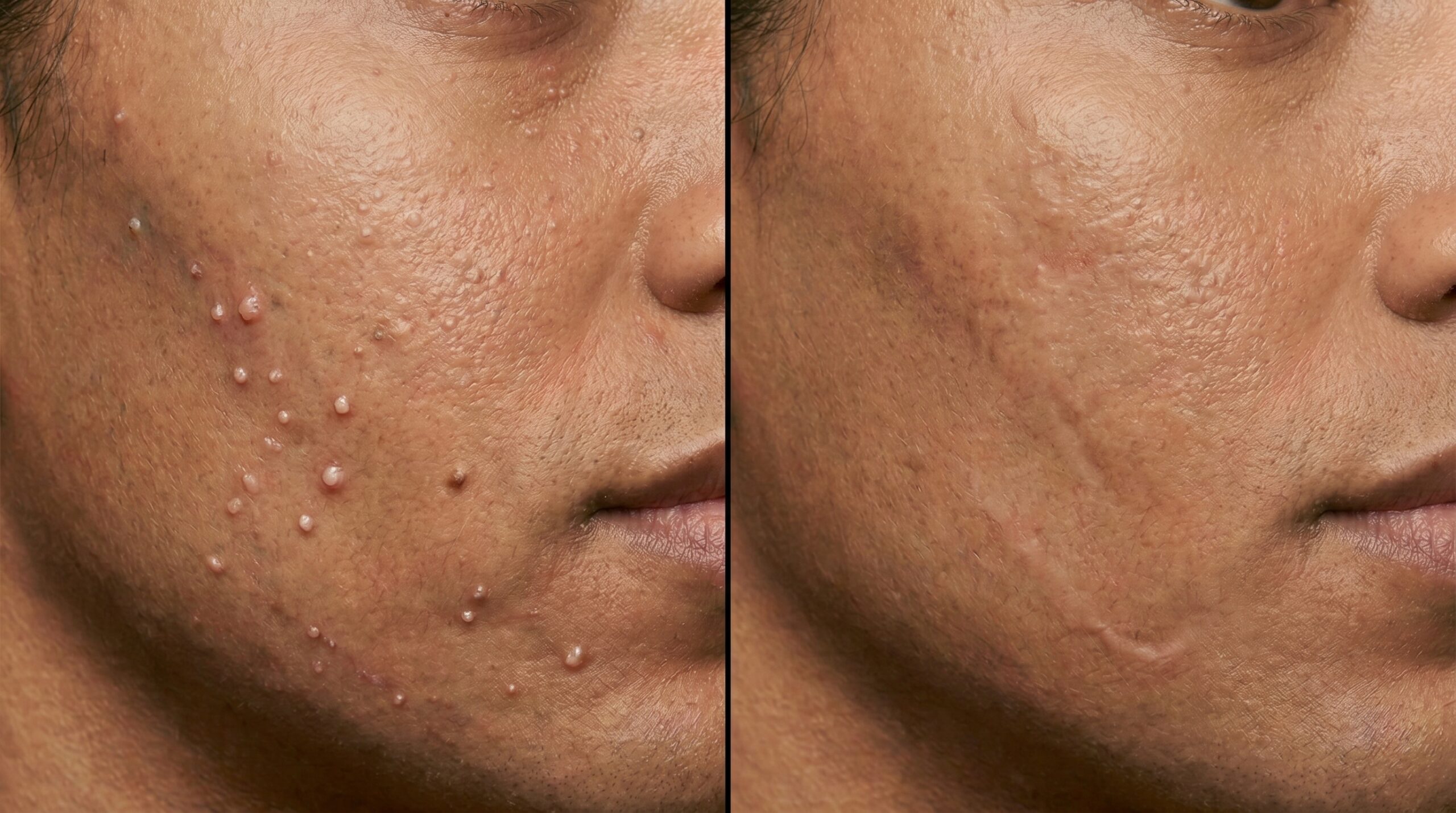
Individual results vary. Most patients see clearance within 1 to 3 treatment visits; persistent or widespread cases — particularly in patients with eczema — may require additional sessions.
Clearing the Virus.
Protecting the Skin.
Whether you are a parent managing a child's spreading molluscum or an adult seeking prompt clearance, treatment should start with the right diagnosis and a plan suited to your specific situation. At Couture Dermatology and Laser, Dr. Chinonso evaluates the full picture — lesion distribution, any co-existing eczema, and patient age — before selecting a modality. Watchful waiting is always on the table when it is clinically appropriate.
Sat · By Appointment Only
"My son had molluscum all over his trunk for almost a year — it kept spreading because of his eczema. Dr. Chinonso treated both at the same visit. After two sessions the molluscum was gone and his skin was the clearest it had been in years. I wish we had come sooner."
Rachel T.
Verified Patient · Beverly Hills
Frequently
Asked Questions
Straightforward answers to what parents and patients ask most before their first molluscum contagiosum consultation — on diagnosis, treatment options, and what to expect.
Molluscum contagiosum is a benign viral infection of the skin caused by a poxvirus. It produces small, dome-shaped papules — typically 2 to 5 mm — that are flesh-colored or pearly with a characteristic central dimple called umbilication. It is not dangerous, but it is contagious and spreads easily in children through skin contact and shared towels or bath items.
In otherwise healthy children and adults, molluscum is self-limited and will typically resolve without treatment over 6 to 18 months, sometimes longer. However, during that time the lesions can spread by autoinoculation — scratching one bump and touching other skin. Treatment makes sense to limit spread, reduce the chance of scarring from scratching, ease associated itch, and address contagion concerns for school or sports.
In-office options include cantharidin (a liquid applied to each lesion that causes a blister to lift it off), cryotherapy with liquid nitrogen, and curettage (physical removal). For home use, we may prescribe topical tretinoin, imiquimod, potassium hydroxide, or berdazimer gel — the first FDA-approved prescription topical specifically for molluscum. The right choice depends on the patient's age, lesion count, and location.
Cantharidin has a long safety record in pediatric dermatology and is one of the most commonly used in-office treatments for children with molluscum. It is applied carefully in the office, blisters form over 24 to 48 hours, and most children tolerate it well without the pain of freezing or cutting. It should always be applied by a dermatologist and never purchased from unregulated sources.
Yes, significantly. Children with atopic dermatitis are more prone to widespread molluscum because the skin barrier is compromised and the itch-scratch cycle drives autoinoculation. Controlling the eczema is a core part of managing molluscum in these patients — reducing itch breaks the spread cycle. We address both conditions together at Couture Dermatology and Laser.
Avoid sharing towels, washcloths, and bath items. Cover lesions with clothing or a bandage during contact sports and swimming. Avoid scratching, and keep fingernails short to reduce autoinoculation. Genital molluscum in adults should be treated promptly as it can be transmitted sexually. Good hand hygiene is important throughout the course of infection.