

You look in the mirror after microneedling and see darker patches or irritated skin instead of the smoother appearance you expected. If microneedling made your skin worse and you need help, it’s understandable to feel unsure about what to do next.
Melasma can be sensitive to irritation, and changes in pigmentation can raise questions about whether your skin is healing or reacting poorly. The timing, appearance, and direction of change can offer useful clues.
Here’s what to know about how microneedling may affect melasma, which symptoms deserve attention, and how to approach aftercare and follow-up. These steps can help you plan what to do next without relying on a mirror alone.
Key Takeaways
- Microneedling can aggravate melasma or trigger darker patches, so changes in pigmentation deserve attention rather than being dismissed as routine healing.
- Keep aftercare gentle and pause retinoids and exfoliating acids for 5 to 7 days, or until your provider clears you to use them again.
- Peeling can occur between days 2 and 5. Resist picking at flakes, which can further irritate healing skin.
- Use mineral-based sunscreen with SPF 30 or higher after treatment, and limit direct sun exposure during early recovery.
- Increasing pain, yellow or green pus, fever, or skin that is worsening by the end of week 2 are reasons to contact the provider who performed your treatment.
Can microneedling worsen melasma?
Microneedling may worsen melasma or trigger post-inflammatory hyperpigmentation, darker marks that can follow irritation. A dermatologist will pay particular attention to pigment changes in darker skin tones, especially if treatment wasn’t customized. If your skin looks worse, the first step is to assess what changed and when, rather than assume every reaction is routine healing.
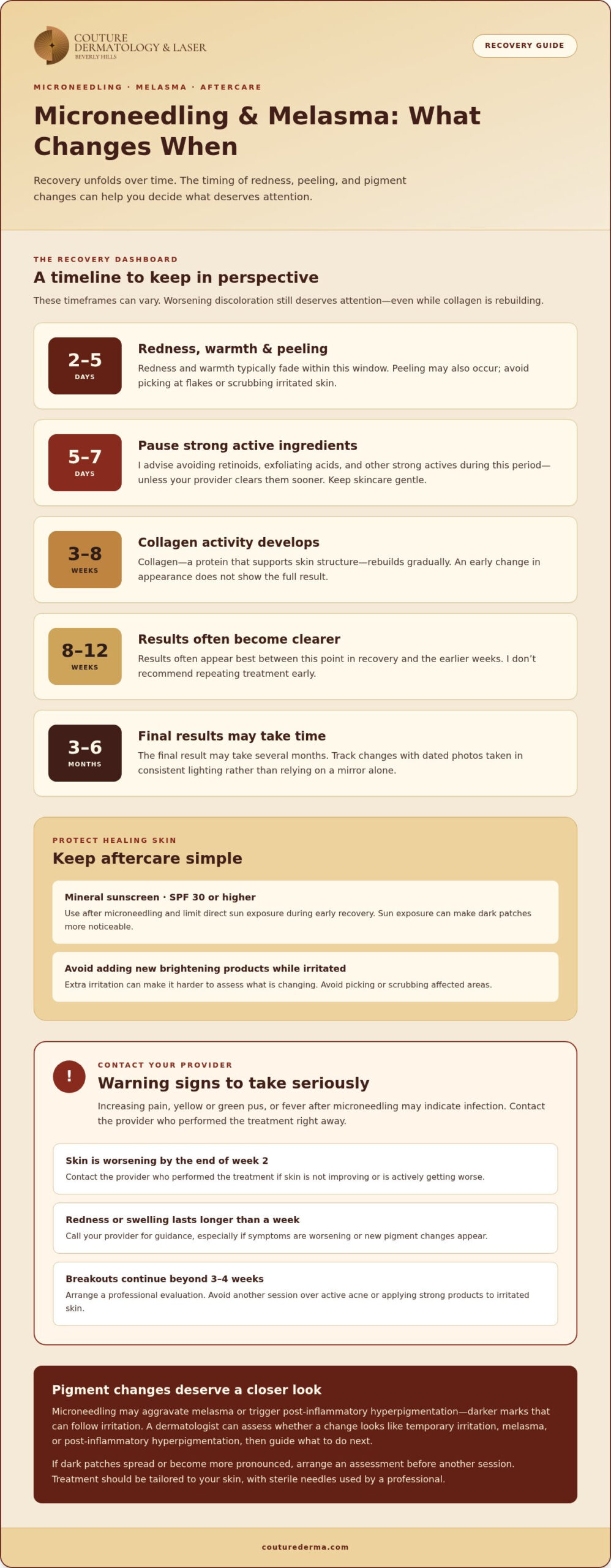
I explain that collagen, a protein supporting skin structure, rebuilds gradually after treatment. Redness and warmth typically fade within 2 to 5 days, while new collagen activity develops around 3 to 8 weeks. Final results may take 3 to 6 months. I encourage patients not to judge the outcome too early, while taking worsening discoloration seriously.
To learn how treatment depth and heat can affect recovery, watch this video from DrAmirKaram:
For 5 to 7 days after treatment, I advise avoiding retinoids, exfoliating acids, and other strong active ingredients, unless your provider clears them sooner. I suggest gentle skincare and no picking or scrubbing irritated areas. I also recommend mineral sunscreen with SPF 30 or higher after microneedling, since sun exposure can make dark patches more noticeable during recovery.
During a consultation, a dermatologist may ask when redness or pigment changes began and which skincare products you use. They can examine the affected area, consider your melasma history and skin tone, and discuss whether more microneedling is appropriate. They may also review numbing and planned needle depth. Professional treatment should use sterile needles and be tailored to your skin.
Not every cause of redness or pigmentation calls for the same approach. A dermatologist can assess whether the change looks like temporary irritation, melasma, or post-inflammatory hyperpigmentation. That distinction helps guide whether to focus on gentle care, allow time to recover, or discuss another treatment. Avoid introducing new brightening products while your skin is irritated, since additional irritation can make the situation harder to assess.
I remind patients that microneedling results build gradually, and the best results often appear between 8 and 12 weeks after treatment. An early change can occur while collagen rebuilds, so I don’t recommend repeating treatment early. I suggest dated photos in consistent lighting to track redness and pigment. If dark patches spread or become more pronounced, arrange an assessment before another session.
Infection, scarring, and post-inflammatory hyperpigmentation risks
Microneedling can worsen active acne and may aggravate rosacea, uneven pigmentation, or scarring concerns. An assessment should consider your skin’s condition before treatment, how the procedure was performed, and what changed afterward.
Post-inflammatory hyperpigmentation refers to darker marks left after irritation, while pigment loss can create lighter patches. The U.S. Food and Drug Administration notes that microneedling can cause either change. Scarring is another concern if needles penetrate too deeply or aftercare instructions aren’t followed.
Could this be purging, irritation, or infection?
Purging describes a temporary increase in breakouts. Irritation can cause redness, swelling, or discomfort, while infection needs prompt attention. Note when bumps appeared and whether pain or swelling is increasing. Those details can help distinguish a breakout from a complication.
If a breakout continues beyond 3 to 4 weeks after treatment, I recommend professional evaluation. I also advise against another session over active acne or applying strong products to irritated skin. Note when symptoms started and which products you used.
What signs could mean infection?
Increasing pain, yellow or green pus, and fever after microneedling are warning signs that may indicate infection. If you notice any of them, contact the provider who performed the treatment right away.
Tell the clinician whether treatment was performed at home or in an office, since infection can occur when sterilization protocols aren’t followed. While arranging care, avoid squeezing bumps or applying unprescribed products. Note when symptoms began and take a clear photo if the area is changing.
When should I see a dermatologist?
I recommend seeing a dermatologist for worsening symptoms, new pigment changes, suspected infection, or concern about scarring. If skin isn’t improving or is actively worsening by the end of week 2, contact the provider who performed the treatment.
Don’t wait for a routine follow-up if you develop increasing pain, yellow or green pus, or fever. Redness or swelling lasting longer than a week is another reason to call. Bring the treatment date, device details, and a list of products used afterward so the clinician can assess the sequence and guide next steps.
A history of keloid scars is a reason to approach microneedling cautiously. If you’ve had keloids, discuss this before treatment rather than treating it as a minor detail. Ask the treating professional to consider your history alongside your current skin concerns and any worries about pigment or scar changes. If you’re unsure whether a past mark was a keloid, describe it and mention that uncertainty before a session.
You can also ask how your personal history affects the recommendation and which alternatives may be appropriate. Take time to understand the advice before deciding whether to proceed. If new scarring or pigment changes appear afterward, consulting a facial specialist like Dr. Aaron Fletcher, MD or a dermatologist can offer clear guidance rather than arranging another session on your own.
Peeling and flaking during recovery
Peeling can be part of microneedling recovery, but the pattern and timing matter. Treatment depth affects how long visible changes may last.
Recovery timeline
After treatment, skin may look red, feel tight, or seem rough before its texture settles. Recovery depends partly on needle depth: moderate-depth professional treatments around 1.0 to 2.0 mm can involve visible changes over several days. Deeper treatments using 1.5 to 2.5 mm needles may extend visible recovery to 5 to 7 days or longer.
Use the treatment date as your reference point. In the first days, keep skincare gentle and follow the aftercare instructions you received. Avoid judging the final result while your skin is peeling. Collagen production continues over time, so an early appearance may not reflect the eventual texture.
Take a clear photo the day after treatment, then another under similar lighting several days later. Comparing them can help you describe whether redness, flaking, or uneven texture is settling or worsening. If changes are worsening rather than easing, contact the provider who performed the procedure instead of scheduling another session.
Peeling and flaking phases
Peeling is the shedding of dry surface skin during recovery, and it commonly appears between days 2 and 5 after microneedling. The skin may look rougher or feel dry during this stage, which can make the treated area seem temporarily less smooth.
Weeks 1 to 2 are often described as a peeling and renewal stage. Mild flaking a few days after treatment can occur, but pulling at loose skin may irritate the area. Let flakes shed on their own, and use only gentle, hydrating products recommended by your provider during the first few days.
Avoid scrubs, exfoliating acids, and retinoids while your skin is actively peeling. They can irritate a healing surface. If you’re unsure whether a product is gentle enough, pause it and ask during a medical consultation. Note what you applied and when, especially if a new product preceded a change in redness or texture.
Peeling alone doesn’t explain every change. Call the provider if redness or swelling lasts longer than a week, or if your skin is actively worsening by the end of week 2. Increasing pain, yellow or green pus, or fever after treatment needs prompt attention. Those symptoms call for assessment, not further exfoliation or an at-home attempt to smooth the skin.
Before another treatment, wait until your skin has recovered and discuss your previous response. The appropriate interval depends on treatment depth, healing, and the concern being addressed. A consultation can help distinguish expected flaking from a symptom that needs medical attention and guide a plan suited to your skin.
Microneedling aftercare and follow-up
If your skin looks worse after microneedling, stop active skincare and contact the provider who performed the session. Increasing pain, yellow or green pus, or fever calls for prompt attention.
Microneedling aftercare
Aftercare means protecting healing skin while its surface recovers from the needles. For the first few days, use gentle, hydrating products recommended by your provider, and avoid rubbing or picking at treated skin. Pause retinoids and exfoliating acids for 5 to 7 days, or until your provider clears them.
Keep direct sunlight off treated skin for at least the first week. Apply mineral-based sunscreen with SPF 30 or higher, 15 minutes before sun exposure, and reapply every 2 hours outdoors. These steps matter because irritation and sun exposure can affect appearance and pigmentation during recovery.
Give makeup and heat-producing activities a pause, too. After superficial microneedling, wait at least 24 to 48 hours before makeup; deeper treatments can call for 72 hours or longer. Avoid intense exercise, saunas, steam rooms, and hot yoga for 24 to 72 hours after a session, following the specific aftercare directions you were given.
Healing varies with needle depth and skin type. Skin is typically healed 7 days after treatment, while deeper treatments using 1.5 to 2.5 mm needles can extend visible recovery to 5 to 7 days or longer. Sensitivity can last several days, so keep your routine simple rather than restarting multiple active products at once.
Immediate steps when skin looks worse
Start by avoiding further irritation and documenting what changed. Stop exfoliants, retinoids, and other strong products, and don’t have another session while your skin looks worse. Take a dated photo in consistent lighting, note when the change began, and record every product applied since treatment.
Then contact the provider who performed the procedure if your skin is actively worsening by the end of week 2, or redness or swelling lasts longer than a week. Share the session date, needle depth if known, and your skincare routine. This gives the clinician useful context for assessing the change.
Don’t wait for a routine follow-up if increasing pain, yellow or green pus, or fever develops after treatment. Contact the provider right away. If you can’t reach them, seek prompt medical evaluation. Wait to make a treatment plan until the current reaction has been assessed and your skin has recovered.
Normal healing versus possible complications
After microneedling, redness and swelling often peak within 24 to 48 hours, then begin easing by day 3. A short-lived change in appearance can be part of healing, but worsening symptoms call for a different response.
Needle depth gives useful context. Treatments using 0.25 to 0.5 mm needles may cause visible pinkness for only a few hours. Deeper procedures can leave redness and sensitivity for several days; with 1.5 to 2.5 mm needles, visible recovery may take 5 to 7 days or longer.
During the first 24 to 48 hours, scars may look more noticeable as skin appears red or swollen. That temporary contrast doesn’t by itself show whether the treatment helped fine lines or other concerns. Track your appearance in consistent lighting, and compare photos from the same angle rather than relying on a mirror check every hour.
What matters is the direction of change. Redness and mild swelling typically calm within 48 hours, and many people see improvement by day 3. If redness or swelling lasts longer than a week, call the provider who performed the treatment. Skin that is actively worsening by the end of week 2 also needs follow-up.
Watch for warning signs beyond ordinary sensitivity. Increasing pain, yellow or green pus, or fever after treatment are reasons to contact the provider right away. Microneedling can cause infection when sterilization protocols aren’t followed, while needles placed too deeply or ignored aftercare instructions can contribute to scarring. Don’t try to smooth a new scar with another session.
Pigment changes also deserve attention. Microneedling can cause hyperpigmentation or pigment loss, and dark marks may be more likely when treatment isn’t customized for darker skin tones. If a patch becomes newly uneven, spreads, or keeps changing after redness settles, pause irritating topical products and arrange an assessment with a dermatologist.
Burns after microneedling need evaluation by a clinician experienced in burns and scarring. Bring the treatment date, device details, and aftercare products you used. These details can help a dermatologist understand the sequence and choose an appropriate next step.
If redness, pigment changes, or scarring concerns persist, arrange a medical assessment rather than repeating microneedling. You can book an appointment to discuss your skin concerns and the next step in care.
Couture Dermatology & Laser Beverly Hills: Laser Skin Resurfacing
Couture Dermatology & Laser Beverly Hills can assess lingering skin concerns and discuss whether laser skin resurfacing may suit your goals. If redness or pain is worsening, or you have signs of infection, seek medical dermatology care before considering an aesthetic procedure.
Once your skin has recovered, a dermatologist can review persistent uneven tone or texture and explain appropriate options. An assessment should account for your skin’s current condition, history of pigment changes, and response to previous treatment. Laser treatment isn’t a substitute for evaluating a complication, and timing matters.
For a personalized discussion about next steps, contact Couture Dermatology & Laser Beverly Hills or visit couturederma.com.
Choose a thoughtful next step for your skin
If microneedling made your skin worse, help starts with pausing before choosing another procedure. You don’t have to address a visible change by adding another treatment right away. A thoughtful plan can begin with a conversation about what changed, what matters most to you, and what pace feels manageable.
Treat the next appointment as a decision point, not a commitment to repeat a procedure. Bring your questions, describe the result you hoped for, and be candid about what now feels uncomfortable. That conversation can help shape a path that respects both your skin and your confidence. Take the time you need to understand the options before deciding what comes next.
If you’d like to discuss a personalized next step, schedule a visit with Couture Dermatology & Laser Beverly Hills. Your concerns deserve careful attention, and you can move forward at a pace that feels right for you.
Frequently Asked Questions
How Long Does Face Look Bad After Microneedling?
Your face may look most noticeably irritated around days 2 to 3, when peeling and roughness can make skin texture seem uneven. The length of visible recovery depends partly on treatment depth, so compare your skin with your provider’s aftercare guidance rather than someone else’s photos. If the appearance is worsening instead of settling, or remains concerning, contact the person who performed your session.
What skin reactions are normal after microneedling, and how long do they last?
Temporary redness, mild swelling, sensitivity, and some flaking can occur after a session. Redness and swelling often peak within 24 to 48 hours and start easing by day 3; sensitivity may last several days. A useful check is to take a photo in the same lighting each day. That makes it easier to notice whether the overall trend is improving, rather than focusing on one moment.
What symptoms after microneedling need urgent medical attention?
Contact the provider who performed your treatment right away if you develop increasing pain, yellow or green pus, or a fever. These symptoms need prompt attention, not home exfoliation or another procedure. If you seek urgent care, tell the clinician when microneedling was done, whether it was at home or in an office, and which products you applied afterward. Bring the device details if available.
How can I tell whether microneedling caused an infection, allergic reaction, or skin damage?
You can’t reliably distinguish these causes by appearance alone. Increasing pain, pus, or fever can signal a possible infection, while new dark or lighter patches may indicate pigment change. A reaction after using a particular product is useful context, but it doesn’t confirm an allergy. Stop adding products, photograph the area, and share the timing, device, needle depth if known, and product names with a dermatologist.
Which skincare products and treatments should I avoid while skin heals after microneedling?
Pause retinoids, exfoliating acids, and other strong active ingredients for 5 to 7 days, or until your provider clears them. Avoid scrubs and picking at peeling skin, since friction can add irritation. Also postpone makeup for at least 24 to 48 hours after superficial treatment, or 72 hours or longer after deeper treatment. Follow your individual aftercare instructions before restarting your usual routine.
How long does microneedling recovery take, and when should skin improve?
Visible recovery often takes several days, though deeper treatment can extend it. Skin is typically healed 7 days after treatment, while deeper procedures may leave visible changes for 5 to 7 days or longer. Collagen changes take longer: results may develop over weeks, with final results appearing over 3 to 6 months. If your skin is actively worsening by the end of week 2, contact your provider.