
You finally decided to have that painful scar removed, but months later, it didn’t just come back; it grew larger and itchier than before. In my practice, I see patients who have spent years searching for effective keloid treatment for black skin in Beverly Hills only to be met with one-size-fits-all solutions. It’s exhausting when previous treatments lead to even more discomfort or post-inflammatory hyperpigmentation (dark spots that form after an injury).
I understand that fear because I see it every day. But you deserve a plan that’s as unique as your skin’s biology. We use a couture approach to flatten your scars without the high risk of it coming back. You’re about to discover how we combine board-certified expertise with advanced tools like the Fotona laser to give you a flatter scar and a long-term plan for lasting confidence.
And let’s be honest about what it takes. We’re going to look at why surgery often fails and how we use specific protocols to manage your collagen (the protein that gives skin its structure) for a smoother finish.
Key Takeaways
- Understand why melanocytes (cells that produce skin pigment) make melanin-rich skin more prone to collagen overgrowth and how to navigate these unique biological triggers.
- Identify the specific risks of generic scar treatments, such as Post-Inflammatory Hyperpigmentation (PIH), and why tailored laser settings are essential for your safety.
- Explore the “Couture Toolkit” for keloid treatment for black skin in Beverly Hills, which blends medical injections with refined aesthetic lasers for superior flattening.
- Learn why recovery is a collaborative journey that requires strict sun protection to prevent treated areas from becoming darker or thicker over time.
- Discover why a bespoke, long-term management plan beats a rushed procedure when it comes to keeping your skin smooth and free from recurring scars.
Why Does Melanin-Rich Skin Develop Keloids More Frequently?
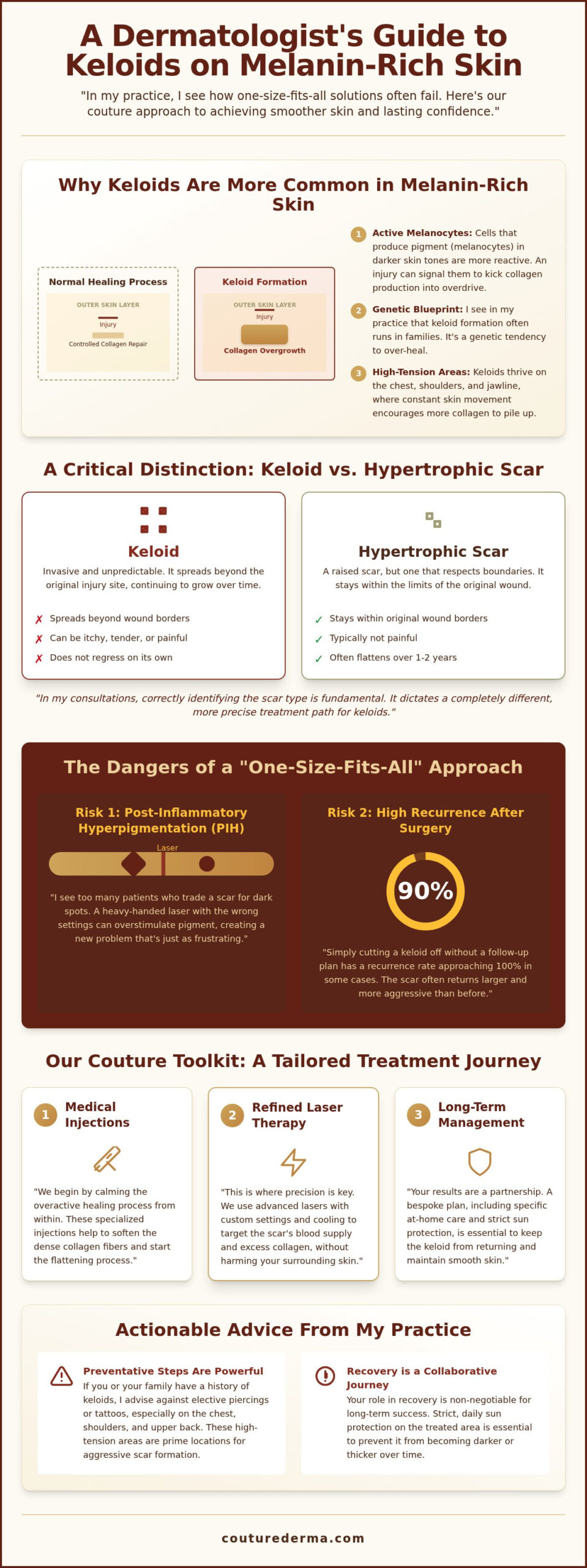
In my practice, I see patients who are deeply frustrated that a tiny blemish or a simple ear piercing turned into a firm, raised growth that won’t stop expanding. A keloid is essentially an overgrowth of collagen (the protein that provides skin structure) during the healing process. Instead of stopping once the wound is closed, your skin stays in “repair mode,” piling on extra tissue. This is a unique biological response that often feels like your body is overreacting to a minor event.
This happens more often in melanin-rich skin because our melanocytes (cells that produce skin pigment) are more active and sensitive. When these cells are triggered by injury, they often send signals that kick collagen production into overdrive. Whether it’s a flare-up from acne or the tension of a new piercing, the response is often disproportionate. It’s valid to feel self-conscious when a scar grows much larger than the original wound, but understanding this “why” is the first step toward effective keloid treatment for black skin beverly hills.
The Genetic Connection and Collagen Overdrive
Some families are simply more prone to these fibroproliferative (scar-forming) disorders. It’s a genetic blueprint that tells the skin to overreact to any trauma. We also see the “tension theory” at play in many cases. This is why keloids love the chest, shoulders, and jawline. These areas are under constant movement and stretching, which keeps the skin in a state of agitation and encourages more collagen to pile up.
Actionable Tip: If you have a family history of keloids, avoid elective piercings or tattoos on the chest, shoulders, and upper back. These high-tension areas are the most common sites for aggressive scar formation that can be difficult to manage later.
Distinguishing Keloids from Hypertrophic Scars
It’s a common mistake to lump all raised scars together, but the distinction is vital for your results. Hypertrophic scars stay within the original borders of the wound and often flatten on their own over a year or two. Keloids are invasive. They spread beyond the initial injury site like a slow-growing tumor of skin cells. Why Does Melanin-Rich Skin Develop Keloids More Frequently? is a question that starts with identifying which type of scar you actually have.
In my practice, I diagnose these during a Couture consultation by looking at the scar’s growth pattern and texture. This distinction matters because the settings we use for keloid treatment for black skin beverly hills must be far more precise. If we treat a keloid as if it were a standard scar, we risk triggering even more growth. We prioritize a bespoke approach to ensure we are calming the skin rather than irritating it further.
The Risks of Generic Scar Treatments for Darker Skin Tones
I see patients who are more afraid of the treatment than the keloid itself. And frankly, that fear is often justified. Finding effective keloid treatment for black skin beverly hills requires a provider who understands that your skin’s pigment-producing cells just need a gentler touch. In melanin-rich skin, a heavy-handed approach can lead to Post-Inflammatory Hyperpigmentation (PIH), which are those stubborn dark spots that form when the skin is overstimulated. If a provider uses a “standard” setting on a laser without considering your unique skin tone, they aren’t just treating a scar. They might be creating a new cosmetic issue that is just as frustrating as the original growth.
The danger is not just in the lasers. Many people believe that simply cutting the growth away is the quickest path to smooth skin. But here’s the thing: surgical excision without any follow-up plan has a recurrence rate approaching 100 percent in some cases. At our practice, we treat the scar while guarding the surrounding pigment. We don’t just aim to remove the mass; we aim to restore the aesthetic harmony of your skin. This is why we view keloid management as a collaborative, transformative journey rather than a one-time transaction.
Why One-Size-Fits-All Lasers Often Fail
In my practice, I emphasize that pulse duration (how long the laser beam stays on the skin) is everything. If the heat stays on the surface too long, it cooks the pigment. We use specific cooling mechanisms and shorter pulses to target the scar tissue while leaving the surrounding skin undisturbed. It’s the difference between a “one-size-fits-all” garment and a custom-tailored suit. Comparing Keloid Treatment Options is about finding the right tool for the right canvas. Or you can wait and see, but in most cases, that just allows the scar to mature and become harder to flatten.
Handling the Recurrence Objection
Let’s be honest. Cutting a keloid off is tempting because you want it gone today. But keloids are aggressive. When you cut into one, you are essentially creating a new wound for a body that already heals by overproducing collagen. Without a plan to “quiet” the skin immediately after surgery, the scar often returns larger and firmer than before. We focus on a long-term management plan for keloid treatment for black skin beverly hills that prioritizes prevention alongside removal. We want to ensure that once the scar is gone, it stays gone.
Actionable Tip: Never agree to keloid surgery without a confirmed plan for immediate post-operative care. This typically involves corticosteroid injections or superficial radiation therapy (SRT) within 24 to 72 hours to prevent the scar from rebounding. If you’ve been told your keloid is “untreatable” or you’re worried about dark spots, it’s time for a more refined approach. You can schedule a couture consultation to discuss a plan that respects your skin’s biology.
Comparing Keloid Treatment Options: From Vbeam Laser to Injections
In my practice, I don’t believe in a “standard” treatment. Every scar has its own unique biology and personality. We use what I call the “Couture Toolkit,” which is a refined blend of medical science and aesthetic artistry. The goal is to flatten the tissue while ensuring the surrounding skin stays vibrant and healthy. For those seeking keloid treatment for black skin beverly hills, this bespoke approach is essential because generic methods often overlook the extreme sensitivity of your pigment-producing cells.
Vbeam Laser: The Secret to Reducing Redness and Growth
Many patients ask if lasers are safe for them, especially if they’ve had a bad experience in the past. The Vbeam laser is a gold standard in my practice for the itchy, vascular (blood-vessel rich) phase of a keloid. It works by “starving” the scar of its blood supply, which effectively stops it from growing further. This is a critical step in managing keloids in skin of color because it addresses the internal inflammation without being overly aggressive on the surface. We often integrate this with laser skin resurfacing to refine the texture once the growth has stabilized.
Actionable Tip: If your scar feels hot, tender, or intensely itchy, it’s likely in an “active” phase. This is the ideal window for Vbeam treatments to shut down the blood vessels before the growth expands further.
The Role of Precision Injections
Intralesional injections (shots delivered directly into the scar tissue) are often our first line of defense. But here’s the thing: precision is everything. We use Kenalog (a corticosteroid) to break down the excess collagen. If you inject too much or hit the healthy skin, you risk skin atrophy (thinning) or permanent light spots. In many cases, we also use 5-Fluorouracil (5-FU), which acts like a targeted “chemotherapy for scars” by stopping the cells from over-multiplying. We “tailor” the concentration of these medications based on how thick or firm your scar feels during your visit.
When is Keloid Surgery Actually Appropriate?
Sometimes a keloid is simply too large or located in an area where it limits your movement. In these specific cases, we might consider surgical excision. But let’s be honest: surgery is never the whole answer for keloid treatment for black skin beverly hills. If we don’t follow up with a specific post-op protocol, the scar will likely return larger than before. In my practice, we combine surgery with immediate injections to quiet the skin’s healing response. For smaller, keloid-prone facial issues, we often look at acne scar refinement to ensure the most seamless aesthetic outcome.
Actionable Tip: If you’re considering surgery, ask your provider about their specific “day-of” injection protocol. A lasting, flat result requires medical intervention the very moment the stitches are placed.
Your Personalized Recovery: Actionable Protocols for Scar Refinement
In my practice, I view the recovery phase as a collaborative journey between us. The work we do in the office is only half the battle. True keloid treatment for black skin beverly hills requires a dedicated at-home commitment to ensure the skin remains calm and flat. It’s a process of scar remodeling that can take 6 to 12 months of consistent care. If you’re patient and follow a tailored protocol, we can often achieve a result that’s nearly flush with your natural skin.
And here’s the thing about our Beverly Hills climate. The year-round sun is your scar’s worst enemy. UV rays trigger your melanocytes (cells that produce skin pigment) and can make a healing keloid significantly darker and thicker. This leads to Post-Inflammatory Hyperpigmentation (PIH), which are the stubborn dark spots that often worry my patients more than the scar’s height. Protecting that new, sensitive tissue is non-negotiable if you want an even skin tone.
The Couture At-Home Protocol
I tell my patients that their daily routine should be gentle and intentional. You’re not just applying products; you’re managing a biological response. Follow these three steps to support your results:
- Step 1: Gentle Cleansing. Use your fingertips and a soap-free cleanser. Never scrub or use a loofah on an active keloid, as irritation can trigger more collagen growth.
- Step 2: Silicone Therapy. Apply medical-grade silicone sheets or gels for at least 12 hours a day. Silicone creates a protective barrier that hydrates the scar and mimics the skin’s natural tension, which helps flatten the tissue.
- Step 3: Sun Management. Use a mineral SPF (sunscreen) containing zinc or titanium dioxide every single morning. These physical blockers reflect UV rays rather than absorbing them, which is much safer for sensitive, melanin-rich skin.
Actionable Tips for Long-Term Success
Let’s be honest about “home remedies.” I see patients who have tried apple cider vinegar or lemon juice to burn off their scars. Please, don’t do this. These acidic liquids often cause chemical burns, leading to more inflammation and a larger keloid. Instead, focus on these professional steps:
- Wait 20 minutes after cleansing your skin before you apply any prescribed medical topicals. This ensures your skin is completely dry and reduces the risk of irritation.
- Massage the scar gently for two minutes while applying your silicone gel. This physical pressure helps break up the dense collagen bundles that make keloids feel hard.
- If you notice the scar becoming suddenly itchy or red, it’s often a sign that it’s entering an “active” phase. Reach out immediately so we can adjust your plan before it grows.
You don’t have to settle for a scar that makes you feel self-conscious. If your current routine isn’t working, it’s time for a more sophisticated approach. You can book your personalized scar assessment at our practice to start your transformation today.
Experience the Couture Difference: Specialized Keloid Care in Beverly Hills
In my practice, I see patients who have spent years hiding their skin because of a scar that refuses to stay flat. It’s not just about the physical itching or the pain. It’s about the confidence that a visible keloid can take away from your daily life. I believe that every patient deserves a path to transformation that respects their unique biology. My Harvard-trained expertise and board certification have allowed me to focus on “All Skin Types,” ensuring that keloid treatment for black skin beverly hills is never a guessing game but a precise, medical art form.
Our clinic environment is designed to be a sanctuary. It is sophisticated, reassuring, and intentionally unhurried. We don’t view your visit as a quick transaction. Instead, we see it as the beginning of a collaborative journey toward restoring the aesthetic harmony of your skin. We understand that your skin is a delicate canvas, and we treat it with the meticulous care it deserves.
Why Beverly Hills Chooses Couture Dermatology
We’re committed to a philosophy of “Artful Refinement.” This means we avoid the “over-treated” look and focus on results that look natural and feel like you. To achieve this, we utilize cutting-edge technology like the Fotona laser. This system allows us to address multi-layered skin health, targeting the deeper tissue of the scar while keeping the surface safe and vibrant. As I often tell my patients, I treat every person’s skin as a unique masterpiece that requires a custom-fit approach.
Actionable Tip: Before your visit, note down any specific triggers you’ve noticed, such as certain clothing fabrics or jewelry metals that make your scar itch more. This helps us identify if external irritation is contributing to your collagen (the protein that provides skin structure) overgrowth.
Booking Your Couture Consultation
What can you expect during your first visit? We take a deep dive into your medical history and the specific biology of your scar. We look at the age of the keloid, its location, and how it has responded to previous treatments. This allows us to create a “Custom-Fit” treatment plan that targets your specific needs. We don’t just aim for a temporary fix; we build a long-term management strategy to prevent the scar from rebounding.
Actionable Tip: If you’ve had treatments elsewhere, try to bring a list of the specific medications or laser types used. Knowing exactly what didn’t work in the past allows us to refine your new protocol with much greater precision.
You don’t have to carry the burden of a painful or visible scar any longer. If you are ready to see what a specialized, board-certified approach can do for your skin, it’s time to take the first step. You can book a consultation with Dr. Abisogun today to begin your personal transformation.
Your Journey Toward Refined, Smooth Skin
Managing keloids isn’t just about flattening a scar; it’s about respecting your skin’s unique biology and ensuring your results are both aesthetically harmonious and long lasting. We’ve explored why melanin rich skin requires a gentler, more precise touch to avoid the risks of darkening or recurrence. Finding the right keloid treatment for black skin beverly hills means choosing a partner who understands the sensitivity of your pigment producing cells. By combining Harvard trained, board certified expertise with specialized protocols, our practice provides a level of care that goes beyond standard dermatology.
In my practice, I see patients who have finally found relief from the itching and self consciousness that keloids bring. Whether we use the Vbeam laser to quiet active growth or implement a custom fit injection schedule, your plan is tailored specifically to you. You deserve the peace of mind that comes from a state of the art Beverly Hills clinic. Let’s move past the frustration of failed treatments and start a plan that actually works for your skin tone.
Begin your journey to smoother skin; schedule your Couture consultation today.
Your skin is a masterpiece. It’s time to treat it that way.
Frequently Asked Questions
Is keloid removal for Black skin safe with lasers?
Laser treatment is safe for melanin-rich skin when we use specific wavelengths and pulse durations designed to protect your pigment. In my practice, I use the Vbeam laser to target blood vessels without overheating the skin surface. This prevents Post-Inflammatory Hyperpigmentation (PIH), which are the dark spots often caused by generic laser settings. We prioritize a couture approach to keloid treatment for black skin beverly hills that respects your skin’s unique biology.
How much does keloid treatment cost in Beverly Hills?
The investment for your treatment depends on the size of the scar, its location, and the specific combination of therapies we choose. Since keloid management is a long-term process, we’ll discuss a personalized plan during your consultation. Some cases require only a few injections, while others benefit from a multi-layered approach with lasers. We focus on providing a custom-fit solution that prioritizes lasting results over a one-size-fits-all price tag.
Can I get a keloid on my earlobe removed permanently?
You can achieve permanent removal, but it requires a strict post-operative protocol to prevent the scar from rebounding. In my practice, I see patients who have had simple excisions fail because they lacked follow-up care. We combine surgical removal with immediate corticosteroid injections or superficial radiation therapy. This quieting of the skin’s healing response is the secret to keeping your earlobe smooth and free from recurring growths.
Why is my keloid itchy and painful, and how can I stop it?
Itching and pain are signs that your keloid is in an active phase with high inflammation and blood flow. This discomfort happens because the dense collagen is pressing on local nerves. I typically recommend the Vbeam laser or precision injections to shut down the vessels feeding the scar. These treatments reduce the internal tension, which stops the itching and provides significant relief from the daily physical discomfort you’re feeling.
Will my skin turn white after steroid injections for keloids?
Temporary or permanent light spots (hypopigmentation) can occur if steroid injections are too aggressive or placed too close to the skin surface. To minimize this risk, we tailor the concentration of the medication to the thickness of your scar. I see patients who seek out keloid treatment for black skin beverly hills because they want a provider who understands how to protect their natural pigment while flattening the growth.
What happens if I leave my keloid untreated?
If left untreated, most keloids will continue to grow slowly and may become more painful or restrictive over time. They don’t typically resolve on their own and can eventually interfere with your movement or cause chronic skin irritation. Early intervention is key because smaller, younger scars are much easier to flatten. Waiting often leads to a more complex treatment journey as the collagen bundles become denser and harder to remodel.
How many sessions of Vbeam laser will I need for my scar?
Most patients need between three and five sessions of Vbeam laser to see a significant reduction in redness and itching. These appointments are usually spaced four to six weeks apart to allow your skin to respond to the treatment. In my practice, we monitor your progress at every visit and adjust the settings to ensure we’re effectively starving the scar’s blood supply without irritating the surrounding healthy tissue.
Can I use Retinol on a keloid scar?
I don’t typically recommend applying Retinol directly to a keloid because it can cause unnecessary irritation and inflammation. Since keloids are already an overreaction of the skin’s healing process, adding a strong exfoliant might trigger more collagen growth. Instead, focus on medical-grade silicone sheets or gels. These provide a protective barrier and help with scar remodeling without the risk of chemical sensitivity that often comes with using retinoids on damaged tissue.