
You’re considering laser resurfacing, but “mini Fraxel” sounds like a specific treatment with predictable downtime. Here’s the catch: the phrase doesn’t name one standard device or protocol. When you ask, “what is a mini fraxel treatment,” the answer depends on how the term is being used and what treatment is actually planned.
It makes sense to want a gentler approach while still hoping for a visible change. In my practice, I start by discussing your skin goals, previous treatments, and the recovery time you can manage. I’ll explain what the label may mean, how fractional resurfacing works, and what to ask before deciding whether a laser plan is right for you.
Key Takeaways
- When asking what is a mini fraxel treatment, remember that “mini” usually describes a gentler approach, not one standardized laser or setting.
- Fractional resurfacing treats small zones of skin while leaving nearby tissue untouched. Your dermatologist can explain how that approach relates to your concerns.
- “Mini” doesn’t promise negligible downtime. Discuss possible treatment sensations and recovery based on the specific laser and plan.
- Prepare for treatment and follow your aftercare instructions closely. Comfort measures and skin care guidance can vary.
- Share your skin history, tone, goals, and available recovery time so your dermatologist can tailor the plan to you.
What Is a Mini Fraxel Treatment, and What Does “Mini” Mean?
You may want smoother-looking skin but feel unsure about committing to intensive resurfacing and a longer recovery. That’s a reasonable concern. In my practice, “mini Fraxel” usually means a lighter fractional resurfacing approach, not one standardized treatment. The phrase alone doesn’t identify a device, setting, treatment depth, or expected recovery.
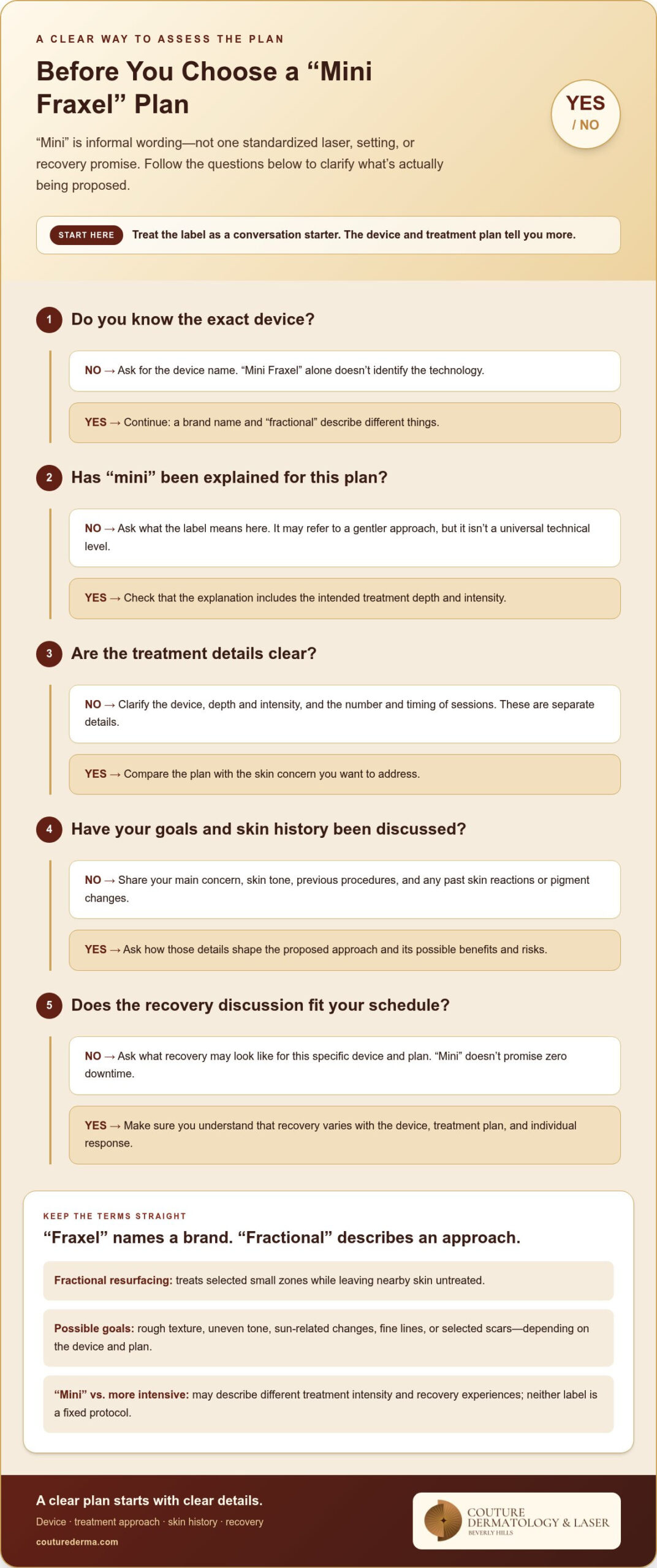
In brief, fractional resurfacing treats selected small zones of skin while leaving nearby tissue untreated. “Mini” is an informal label for a potentially gentler plan, not a specific laser. Before comparing options, write down the exact device name and ask what “mini” means for the proposed treatment. A clear answer should help you understand the treatment approach, not just the marketing term.
For general background on how lasers are used in medicine, you can read this overview of laser medicine. The device name and treatment approach are separate details, so it helps to understand both.
To hear a dermatologist discuss Fraxel and skin goals, watch this video:
Is mini Fraxel the same thing as Fraxel?
Fraxel is a brand name; fractional describes how a laser treats selected areas rather than the full skin surface. The terms are related, but they don’t mean the same thing. Different practices may use “mini Fraxel” for different lighter approaches, so the label doesn’t tell you which technology or plan is involved.
You may see Clear + Brilliant described elsewhere as a gentler or “baby Fraxel” option. That’s one example of how the wording is used, not a universal definition. At an assessment, bring your main concern and a list of previous procedures or skin reactions. Those details help make the discussion specific to you.
What skin concerns might a lighter fractional treatment address?
Depending on the device and plan, possible goals include improving rough texture, uneven tone, sun-related changes, fine lines, or selected scars. The likely benefit depends on the concern, your skin assessment, and the treatment approach. A lighter plan may be considered for some goals, but it doesn’t promise a particular degree of change.
Scar planning calls for attention to the type of scar and your skin history. If acne scars are a main concern, explore acne scar refinement and bring questions about your scar pattern to a dermatologist. That conversation can help connect your goals with a suitable resurfacing plan.
How Does Fractional Laser Resurfacing Work Beneath the Surface?
A fractional laser delivers focused energy to selected, tiny treatment zones while leaving nearby skin untreated. The treated areas begin a repair response, and the surrounding untreated tissue can support healing. As skin renews, it may produce collagen, a structural protein that helps support skin. This process can contribute to changes over time, but it doesn’t guarantee a particular result.
Unlike a laser that treats an entire surface uniformly, fractional resurfacing leaves untreated spaces between its treatment zones. That distinction is useful when comparing treatment plans, but it doesn’t by itself tell you how much change to expect or how long recovery may take.
What happens to the skin during fractional resurfacing?
Focused energy creates small areas of controlled heat in the outer layer of skin or beneath it. How deep and intense the treatment is depends on the technology and the clinician’s plan. Fractional lasers don’t all use the same wavelength or affect tissue in the same way, so the device and intended goal matter when discussing what your skin may experience.
Why do treatment settings matter for different skin tones?
Melanin, the pigment that gives skin its color, can affect how skin responds to laser energy. I consider your skin tone, any history of dark marks or other pigment changes, and the concern you want to address. Share any past reaction to a procedure or skin irritation. That history helps guide a careful discussion about possible benefits and risks.
At Couture Dermatology & Laser Beverly Hills, I offer laser skin resurfacing and discuss the intended approach and its limits before treatment. If you’re considering resurfacing, an assessment can connect your skin history with a plan tailored to your goals. You can book an appointment to discuss your options.
Mini Fraxel vs. Traditional Fraxel: What Is the Real Difference?
It’s easy to hear “mini” and assume it means a specific low-intensity Fraxel setting with almost no recovery. Here’s the thing: “mini” isn’t a universal technical level, and it doesn’t promise negligible downtime. It’s informal wording that may describe a lighter treatment plan, while “Fraxel” refers to a brand of laser devices.
To compare options clearly, separate three details: the device being used, the treatment depth and intensity, and the number and timing of sessions. These factors can influence one another, but they aren’t interchangeable. The phrase “traditional Fraxel” also needs context, since the actual plan can vary.
| What you’re comparing | “Mini Fraxel” | More intensive Fraxel plan |
|---|---|---|
| Terminology | Informal label for a lighter fractional approach | Informal description, not one fixed protocol |
| Intended intensity | May use a gentler treatment plan | May be planned for a stronger degree of treatment |
| Possible goals | Subtle improvement in selected concerns | May target concerns needing a more intensive approach |
| Recovery | Varies with device, plan, and individual response | May involve a different recovery experience; timing varies |
Does mini Fraxel mean less downtime?
A lighter plan may mean a different recovery experience, but it doesn’t guarantee “zero downtime.” Depending on the treatment, you may have temporary redness, warmth, or sensitivity. The extent and duration can vary with the device, treatment plan, your skin, and how it responds. Before scheduling, tell your dermatologist about upcoming events so recovery can be part of the discussion.
Is a lighter treatment less effective than traditional Fraxel?
Not necessarily. Effectiveness depends on the concern and the degree of change you’re hoping for. A lighter approach may suit a more modest goal, while a different plan may be considered for a concern that needs more intensive treatment. More intensity isn’t automatically a better match. Treatment planning balances your goals with tolerability and recovery.
In my practice, I assess your skin before recommending an approach rather than relying on the word “mini.” Bring your main concern and recovery preferences to the conversation. That gives us a clearer starting point for deciding whether a lighter plan fits.
What Should You Expect Before and After a Mini Fraxel Treatment?
If you’re asking what is a mini fraxel treatment in practical terms, the answer includes more than the laser session. Preparation, comfort measures, and aftercare depend on the specific device and plan. I guide you through those details so you know what to expect and can make room for recovery.
How should you prepare for a dermatologist’s assessment?
Start by describing the concern you’d most like to address and what kind of change you hope to see. Tell your dermatologist about past procedures, how your skin reacted, and any history of dark marks or other pigment changes. These details help shape an assessment around your skin rather than a label like “mini.”
Bring a list of the medicines and skin care products you use, including prescription treatments. They can matter to the discussion, but don’t stop or change a medicine on your own. Your dermatologist can advise you on any preparation needed for the treatment being considered.
At Couture Dermatology in Beverly Hills, I use the assessment to connect your concerns and skin history with a plan that considers your goals and recovery preferences. If you’re considering laser resurfacing, you can book an appointment to discuss your options.
What can recovery feel like after fractional resurfacing?
On treatment day, your clinician should explain the planned steps and the comfort measures being used. Sensation and aftercare depend on the specific laser and treatment plan. Ask for instructions tailored to your session rather than relying on someone else’s recovery experience.
Afterward, you may notice temporary warmth, redness, dryness, or sensitivity. These effects and how long they remain visible can vary with the device, treatment intensity, and your skin’s response. Follow the aftercare instructions you’re given, and contact your treating clinician if you’re unsure whether a skin symptom is expected.
Protecting your skin from sun exposure is an important part of care. Apply sunscreen 15 minutes before sun exposure, and follow your clinician’s guidance on sun protection and skin care while you recover. Keep any follow-up appointment so your dermatologist can assess healing and discuss how your skin is responding.
How Does a Dermatologist Tailor a Mini Fraxel Plan in Beverly Hills?
If you’re still weighing what is a mini fraxel treatment for your skin, the label matters less than the concern you want to address and the plan behind it. I’m Dr. Chinonso Kagha Abisogun, a board-certified dermatologist with 15 years of experience. At Couture Dermatology in Beverly Hills, I approach laser resurfacing as a conversation, not a one-size-fits-all prescription.
What does a personalized laser consultation consider?
I’ll ask what you’d most like to change, how long the concern has been present, and what kind of improvement you hope to see. We’ll also discuss your skin tone, history of pigment changes or sensitivity, previous procedures, and how much recovery time feels manageable. These details help me consider which approach may fit your priorities.
We’ll talk through potential benefits and limits, along with the treatment’s expected recovery and any factors that may affect planning. Your preferred pace matters, too. You may want a gradual change with a gentler approach, or you may be exploring whether a different level of resurfacing better fits your concern. The goal is to make that decision together with clear expectations.
If you’re comparing laser resurfacing with other ways to refresh your skin, bring those questions to the consultation. We can discuss how the options differ and which considerations are relevant to your goals, without assuming one laser suits everyone.
When is it time to discuss treatment in person?
A consultation may be useful if persistent rough texture, discoloration, or scarring continues to bother you and you’re considering professional treatment. An in-person assessment lets me examine the concern and discuss suitable options. It can clarify what a plan may involve, but it can’t guarantee a specific result.
You don’t need to arrive knowing which device or treatment intensity you want. Bring your questions, describe what matters most to you, and tell me what recovery you can accommodate. If you’re ready to discuss laser resurfacing with our practice, book an appointment.
Take the Next Step Toward a Thoughtful Laser Plan
Understanding what is a mini fraxel treatment starts with recognizing that “mini” is informal language for a lighter fractional approach, not a defined device or promise of minimal recovery. The right plan depends on your skin concern, tone and history, desired degree of change, and time you can allow for healing.
In my practice, I focus on that fit rather than choosing a treatment by label alone. I’m Dr. Chinonso Kagha Abisogun, a board-certified dermatologist, and laser skin resurfacing is a priority service at Couture Dermatology in Beverly Hills. An assessment can clarify possible options and recovery expectations, though it can’t guarantee a specific result.
If you’re ready to discuss your goals and a personalized laser resurfacing plan, book an appointment. You can take the next step at a pace that feels right, with a clearer understanding of the options for your skin.
Frequently Asked Questions
What is a mini Fraxel treatment?
A mini Fraxel treatment usually means a lighter fractional laser resurfacing approach, not one specific device or standard setting. Fractional lasers treat selected small zones while leaving nearby skin untreated. The phrase alone doesn’t tell you the treatment depth, recovery, or result to expect. In my practice at Couture Dermatology in Beverly Hills, Los Angeles, I assess your skin and goals before discussing a suitable plan.
Is mini Fraxel the same as Clear + Brilliant?
No, the terms aren’t interchangeable. Clear + Brilliant is a specific fractional laser that some sources describe as a gentler or “baby Fraxel” option. “Mini Fraxel” is informal wording that different practices may use for different lighter treatment approaches. If you’re comparing the two, focus on the actual device and proposed treatment plan, rather than assuming the labels promise the same experience or outcome.
Is mini Fraxel different from traditional Fraxel?
“Mini” generally suggests a lighter plan, while “traditional Fraxel” may refer to a branded Fraxel treatment, but neither phrase alone specifies the treatment details. The device, treatment depth, intensity, and session plan are separate factors. A more intensive treatment isn’t automatically a better match for your concern. Your dermatologist can explain how the plan is tailored to your goals and recovery preferences.
How long does recovery from a mini Fraxel treatment take?
There isn’t one recovery timeline for every mini Fraxel treatment because the label doesn’t define a specific laser or intensity. Temporary redness, warmth, dryness, or sensitivity may occur, and how long these last varies with the treatment and your skin’s response. Some non-ablative Fraxel treatments are associated with recovery of about five to seven days, but that estimate shouldn’t be assumed for every lighter plan.
Can mini Fraxel help with acne scars or dark spots?
It may help improve the look of selected acne scars or dark spots, but the likely benefit depends on the type of concern, your skin, and the treatment plan. Different scars and areas of discoloration may call for different approaches. I assess your skin history and goals before discussing laser resurfacing, and I set expectations around possible improvement rather than promising a particular result.
Is fractional laser resurfacing suitable for darker skin tones?
It may be an option for some people with darker skin tones, but suitability depends on the laser, plan, and individual skin assessment. Melanin, the pigment that gives skin its color, can affect how skin responds to laser energy. I consider your tone, history of dark marks or other pigment changes, and treatment goals before discussing possible benefits and risks.
What should I avoid after a mini Fraxel treatment?
Follow the aftercare instructions your clinician gives you, since they depend on the specific laser and treatment. In general, avoid picking or scrubbing flaking skin, and hold off on retinoids, exfoliating acids, and physical scrubs until your skin has healed and your clinician says they’re appropriate. Protect treated skin from sun exposure, and apply sunscreen 15 minutes before sun exposure as directed.