

The persistent blush that isn’t from flattery, the unexpected bumps that disrupt your skin’s smooth landscape-living with sensitive, reactive skin can feel like a constant, frustrating mystery. If this experience feels deeply familiar, you are likely navigating the complexities of rosacea and the cycle of flare-ups it brings, often leaving you feeling self-conscious and searching for a solution that finally works. You are not alone, and your journey to serene, confident skin begins with understanding.
This guide, curated by our Harvard-trained Beverly Hills dermatologist, is your first step on that bespoke path. We will unveil the hidden triggers that provoke your skin, demystify the condition, and introduce you to the most elegant and effective treatments available. Prepare to move beyond temporary fixes and embark on your Couture Journey to a complexion that radiates calm, clarity, and the bold confidence you deserve. Beautiful skin is not a destination; it is a beautifully tailored experience.
Key Takeaways
- Understand that rosacea is a chronic inflammatory condition, not a personal failing, empowering you to begin your journey toward calm, confident skin.
- Discover how to identify the unique triggers for rosacea and learn elegant strategies to manage them, giving you greater control over your skin’s serenity.
- Learn why a “couture” treatment plan that combines medical, cosmetic, and at-home care is essential for achieving lasting refinement.
- Master the art of a gentle daily ritual designed to support your skin barrier, forming the cornerstone of successful rosacea management.
What is Rosacea? Understanding the Source of Facial Redness
Rosacea is far more than a simple tendency to blush; it is a chronic and often complex inflammatory skin condition that requires a sophisticated, nuanced approach. While its signature is facial redness, its impact extends much deeper, often affecting the confidence and daily comfort of those who experience it. Understanding what is rosacea at its core means distinguishing it from common acne, allergic reactions, or general sensitivity. This clarity is the foundational step in your journey toward calm, clear skin. While not curable, rosacea is highly manageable, and with expert dermatological care, its symptoms can be beautifully controlled for an enduring, serene complexion.
To better understand the potential underlying factors of this condition, Dr. Eric Berg offers a valuable clinical perspective:
Rosacea’s Signature Signs
The presentation of rosacea is unique to each individual, yet it is defined by a constellation of characteristic signs. A couture-level treatment plan begins with correctly identifying these elegant, yet often frustrating, markers:
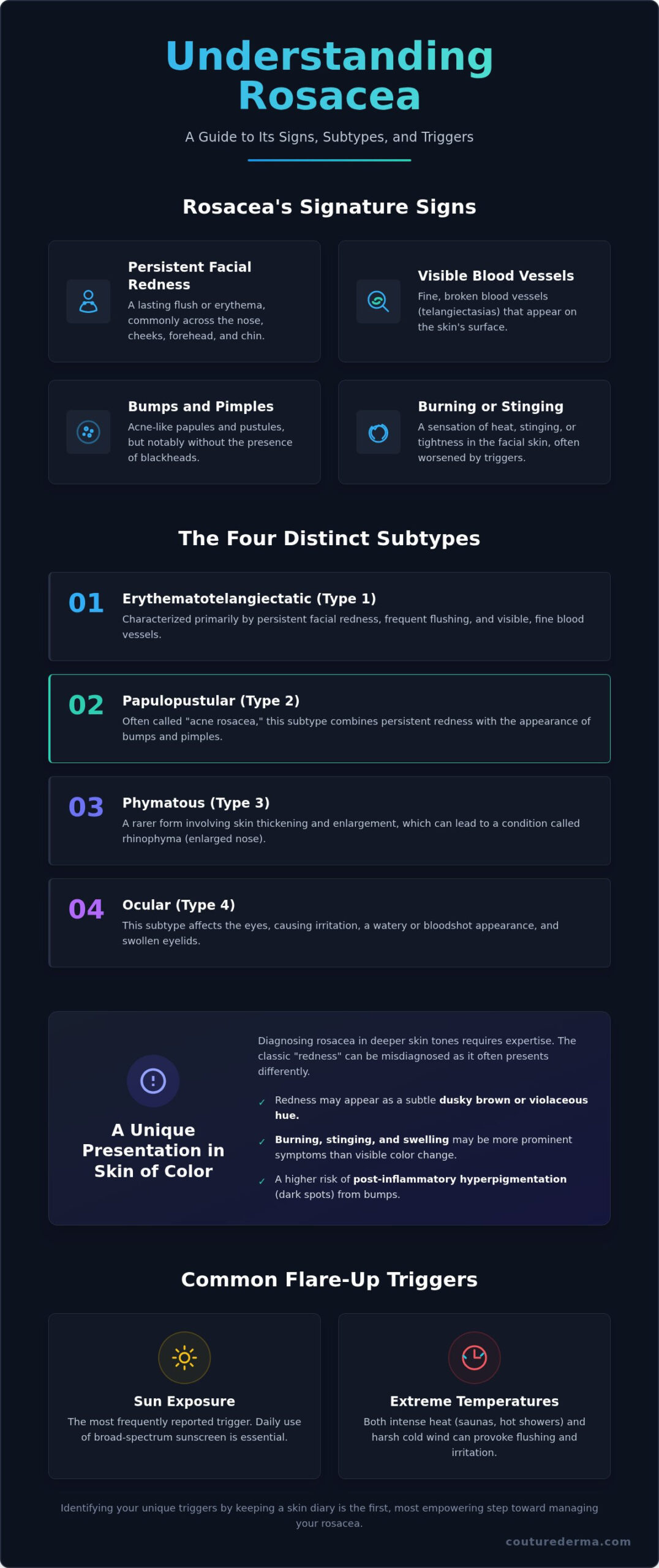
- Persistent Facial Redness: A lasting erythema or flushing, most commonly appearing across the nose, cheeks, forehead, and chin.
- Visible Blood Vessels: Fine, broken blood vessels, known as telangiectasias, that become visible on the skin’s surface.
- Bumps and Pimples: Papules and pustules that resemble acne but are distinguished by the absence of blackheads.
- Burning or Stinging Sensations: A feeling of heat, stinging, or tightness in the facial skin, often exacerbated by triggers.
The Four Distinct Subtypes of Rosacea
To curate the most effective treatment, a board-certified dermatologist will first identify your specific subtype of rosacea. Each one requires a different therapeutic approach.
Type 1 (Erythematotelangiectatic): Characterized primarily by persistent redness, flushing, and visible blood vessels.
Type 2 (Papulopustular): Often called “acne rosacea,” this subtype combines persistent redness with bumps and pimples.
Type 3 (Phymatous): A rarer form involving skin thickening and enlargement, most famously affecting the nose (rhinophyma).
Type 4 (Ocular): This subtype affects the eyes, causing irritation, watery or bloodshot appearance, and swollen eyelids.
Rosacea in Skin of Color: A Unique Presentation
Diagnosing rosacea in deeper skin tones requires an artistic and experienced eye. The classic redness may appear as a more subtle dusky brown or violaceous hue, making it easy to misdiagnose. For individuals with skin of color, the experience and presentation of rosacea can be unique; symptoms like burning, stinging, and swelling may be more prominent than visible redness. Furthermore, the inflammatory bumps can lead to a higher risk of post-inflammatory hyperpigmentation (dark spots), demanding a treatment plan that is both gentle and effective. A dermatologist with specialized expertise in diverse skin tones is essential for achieving skin refinement without complication.
Uncovering Your Triggers: What Causes Rosacea Flare-Ups?
While the precise origins of rosacea remain a subject of ongoing dermatologic science, it is understood to be a complex interplay of genetic predisposition and environmental factors. The first, most empowering step in your journey toward serene skin is identifying the unique elements that cause your personal flare-ups. Gaining this knowledge allows us to curate a management plan that feels less like a restriction and more like a refined approach to your daily life.
We encourage our clients to keep a simple skin diary, noting diet, activities, and environmental conditions. This bespoke log becomes an invaluable tool, revealing the subtle patterns between your lifestyle and your skin’s response. It is the foundation of a truly personalized treatment strategy.
Common Environmental and Lifestyle Triggers
Your environment and daily habits play a significant role in the state of your skin. Understanding the connection between rosacea and your surroundings is key to maintaining a calm, even complexion. Be mindful of these common catalysts:
- Sun Exposure: The most frequently reported trigger. Daily, year-round use of a broad-spectrum, mineral-based sunscreen is non-negotiable for skin refinement.
- Extreme Temperatures: Both intense heat from saunas or hot showers and the harsh effects of cold wind can provoke flushing and irritation.
- Strenuous Exercise: While vital for well-being, intense workouts can increase facial redness. Consider modifying your routine with lower-impact activities or exercising in a cool environment.
- Emotional Stress: The mind-skin connection is powerful. Practices like meditation or yoga can be beautiful complements to your clinical care.
Dietary Triggers to Be Mindful Of
What you consume can sometimes manifest on your skin, but dietary triggers are highly individual. The Mayo Clinic provides a comprehensive list of common rosacea triggers, but your personal diary will be your most valuable guide. Common culprits include:
- Hot beverages, spicy foods, and alcohol (particularly red wine).
- Foods containing cinnamaldehyde, such as cinnamon, tomatoes, and citrus fruits.
- Histamine-rich foods like aged cheeses and processed meats.
Skincare and Cosmetic Triggers
The products you apply directly to your skin can either soothe or aggravate. Curating a gentle, supportive skincare ritual is essential. We advise avoiding products formulated with potential irritants like alcohol, witch hazel, fragrances, and menthol. Abrasive physical scrubs can disrupt the delicate skin barrier, and certain chemical sunscreens may cause sensitivity. Before introducing any new product into your routine, always perform a patch test on a discreet area of skin to ensure compatibility.
The Couture Journey: Curated Rosacea Treatments in Beverly Hills
At Couture Dermatology, we believe managing rosacea is not a one-size-fits-all prescription but a bespoke journey of skin refinement. Your treatment plan is curated with meticulous care, designed specifically for your skin history, lifestyle, and aesthetic goals. This is a collaborative process, blending medical-grade therapies, advanced cosmetic procedures, and sophisticated at-home care. Our primary goals are to calm inflammation, diminish visible redness, and prevent the progression of the condition. Achieving beautifully clear, calm skin requires patience and a consistent, personalized approach-a journey we navigate together.
Foundational Medical Therapies
The foundation of every successful rosacea treatment plan is built on proven medical science. These therapies are designed to control the underlying inflammatory processes. As detailed in this comprehensive overview of rosacea from the NIH, a multi-faceted approach is key. Your curated regimen may include:
- Topical Prescriptions: Creams and gels like Metronidazole and Azelaic Acid reduce inflammation and bumps, while Ivermectin targets Demodex mites, a known trigger for some individuals.
- Oral Medications: Low-dose antibiotics, such as Doxycycline, are often prescribed not for their antibacterial effects, but for their potent anti-inflammatory properties to calm flare-ups from within.
Advanced In-Office Procedures for Redness and Texture
To address the persistent redness and visible blood vessels characteristic of rosacea, we turn to advanced light and laser technology. The Vbeam Perfecta® is the gold standard, a vascular laser that selectively targets and collapses unwanted blood vessels without harming the surrounding skin. This process is highly effective for treating the persistent redness of rosacea and restoring an even, serene skin tone. Other options, such as Intense Pulsed Light (IPL), may also be part of your plan. Learn more about our Vbeam Laser treatment for redness.
Addressing Textural Changes and Rhinophyma
Chronic inflammation can lead to textural irregularities, including skin thickening and enlargement, particularly on the nose (rhinophyma). Addressing the advanced signs of rosacea and textural irregularities requires not just science, but artistry. Laser skin resurfacing, often with a refined CO2 laser, can meticulously smooth the skin’s surface. Treating rhinophyma is a delicate procedure, reshaping tissue to restore natural contours with an expert, artistic eye. Schedule a consultation to design your complete treatment plan and begin your journey to confident, beautiful skin.
Crafting Your Daily Ritual: At-Home Skincare for Rosacea-Prone Skin
While advanced clinical treatments form the core of your transformation, the daily ritual you practice at home is the foundation upon which all success is built. For those managing rosacea and sensitive skin, this routine is not about challenging the skin, but about providing serene, consistent support. The philosophy is one of elegant simplicity: a curated selection of steps designed to calm inflammation and fortify your delicate skin barrier. Your daily practice distills down to three essential pillars: gentle cleansing, strategic hydration, and diligent sun protection.
The Art of Gentle Cleansing
The goal of cleansing is to remove impurities without stripping the skin of its essential moisture. This step should feel restorative, not abrasive. Always handle your skin with intention and care.
- Choose Wisely: Opt for a non-soap, pH-balanced, and hydrating cleanser. Cream or milky formulas are often ideal.
- Technique Matters: Use only lukewarm water and your fingertips in gentle, circular motions. Avoid washcloths or harsh scrubs, which can cause micro-tears and irritation.
- Pat, Don’t Rub: After rinsing, gently pat your face dry with a soft, clean towel.
Hydration and Barrier Repair
A strong, healthy skin barrier is less reactive and better equipped to defend against environmental triggers. Your moisturizer is your primary tool for reinforcing this barrier. Select meticulously formulated, fragrance-free, and hypoallergenic moisturizers featuring calming ingredients like niacinamide, ceramides, and hyaluronic acid. For optimal absorption, apply your moisturizer to slightly damp skin to seal in hydration and create a beautifully smooth finish.
Sun Protection: Your Most Essential Step
If you incorporate only one step into your routine, let it be this one. Sun exposure is a primary trigger for rosacea flare-ups, making daily sun protection your most powerful defense. We recommend a broad-spectrum, mineral-based sunscreen with an SPF of 30 or higher. Formulations with zinc oxide or titanium dioxide are physical blockers that sit on the skin’s surface, offering gentle yet effective protection with less risk of irritation. Remember to reapply every two hours when outdoors for enduring protection.
Embracing this mindful routine is an essential part of your skin refinement journey. It provides the daily stability your skin craves, allowing the results of your in-office treatments to truly endure. To begin curating a comprehensive plan that addresses your unique experience with rosacea and helps you achieve lasting confidence, we invite you to explore The Couture Journey.
Curate Your Path to Calm, Confident Skin
Navigating the world of facial redness is a deeply personal journey, but it is one you can now approach with newfound clarity and confidence. As we’ve explored, understanding what rosacea is and how it manifests is the first step. The true power, however, lies in identifying your unique triggers and crafting a daily ritual that nurtures your skin. This knowledge empowers you to manage rosacea and reclaim a sense of control over your skin’s delicate balance, paving the way for lasting relief.
Your journey to refinement doesn’t have to be one of trial and error. At Couture Dermatology in Beverly Hills, we see your skin’s health as a collaborative art form. Under the world-class guidance of Harvard-trained dermatologist Dr. Chinonso Kagha Abisogun, we specialize in creating truly bespoke treatment plans that honor and celebrate every skin tone. Our philosophy is rooted in blending advanced dermatologic science with a luxurious, reassuring experience, ensuring your path to clear skin feels as beautiful as the results.
Begin your couture journey to calm skin. Book your consultation today.
The serene, confident complexion you’ve envisioned is not a distant dream-it is your new reality, waiting to be revealed.
Frequently Asked Questions About Rosacea
Can rosacea be permanently cured?
While there is no permanent cure for rosacea, it is a highly manageable condition. Through a meticulously curated treatment plan, we can significantly reduce flare-ups and achieve long-term remission, allowing you to enjoy beautifully clear and calm skin. Our approach is not about a quick fix but about creating an enduring strategy for skin refinement, empowering you with the tools and advanced treatments to maintain your results and confidence for years to come.
Is rosacea a type of adult acne?
Although rosacea and adult acne can both present with redness and bumps, they are distinct conditions with different underlying causes. A board-certified dermatologist can provide an expert diagnosis, which is the essential first step in your couture journey to clear skin. Mistaking one for the other can lead to ineffective treatments, so a precise diagnosis ensures your curated plan targets the true source of inflammation for elegant, lasting refinement.
What is the best makeup or foundation to cover rosacea?
To complement your treatment plan, we recommend mineral-based foundations and powders. These formulations are typically free of irritants like fragrance and oils that can trigger flare-ups. For an added touch of elegance, a green-tinted primer can be applied underneath your foundation to beautifully neutralize redness. This approach ensures you achieve a flawless, comfortable finish without compromising the health of your skin or the results of your curated treatments.
Will my rosacea get worse as I get older?
Rosacea can progress if left unmanaged, but it certainly does not have to. With a proactive and personalized treatment strategy, we can effectively control symptoms and prevent them from advancing over time. The key is consistent, couture-level care tailored to your skin’s evolving needs. Our goal is to empower you to manage your skin gracefully, maintaining its health and refined appearance at every age, ensuring your confidence never wavers.
Are there any natural or holistic remedies that help with rosacea?
A holistic view is central to our philosophy, and we believe in integrating lifestyle refinements with advanced dermatologic science. Identifying and managing personal triggers-such as sun exposure, stress, or certain foods-is a foundational part of your couture plan. While these adjustments support skin health, they are most effective when paired with clinically-proven treatments curated by your dermatologist to achieve truly transformative and enduring results for your rosacea and overall skin wellness.
How long does it take for rosacea treatments to start working?
Skin refinement is a journey, and patience is a key element of achieving elegant results. While some clients notice initial improvements within a few weeks of starting topical or oral medications, the most significant and visible transformation often unfolds over two to three months. Advanced treatments like laser therapy may offer more immediate refinement of redness. Your personalized timeline will be discussed during your consultation as we embark on this collaborative journey together.