

I see patients every day who have lived through the fear of laser burns or being misdiagnosed by providers who don’t understand deeper skin tones. Finding a dermatologist specializing in skin of color ca is the first step toward reclaiming your confidence and ensuring your medical safety. In my practice here in Beverly Hills, we treat your skin with the same precision a master tailor uses on a bespoke gown, because melanin-rich skin isn’t a “special case,” it’s a masterpiece that requires specific expertise. In most cases, it’s wise to ask if a provider performs test spots before a full laser treatment to see how your pigment reacts.
You’ve probably felt the sting of “one-size-fits-all” advice that leaves your complexion uneven or irritated. I’m here to tell you that clear, radiant skin is possible without the risk of post-inflammatory hyperpigmentation (PIH) (dark spots that appear after skin irritation). You’ll discover how our tailored protocols and specialized knowledge of melanocytes (cells that produce skin pigment) create a path to transformation. Let’s explore the couture approach to dermatology that prioritizes your safety and delivers the sophisticated results you’ve been searching for.
Key Takeaways
- Finding a dermatologist specializing in skin of color ca ensures your plan accounts for how your pigment-producing cells react to heat or trauma.
- You’ll learn why conditions like melasma and acne require a “slow and low” approach. It’s the best way to avoid the dark marks standard treatments often leave behind.
- Discover how specific technology, such as the Fotona laser, makes safe aesthetic procedures a reality for melanin-rich skin when used with expert precision.
- We’ll give you the exact questions to ask to find a provider who truly understands your skin’s unique needs and cultural nuances.
- Gain a simple daily protocol. It focuses on protection and the strategic use of active ingredients to maintain your healthy glow.
What Does a Dermatologist Specializing in Skin of Color Actually Do?
In my practice, I often tell patients that general dermatology is like buying a suit off-the-rack. It might fit okay, but it wasn’t made for your specific frame. When you search for a dermatologist specializing in skin of color ca, you’re looking for a bespoke experience. It’s about an expert eye that understands how melanocytes (pigment-producing cells) react to the world around them. Here’s the thing: skin of color isn’t just a label for a certain shade. It’s a biological profile that dictates how your skin heals, scars, and ages.
To better understand this concept, watch this helpful video:
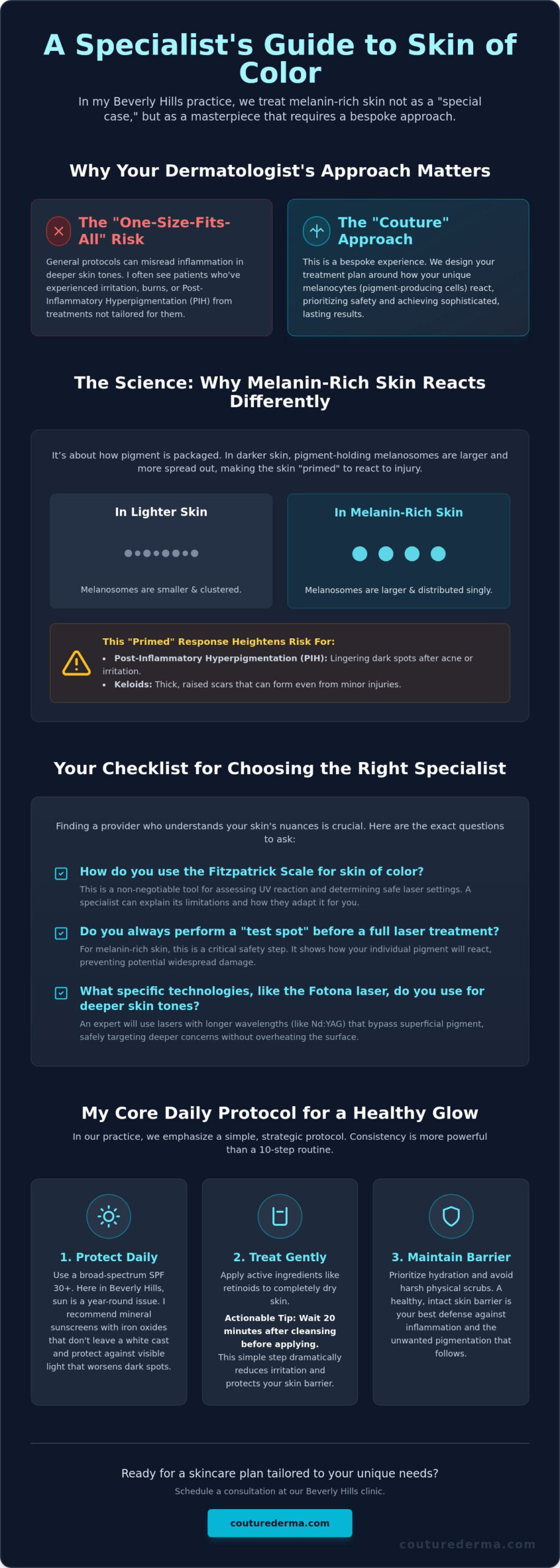
I use what I call “Conversational Authority” to bridge the gap between clinical science and your lived experience. In my practice, I see patients who have been told their skin looks “fine” because a generalist couldn’t spot the subtle, deep-seated redness that signals inflammation in darker tones. A specialist sees the “ashiness” that is actually eczema or the faint shadow that will soon become stubborn melasma. Actionable Tip: During your first five minutes in the exam room, listen to see if your provider discusses the Fitzpatrick Scale. This system classifies skin types by their reaction to UV light, and it’s a non-negotiable tool for planning safe treatments.
The Science of Melanin-Rich Skin
Understanding the science of melanin-rich skin starts with melanosomes. These are the tiny packages that hold your pigment. In darker skin, these packages are larger and spread out more evenly than in lighter skin. This provides some natural protection against UV rays, but it also means the skin is “primed” to react. When the skin is injured by a pimple or a harsh laser, those melanocytes go into overdrive. This leads to post-inflammatory hyperpigmentation (PIH) (dark spots that outlast the initial injury). In some cases, this reactive nature also makes the skin more prone to keloids (thick, raised scars). My “Couture” philosophy focuses on protecting the skin barrier first. We achieve medical results without triggering these defensive pigment responses.
Why California Patients Seek Specialized Care
Living in Beverly Hills means dealing with intense, year-round sun exposure. This constant UV stress makes conditions like melasma particularly difficult to manage. If you’re looking for a dermatologist in Los Angeles, you need someone who understands our local lifestyle. You might spend your weekends hiking in the canyons or driving with the sun hitting one side of your face. These habits directly impact your treatment plan. And let’s be honest, the “sunscreen for all” talk is usually too simple. For deeper skin tones, we have to find formulations that don’t leave a white cast but still offer high-level protection against the visible light that worsens dark spots. It’s a delicate balance that requires a nuanced, expert approach.
Common Conditions We Treat with a Specialized Lens
In my practice, I see patients who have spent years trying to scrub away dark spots only to make them darker. Here’s the thing: treating melanin-rich skin requires a specialized eye because the inflammatory response is so much more active. When you consult a dermatologist specializing in skin of color ca, you’re getting a protocol designed to outsmart your melanocytes (pigment cells) rather than just attacking them. I often see this specialized need in patients with Central Centrifugal Cicatricial Alopecia (CCCA). This is a form of hair loss common in Black women that starts at the crown and can lead to permanent scarring. It often looks like simple breakage to an untrained eye, but we treat it as a medical priority to save the hair follicles.
Actionable Tip: If you’re dealing with a dark spot after a breakout, here’s a specific protocol: wait 20 minutes after washing your face before you apply a retinoid. Applying active ingredients to damp skin can increase irritation, and for your skin, irritation almost always leads to more pigment.
The Battle Against Hyperpigmentation
Melasma is a fickle companion. Unlike sun damage, which is often surface-level and easier to lift, melasma is deeply tied to hormones, heat, and even visible light. Aggressive chemical peels might seem like a quick fix, but they often backfire on deeper skin tones by triggering more inflammation. This is why hyperpigmentation treatments must be curated with a “slow and low” approach. Organizations like the Skin of Color Society emphasize that safety comes from understanding these biological nuances before picking up a laser or a peel. We focus on stabilizing the pigment before we ever try to “fix” it.
Acne and the PIH Cycle
The goal with acne in skin of color isn’t just to clear the pimple. It’s to prevent the dark mark, or post-inflammatory hyperpigmentation (PIH), that follows. I see so many patients who have been over-exfoliating with harsh scrubs, thinking they can polish away the spots. In reality, they’re damaging their skin barrier and making the pigment worse. My “Couture” protocol focuses on early, gentle intervention to stop the inflammatory cascade before it leaves a stain. You can read more about what a dermatologist wants you to know about acne to understand how we build these foundational routines. If the breakout has already left a lasting mark, we may transition to acne scar refinement to restore a smooth, even texture. If you’re tired of the cycle of breakouts and stains, it might be time to schedule a personalized consultation with a dermatologist specializing in skin of color ca.
Safe Aesthetic Procedures: Lasers and Injectables for Melanin
I hear the same question at almost every consultation: “Is it even safe for me to get a laser?” There’s a common myth that people with darker skin must avoid laser treatments altogether. But here’s the truth. Lasers are safe and effective for melanin-rich skin as long as the provider uses the correct wavelength and energy settings. In my practice, I rely on a “Couture” approach that prioritizes safety above all else. As a dermatologist specializing in skin of color ca, I know that the wrong device can cause burns, but the right one can be life-changing. Actionable Tip: If you are Fitzpatrick Type IV-VI (the categories for tan to very deep skin tones), always ask for a “test spot” on a discreet area like behind the ear before committing to a full laser treatment.
The American Society for Laser Medicine and Surgery sets the gold standard for these safety protocols, and we follow them meticulously to ensure every pulse of light is intentional. We don’t believe in “one-size-fits-all” settings. Instead, we calibrate our technology to respect the unique biology of your skin. It’s about achieving aesthetic harmony without compromising the health of your skin barrier.
The “Couture” Laser Protocol
In my Beverly Hills office, the Nd:YAG 1064nm wavelength is our workhorse. This specific wavelength is a game-changer because it bypasses the surface pigment to target deeper layers safely. This means we can treat hair removal or skin tightening without “confusing” the laser with the melanin in your top layer of skin. When we perform laser skin resurfacing, we often use fractional technology. This creates microscopic “treatment zones” while leaving the surrounding skin intact, which significantly lowers the risk of scarring. We also use the Vbeam laser for redness. While redness is harder to see in darker skin, we look for “hidden” vascularity (tiny blood vessels) that can cause persistent inflammation if left untreated.
Injectables and Volume Restoration
Aging in melanin-rich skin often shows up as volume loss rather than fine lines. I see patients who want to restore their structure without looking “done” or artificial. This is where jawline contouring becomes an artistic tool. We use dermal fillers to provide support where the bone and fat have naturally shifted over time. To prevent the dreaded “filler migration” (where the product moves from its original spot), we take a slow, layered approach. I also prefer a “micro-dose” strategy for Botox. By using smaller amounts in precise locations, we soften the look of tension while keeping your natural expressions. It’s not about freezing your face; it’s about a refined, rested version of you.
How to Choose the Right Specialist in California
I see patients every day who have been “burned” by general clinics, both literally and figuratively. Finding a dermatologist specializing in skin of color ca is not just about finding a doctor; it’s about finding a partner who understands the high stakes of your specific biology. Board certification is your baseline. It’s a non-negotiable credential that ensures your provider has the medical training to keep you safe. But beyond the certificate, look for “Conversational Authority.” Do they explain the “why” behind their choices, or do they just push a product? A true expert will discuss how your pigment reacts to inflammation before you even ask.
Actionable Tip: Look for a provider who asks about your ethnic background during the intake. This isn’t just for paperwork. Different ancestries have different risks for conditions like keloids (thick, raised scars), and a specialist needs this context to build your bespoke plan.
Red Flags to Watch For
In my practice, I often hear about the “one-size-fits-all” trap. If a clinic uses the same laser settings for every patient, walk away. Melanin-rich skin requires a nuanced approach to energy and heat. Another red flag is a provider who doesn’t mention the risk of post-inflammatory hyperpigmentation (PIH) (dark marks left after skin irritation). If they don’t have a plan to prevent or treat it, they aren’t prepared to handle your skin. They should also take a full medical history, specifically looking for your tendency to scar or develop raised bumps after an injury.
Actionable Tip: Ask the provider, “What is your specific protocol if I develop a dark spot after this treatment?” A true expert will have a ready answer involving topical stabilizers or specific light therapies. If they say it “never happens,” they aren’t being realistic about the nature of melanin-rich skin.
The Beverly Hills Difference
Choosing a Los Angeles dermatologist means finding someone who balances the artistry of aesthetics with the rigor of medical science. In our Beverly Hills practice, we treat every consultation as a collaborative journey. My training at Harvard provided the scientific foundation that underpins every “Couture” experience we offer. We don’t believe in rushed, transactional appointments. Instead, we take a meticulous and patient approach to ensure your results are both safe and transformative. If you’re ready for a provider who truly listens, you can book your consultation online today to start your personalized journey.
Your Daily Couture Protocol: Maintenance and Protection
I often meet patients who believe they don’t need sunscreen because they never burn. But here’s the thing: if you’re battling dark spots or an uneven tone, sunscreen is your most powerful tool. In my practice, I explain that melanin-rich skin is highly reactive to all forms of light, not just the sun. As a dermatologist specializing in skin of color ca, I’ve seen how heat and even the blue light from your phone can keep melasma active. Actionable Tip: Look for a tinted sunscreen that contains iron oxides. These minerals provide a physical shield against visible light, which is a major trigger for pigment changes in deeper skin tones.
My “Couture” philosophy relies on a “slow and low” approach to active ingredients. I see patients who have damaged their skin barrier by jumping straight into high-percentage retinoids or harsh acids. This almost always leads to irritation, and for your skin, irritation is the fastest path to new dark marks. We prefer starting with lower concentrations to let your skin build tolerance without triggering a defensive pigment response. It’s about a gradual, elegant progression toward your goals.
A Sample Morning and Evening Routine
Your daily routine should feel like a protective layer of fine silk. In the morning, focus on defense. I recommend an antioxidant serum containing Vitamin C or E to neutralize environmental stress, followed by your tinted SPF. If you’re concerned about shadows under the lids, you might consider under-eye brightening treatments to complement your topical care. In the evening, the goal is repair. Start with a gentle, non-stripping cleanser to remove the day’s debris. Actionable Tip: Wait 20 minutes after cleansing before applying tretinoin or other strong actives. Applying these to damp skin increases absorption too quickly, which can cause the redness and peeling that leads to PIH (post-inflammatory hyperpigmentation).
- Morning: Antioxidant Serum + Tinted SPF (30 or higher).
- Evening: Gentle Cleanser + Tailored Treatment (like Azelaic Acid) + Barrier-Repairing Moisturizer.
When to Seek Professional Help
There are times when “off-the-rack” skincare simply isn’t enough. If you have a dark spot that hasn’t faded after three months of consistent over-the-counter use, it’s time for a professional intervention. I also tell my patients to watch for sudden changes in hair density or texture, as these can be early signs of scarring alopecia. And let’s be honest about “ashiness.” If your skin feels persistently dry or gray despite heavy moisturizing, it might not be simple dryness. In many cases, this is actually undiagnosed eczema that requires a medical-grade plan. If your current routine feels like it’s failing you, it may be time to schedule a personalized consultation with a dermatologist specializing in skin of color ca to begin your transformative journey.
Begin Your Transformation Toward Radiant, Even Skin
Your journey toward a clearer, more luminous complexion shouldn’t be a source of anxiety. I see patients who have spent years hiding behind makeup because they didn’t think safe, effective treatments existed for their specific tones. But here’s the thing: with a specialized eye and the right technology, like our Fotona laser, you can achieve the aesthetic harmony you’ve always wanted. Finding a dermatologist specializing in skin of color ca means choosing a provider who respects your biology and prioritizes your long-term skin health above all else. It’s about moving away from “off-the-rack” solutions and toward a plan that is truly bespoke.
My Harvard-trained background and board-certified expertise provide the clinical authority you deserve, while our “Couture” approach ensures your treatment plan is as unique as your heritage. We don’t believe in rushed appointments or artificial looks. And we believe in meticulous, patient care that reveals your most confident self. Experience the Couture difference; schedule your personalized consultation with Dr. Abisogun today. You’ve waited long enough for skin that feels like a masterpiece, and I’m here to help you finally achieve it.
Frequently Asked Questions
Do I really need a skin of color specialist if I just have acne?
In my practice, I see patients who treat their acne but end up with dark marks that last longer than the pimple. A specialist focuses on clearing the breakout while preventing post-inflammatory hyperpigmentation (PIH). We use specific protocols to ensure the inflammation doesn’t trigger your melanocytes (pigment cells). This proactive approach is why seeing a dermatologist specializing in skin of color ca is essential for a clear, even complexion.
Is laser hair removal safe for dark skin in 2026?
Laser hair removal is absolutely safe for dark skin when using the correct technology. We typically use the Nd:YAG 1064nm laser, which targets the hair follicle while bypassing the pigment in your outer layer of skin. It’s the gold standard for safety in 2026. I often perform a test spot first to ensure your skin reacts perfectly before we proceed with the full treatment area.
What is the best treatment for melasma on darker skin tones?
The best treatment for melasma is a “slow and low” combination approach that prioritizes skin barrier health. We often combine prescription-strength topicals like azelaic acid with strict sun protection using tinted SPF containing iron oxides. In some cases, we use specialized laser treatments to gently lift pigment without causing heat-induced inflammation. It’s a marathon, not a sprint, and requires a highly tailored protocol for long-term success.
How much does a consultation with a Beverly Hills dermatologist cost?
While costs vary by practice, a full-body skin exam with a board-certified dermatologist in Los Angeles typically costs between $150 and $300 out-of-pocket in 2026. If you have insurance and have met your deductible, a specialist copay for a medically necessary visit is often between $30 and $75. We recommend checking with your specific provider to understand their structure and any potential fees for specialized aesthetic consultations.
Can people with dark skin get chemical peels?
Yes, you can get chemical peels, but they must be “superficial” or gentle to avoid triggering new dark spots. In my practice, I see patients who’ve had aggressive peels elsewhere that caused scarring. We use specific acids like mandelic or salicylic at lower concentrations to refine the skin texture safely. We always prep the skin for several weeks beforehand with pigment-stabilizing creams to ensure a safe result.
What is PIH and how long does it take to fade?
PIH stands for post-inflammatory hyperpigmentation, which are the dark marks left behind after an injury or breakout. These spots can take anywhere from three to six months to fade with professional treatment, but they may last over a year if left alone. We use medical-grade brighteners and sun protection to speed up the process. It’s important to remember that picking at the skin will only make these marks deeper.
How can I tell if my dermatologist is actually an expert in skin of color?
You should ask specifically about their experience with your ethnicity and if they use the Fitzpatrick Scale to categorize skin types. A true expert should be able to show you before-and-after photos of patients with your exact skin tone. It’s also vital to confirm they are a board-certified dermatologist specializing in skin of color ca. If they don’t discuss the risk of hyperpigmentation, they may lack the necessary specialized training.
Does Dr. Abisogun treat all ethnicities at Couture Dermatology?
Yes, our practice is dedicated to providing high-end care for all skin types and ethnicities. While we have deep expertise in melanin-rich skin, the “Couture” approach means every patient receives a bespoke plan tailored to their unique biology. Whether we are performing laser treatments or medical dermatology, we focus on aesthetic harmony and safety for everyone. We believe that every person deserves a provider who understands their specific cultural and clinical needs.