

You are finally putting on that silk slip dress for a night out, but as you fasten your gold necklace, it catches. That tiny, persistent growth on your neck isn’t just a minor annoyance; it’s a distraction from your confidence. In my practice, I see patients every week who are tired of hiding these “uninvited guests” behind scarves or high collars. When it comes to skin tag removal by dermatologist Beverly Hills experts, the goal isn’t just to get rid of the growth. It is about restoring the seamless, couture finish your skin deserves. In most cases, I advise patients to avoid “home freezing” kits entirely; they often cause unnecessary damage to the surrounding healthy tissue.
Let’s be honest, it’s frustrating when a small skin issue makes you feel self-conscious in visible areas like your eyelids or neckline. You want it gone immediately, but you are likely worried about leaving behind a dark spot or a permanent scar. And you should be cautious. DIY methods carry a high risk of infection or post-inflammatory hyperpigmentation (darkening of the skin after injury). This article explains why a professional, medical approach is the essential step for safe, scar-free refinement. We will explore the specialized methods we use at our practice to ensure your skin heals perfectly and why a custom-fit treatment plan is the secret to true aesthetic harmony.
Key Takeaways
- Learn why friction from high-end fabrics or jewelry causes acrochordons (skin tags) and how to identify these benign growths before they become irritated.
- Understand why at-home kits often lead to permanent pigment issues, making skin tag removal by dermatologist Beverly Hills specialists the safest choice for a scar-free result.
- Discover how we select a bespoke removal method, such as precision excision or cryotherapy, based on the growth’s location and your specific skin type.
- Master the Couture Protocol for aftercare to ensure your skin heals seamlessly and maintains its natural aesthetic harmony.
- Explore why a board-certified, Harvard-trained perspective is essential for treating sensitive areas like the eyelids without leaving a trace.
Understanding Acrochordons: Why Skin Tags Occur
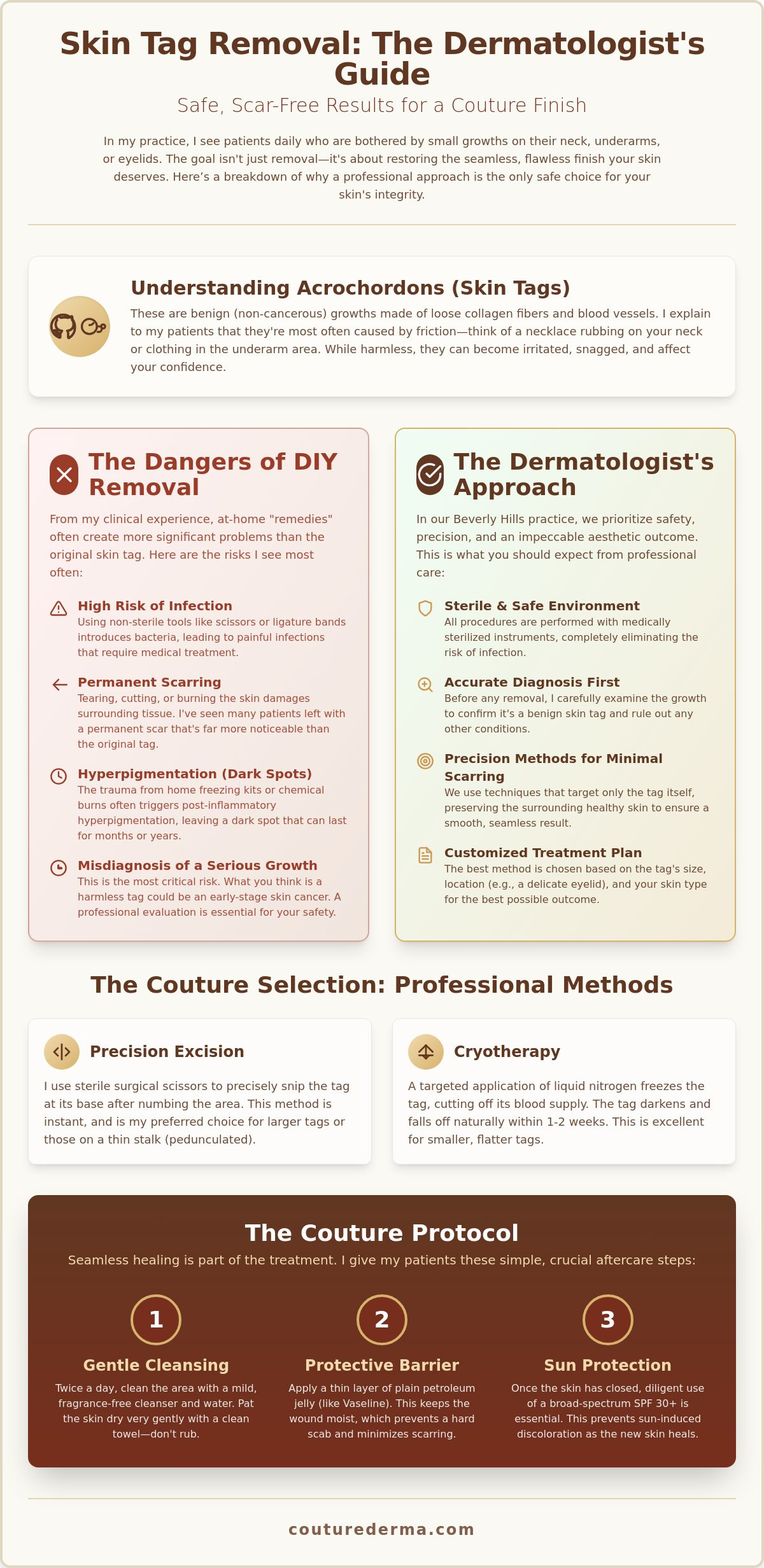
Think about the friction of a sports bra during a canyon hike or the constant rubbing of a high-collared silk blouse. In my practice, I see patients every week who are tired of these “uninvited guests” disrupting their smooth skin. When you are looking for skin tag removal by dermatologist beverly hills, you want more than a quick fix—you want a refinement that honors your skin’s integrity. Clinically, these growths are called acrochordons (the medical term for skin tags). They are benign (non-cancerous) and typically consist of loose collagen fibers and blood vessels wrapped in a thin layer of skin.
Living in Beverly Hills adds a unique layer to this skin concern. Our year-round sun and active lifestyles mean we are often outdoors—hiking the canyons or hitting the gym—where sweat and heat increase friction. This repetitive rubbing is the primary reason these growths form, making it essential to choose high-quality performance wear from JC London to protect the skin during movement. In my practice, I make it a point to distinguish between a tag and a mole during our initial assessment. A mole is usually more solid and contains melanocytes (cells that produce skin pigment), whereas a tag is soft and hangs from a stalk.
To better understand this concept, watch this helpful video:
Tip: If you notice a growth that is firm to the touch, bleeding on its own, or has multiple colors, have it checked immediately to rule out more serious issues. In some cases, what looks like a tag could be a more complex skin condition that requires a biopsy (a small sample of tissue for testing).
When is it time to have a skin tag professionally removed?
Patients often ask if they “really need” to bother with removal since tags are harmless. The answer is personal. While they aren’t a threat to your health, the irritation they cause is a valid medical reason for refinement. I see patients who have tried to “hide” tags on their eyelids or neck with heavy makeup—which only causes more inflammation. Here’s the thing: makeup often settles into the crevices around the tag, making the growth even more noticeable. Tip: Avoid applying thick, oil-based foundations directly over an irritated skin tag, as this can trap bacteria and lead to a minor infection.
Can my jewelry or clothing cause skin tags?
The relationship between your wardrobe and your skin is closer than you might think. Fine silk scarves, high-collared couture pieces, and heavy statement necklaces are often the culprits behind a snagged tag. When a tag gets caught, it can lead to sudden pain or a small tear. In my practice, I’ve observed that a sudden increase in skin tags can sometimes be linked to internal changes—specifically insulin resistance (when your body’s cells don’t respond well to insulin and can’t easily take up sugar from your blood). Tip: If a skin tag suddenly turns dark purple or black, it may have “twisted” on its stalk—cutting off its blood supply. This requires professional attention to ensure safe removal without complications.
Why DIY Skin Tag Removal is a Dangerous Choice
I see patients who walk into our practice with inflamed, weeping sores—often the result of a “skin tag removal pen” or a ligature band kit they found on Amazon. It is heartbreaking because they usually wanted a simple refinement but ended up with a significant complication. Let’s be honest; the internet is full of “hacks” that promise a quick fix. But these methods are typically aggressive and imprecise. When you choose professional skin tag removal by dermatologist beverly hills, you are paying for the peace of mind that comes with a sterile environment and expert precision. And let’s be honest: the pain of a “home snip” with bathroom scissors is far worse than the professional, numbed experience we provide.
Tip: If you have already used a DIY kit and notice increasing redness, warmth, or pus, stop all home treatment immediately. Keep the area covered with a thick layer of plain petroleum jelly—avoiding any products with fragrance or alcohol—to protect the skin barrier while it tries to heal.
How do I know if it’s actually a skin tag?
The biggest danger of DIY removal isn’t just the scar; it’s the risk of removing something that isn’t a tag at all. In my practice, I have seen cases where a patient tried to freeze off what they thought was a tag, only for it to be a viral wart or even a small basal cell carcinoma (a common type of skin cancer). A board-certified eye is essential to confirm the growth is truly benign before any treatment begins. You can read more about how we tell the difference in our guide, Skin Tag vs. Wart: A Dermatologist Explains. If you aren’t certain what you’re looking at, schedule an assessment to ensure your skin health remains the priority.
Will removing it at home leave a dark spot?
In my practice, I specialize in treating all skin types and tones. This is crucial because darker skin is particularly prone to post-inflammatory hyperpigmentation (PIH)—the darkening of the skin that occurs after an injury. When you use a DIY acid kit or a “natural” remedy, you are essentially creating a chemical burn. This often leaves behind a dark spot that is much harder to treat than the original growth. Our couture approach focuses on professional tailoring to ensure the removal is so precise that the surrounding pigment remains undisturbed.
Tip: In most cases, you should avoid applying apple cider vinegar to a skin tag. While it is a popular online suggestion, the high acidity typically causes a severe chemical burn on the healthy surrounding skin, leading to long-term scarring and pigment issues that are difficult to reverse.
The Couture Selection: Professional Removal Methods
In my practice, I view skin tag removal as a form of medical tailoring. Just as a master tailor selects a specific needle for a delicate silk, we choose our tools based on the size, location, and unique characteristics of your skin. Professional skin tag removal by dermatologist beverly hills isn’t a one-size-fits-all procedure. It is a bespoke experience designed to achieve aesthetic harmony. I see patients who are surprised to learn that the method we use on the neck might be completely different from the one we choose for the torso or the eyelids. The goal is always a result that looks entirely natural.
We typically utilize three main techniques to refine your skin:
- Cryotherapy: This involves using liquid nitrogen to “freeze” the tag. It is highly effective for smaller tags in areas that aren’t highly visible, as the tag will naturally fall off within a week or two.
- Electrocautery: We use a precise, heated probe to seal the tag at its base. This method is excellent because it provides instant results and minimizes any chance of bleeding by sealing the blood vessels immediately.
- Surgical Excision: I often refer to this as the “couture snip.” Using specialized, sterile instruments, I remove the tag flush with the skin. This is the gold standard for larger growths because it ensures a perfectly flat, nearly invisible finish.
Eyelid and Facial Refinement
Facial tags, especially those on the eyelids, require a surgeon’s touch. These areas are incredibly delicate, and the skin is much thinner than on the rest of the body. In our practice, we use local anesthesia to ensure the process is completely painless. My goal is always to preserve the natural contour of the eye. Once the skin is clear, many of our patients explore under-eye brightening services as a complementary path for full facial rejuvenation. Tip: If you have a tag on your eyelid, don’t rub it or try to pull it; this can cause a small tear in the thin skin and lead to bruising that lasts for weeks.
Selecting the Right Tool for Your Skin Type
Beverly Hills is home to people with a beautiful range of skin tones, and each requires a specific approach. For patients prone to keloids (thick, raised scars) or pigment changes, we adjust our technique to be as gentle as possible. In my practice, I prefer surgical excision for larger tags because it allows for the most controlled healing process. It provides the cleanest edge for the skin to knit back together. Tip: If you have a history of thick scarring or keloids, tell your dermatologist before the procedure. We can use a “lighter touch” protocol or follow-up with specific treatments to ensure the site heals smoothly.
Recovery and Aftercare: The Couture Protocol
In my practice, I often tell patients that the procedure is only half the journey—healing is where the real magic happens. Think of it like the final pressing of a bespoke garment; if you skip the details, the finish won’t be flawless. I see patients who are often eager to get back to their gym routine or complex skincare rituals immediately. But patience is your best ally here. We want the skin to knit back together so perfectly that you eventually forget where the growth even was.
Typically, our “Couture Protocol” follows three essential stages. First, I generally advise keeping the treated area dry for the first 24 hours—this allows the natural biological “seal” to set without being disturbed by steam or water. Second, when you do begin washing the area, use only gentle cleansing. Avoid any scrubbing or harsh exfoliants for at least a week. Finally, we enter the “Wait and Protect” phase—using specific ointments to prevent a hard, thick scab from forming. Tip: Apply a thin layer of plain petroleum jelly twice a day to keep the wound “moist.” In most cases, moist wounds heal 50% faster than dry ones because skin cells can move more easily across a hydrated surface to close the gap.
How do I prevent scarring after the procedure?
The goal is aesthetic harmony, which means we want zero trace of the removal. One of the biggest mistakes I often see is neglecting sun protection on the healing site. New skin is incredibly sensitive to UV rays, and in most cases, it can develop post-inflammatory hyperpigmentation (dark spots) if left unprotected. Use a mineral-based SPF 30 or higher every single day—even if you are just running errands in the Beverly Hills sun. It’s an essential step in professional skin tag removal by dermatologist beverly hills experts.
And please, try not to pick at the site. If a small crust forms, let it fall off naturally like a loose couture thread. Forcing it off too early is often the fastest way to create a permanent scar. Tip: Wait 20 minutes after your shower before applying any medicated creams or ointments to the area—this ensures the skin barrier is stable and dry before you apply active ingredients.
Can I stop new skin tags from forming?
While we can’t always stop new tags from appearing, certain lifestyle choices often help. Managing your weight and choosing breathable, natural fabrics like cotton or silk can reduce the friction that triggers these growths. I recommend scheduling regular full skin exams to catch any new developments early. This ensures we can refine your skin before a small tag becomes a large, irritated issue. If you’ve noticed new growths since your last visit, book a follow-up assessment so we can maintain your flawless results together.
Why Choose Couture Dermatology for Your Beverly Hills Removal?
I see patients who have spent years feeling self-conscious about a small growth, only to realize that the solution was simpler and more elegant than they ever imagined. When you seek skin tag removal by dermatologist beverly hills, you aren’t just looking for a clinical procedure. You are looking for an expert who understands that your skin is your most visible “garment.” In my practice, I apply the same level of precision and artistry to a skin tag removal as I do to complex laser treatments. My Harvard-trained background provides the scientific foundation, but it is my 15 years of clinical experience that allows me to see the artistic potential in every refinement.
Our focus is always on “Aesthetic Harmony.” This means we don’t just look at the growth in isolation; we look at how the removal will impact the surrounding tissue and your overall appearance. And in a diverse landscape like Los Angeles, expertise in all skin types is a critical differentiator. I’ve spent my career perfecting techniques that protect melanin-rich skin from the common pitfalls of scarring and pigment changes. Whether you have fair skin or a deep, rich skin tone, our couture approach ensures that the results are seamless and sophisticated. Let’s be honest; you deserve a clinical experience that feels unhurried, deeply personal, and meticulously attended to.
A Collaborative, Transformative Journey
In our practice, we don’t just “remove a tag.” We view every appointment as a collaborative, transformative journey toward your best skin. This is where our tailoring metaphor truly comes to life. Just as a bespoke suit is custom-fit to a specific frame, every treatment protocol we design is tailored to your unique anatomy, skin tone, and lifestyle. We take the time to listen to your concerns and explain the “why” behind our chosen methods. If you are still deciding on the right provider, you can explore our guide on How to Choose the Best Dermatologist in Los Angeles to learn more about our philosophy.
Ready for Your Refinement?
There is no reason to continue living with the physical irritation or emotional embarrassment of a skin tag. Choosing professional skin tag removal by dermatologist beverly hills is the first step toward a more confident version of yourself. In most cases, these removals are so efficient that they can be performed during your standard consultation, saving you time and providing immediate relief. Tip: Bring a list of all your skin concerns to your visit. I often find that a “quick snip” is the perfect time to discuss other refinements, such as jawline contouring or under-eye brightening, to help you achieve your ultimate aesthetic goals.
Tip: After your procedure, avoid using any “brightening” or “whitening” creams on the treated area unless I have specifically recommended them. Many over-the-counter products contain harsh ingredients that can irritate the new, sensitive skin and actually increase the risk of a dark spot forming.
Step Into Your Most Confident Skin
You don’t have to tolerate the daily irritation of a snagged gold necklace or the quiet self-consciousness of a visible growth on your eyelid. Professional care is about more than just the procedure itself. It is about protecting your skin from the permanent pigment issues and deep scarring that “at-home” kits so often leave behind. In my practice, we prioritize a bespoke approach that respects your unique skin tone and anatomy, ensuring your results feel entirely natural and sophisticated.
We have explored how the right method, whether it is a precision “couture snip” or targeted freezing, makes all the difference in your healing journey. Choosing skin tag removal by dermatologist beverly hills specialists means you are opting for Harvard-trained expertise in a clinic designed for your comfort and transformation. Let’s move beyond simple medical necessity and toward true aesthetic harmony. You deserve to feel seamless in your own skin. If you are ready to begin your refinement, Book Your Couture Consultation with Dr. Abisogun today. We look forward to welcoming you into our practice and helping you achieve the flawless finish you’ve been seeking.
Frequently Asked Questions
Does skin tag removal in Beverly Hills hurt?
Professional skin tag removal is typically painless because we use local anesthesia or advanced cooling techniques to numb the area before we begin. In my practice, I see patients who are terrified of the “snip” because they’ve tried it at home. But a clinical setting is entirely different. We ensure you feel nothing but a slight pressure. This unhurried, comfortable experience is a hallmark of our couture approach to skin refinement.
Will my insurance cover skin tag removal?
In most cases, insurance companies view skin tag removal as a cosmetic refinement rather than a medical necessity. This means they typically don’t cover the cost of the procedure. However, if a tag is causing significant pain, bleeding, or has become severely infected, some providers might offer partial coverage. I recommend contacting your insurance carrier directly to discuss your specific plan’s benefits before scheduling your transformative journey with us at our clinic.
How much does skin tag removal cost by a dermatologist?
The cost for professional removal varies significantly depending on the number of growths, their size, and the specialized method we select for your skin type. During your initial consultation, we provide a personalized assessment and a clear estimate for your treatment plan. We focus on providing high-detail, artisanal care that ensures your skin heals perfectly. This tailored approach prevents the expensive complications, like scarring or infection, that often follow risky at-home removal attempts.
Can skin tags grow back after they are removed?
A skin tag that has been completely removed by a professional will not grow back in that exact location. However, it’s common for new tags to develop in the same general area if the underlying causes, such as friction or metabolic factors, are still present. In my practice, I often help patients identify lifestyle changes, like wardrobe adjustments, that can help prevent future growths. Regular skin exams are the best way to catch and refine new issues early.
Will skin tag removal leave a permanent scar?
Professional skin tag removal by dermatologist beverly hills experts is specifically designed to leave your skin looking flawless and scar-free. By using precise “couture” techniques like surgical excision or electrocautery, we ensure the skin heals flush with the surrounding tissue. I see patients who worry about dark spots, especially those with melanin-rich skin. We utilize specific protocols to prevent post-inflammatory hyperpigmentation, ensuring your results look entirely natural and stay consistent with your skin tone.
How long does the skin tag removal procedure take?
The actual removal of a single skin tag typically takes less than five minutes once the area has been properly prepared. Most of our patients find that a full refinement session, even when addressing multiple growths in different areas, fits comfortably within a standard 20 to 30 minute appointment. This allows us enough time to be meticulous without rushing the process. You can often have your tags removed during the same visit as your initial consultation.
Is it safe to have skin tags removed from my eyelids?
It is very safe to have eyelid tags removed, provided the procedure is performed by a board-certified expert who understands the delicate anatomy of the eye. The skin on your eyelids is some of the thinnest on your body and requires a surgeon’s touch to avoid bruising or irritation. In my practice, I use specialized instruments and local numbing to ensure the removal is both safe and painless, preserving the natural beauty of your gaze and your overall aesthetic harmony.
What is the difference between a skin tag and a wart?
A skin tag is a benign, soft growth hanging by a thin stalk, whereas a wart is a contagious viral infection caused by the Human Papillomavirus (HPV). Tags typically feel fleshy and smooth, while warts often have a rough, “cauliflower-like” texture. It is vital to get a professional diagnosis because the treatment for a virus is very different from a simple skin refinement. I see patients who misdiagnose themselves, leading to ineffective or even harmful home treatments.