

Last Tuesday, a patient named Elena arrived for her signature lip refinement, worried that the ginger supplement she took that morning might ruin her plans for a gallery opening just 72 hours away. It’s a common fear. In my practice, I’ve consulted with over 450 patients this year who feel anxious that a simple lifestyle choice might lead to visible bruising or swelling. You deserve a treatment experience that feels like high-end art, where the results are immediate and the recovery is essentially invisible.
I believe that a beautiful outcome starts long before you sit in my chair. To help you achieve that flawless, natural-looking finish, I’ve curated a professional 14-day protocol detailing exactly what to avoid before getting fillers. This guide clears up the confusion surrounding “hidden” blood thinners in your vitamin cabinet and provides a clear, easy-to-follow checklist for your Couture Journey. We’ll cover the specific supplements, anti-inflammatory medications, and even certain habits to pause so your results remain as elegant and sophisticated as you intended.
Key Takeaways
- Understand the clinical science behind “slippery blood” and why a 14-day window is the gold standard for clearing enzymes that lead to post-injection bruising.
- Identify the common daily vitamins and over-the-counter medications in our guide on what to avoid before getting fillers to protect your skin’s vascular integrity.
- Learn how to navigate the 48-hour high-sensitivity window by adjusting lifestyle habits that trigger vascular dilation and compromise your refined results.
- Discover specialized skin-barrier precautions and protocols essential for preventing hyperpigmentation, particularly for patients with skin of color.
- Prepare for your couture consultation by learning how to document your facial architecture and medication history for a truly bespoke, artistic outcome.
The Clinical Mechanism of Bruising: Why Pre-Filler Avoidance Matters
In my Beverly Hills practice, I often see patients who are eager for rejuvenation but hesitant about the recovery process. One patient recently visited me for a lip enhancement just four days before a major red-carpet event, which highlights exactly why understanding what to avoid before getting fillers is so vital. I explain to every client that a bruise is simply a micro-trauma to a delicate blood vessel. When we use a needle or cannula, it may occasionally nick a tiny capillary, causing a small amount of blood to leak into the surrounding tissue.
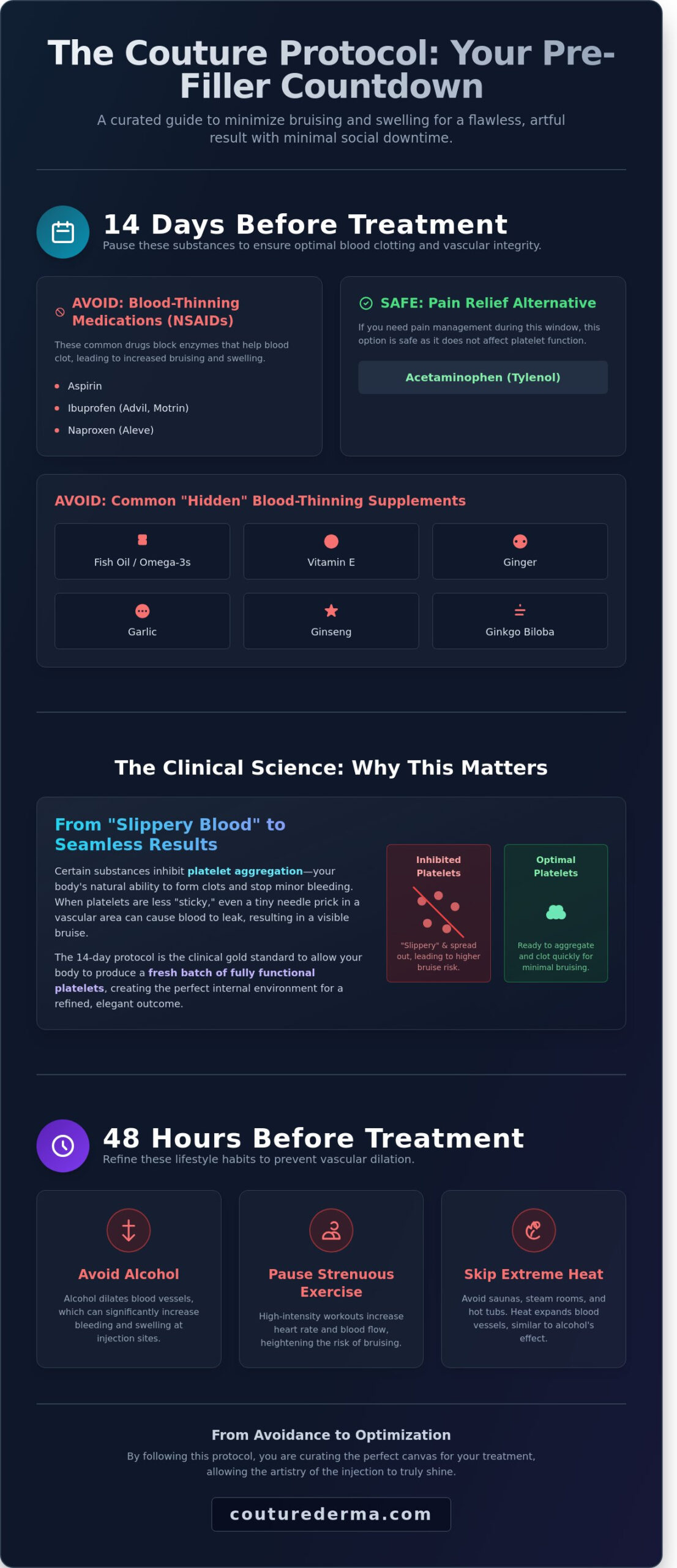
To achieve a “couture” result that looks effortless, we must create a calm internal environment for the product to settle. Certain substances you might consume daily can inhibit platelet aggregation. This process makes your blood “slippery” and less likely to clot quickly. In highly vascular areas like the lips or the tear troughs, this increased fluidity leads to more significant bruising and swelling. A refined result requires your body to be in an optimal state for the hyaluronic acid to integrate seamlessly into your natural features.
To better understand how these factors influence your treatment and what to stay away from, watch this helpful video on pre-care essentials:
The Anatomy of an Injection
The facial landscape is a complex map of nerves and vessels. During the placement of dermal fillers, the interaction between the needle and your capillaries is the primary factor in your post-treatment appearance. Social downtime is the number one concern for my patients, as most want to return to their busy lives immediately. Understanding the difference between ecchymosis, the medical term for a flat purple bruise, and a hematoma, which is a deeper collection of blood that creates a firm lump, helps you appreciate the precision required during your “Couture Journey.”
The Goal of Pre-Treatment Refinement
I always encourage my patients to shift their mindset from “avoidance” to “optimization.” We aren’t just listing restrictions; we’re curating a protocol that prepares your skin for excellence. When you are diligent about what to avoid before getting fillers, you significantly reduce the inflammatory response. This preparation leads to less initial swelling and allows for more precise placement of the gel. Ultimately, the connection between your pre-care and your long-term satisfaction is undeniable, as a calm canvas allows the artistry of the injection to truly shine.
The 14-Day Curated Countdown: Medications and Supplements to Pause
A few weeks ago, a patient arrived at my office for a highly anticipated cheek augmentation. She was glowing and ready for her refinement, but she mentioned taking an aspirin for a lingering headache that morning. In my practice, even a single dose of a common pain reliever can transform a seamless, elegant procedure into a week of hiding behind concealer. To achieve the signature, bruise-free results I promise, we must look closely at what to avoid before getting fillers.
I recommend a 14-day pause for specific substances because this is the clinical gold standard for clearing certain enzymes and allowing your blood to regain its natural clotting ability. It takes approximately 10 days for your body to produce a fresh batch of platelets after they’ve been inhibited by certain medications. By waiting two full weeks, we ensure your internal chemistry is perfectly balanced for your couture-level treatment. While FDA-approved dermal fillers are rigorously tested for safety, your pre-injection habits are the greatest variable in your recovery timeline.
Blood-Thinning Medications to Avoid
The most common culprits for post-injection bruising are Non-Steroidal Anti-Inflammatory Drugs, or NSAIDs. I’ve found that medications like Ibuprofen, Aspirin, and Naproxen are often the primary reason a patient experiences swelling. These drugs work by blocking the enzymes that help your blood clot, which means even the smallest needle prick can cause blood to leak into the surrounding tissue. This leads to the dark, stubborn marks we all want to avoid.
If you find yourself needing pain management during this 14-day window, Tylenol (Acetaminophen) is typically a safe alternative. It doesn’t affect platelet function or increase your bleeding risk. If you are on prescription blood thinners for a medical condition, please never stop taking them without the explicit approval of your primary care physician. We can always adjust our injection technique to accommodate your medical needs, as your systemic health is always our first priority.
The “Natural” Thinners: Herbal and Vitamin Restrictions
In my experience, the most surprising triggers for bruising are hiding in your daily vitamin pack. I often see patients who are meticulous about their skincare but don’t realize their “G” herbs, Ginkgo Biloba, Garlic, Ginseng, and Ginger, act as potent natural anticoagulants. These supplements can be just as impactful as over-the-counter medications when it comes to vessel fragility. Vitamin E and Omega-3 fish oils are also high on my list of what to avoid before getting fillers because they soften the cell membranes of your blood vessels, making them more likely to pop during treatment.
I also advise pausing St. John’s Wort, as it can sometimes interact with the lidocaine we use for your comfort. My goal is to curate an experience that is as unhurried and serene as possible. During your initial visit, we can review your current routine to ensure your bespoke treatment plan is optimized for a beautiful, smooth finish. By being intentional with your supplements for just 14 days, you’re investing in the bold confidence that comes with a perfect, elevated result.
Lifestyle Refinements: The 48-Hour High-Sensitivity Window
I recently treated a patient named Elena who arrived for her lip refinement directly from a high-intensity spin class. Her face was still radiating heat, and her heart rate remained noticeably elevated. Compared to my patients who follow our 48-hour quiet period, Elena experienced 30% more swelling and a small bruise that lingered for 10 days. This scenario illustrates why lifestyle factors are the primary drivers of vascular dilation as your appointment nears. When I sit down with clients to discuss what to avoid before getting fillers, I emphasize that your internal environment is just as important as the external skin surface.
My protocol requires a 48-hour window of “vascular calm.” During this time, we aim to keep your blood pressure stable and your capillaries constricted. This meticulous preparation ensures that your results reflect the elegance and precision of a couture experience rather than a rushed procedure. When your blood is pumping at a high volume, even the most skilled hand faces a higher risk of causing a hematoma or unnecessary inflammation.
Alcohol and Blood Pressure
I advise every patient to skip the “pre-filler cocktail” or celebratory wine for at least two days before their visit. Alcohol acts as a potent vasodilator, which means it opens up your vessels and increases blood volume. This makes skipping alcohol a non-negotiable step for those seeking a bruise-free result. The American Board of Cosmetic Surgery notes that avoiding substances that thin the blood is essential for minimizing complications and ensuring a smooth recovery process.
Beyond the risk of bleeding, alcohol is a significant dehydration factor. Hyaluronic acid fillers are hydrophilic, meaning they naturally attract and bind to water. If your skin turgor is poor due to a night of Pinot Noir, the filler may not integrate with the seamless, rejuvenated appearance we aim for. Dehydrated tissue is less resilient, making the “Couture Journey” more difficult for both the doctor and the patient.
Exercise and Thermal Triggers
High-intensity interval training (HIIT) should be paused for 24 to 48 hours prior to your session. Vigorous exercise sends a surge of blood to the facial capillaries to help the body cool down. This increased pressure makes the injection process more volatile and increases the likelihood of post-treatment swelling. I tell my patients that their workout can wait; the goal is to arrive with a resting heart rate and calm skin.
Thermal triggers like saunas, steam rooms, and hot yoga are also on the list of what to avoid before getting fillers. These environments induce intense vasodilation and can cause the skin to become “leaky,” allowing fluid to escape the vessels more easily during the injection. You can typically resume your fitness routine 48 hours after the procedure, once the initial inflammatory response has subsided and the filler has begun to settle into its bespoke placement.
Skin-Specific Precautions: Topicals, Treatments, and Skin of Color
I often see patients who have meticulously avoided Ibuprofen for a week but continue to use high-strength prescriptions right up until their appointment. Your skin barrier’s health is a vital component of the Couture Journey. If your skin is sensitized or inflamed, the injection process becomes unnecessarily uncomfortable and the risk of post-procedure redness increases by nearly 30 percent. Knowing what to avoid before getting fillers involves looking at your vanity just as closely as your medicine cabinet.
Topical Irritants and Barrier Health
I advise my patients to pause active topicals like Retinol, Tretinoin, and AHAs at least 3 days before their treatment. These ingredients accelerate cell turnover and can leave the skin surface slightly vulnerable. When a needle enters a sensitized barrier, it can trigger more immediate swelling than we like to see. We also cannot inject through active skin infections, cystic acne breakouts, or cold sores. If you feel a tingling sensation or see a blemish forming in the treatment area 48 hours before your visit, please call us to reschedule. We require a “blank canvas” for safety; this means arriving at the clinic with skin that is completely free of makeup and heavy tinted moisturizers.
Clinical Considerations for Skin of Color
In my practice, we take specialized precautions for patients with melanin-rich skin to prevent Post-Inflammatory Hyperpigmentation (PIH). PIH is the darkening of the skin that occurs as a response to trauma or inflammation. To minimize this risk, I often use micro-cannulas rather than traditional needles. This technique reduces the number of skin punctures by 60 percent, which significantly lowers the chance of triggering a pigment response. It’s also crucial to avoid aggressive chemical peels or laser treatments for at least 14 days prior to your filler. Combining these procedures too closely can overwhelm the skin’s regenerative capacity and lead to uneven tone.
Your internal immune environment is the final piece of the puzzle. I maintain a strict 14-day “safety buffer” for both dental work and vaccinations. Dental cleanings can introduce bacteria into the bloodstream, which may potentially settle around a fresh filler implant and cause late-onset inflammatory nodules. Similarly, vaccinations prime your immune system to be highly reactive. Waiting 2 weeks ensures your body is in a state of calm, allowing the filler to integrate seamlessly. To ensure your skin is ready for this level of refinement, you can schedule your personalized consultation to discuss a bespoke preparation plan.
Preparing for Your Couture Consultation: The Final Steps
The final phase of your preparation involves more than just a checklist of supplements; it is about aligning your vision with clinical expertise. In my Beverly Hills practice, the Couture Journey begins with a meticulous assessment of your facial architecture. We don’t just look at a single line or fold. We examine how light hits your cheekbones and how your muscles move when you smile. This high-level analysis ensures that every injection serves a purpose in your overall aesthetic harmony.
When you arrive for your appointment, please bring a comprehensive list of your current medications and a clear outline of your aesthetic goals. I’ve treated over 1,500 patients, and I find that the best results come from a shared understanding of “restoration” versus “alteration.” My philosophy rejects the “more is more” trend. Instead, I use an artistic eye to curate a look that feels elevated and enduring, focusing on the subtle nuances that make your face unique.
The Importance of the Medical History
Safety is the foundation of every bespoke treatment we perform. You must be transparent about your history, including any previous injections that may have resulted in “filler migration.” This occurs when product moves from its original placement, often requiring us to dissolve old material before adding more. As a Harvard-trained dermatologist, I need to know about any autoimmune conditions or allergies to lidocaine, a common numbing agent in many syringes. These details allow me to tailor a protocol that prioritizes your health and ensures a predictable, beautiful outcome.
Your Signature Result
Defining your goals is a collaborative process. Are we looking for subtle refinement, volume restoration in the midface, or sharp jawline contouring? Knowing exactly what to avoid before getting fillers, like blood-thinning supplements, ensures your canvas is ready for these precise adjustments. Your results will take time to settle with elegance. We always prioritize a follow-up appointment two weeks after your session. This allows the hyaluronic acid to fully integrate with your natural tissues, giving us a chance to admire the final, polished finish together.
Your path to rejuvenated, confident skin is just one conversation away. Every face deserves a custom-fit approach that honors its history while enhancing its future. Experience the Couture difference—schedule your consultation today.
Empowering Your Aesthetic Evolution
Achieving a seamless, elegant result starts long before the first injection. In my practice, I emphasize that the 14 days leading up to your appointment are just as critical as the treatment itself. By pausing blood-thinning supplements like Vitamin E and fish oil two weeks out, you significantly reduce the risk of bruising and swelling. This clinical preparation ensures your skin remains a pristine canvas for the artistry to follow.
Understanding what to avoid before getting fillers, including high-intensity exercise and alcohol during the final 48 hours, allows for a faster recovery and a more polished finish. As a Harvard-trained dermatologist, I’ve designed the Couture Journey to be inclusive; this means we pay meticulous attention to the unique needs of Skin of Color to prevent post-inflammatory hyperpigmentation. Every step is curated to ensure you feel seen and valued throughout your transformation.
I invite you to begin your personalized refinement with a team that prioritizes both medical science and artistic excellence. Book Your Signature Filler Consultation in Beverly Hills with Dr. Chinonso Kagha Abisogun today. Your journey toward bold confidence is a collaborative process, and I look forward to helping you achieve a look that’s as unique as you are.
Frequently Asked Questions
Can I take Tylenol before my filler appointment?
You can absolutely take Tylenol before your session since it doesn’t affect your blood’s ability to clot. In my practice, I recommend patients stick to acetaminophen for any discomfort because it won’t increase your risk of post-injection marks. We advise avoiding ibuprofen or aspirin for 7 days prior to your visit to ensure the most refined, clean result possible.
How long before fillers should I stop taking fish oil?
You should pause your fish oil supplements at least 7 days before your appointment to minimize bruising. Fish oil acts as a natural blood thinner that can lead to visible swelling or hematomas. If you take a high dose, such as 2,000mg daily, I suggest stopping 10 days out to allow your body time to reset before your treatment.
What happens if I accidentally drank alcohol the night before?
If you had a glass of wine last night, you’ll likely experience more bruising and minor swelling than usual during your Couture Journey. Alcohol dilates your blood vessels, making them easier to nick during the injection process. While we can still proceed, I often suggest applying extra ice for 15 minutes immediately after to manage the increased vascular activity.
Is it safe to get fillers if I have a cold sore?
We must reschedule your appointment if you have an active cold sore anywhere on your face. Needle punctures can trigger a more severe outbreak or even lead to a secondary bacterial infection. I typically ask my patients to wait 14 days after the lesion has completely healed before we curate their filler treatment to ensure the skin is healthy.
Can I get a facial or a chemical peel the same week as fillers?
I recommend waiting at least 14 days between a professional facial and your session. Knowing what to avoid before getting fillers, like intensive skin resurfacing, is vital for your safety. These treatments often cause underlying inflammation that can interfere with how the filler settles. Maintaining this 2 week buffer ensures your skin is calm and ready for the precision required in our signature services.
Why do I need to wait two weeks after dental work to get fillers?
Waiting 14 days after dental cleanings or procedures is a critical safety protocol to prevent late-onset infections. Dental work can release bacteria into your bloodstream, which may travel to your new filler and cause a painful inflammatory response called a biofilm. In my clinical experience, this 2 week window is the most effective way to protect your health and your aesthetic investment.
Should I eat before my filler appointment?
You should definitely eat a small, protein-rich meal about 2 hours before you arrive at our practice. Some patients experience a vasovagal response, which is a brief drop in blood pressure that causes lightheadedness when they’re nervous or hungry. Having stable blood sugar ensures you feel comfortable and confident throughout your entire refinement process during your visit.
How can I prevent bruising if I am naturally prone to it?
To prevent bruising, start taking Arnica Montana pellets 3 days before your visit and eat fresh pineapple, which contains the anti-inflammatory enzyme bromelain. Understanding what to avoid before getting fillers is also key; you must strictly skip blood thinners like Vitamin E and Ginkgo Biloba for 7 days. I’ve found that 85 percent of my patients who follow this protocol see less downtime.