

What to Expect at Your First Acne Scar Treatment Consultation: Comprehensive Guide to the Consultation Process and Treatment Options

The initial acne scar consultation establishes the clinical baseline and informs a targeted treatment strategy. This guide clarifies the consultation workflow, outlines available modalities, and describes practical preparation steps. Knowing the assessment components and potential interventions reduces uncertainty and supports informed decision‑making. We review the evaluation process, treatment options, expected outcomes, and suggested questions to discuss with your dermatologist. For specialised medical and aesthetic services, Couture Dermatology and Laser Beverly Hills provides individualized care.
Consultation Process
The consultation typically begins with a structured skin assessment in which the clinician documents scar morphology, distribution, and severity. This clinical evaluation guides selection of appropriate modalities and sequencing. Your medical history, prior interventions, and current dermatologic conditions will be reviewed to identify contraindications and optimise the plan. The clinician will also confirm your treatment objectives to ensure recommendations align with expected outcomes.
How Does the Dermatologist Evaluate Acne Scars During Your Initial Consultation?
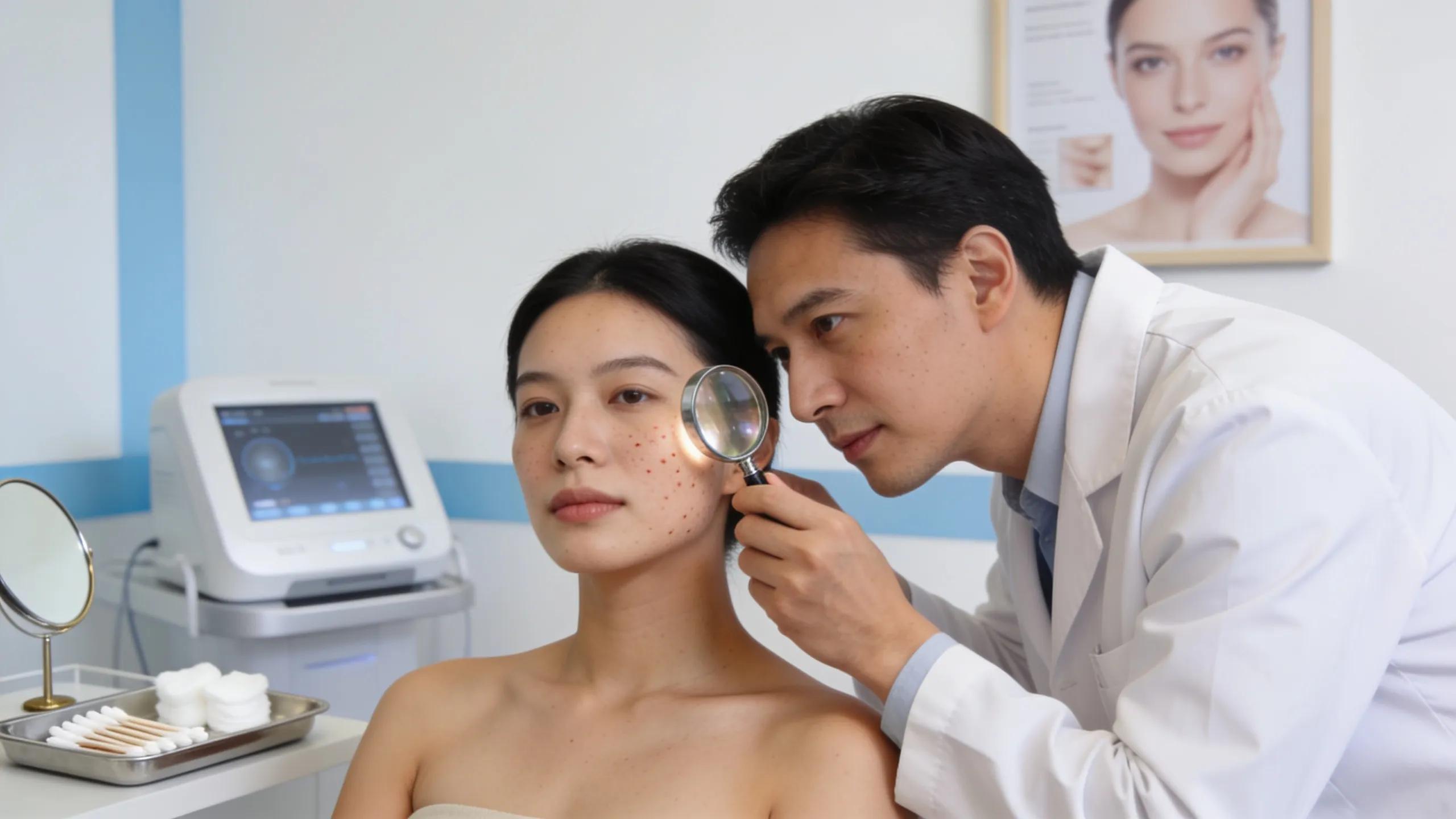
Assessment comprises a systematic visual examination, palpation, and, when indicated, the use of diagnostic instruments to appraise scar depth, texture, and contour. The clinician will categorise scars and correlate findings with skin phototype and tissue quality to determine the most effective interventions.
What Types of Acne Scars Are Assessed in the Evaluation?
The evaluation addresses common scar morphologies, including ice pick, rolling, and boxcar scars. Each morphology has specific histologic and structural features that influence therapeutic responsiveness, and accurate classification is essential for planning effective treatment.
Objective, reproducible assessment of scar characteristics is necessary to inform a treatment algorithm and to measure therapeutic response.
Acne Scar Assessment: Factors Influencing Therapeutic Modalities
Acne scarring, a prevalent sequela of acne vulgaris, exerts measurable effects on facial aesthetics. Therapeutic selection depends on the scar’s stage, pigmentation, morphology, and anatomic location. A precise, objective scar assessment is a prerequisite for treatment planning and serves as an outcome metric for efficacy evaluation.Advances in the Application of Noninvasive Skin Imaging Techniques in Acne Scars, 2024
Which Diagnostic Techniques Are Used for Accurate Scar Analysis?
Clinicians may employ techniques such as morphological mapping, high‑resolution imaging, and a thorough dermatologic history to characterise scars. These methods assist in distinguishing active acne from residual scarring and in determining whether pre‑treatment control of active disease is required.
A structured, algorithmic approach to atrophic acne scars supports selection of appropriate therapeutic modalities and reduces variability in clinical decision‑making.
Acne Scar Consultation: Assessment and Therapeutic Approaches
General dermatologists frequently encounter the challenge of assessing and recommending treatment for acne scars. This article presents a practical, systematic method for evaluating atrophic acne scars, provides an algorithm for selecting modalities, and reviews potential complications to avoid. Procedures suited for integration into general dermatology practice—such as filler injections, microneedling, and punch excision—are discussed.Practical evaluation and management of atrophic acne scars: tips for the general dermatologist, 2011
Available Treatment Options
Multiple therapeutic options exist for acne scarring; each targets specific scar types and tissue characteristics. Commonly utilised interventions include chemical reconstruction (TCA Cross), subcision, fractional laser resurfacing, microneedling with or without radiofrequency, and dermal fillers. Selection depends on scar morphology, skin type, and clinical goals.
| Treatment Type | Description | Expected Results |
|---|---|---|
| TCA Cross | A chemical peel technique used for ice pick scars. | Reduces the appearance of deep scars. |
| Subcision | A minor surgical procedure that releases the fibrous bands under the skin. | Improves the appearance of rolling scars. |
| Fractional Laser | A laser treatment that promotes collagen production. | Enhances skin texture and reduces scar visibility. |
| Microneedling RF | A procedure that uses fine needles to stimulate collagen production. | Improves skin texture and elasticity. |
| Dermal Fillers | Injectables that fill in depressed scars. | Provides immediate volume and smoothness. |
Couture Dermatology and Laser Beverly Hills provides advanced clinical and aesthetic treatments and may incorporate these modalities into personalised scar‑refinement plans.
What Are the Available Acne Scar Treatment Options Discussed at Consultation?
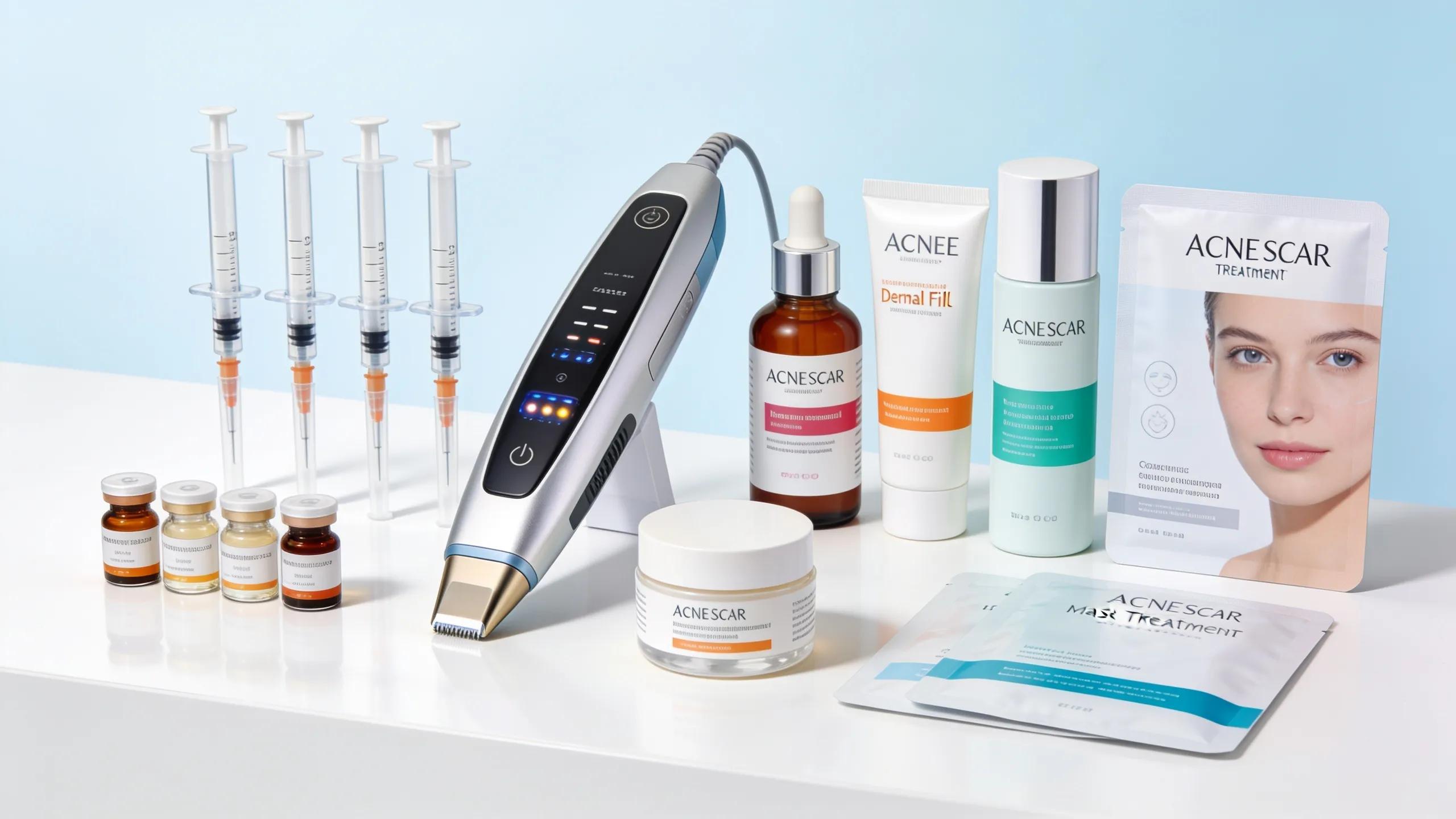
During the consultation, the clinician will review each applicable modality, explain the mechanism of action, outline anticipated clinical improvement, and describe common or expected adverse effects. This discussion supports an evidence‑based selection of treatments tailored to your scar types and objectives. For further details on aesthetic services, see their range of aesthetic services.
Recognising the full spectrum of medical and procedural options facilitates initiation of an appropriate outpatient treatment plan for acne scarring.
Acne Scar Management: Evaluation and Medical Therapeutic Approaches
This review addresses acne scarring, assessment tools, and medical treatment strategies. The principles presented support the approach to and initiation of acne scar treatment in the outpatient clinical setting.Acne scarring—pathophysiology, diagnosis, prevention and education: Part I, 2024
How Does Laser Skin Resurfacing Improve Acne Scars?
Laser resurfacing removes damaged epidermal tissue and induces dermal remodelling, thereby stimulating neocollagenesis and improving texture and scar contour. Parameters are adjusted for skin type and scar severity to balance efficacy and downtime. For procedural details, consult the specified resource.
What Are Alternative Treatments Like Microneedling and Chemical Peels?
Microneedling creates controlled micro‑injuries to provoke collagen synthesis and dermal remodelling; chemical peels remove superficial epidermis to accelerate re‑epithelialisation. Both modalities can reduce scar prominence when matched appropriately to scar type and skin characteristics.
Potential Outcomes
Clinical outcomes vary by scar morphology, baseline skin quality, and chosen intervention. Patients should maintain realistic expectations: many observe measurable improvement in texture and scar visibility, while the degree of change depends on individual response and treatment course.
What Questions Should Patients Expect and Ask?
Prepare to discuss procedure details, realistic outcomes, recovery timelines, and potential adverse events. Relevant questions include:
- What type of scars do I have, and how will they respond to treatment?
- What are the expected results, and how long will they last?
- What are the potential side effects of the recommended treatments?
- How many sessions will I need to achieve my desired results?
These queries aid in clarifying the proposed regimen, setting outcome expectations, and establishing a follow‑up plan.
How Should Patients Prepare for Their Acne Scar Treatment Consultation?
Adequate preparation ensures an efficient and informative consultation. Gather relevant medical documentation, list current medications and topical regimens, and prepare specific questions regarding risks, benefits, and logistics of proposed treatments.
What Pre-Consultation Steps Ensure an Effective Evaluation?
To support a comprehensive evaluation, complete the following: document medical history and prior dermatologic therapies, address any active acne with your clinician before proceeding with scar treatments, and define your treatment goals to guide clinical recommendations.
- Prepare Your Medical History: Document any existing medical conditions and past treatments.
- Control Active Acne: If you have active acne, discuss management options with your dermatologist before the consultation.
- Set Clear Goals: Think about what you hope to achieve with your treatment and communicate this during your visit.
Which Medical and Skin History Details Should Be Provided?
Provide a complete medical and dermatologic history, including systemic illnesses that could affect healing, previous acne therapies and their outcomes, and all current prescription and over‑the‑counter products to identify potential interactions or contraindications.
What Happens During the Acne Scar Consultation Process?
The clinician will perform a comprehensive assessment encompassing history, physical examination of the skin, and documentation of scar characteristics. This information underpins a personalised treatment plan that aligns clinical options with your objectives and prognostic factors.
How Is the Personalized Treatment Plan Developed?
The treatment plan is formulated from the clinical assessment, scar classification, skin type, and stated goals. The clinician integrates these factors to recommend modality selection, sequencing, and expected timelines to optimise functional and aesthetic outcomes.
What Post-Consultation Care and Follow-Up Are Recommended?
Following the consultation, you will receive specific post‑procedure instructions to support healing and maximise results. This may include product recommendations, activity restrictions, and scheduling of follow‑up visits to monitor progress and adjust therapy as needed.
How Should Patients Manage Skin After Treatment?
Adhere to post‑treatment guidance to promote recovery: cleanse with gentle agents, maintain hydration with appropriate moisturisers, and apply sun protection to minimise photo‑induced complications during healing.
When Are Follow-Up Visits Scheduled and What Do They Include?
Follow‑up appointments are generally arranged several weeks post‑procedure to assess response, document healing, and determine whether additional treatments or modifications are necessary. Clinicians will evaluate clinical endpoints and plan subsequent care accordingly.
This guide is intended to prepare you for an initial acne scar consultation by outlining the assessment process, treatment options, and follow‑up considerations so you can participate in informed, clinician‑led decision‑making.
Frequently Asked Questions
What Should I Bring to My Acne Scar Treatment Consultation?
Attend the appointment with your relevant medical records, documentation of prior dermatologic procedures, and a list of current medications and topical agents. Also bring a prepared list of questions about proposed treatments, expected outcomes, and recovery to ensure a focused clinical discussion.
How Long Does the Consultation Process Typically Last?
A standard acne scar consultation typically requires 30 to 60 minutes. This interval allows for a thorough dermatologic assessment, review of history, discussion of options, and time for patient questions; duration may extend if comprehensive planning or additional documentation is necessary.
Are Acne Scar Treatments Painful?
Treatment‑related discomfort varies by modality. Procedures such as lasers and microneedling can cause transient pain or discomfort; topical or local anaesthesia is commonly used to mitigate procedural pain. Discuss analgesia options and your tolerance with the clinician during the consultation.
What Are the Risks Associated with Acne Scar Treatments?
Risks include temporary erythema, swelling, and bruising. Less common but clinically significant complications may include infection, persistent scarring, or post‑inflammatory pigmentary changes. Review the risk profile for each recommended procedure with the dermatologist to make an informed decision.
How Soon Can I Expect to See Results After Treatment?
Time to visible improvement depends on the intervention and individual healing dynamics. Some treatments, such as dermal fillers, yield immediate change; remodelling procedures like lasers or microneedling typically show progressive improvement over several weeks as collagen synthesis occurs. Discuss anticipated timelines for your specific plan.
Can I Combine Different Acne Scar Treatments?
Combination therapy is often employed to address multiple scar types and optimise outcomes. Sequential or concurrent use of modalities—such as resurfacing followed by needling or filler placement—may be recommended based on clinical assessment. Your dermatologist will determine the safest and most effective combination for your case.
Conclusion
Understanding the consultation workflow and available interventions enables patients to engage in evidence‑based decisions regarding acne scar management. Selecting an approach matched to scar type and treatment goals improves the likelihood of measurable improvement. Consult a qualified dermatologist to obtain an accurate evaluation and a tailored treatment plan. Connect with us at Couture Dermatology today to explore personalised solutions for your skin concerns.